
Australian dwelling values are days away from recording their largest decline in more than 40 years of records, according to Cotality’s daily dwelling values index.
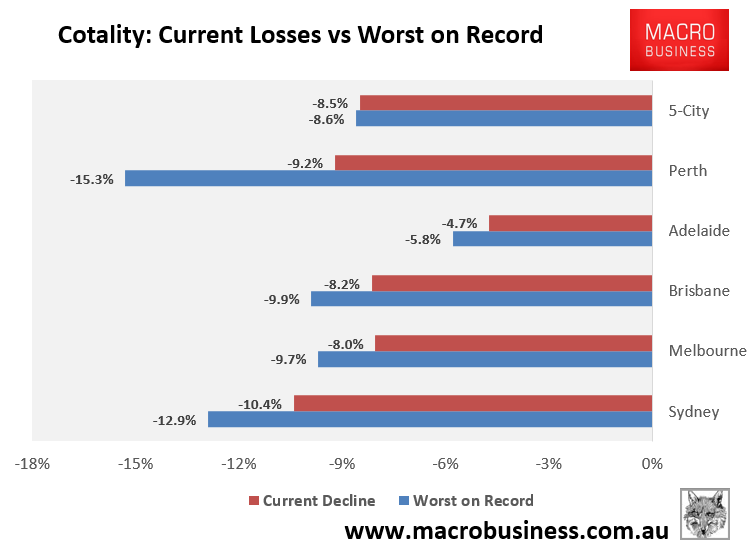
Across the five major capital city markets, values have declined by 8.5% from their 10 April 2026 peak, just a whisker below the peak decline of 8.6% between November 2017 and May 2019:
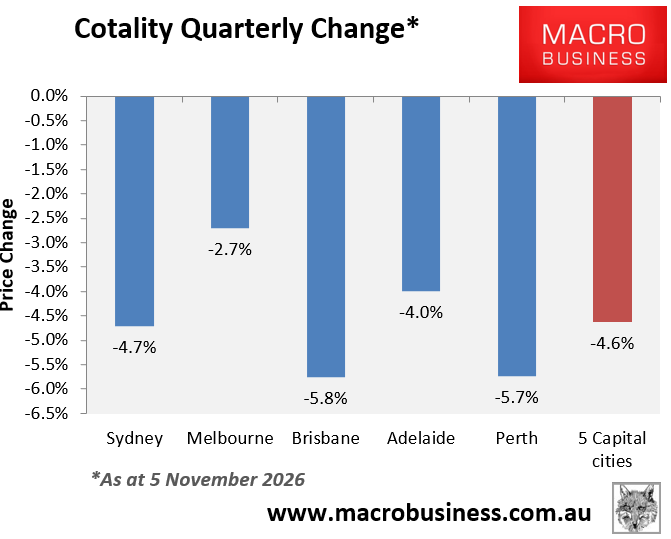
The pace of decline has also steepened, with values plummeting by 4.6% over the past quarter across the five major capital cities:
Cotality has issued a media release forecasting further declines in housing values driven by the Reserve Bank’s five rate hikes this year, reduced borrowing capacity, and the May federal budget’s changes to negative gearing and capital gains taxes:
Restrictive interest rates have had a significant impact on residential property demand and have been one of the key drivers of the fastest downturn across the combined capital cities over the past forty years.
The cumulative impact of the five rate increases in 2026 has lifted mortgage costs and reduced the borrowing capacity of households. Based on the average owner-occupier mortgage in the June quarter (almost $742,000), mortgage repayments are now around $600 a month (or 14%) higher than where they stood in January. Similarly, the borrowing capacity of the median income household is around $88,000 lower (or 12%) following this fifth hike than at the start of the year.
Combined with existing affordability constraints, cost-of-living pressures, pessimistic consumer confidence and the retreat of investors following May’s Federal Budget, higher interest rates have driven potential buyers to the sidelines. Our estimate of sales volumes for the combined capitals in the three months to October was almost 26% lower than the same period last year. Home values in the combined capital cities have fallen 8.1% from the peaks of March, close to the record peak-to-trough decline seen between late 2017 and mid-2019.
The 12% decline in borrowing capacity arising from the Reserve Bank’s five interest rate hikes is especially pertinent.
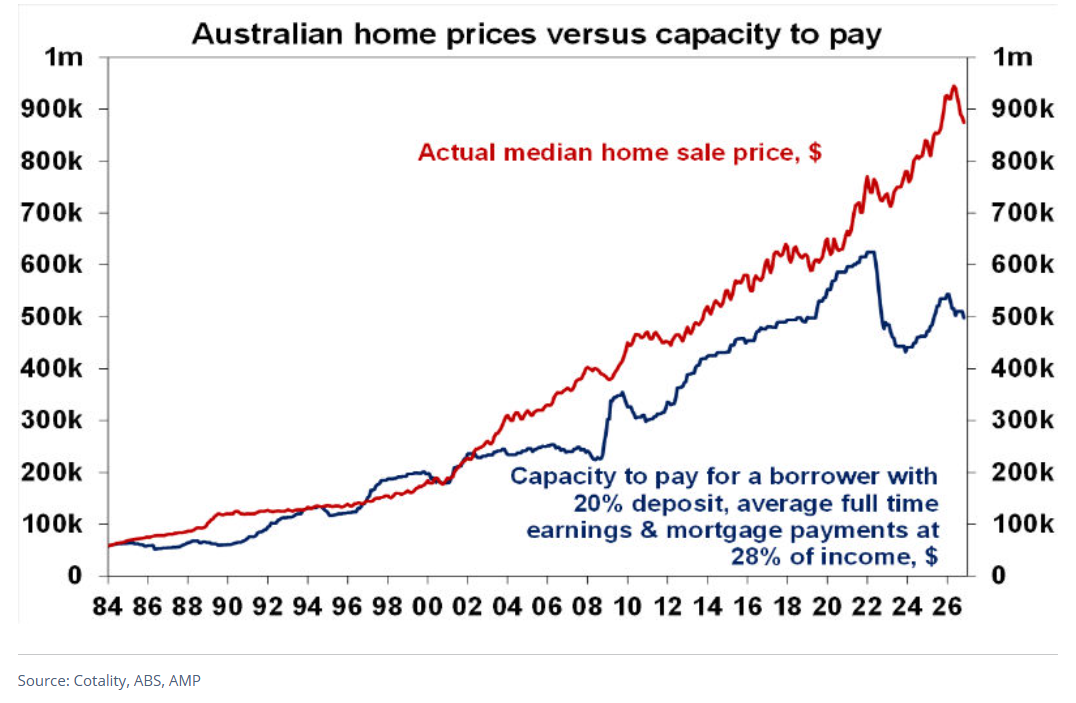
As AMP chief economist Shane Oliver shows below, borrowers’ capacity to pay has fallen sharply and sits well below the media home price, which has also fallen. In fact, the gap between capacity to pay and home prices has never been wider, estimated at around $400,000 by Oliver.
As a result, home prices must fall significantly further to bring values into line with the capacity to pay, and Oliver forecasts a peak-to-trough decline in capital city home prices of around 15%:
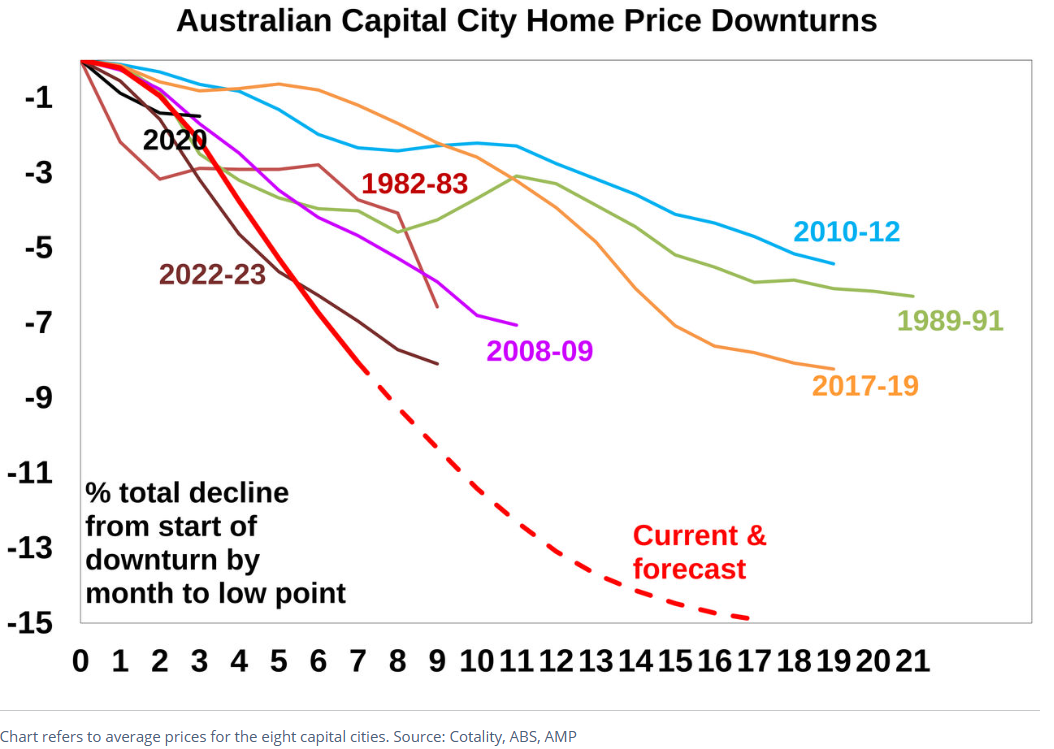
“The drags on demand set to continue for a while yet and a likely rise in distressed selling, we are revising our expected top to bottom fall to around 15%”, Oliver notes.
“This is deeper than the range of average capital city property price declines seen over the last 40 years or so but is consistent with the perfect storm now hitting the property market”.
“However, by the September quarter next year, property prices are likely to bottom with the market starting to anticipate RBA rate cuts”.
My view remains unchanged: Australia will experience a New Zealand-style house price crash, with values falling sharply over an 18-month to two-year period, then trading broadly sideways for many years and declining in real, inflation-adjusted terms.
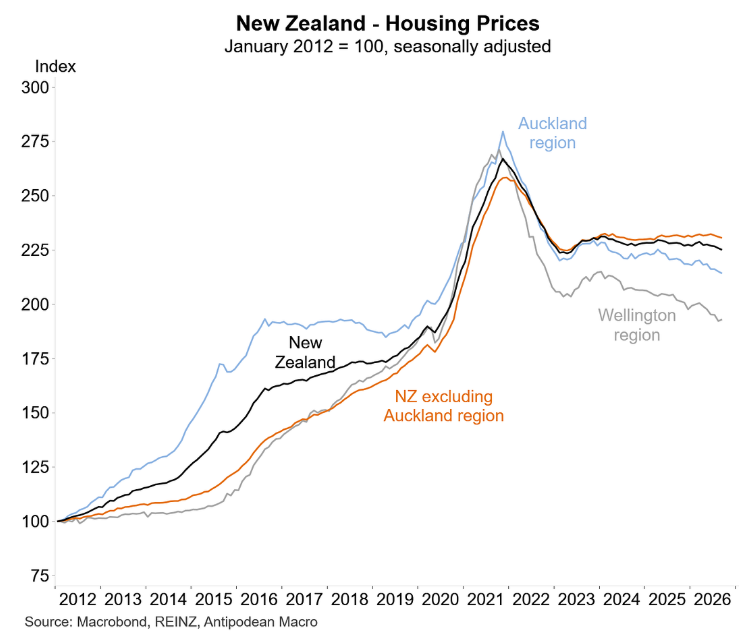
Chart from Justin Fabo (Antipodean Macro)
As noted by Shane Oliver, the 30-year housing supercycle is well and truly over:
The combination of a rising long-term trend in mortgage rates after the long-term downtrend that ran from 1989 (when they peaked at 17%) to 2021 (when they bottomed around 2%), the virtual removal of property tax concessions, record poor affordability and a political shift towards lower immigration after nearly 20 years of relatively high immigration may mean the 30-year super cycle upswing in home prices may be over. This saw average property prices rise dramatically faster than their long-term trend and incomes since the mid-1990s and led to chronically poor housing affordability.
