
Australian tenants have experienced torrid conditions since the pandemic, with advertised rents soaring by around 40% nationally over the past five years, according to Cotality.
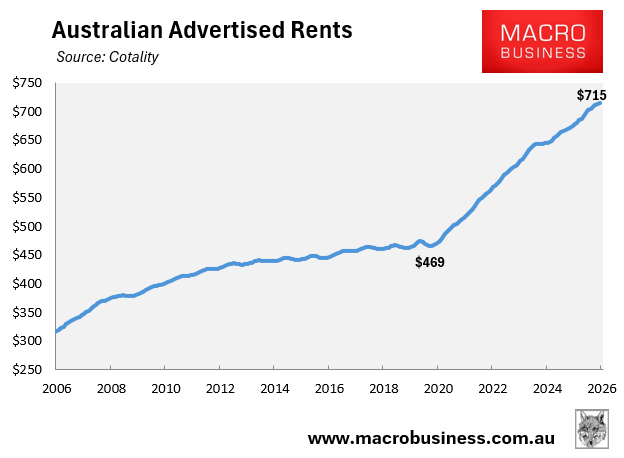
“Weekly rents have risen by about $200 over the past five years across the country”, noted Cotality research director Tim Lawless last month. “This has been a period of unprecedented rental growth that has stretched rental affordability to the worst levels on record”.
“Anecdotally, renters are likely to be looking for any way possible to minimise their rental costs, such as larger households, multi-generational housing options or looking for smaller or further afield rental options”.
The latest National Housing Supply and Affordability Council (NHSAC) State of the Housing System Report also stated that households are banding together to afford shelter amid record poor affordability:
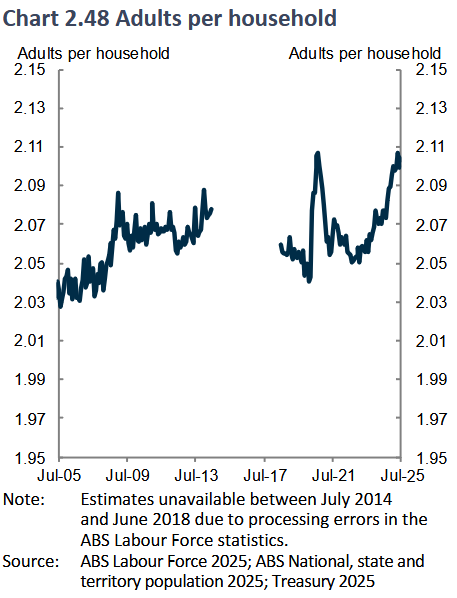
“Adults are increasingly living in larger households in response to affordability constraints, with high living and housing costs contributing to adult children staying in the parental home for longer”, NHSAC noted.
While the data is obviously alarming for tenant households, some property industry insiders have tried to link Australia’s rental crisis to changes in the May federal budget to negative gearing and capital gains taxes.
The latest example comes from leading auctioneer Tom Panos, who posted a video noting that three different housing data providers – Cotality, Domain, and SQM Research – have reported that the rental crisis is getting worse and called for the reversal of the budget’s changes to negative gearing and capital gains taxes:
“Let’s be clear. This is not made up stuff. These are the three major data companies in Australia. Three reports. Three independent sources. One very clear message: rents are surging, supply remains tight. And millions of Aussies are paying the price”.
“So, here’s my question: what’s the government’s plan now?.. One in three Aussie households rent”…
“Because if these three independent reports are all pointing in the same direction, which is what everyone was saying prior to the budget, surely it’s time to rethink this strategy?”
“Treasury’s modelling suggested the impact on rents would be about $2 a week. That’s not even close. But the latest evidence is telling us a totally different story”.
“Good policy should always be guided by good evidence. And when evidence changes, governments should be prepared to change with it”…
“Because renters don’t live in Treasury forecasts”.
Here’s my question for Tom Panos: where was your concern for renters before the May budget’s changes to negative gearing and capital gains taxes? Because I have been hammering the issue for years.
Second, where is the evidence that the federal budget’s changes have driven up rental growth? Because Cotality’s data shows that rental growth has slowed and vacancy rates have risen since the changes to negative gearing and capital gains taxes were announced on budget night:
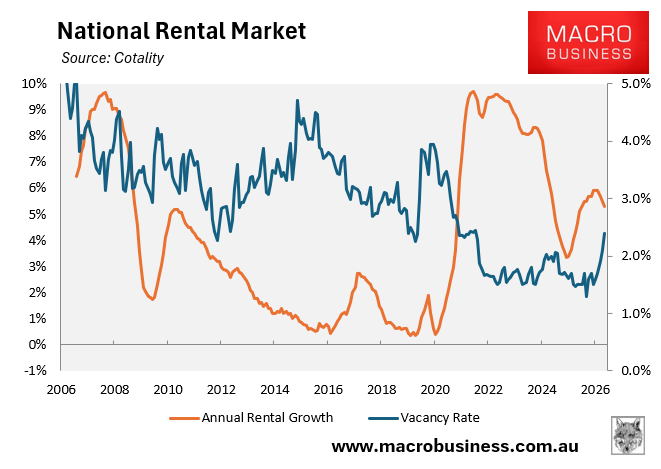
Over the past three months, Cotality reports that rents have risen just 0.4% nationally, the smallest quarterly change since late 2024. The national rental vacancy rate has also jumped to 2.4%, its highest reading since late 2021.
SQM Research’s data also shows that rental growth has slowed significantly, especially for apartments:
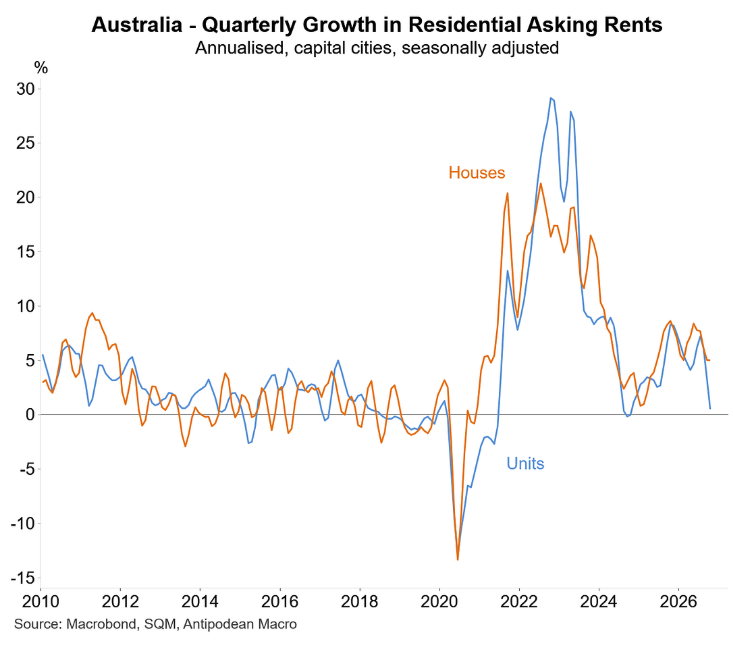
Chart from Justin Fabo (Antipodean Macro)
The actual data shows that rental conditions have eased since the federal budget, although this reflects correlation more than causation.
The more logical explanation is that immigration has slowed, meaning less rental demand, while record poor affordability has driven tenants into shared living arrangements, suppressing rental growth.
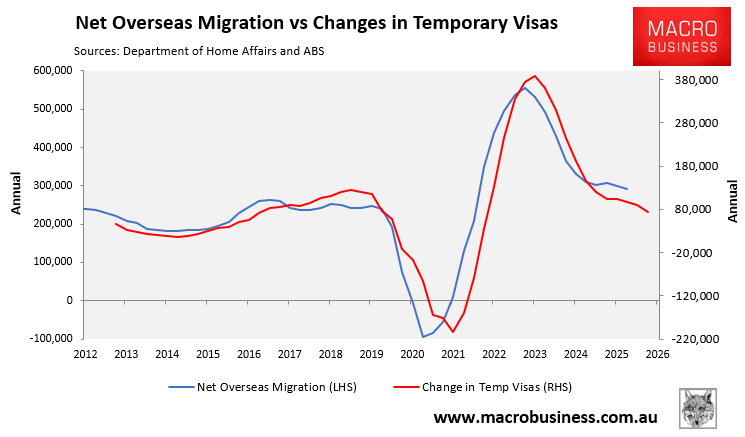
Regardless, it is wrong for Tom Panos to blame the recent changes to negative gearing and capital gains taxes for the rental crisis, which was already well entrenched before these were announced.
