
Spendthrift Aussie governments drive higher inflation
For months, a spirited debate has centred on the extent to which excessive government spending is driving Australia’s inflation, which remains well above the Reserve Bank of Australia’s (RBA) target and has prompted five rate hikes this year.
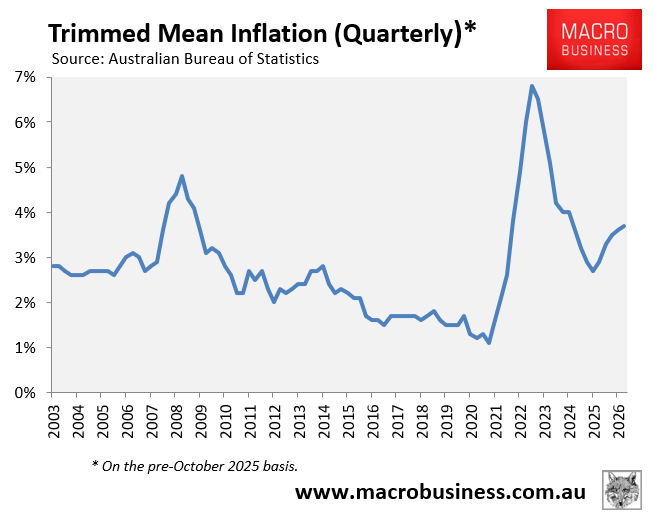
Australia’s public spending as a share of GDP is tracking at historically high levels, commensurate with the height of the COVID-19 pandemic when mandated lockdowns were in place, and unprecedented government stimulus supported businesses and households.
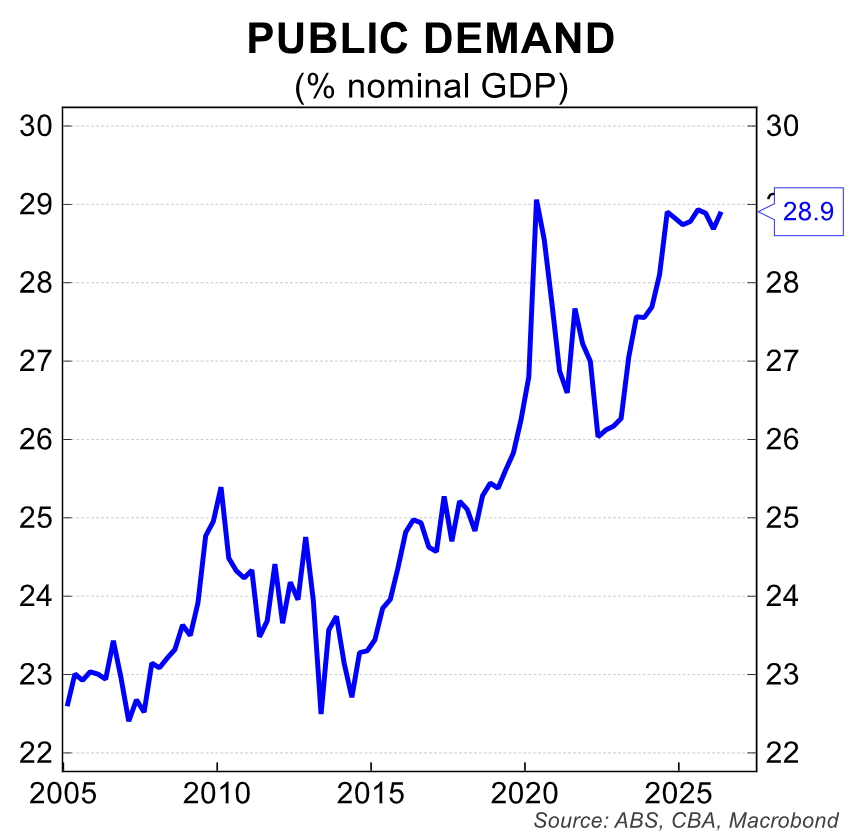
Chart from CBA
This excessive public demand has expanded aggregate demand into a supply-constrained economy, giving Australia one of the highest core inflation rates in the world:
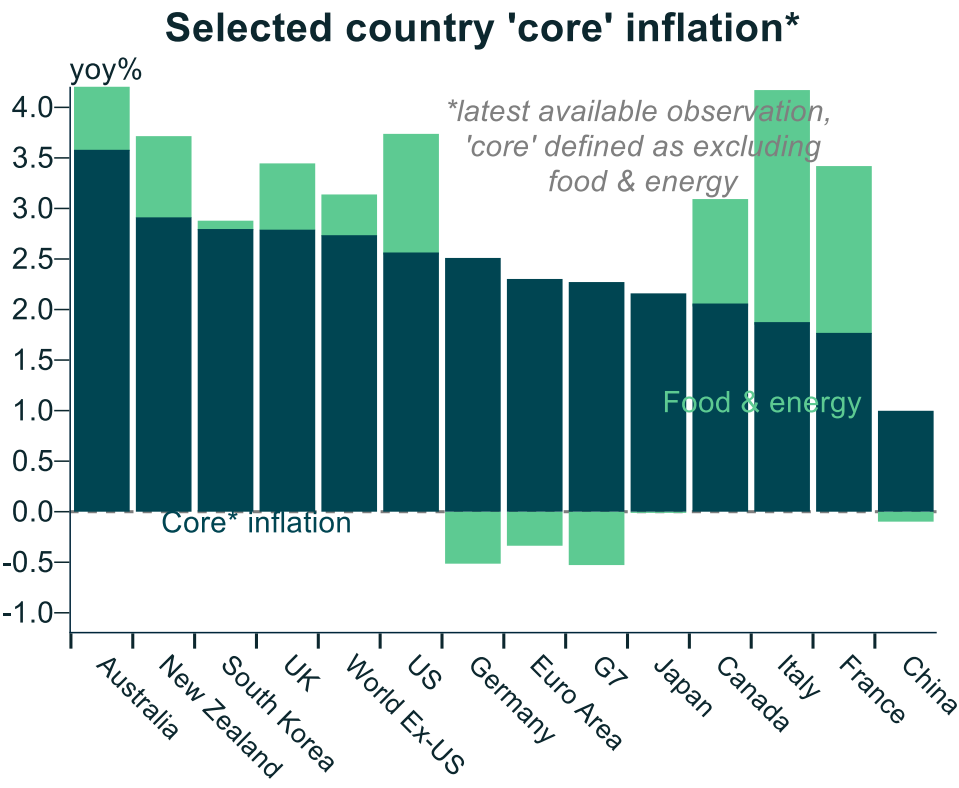
Chart from Alex Joiner (IFM Investors)
As a result, the RBA has been forced to raise interest rates to slow inflation, delivering the second-highest policy rate in the advanced world.
New analysis from The Australian’s Matthew Cranston, based on budget papers and data from the International Monetary Fund (IMF), shows overall government spending in Australia has increased by about 3.9% of GDP since 2022-23. This is a faster rate of growth than any of the major advanced economies, while Australia’s core inflation is 3.7%, the highest in the G7.
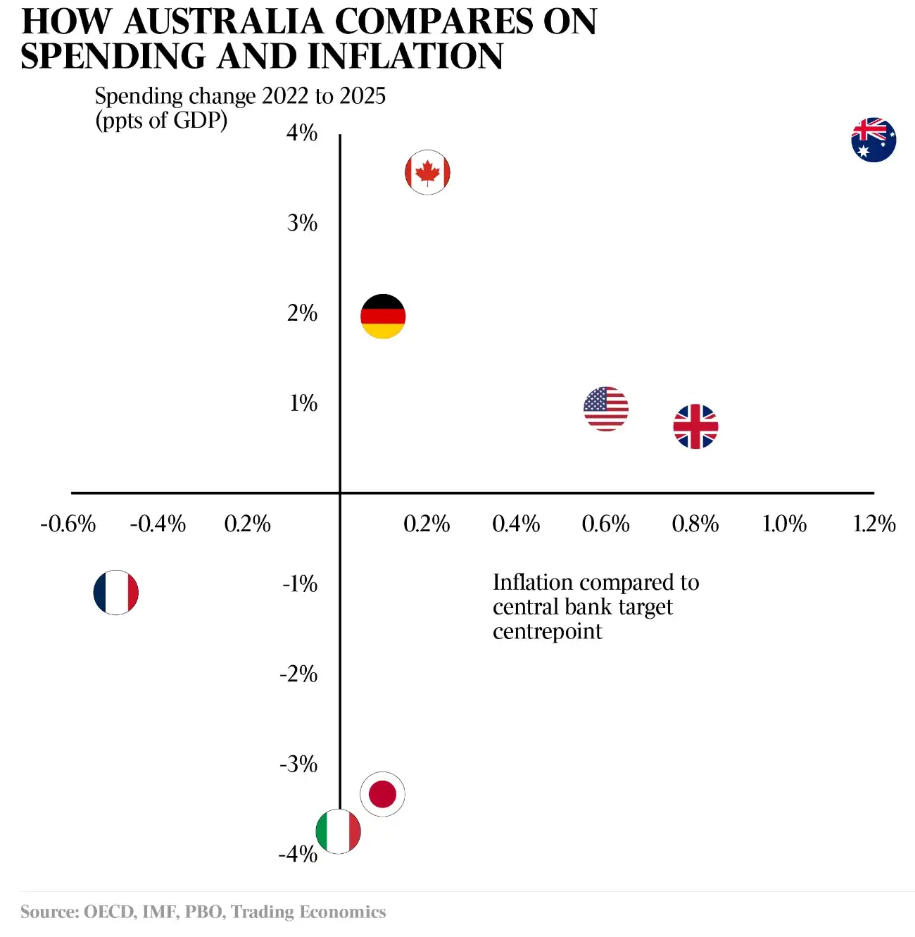
So while the global energy shock and the AI data centre boom are certainly contributing to global inflation, Australia’s inflation is being worsened by excessive public spending from state and federal governments.
Tarric Brooker coined the term “burnout economics” to describe the situation facing Australia. Governments have their feet on the accelerator, pushing demand higher through excessive spending. Meanwhile, the RBA has its foot on the brake, using interest rates to slow demand and bring inflation down.
We need government fiscal policy to work in tandem with the RBA, not against it.
