
This month’s rate hike from the Reserve Bank of Australia (RBA) – the fifth increase this year – has seen the official cash rate rise to an 18-year high of 4.85%.
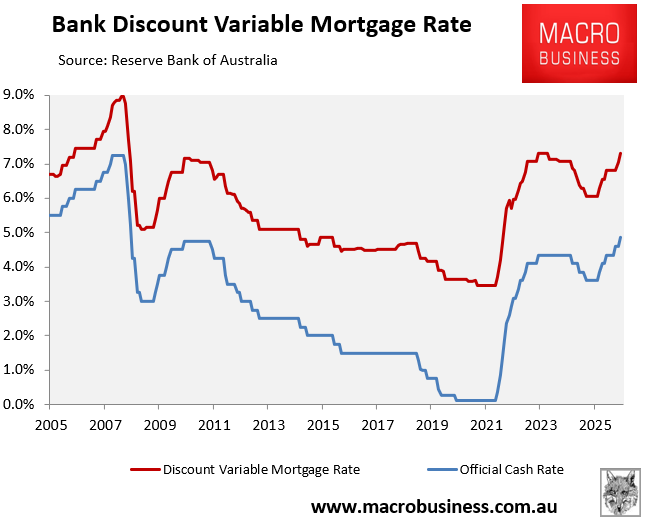
Analysis by REA Group shows that repayments on a median-priced home account for 37.4% of a typical household’s income, just shy of the record high of 37.5% in December 1989:
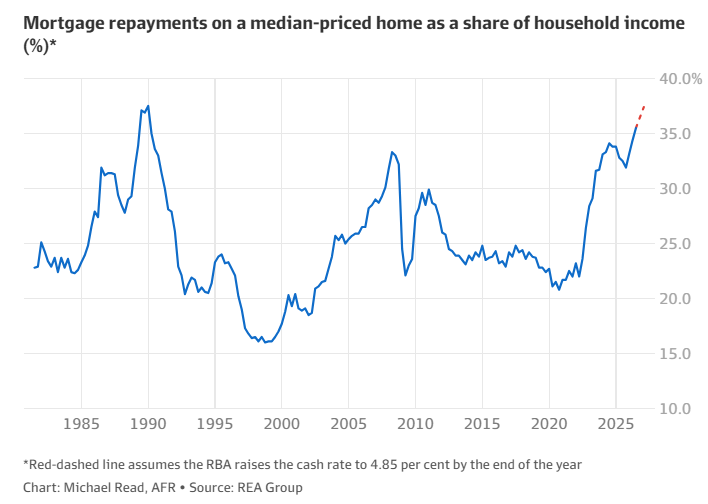
At the same time, Australian housing values are plummeting, recording their sharpest decline on record since early April, according to Cotality’s daily dwelling values index:
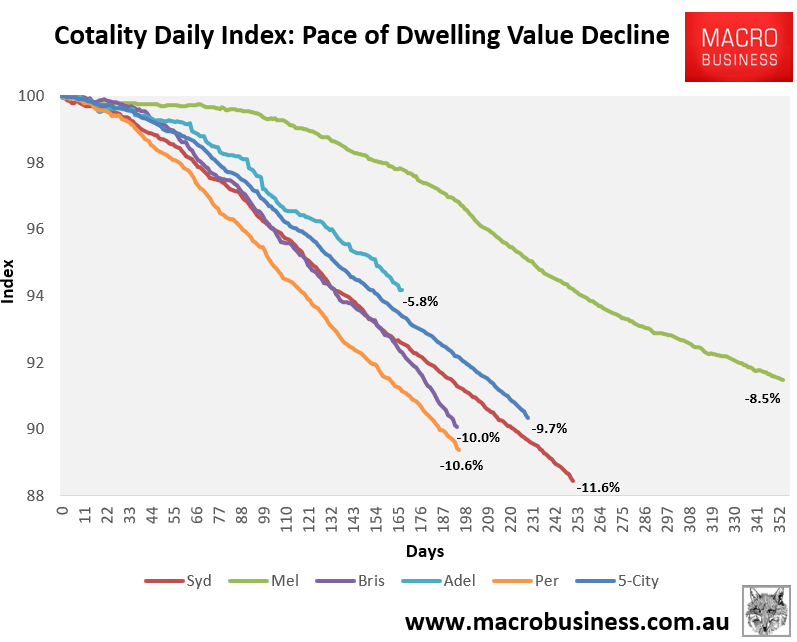
First home buyers who utilised the Albanese government’s 5% deposit scheme to enter the market at the peak are the most exposed to mortgage stress and negative equity.
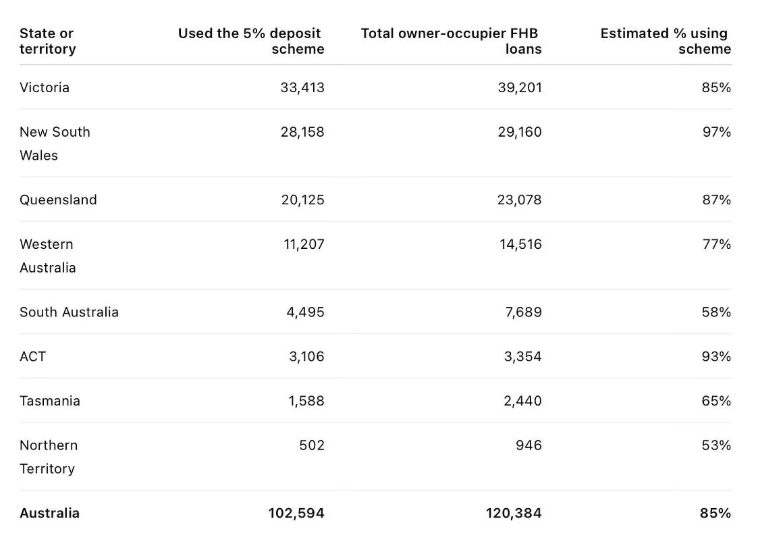
According to federal government data released in October, more than 100,000 first home buyers utilised the scheme in its first 12 months, with 60% located in NSW and Victoria:
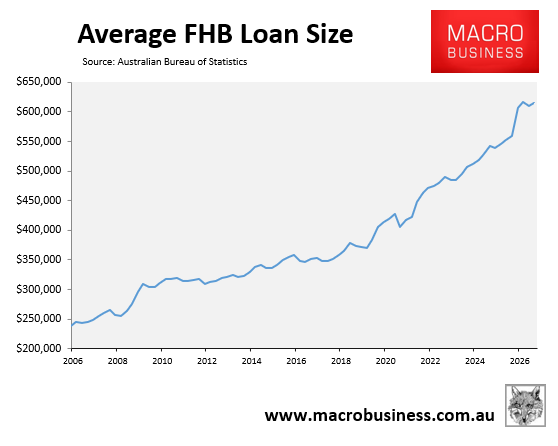
The average first home buyer mortgage increased in size by $55,200 (10%) in the year to September 2026 to $614,700:
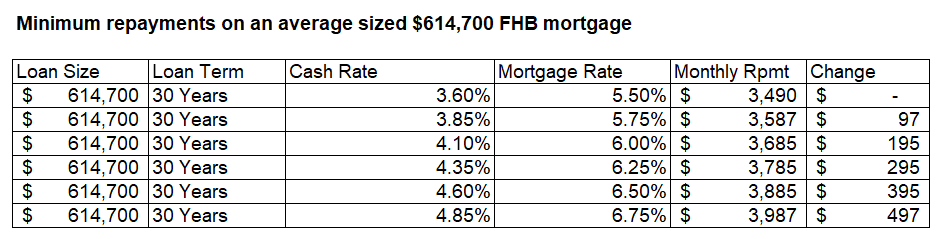
The following table shows that a first-home buyer carrying the average $614,700 mortgage is paying nearly $500 extra in repayments per month following the five rate hikes delivered by the RBA this year:
New analysis by realestate.com.au economist Luc Redman found that negative equity is rising among recent first-home buyers.
Those who purchased recently with only a 5% deposit have had little opportunity to reduce their loan balance or build equity, making them vulnerable to even modest house price falls.
An estimated 4,808 buyers who used the federal government’s 5% deposit Home Guarantee Scheme over the past year now owe more on their mortgage than their property’s current value, up sharply from 1,143 in September and 87 in July.
Redman warned that negative equity can trap borrowers in their loans by making it difficult to refinance with a cheaper lender, as many banks require sufficient equity before approving a mortgage transfer. Higher mortgage rates are also pushing many borrowers into financial stress.
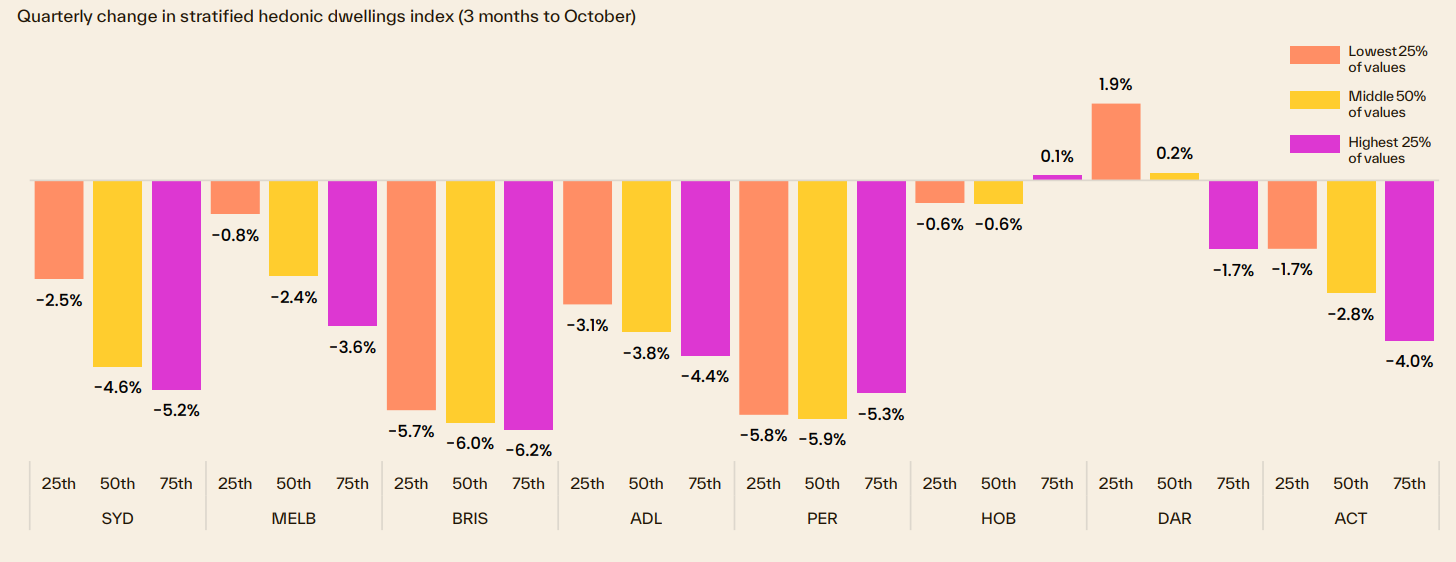
Western Australia is the worst affected state, with an estimated 22% of scheme users now in negative equity. As illustrated above, Perth has suffered the steepest price decline, with dwelling values falling by 10.6% in only 195 days.
By contrast, Victoria has been relatively less affected despite receiving around one-third of the guarantees issued since the scheme expansion. Price declines in Victoria have been more gradual and concentrated in higher-value suburbs, many of which sit above the scheme’s $950,000 purchase cap, reducing the impact on eligible buyers.
Source: Cotality
The expanded 5% deposit scheme was clearly a policy mistake. It enticed more than 100,000 first home buyers into the market near the peak, leaving many with very little equity cushion.
As prices have fallen sharply and interest rates have risen, a growing number are slipping into negative equity and mortgage stress, limiting their ability to refinance and increasing their financial vulnerability.
The only saving grace is that the issue remains concentrated among a relatively small group of recent first-home buyers rather than the mortgage market as a whole.
The RBA and Moody’s both argue that negative equity remains uncommon across the broader mortgage market and risks are largely concentrated among recent high-LVR buyers.
