
The Australian Bureau of Statistics (ABS) has released dwelling approvals data for September, which showed that approvals nationally were tracking at their highest level since July 2021, with 18,700 homes approved:
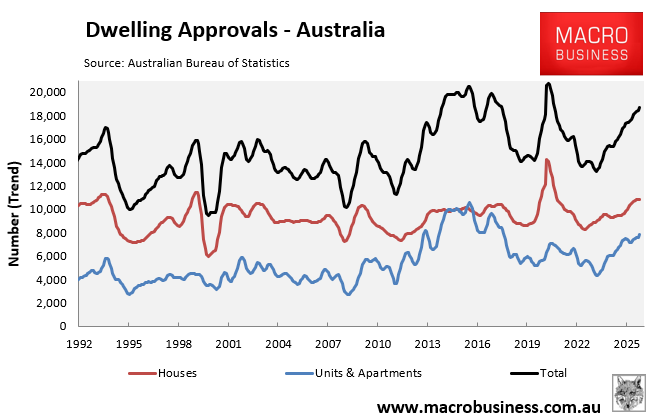
Annual approvals were tracking at 208,300:
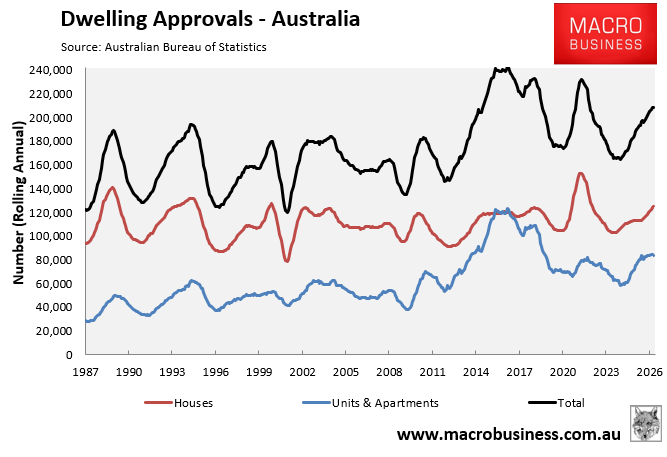
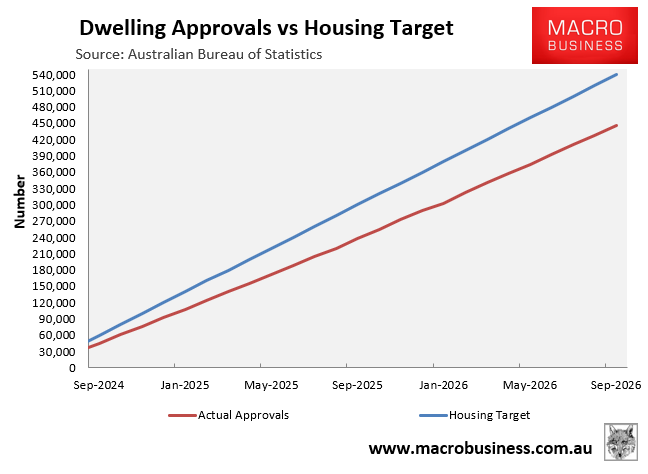
Despite the upswing, dwelling approvals were still tracking 93,500 (17%) below the National Housing Accord’s target, which requires 240,000 homes to be built annually:
The quarterly data from the ABS shows that the gap between dwelling approvals and actual dwelling completions continues to widen:
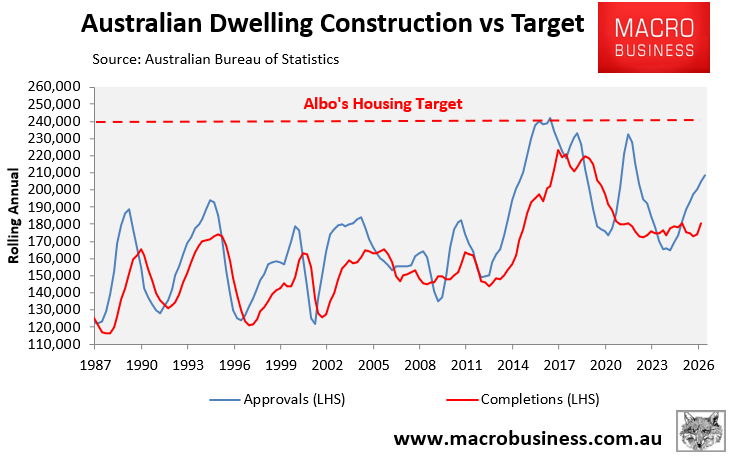
As a result, there were a record 248,733 dwellings under construction in the June quarter of 2026:
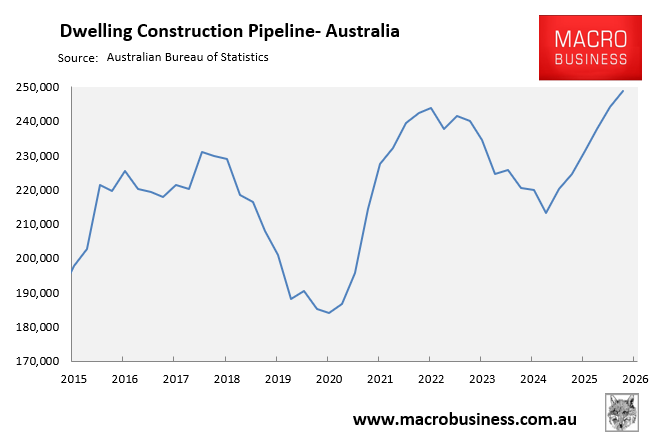
Part of the reason why the dwelling construction pipeline has bulged is that the time taken to build apartments has blown out to more than nine quarters:
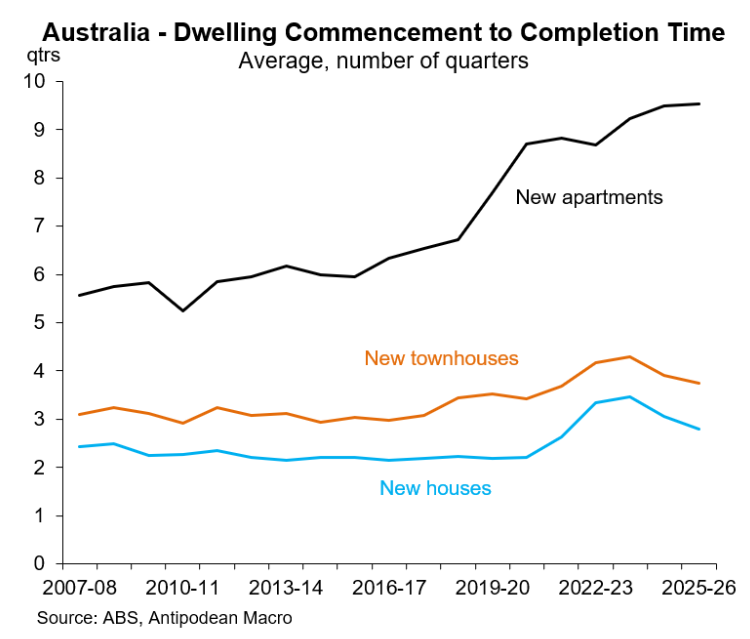
Chart by Justin Fabo (Antipodean Macro)
While the large pipeline of homes under construction should keep activity chugging along in 2027, there are storm clouds on the horizon.
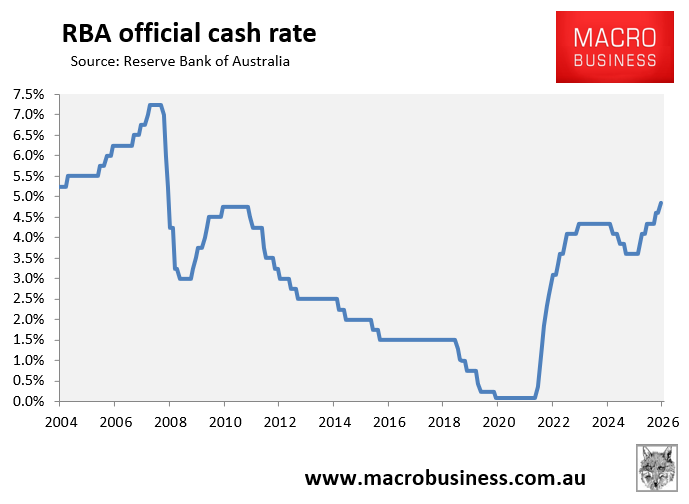
On Tuesday, the Reserve Bank hiked the official cash rate to 4.85%, the highest level in 18 years, making it more expensive to finance new homes (either as a buyer or developer):
The cost of construction also continues to rise:
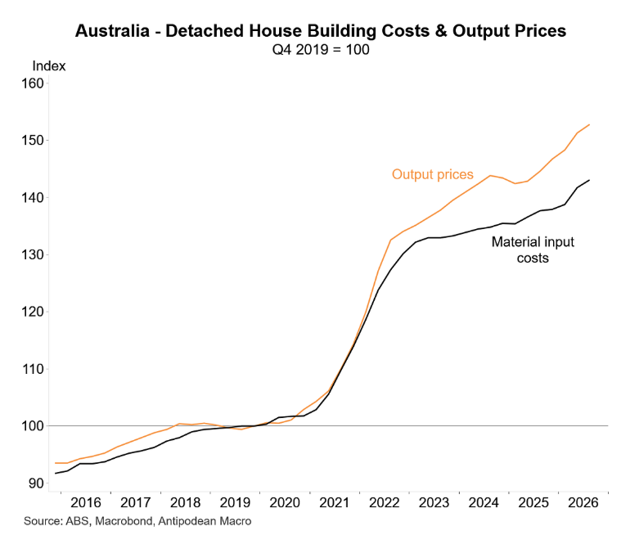
Chart by Justin Fabo (Antipodean Macro)
Meanwhile, as Justin Fabo from Antipodean Macro shows below, dwelling approvals are typically correlated with dwelling values. Thus, the largest price correction in more than 40 years should suppress approvals in the period ahead:
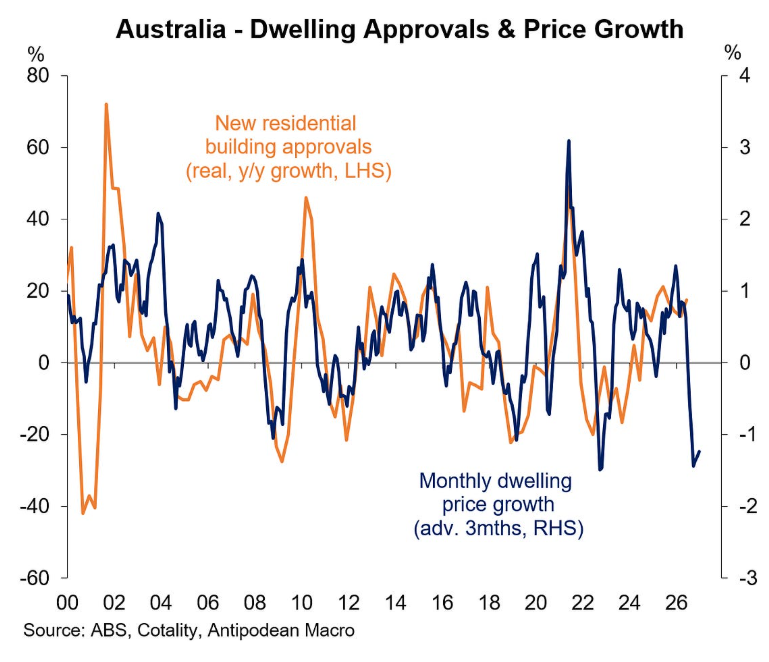
Chart by Justin Fabo (Antipodean Macro)
Indeed, the Reserve Bank’s November Statement of Monetary Policy, released on Tuesday, has arrived at a similar conclusion, forecasting a sharp contraction in dwelling investment between 2H 2027 and 2H 2028:
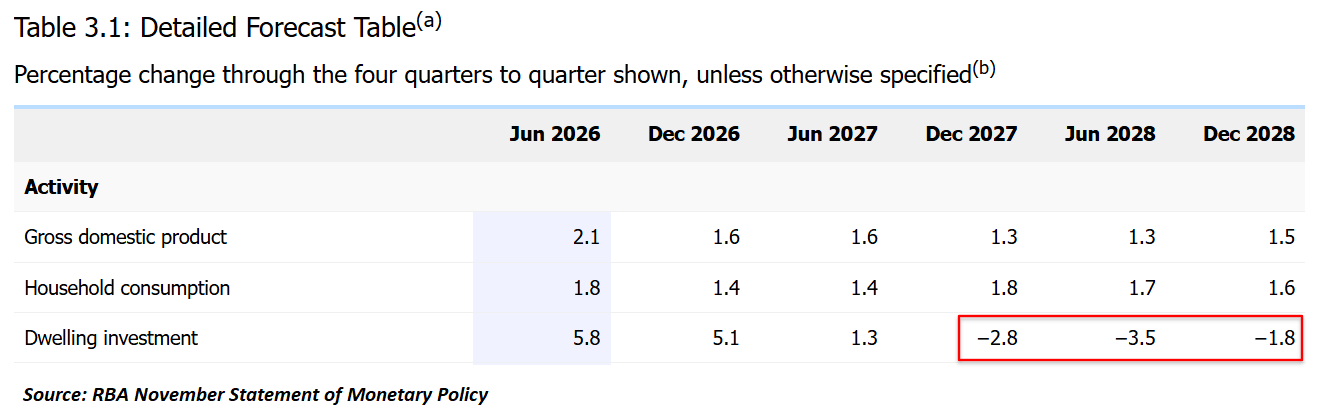
The upshot is that Australian dwelling construction will very likely follow prices lower, albeit with a lag, deepening the nation’s housing shortage unless immigration is also slashed.
