
Aussie mortgage holders burn like its 1989
The Reserve Bank of Australia’s (RBA) preferred inflation measure, trimmed mean inflation, rose from 3.6% to 3.7% in the September quarter, exceeding the RBA’s forecast of 3.5%.
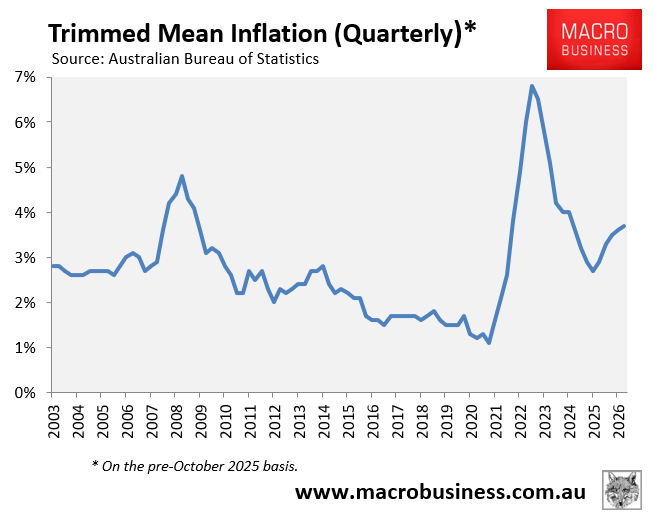
With trimmed mean inflation tracking well above the RBA’s target band of 2% to 3%, financial markets are pricing in an 80% probability that the official cash rate will be lifted to 4.85% on Tuesday, the highest level in 18 years.
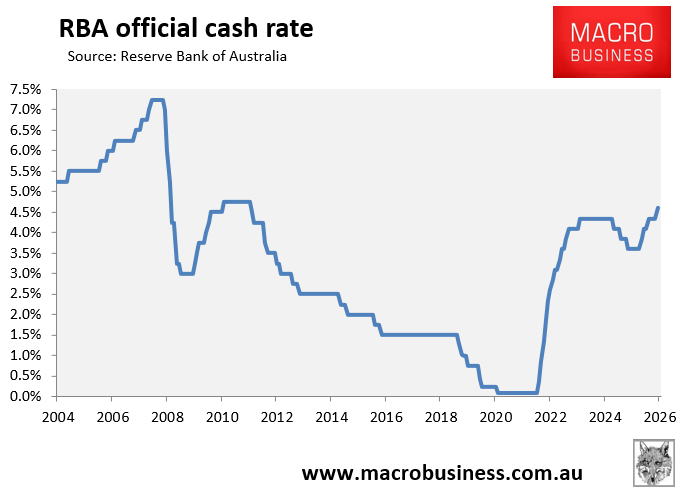
If the RBA hikes on Tuesday, the variable owner-occupier mortgage rate on new home loans would rise to around 6.75%, up from a low of around 2.4% in late 2021, at the height of the COVID pandemic, when the official cash rate was slashed to only 0.1%.
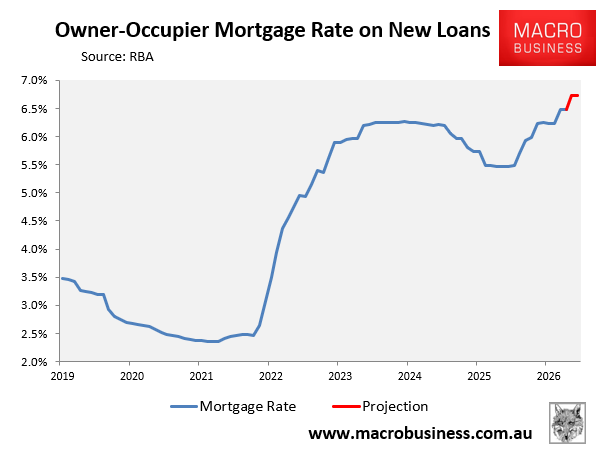
The following table shows the change in minimum monthly mortgage repayments on an average $736,000 new loan, based on the change in rates from the pandemic low to now, as well as what repayments would look like if the RBA hikes on Tuesday:

Minimum monthly mortgage repayments on a $736,000 loan are currently $4,652, $1,782 (62%) higher than if mortgage rates had remained at their pandemic low of 2.4%.
If the RBA hikes the official cash rate, monthly mortgage payments would rise to $4,774, $1,904 (66%) higher than their pandemic low.
In fact, the five interest rate hikes the RBA delivered this year would raise mortgage repayments by $595 a month, or around $7,140 annually.
As illustrated below by The AFR, mortgage repayments on a median-priced home would consume 37.4% of a typical household’s income if the RBA hikes on Tuesday:
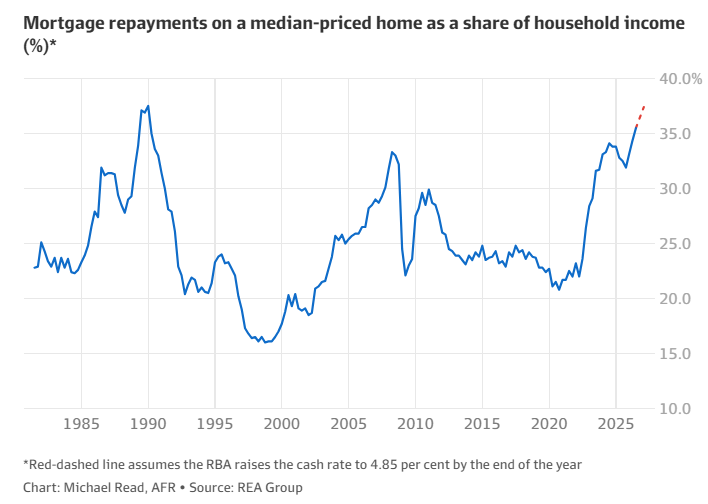
This approaches the record burden reached in 1989, when mortgage repayments absorbed 37.5% of household income amid mortgage rates of around 17%.
The key difference this time around is that dwelling values and the average stock of mortgage debt outstanding are far higher today than in 1989.
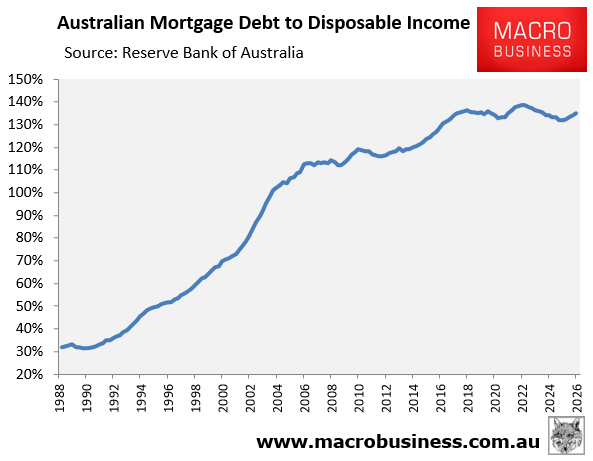
Thus, today’s mortgage holders are facing higher repayments over the life of their loans than those who purchased in 1989.
