
More than a decade ago, in June 2015, then Coalition federal Treasurer Joe Hockey told Australians that the solution to the nation’s housing affordability crisis was to “build more housing”.
“I say again in relation to what is reasonably expensive entry costs for first home buyers into housing in Australia, the best response is to build more housing,” he said, adding that there is a greater role for both state and local governments in accelerating the building process.
Australia then embarked on the greatest high-rise apartment construction boom in its history, which ran for nearly five years, as illustrated below.
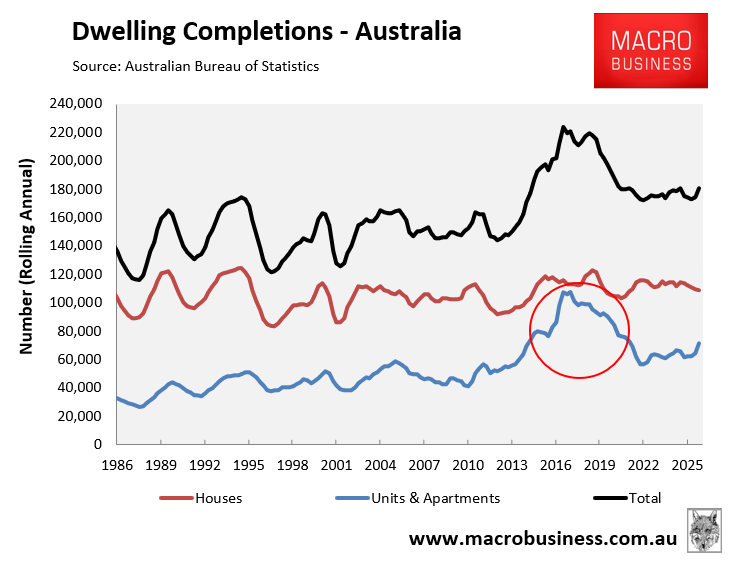
As a result, Australia’s rate of housing completions peaked at 223,600 in 2017.
Many of these apartments ended up defective, with flammable cladding, cracking, waterproofing issues, and balcony defects.
The Four Corners Report “Cracking Up” uncovered these defects and documented a systemic failure to safeguard the buying public from faulty workmanship.
A November 2023 New South Wales government strata study also found that over half of newly registered buildings since 2016 had at least one severe fault, with repair costs averaging $331,829 per building.
Australia’s population has ballooned by 4.2 million since Joe Hockey made these comments in 2015, thanks to historically high immigration.
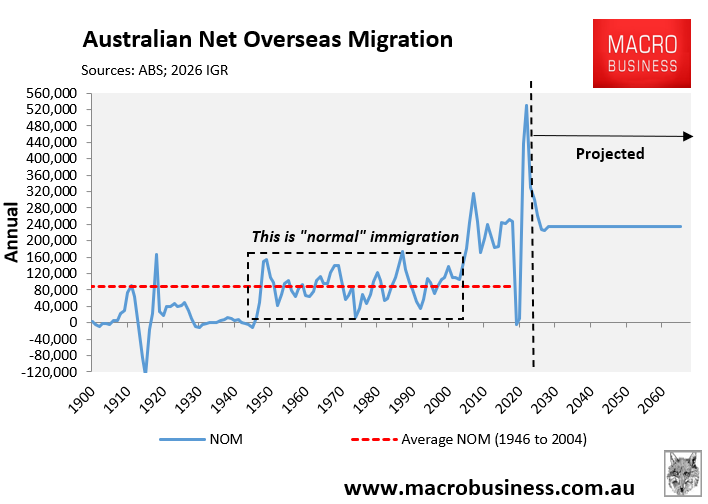
As a result, Australia has remained structurally short of housing, despite the apartment construction boom, with both purchase and rental affordability at record lows.
As the saying goes, history doesn’t repeat, but it sure does rhyme.
ANZ CEO Nuno Matos gave evidence to a parliamentary inquiry last week, saying that a structural shortage of homes and ongoing strong demand means home prices should bottom next year before rebounding. He also said that structural housing affordability won’t improve until supply increases.
“The big support for house prices in Australia is the fact that there is a structural gap … between availability of housing and the population of Australia”.
“The supply side, it’s a critical element to move, meaning there must be conditions for housing construction to accelerate materially”.
“Without more houses, without more spending in building, we will never get out of this problem”.
Why does policy discussion regarding housing affordability always refer only to supply and ignore Australia’s world-beating population growth via immigration?
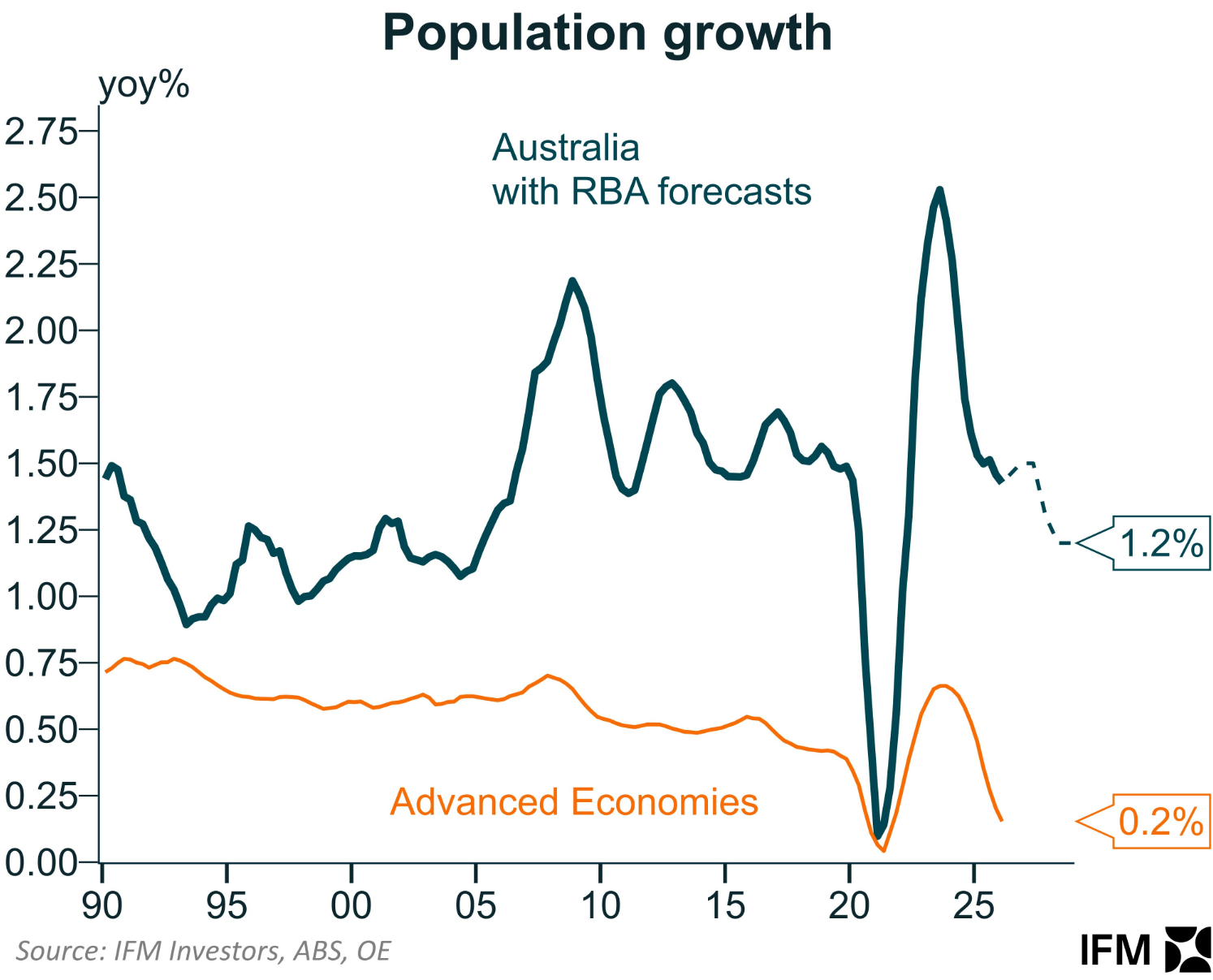
Chart from Alex Joiner (IFM Investors)
Australia completed a record 1.90 million dwellings over the decade to June 2026, 290,000 (18%) more than the 1.61 million dwellings completed in the decade prior (i.e., to June 2016).
Yet, despite the significant uplift in dwelling construction, Australia’s housing shortage is still perceived to be due to a ‘lack of supply ‘, not an excess of population demand via immigration.
Indeed, in the past decade, Australia has received 2,615,000 net overseas migrants, 410,000 (16%) more than the 2,205,000 net migrants received in the decade prior, which itself was a record high.
Clearly, the single most effective and fastest way for Australia to alleviate its housing shortage would be to cut immigration to historical Australian and developed-world norms.
Why won’t commentary acknowledge the elephant in the room?
