
According to the Real Estate Institute of New Zealand’s (REINZ) leading house price index, which is used by the Reserve Bank, home prices nationally have collapsed back to late 2017 levels in real terms following a near five-year decline:
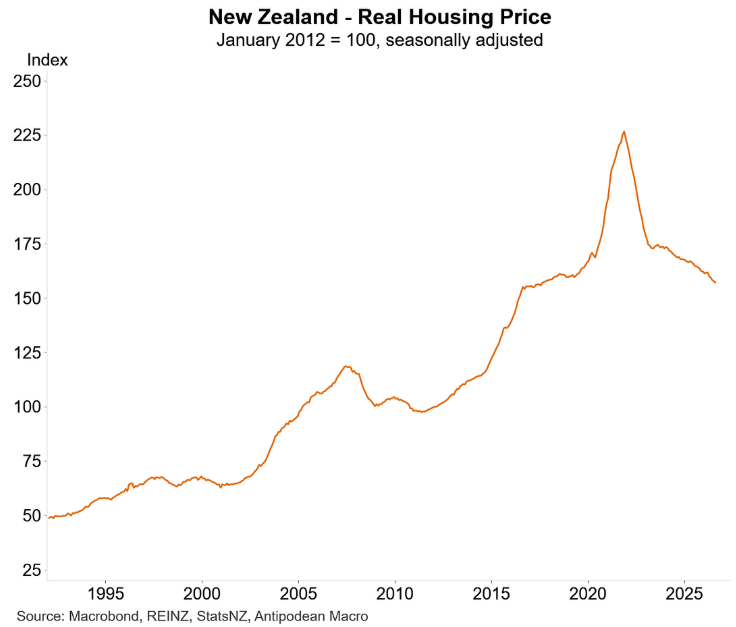
Chart from Justin Fabo (Antipodean Macro)
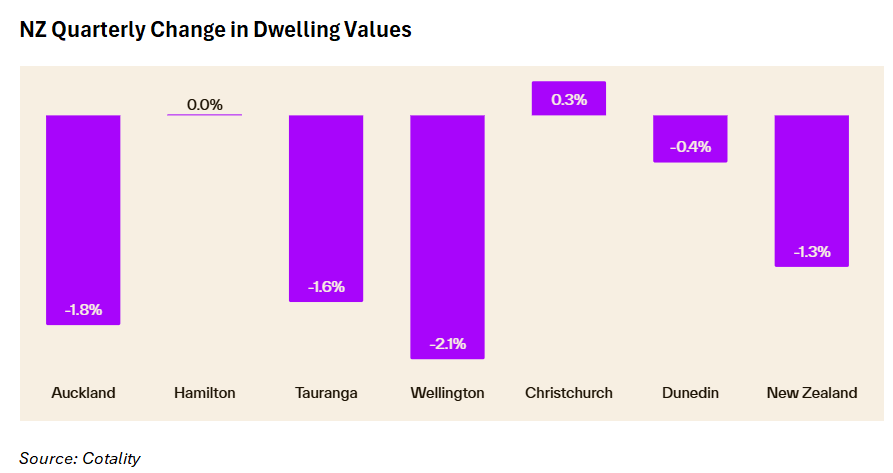
New data from Cotality likewise shows that New Zealand’s house price crash has reasserted itself following six consecutive months of decline.
Over the September quarter, Cotality recorded a 1.8% decline in values across New Zealand, led by Wellington (-2.1%) and Auckland (-1.8%):
Values nationally are now down around 18.5% from their peak in late 2021, with significant falls recorded across most markets:
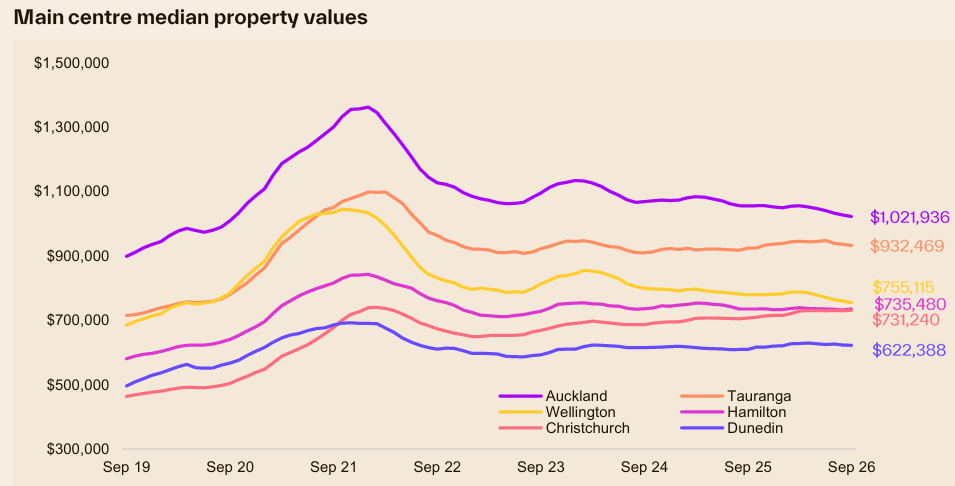
Source Cotality
The REINZ’s house price index likewise has recorded a similar decline from its peak, with all major markets losing value (shown more clearly in index terms):
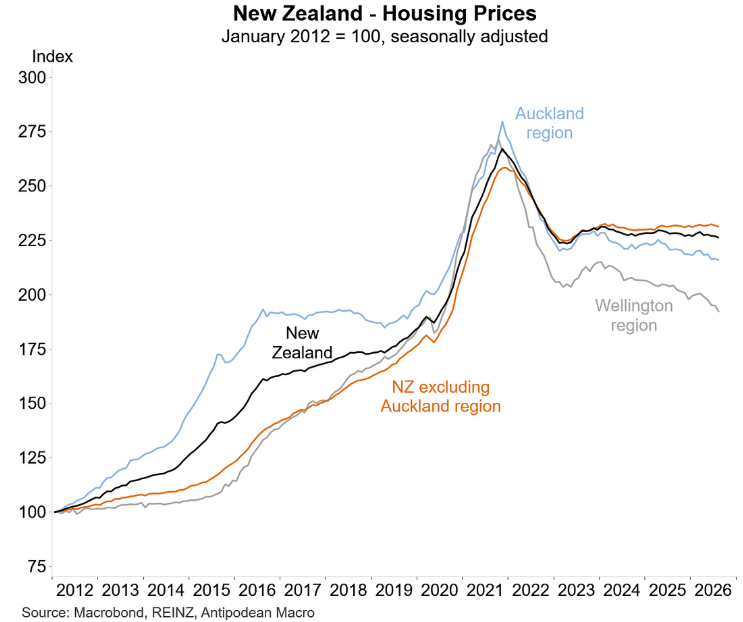
Chart from Justin Fabo (Antipodean Macro)
Cotality NZ Chief Property Economist Kelvin Davidson said the latest figures reflect a housing market that continues to favour buyers, with “plentiful choice and little urgency”.
Davidson added that “conditions are unlikely to support a sharp rebound in prices”, noting that “elevated mortgage rates, economic uncertainty and a high level of available listings are likely to keep a lid on value growth for some time yet”.
Indeed, home sales in New Zealand are depressed:
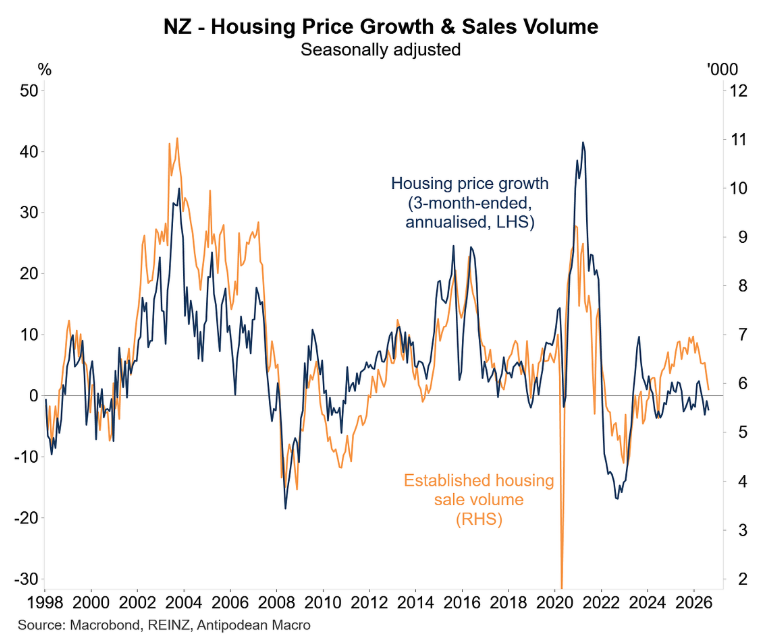
Chart from Justin Fabo (Antipodean Macro)
Meanwhile, total for-sale listings are tracking at decade highs:
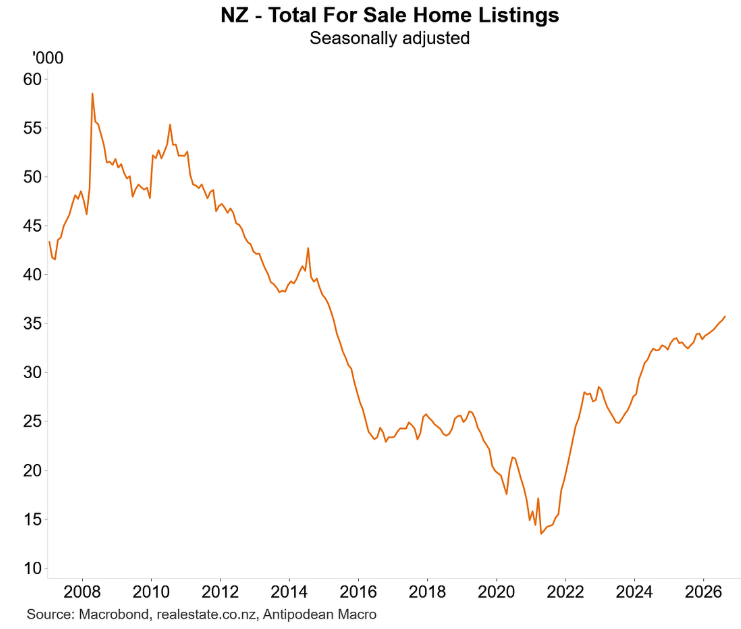
Chart from Justin Fabo (Antipodean Macro)
My best guess is that Australia’s housing price correction will follow a similar pattern to New Zealand’s – that is, a sharp downturn over 18 months to two years followed by years of nothingness, whereby values continue to decline in inflation-adjusted terms.
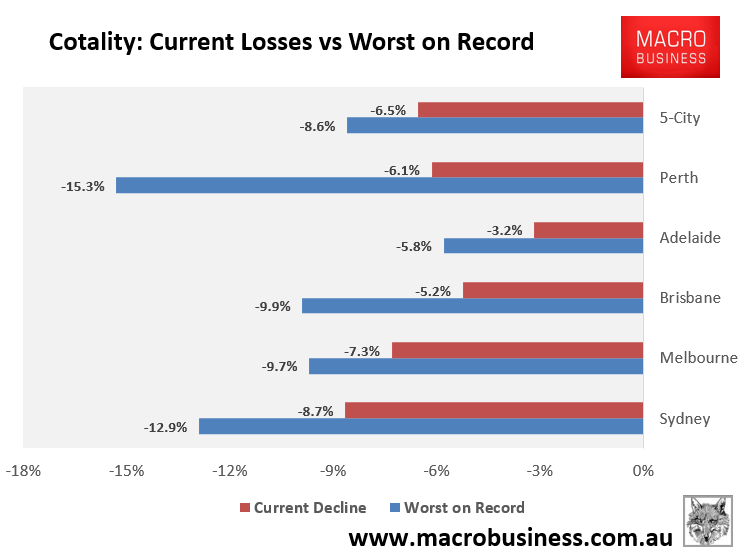
The RBA lifted rates by 0.25% on Tuesday, with further hikes expected.
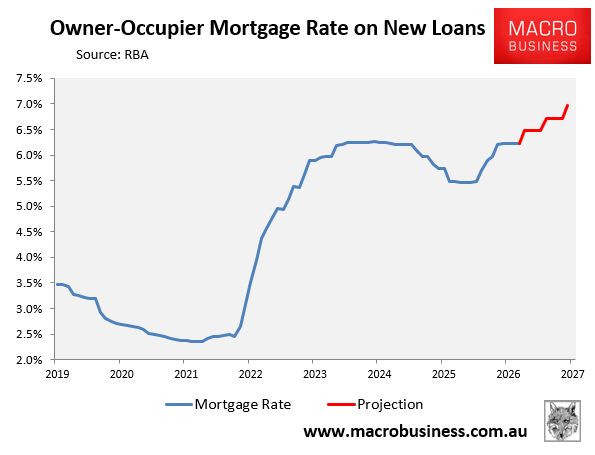
Australian housing turnover has fallen 19.1% year-on-year and is tracking 13.3% below the five-year average, while for-sale listings continue to rise, up 23.1% year-on-year amid weak demand.
As in New Zealand and Canada, buyer psychology in Australia will transform from fear of missing out (FOMO) to fear of overpaying (FOOP).
