
Mortgage stress surges with worse to come
Roy Morgan’s latest mortgage stress survey shows that 32.3% of mortgage households were at risk of mortgage stress in August, with 22.7% extremely at risk:
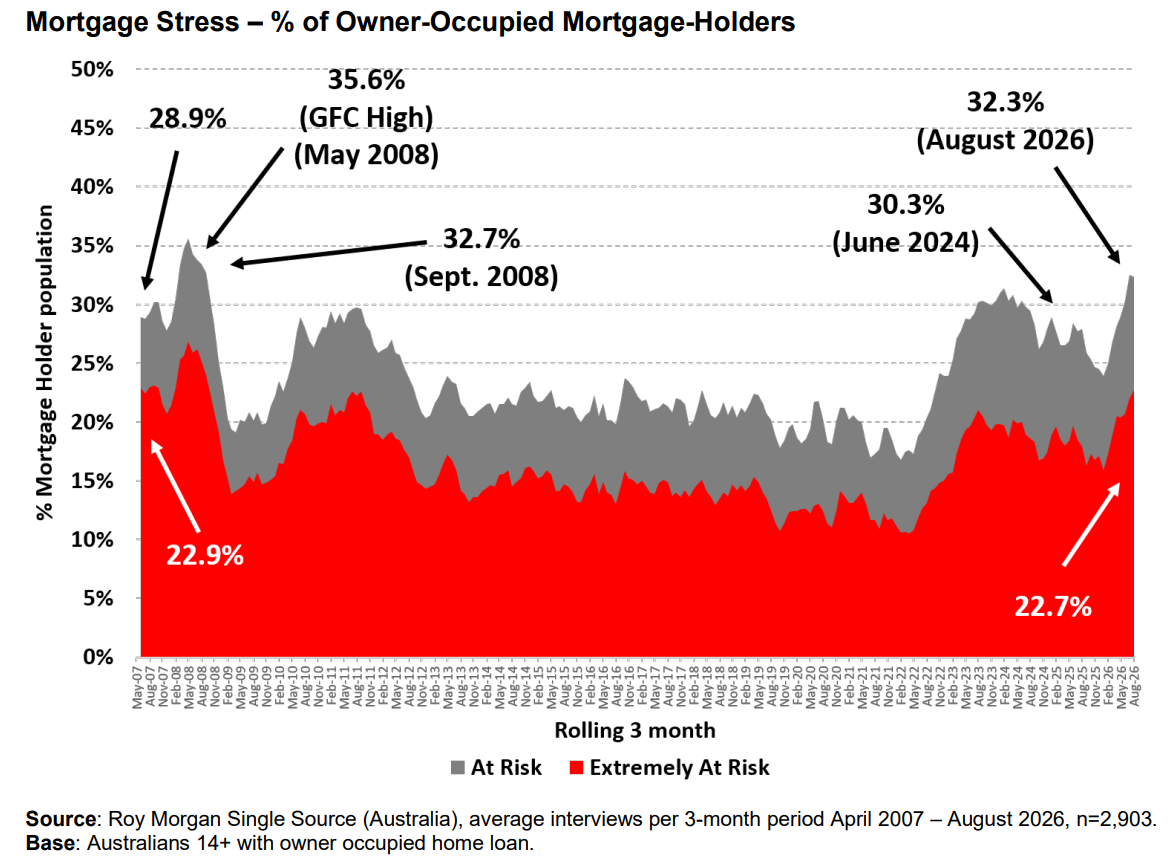
Mortgage stress was tracking at its highest levels since the peak of the Global Financial Crisis (GFC) in mid-2008, when the official cash rate hit 7%.
The Reserve Bank of Australia (RBA) lifted the cash rate by 0.25% on Tuesday to 4.60%, and financial markets have priced in at least one and maybe two additional rate hikes:
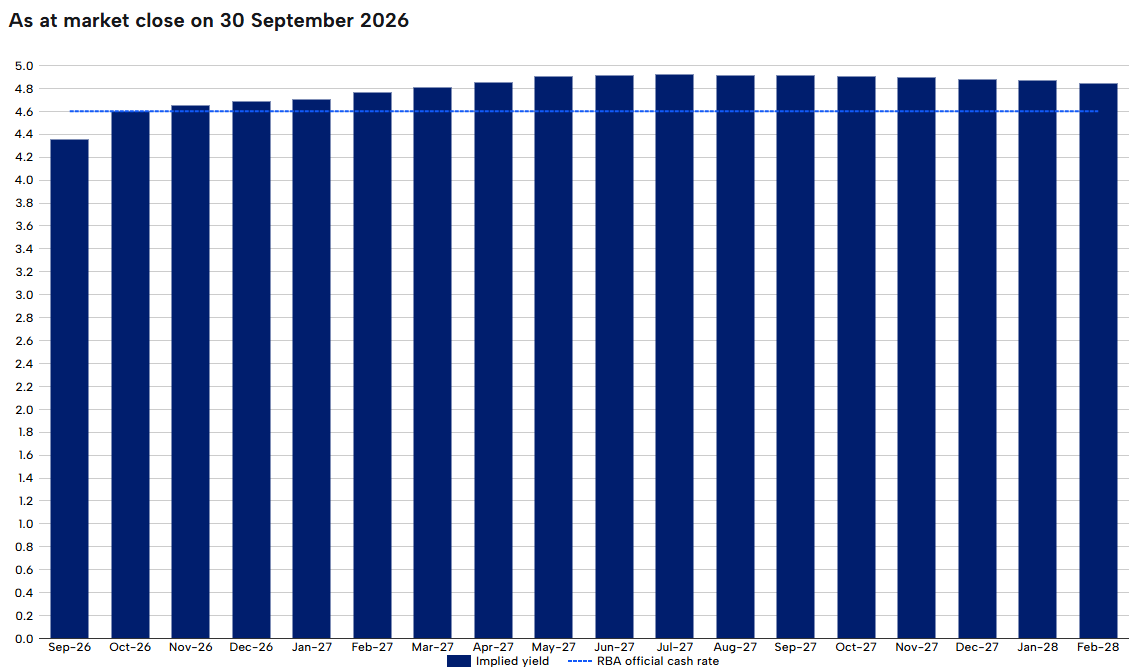
ASX Future Cash Rate Pricing
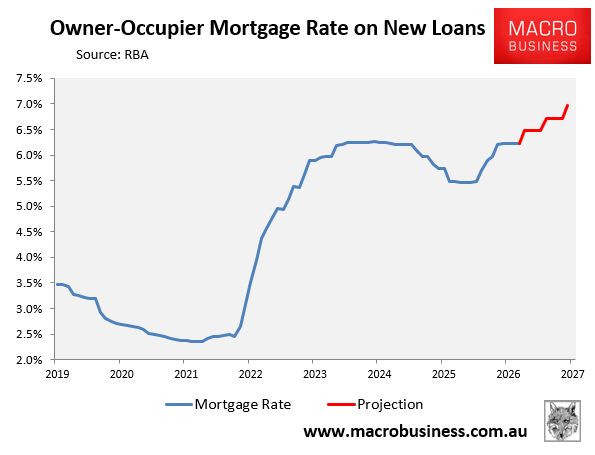
As a result, mortgage rates would rise to nearly 7.0%:
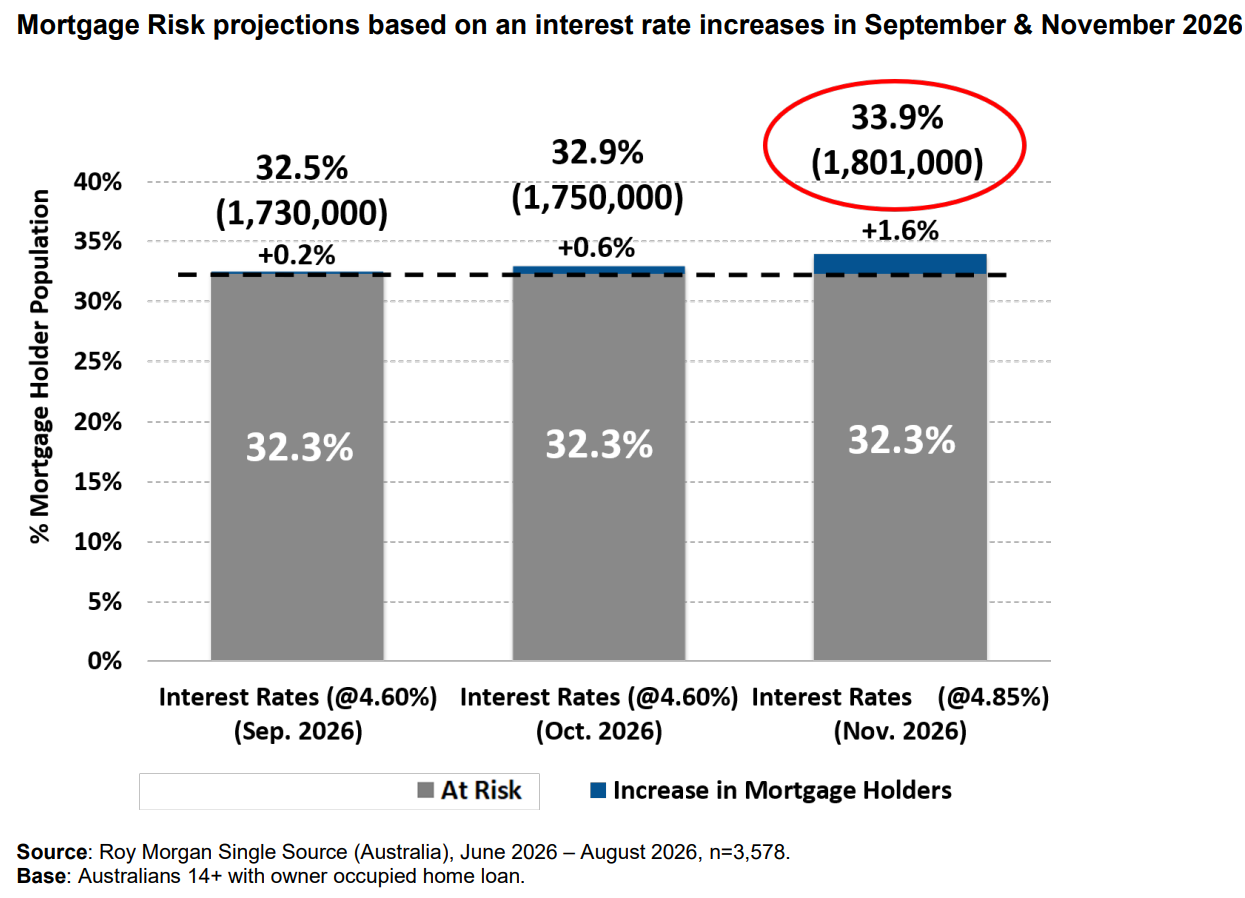
Roy Morgan estimates that if the RBA delivers another rate hike in November, lifting the cash rate to 4.85%, then the share of households at risk of mortgage stress will rise to 33.9%:
The doomsday scenario:
While rising mortgage rates obviously imply rising stress levels, the most critical factor is actually the unemployment rate.
As noted by Roy Morgan:
Unemployment is the key factor which has the largest impact on income and mortgage stress.
It is worth understanding that Roy Morgan uses a conservative forecasting model, essentially assuming all other factors apart from interest rates remain the same…
Despite the actions of the Reserve Bank, the fact remains the greatest impact on an individual, or household’s, ability to pay the mortgage is not interest rates, it’s if they lose their job or main source of income…
Australia’s unemployment rate is rising, and there is a danger that it spikes next year in response to tighter monetary policy and the diesel fuel shock.
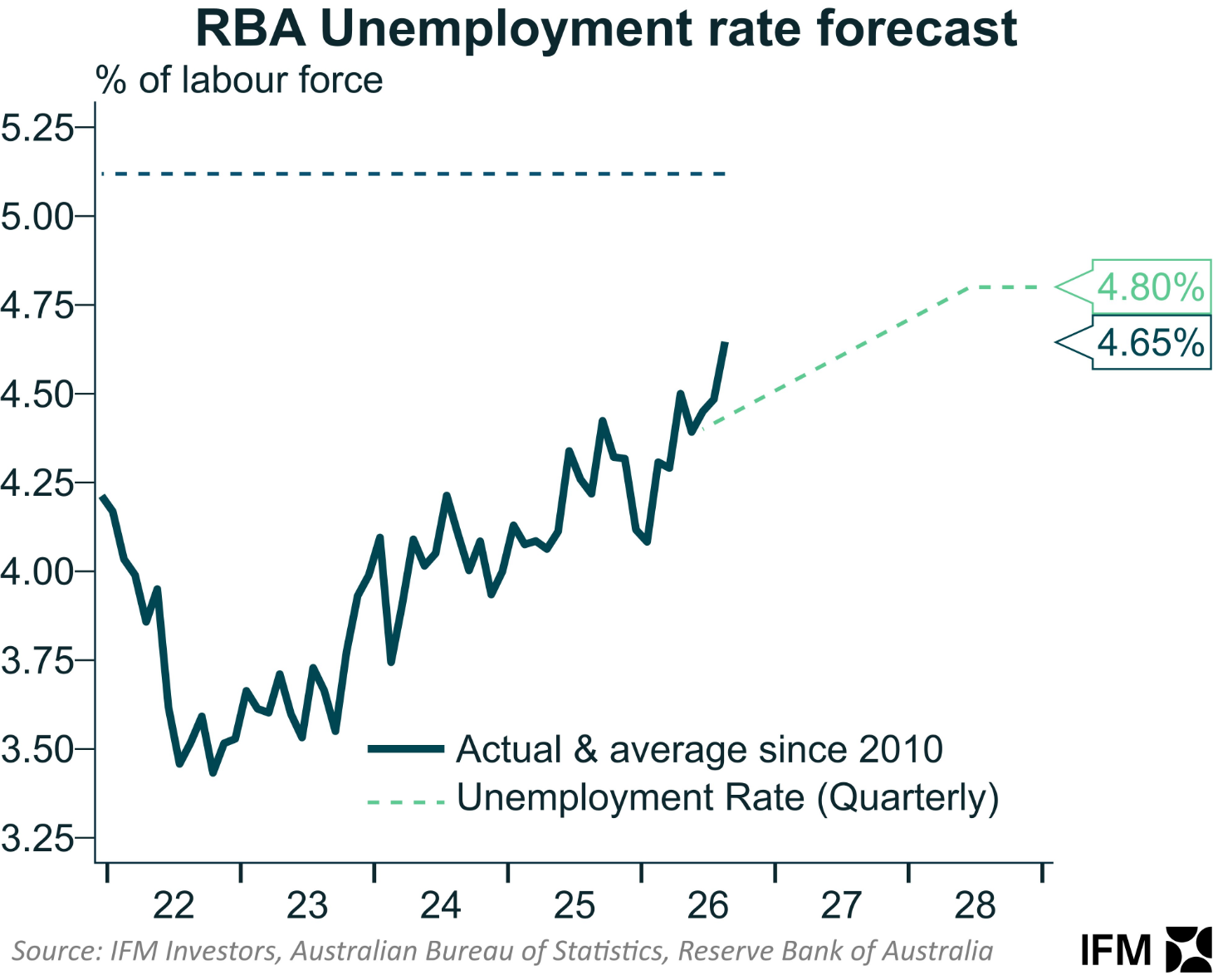
The RBA has said unemployment may need to rise above 5% to bring inflation down.
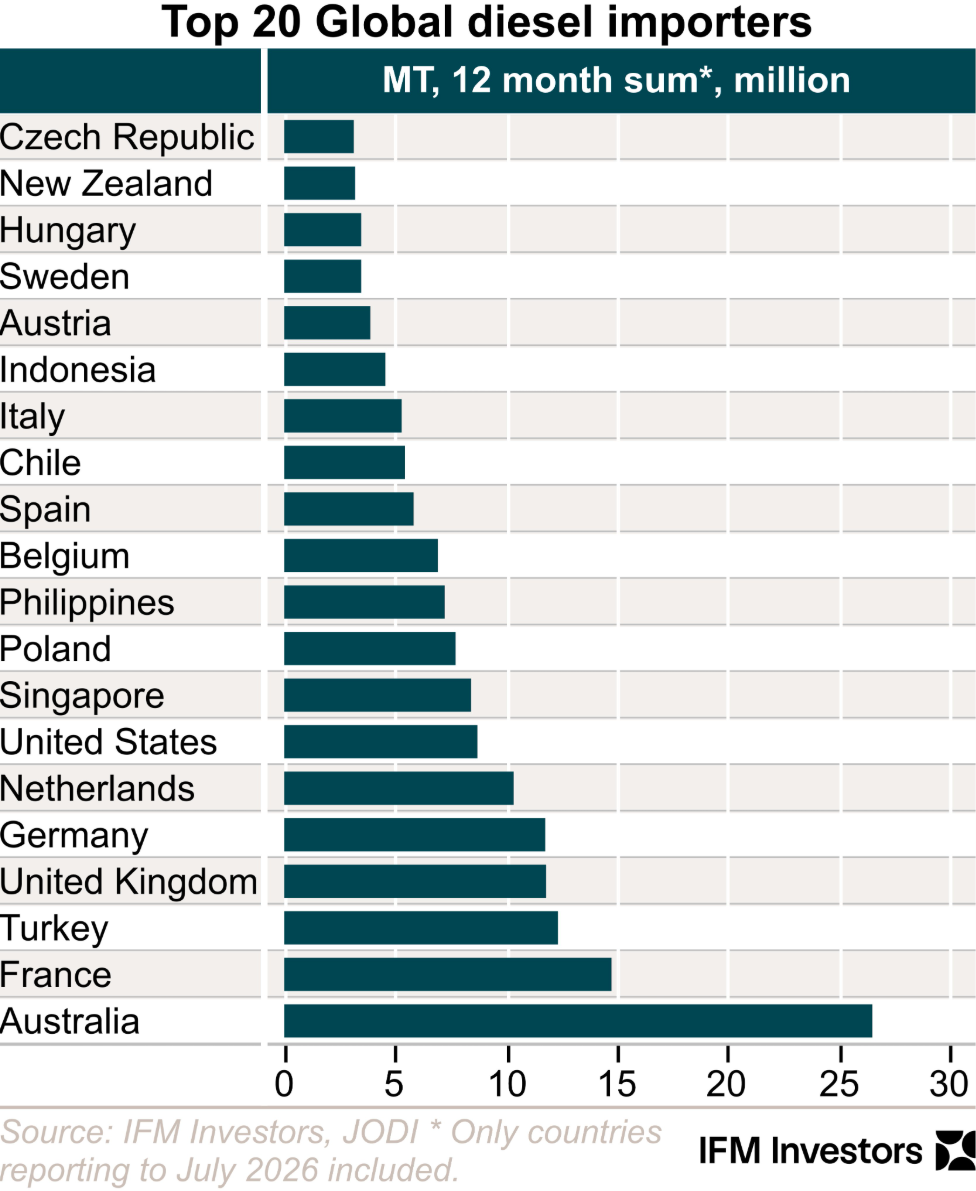
As illustrated below by Alex Joiner from IFM Investors, Australia is easily the largest importer of diesel fuel in the world:
At the same time, Australia has very low stocks of diesel in reserve:
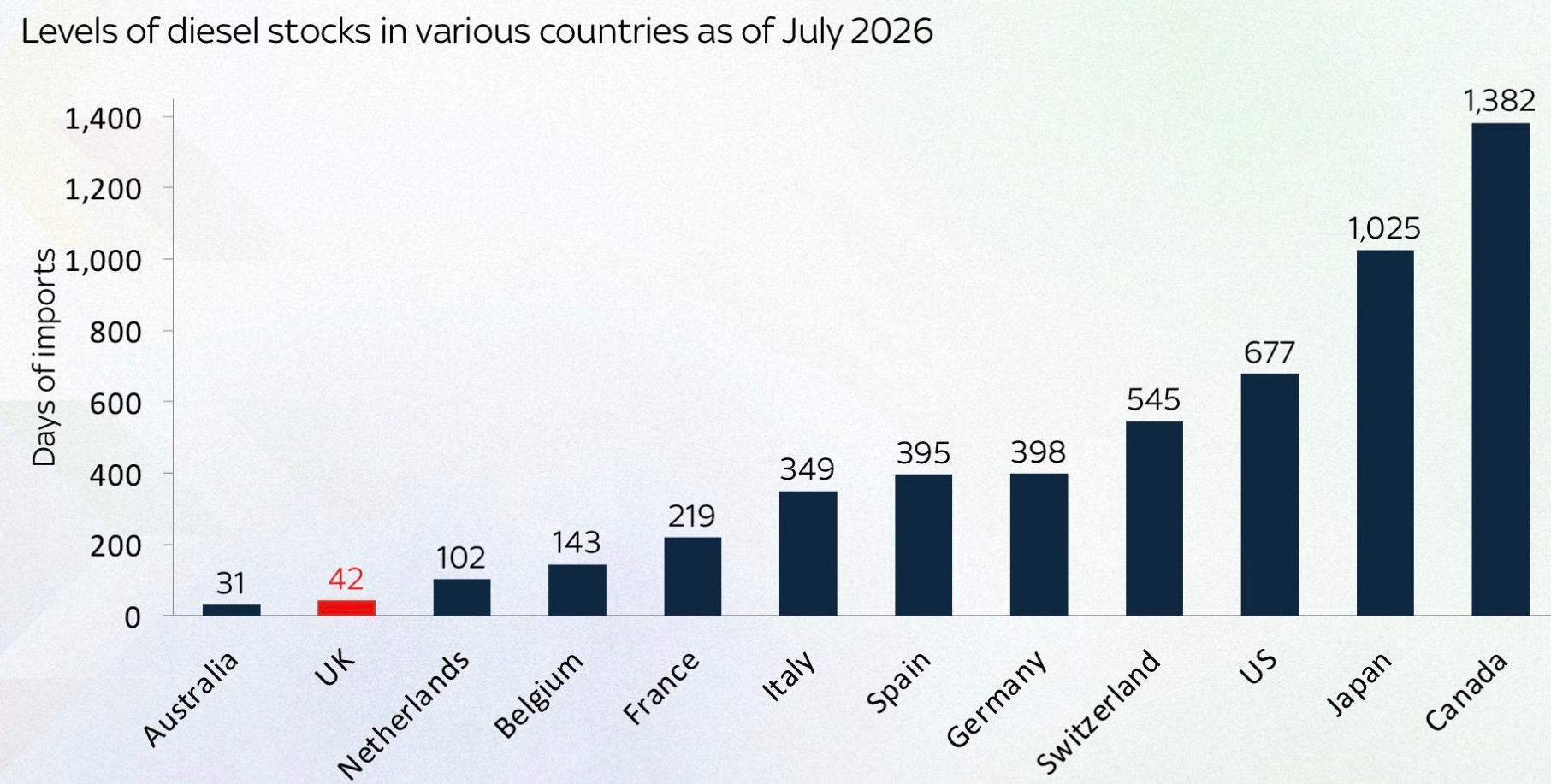
Source: Sky UK
Thus, if the two straits in the Middle East were to shut and oil flows cease, Australia would be the most exposed economy on earth to diesel shortages.
The following chart from CBA shows what a 10% reduction in diesel supply would mean to key sectors of the Australian economy—namely mining, construction, transport, and agriculture:
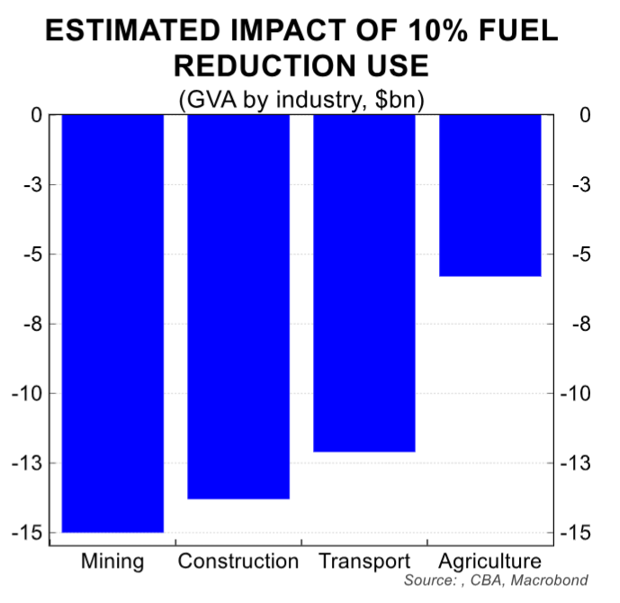
The economic impact would be enormous, effectively shutting down large swathes of the economy. Unemployment would also rise materially.
Even if shortages are avoided, the economy faces severe energy cost inflation, resulting in significant cost-push inflation as firms pass on higher costs.
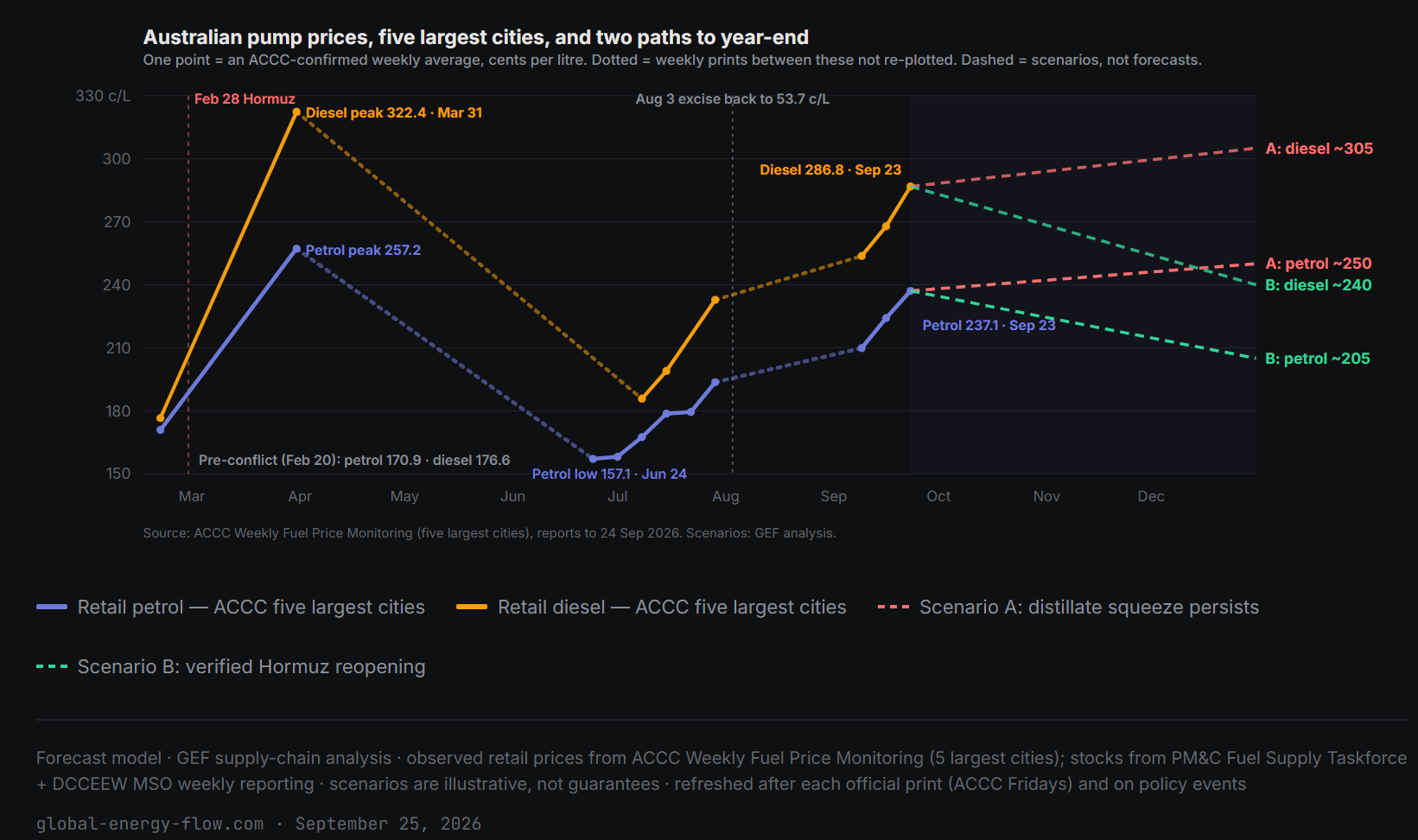
Diesel Price Forecasts (Source: Global Energy Flow)
As a result, overall CPI inflation would rise, increasing pressure on the RBA to hike further, adding to mortgage stress and unemployment.
