
To date, Australia’s housing correction has been driven by the two largest capital cities, Sydney and Melbourne.
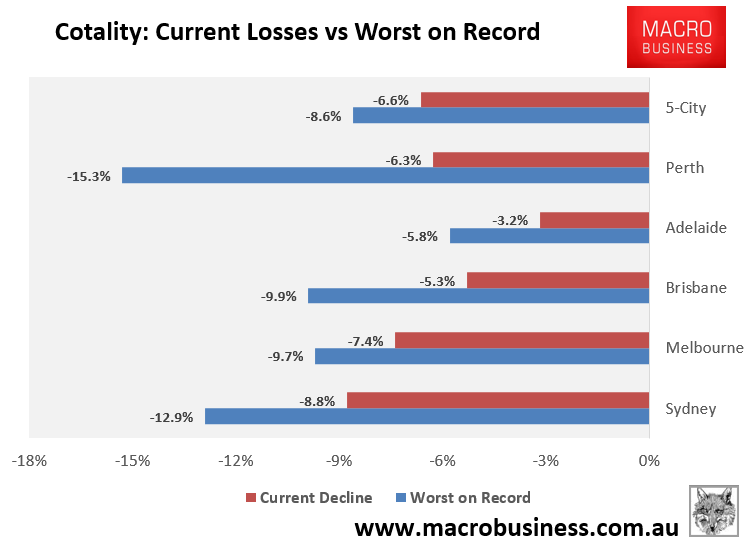
As illustrated below, Cotality’s daily dwelling values index has recorded a 6.6% decline from its peak across the five major capital city markets, led by declines of 8.8% recorded in Sydney and 7.4% in Melbourne:
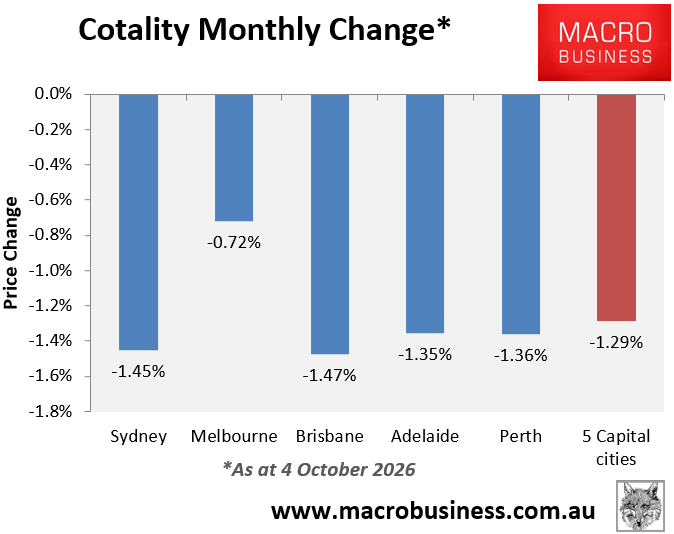
However, Cotality’s daily dwelling values index is showing a clear shift in momentum, with the medium-sized capital cities of Brisbane, Perth and Adelaide recording sharp price falls over the past month:
Market indicators also suggest that the correction will accelerate in these mid-sized capital markets.
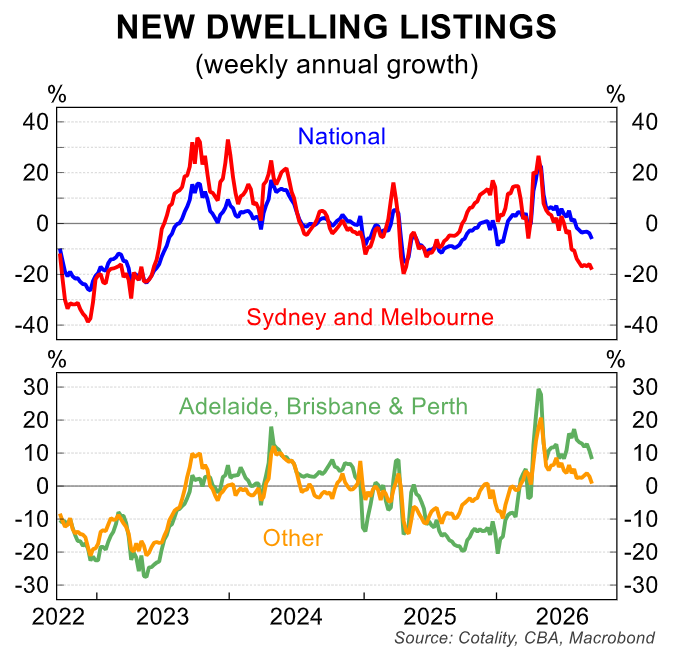
As illustrated below by CBA, the number of new listings hitting the mid-sized capitals has risen significantly in recent months, whereas new listings have declined in Sydney and Melbourne:
Cotality also reports that the annual growth in total listings has ballooned across the mid-sized capitals, whereas they have grown far more modestly in Sydney and Melbourne:
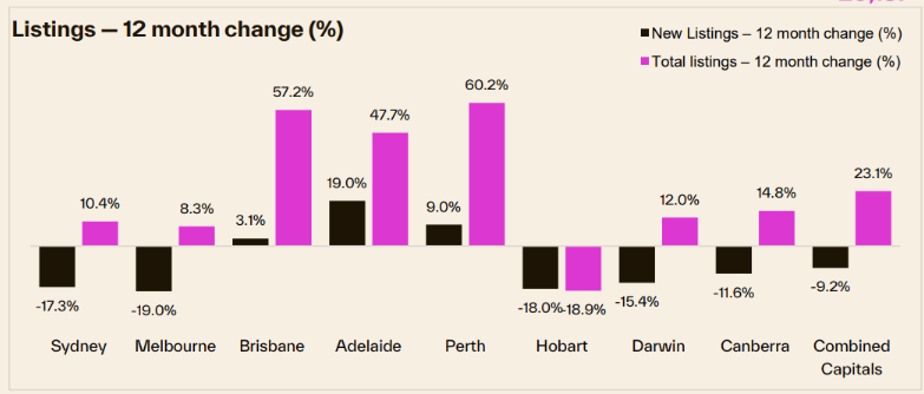
Source: Cotality
Finally, while the median days on market has lifted across all major markets, the increase is most extreme across Brisbane and Perth:
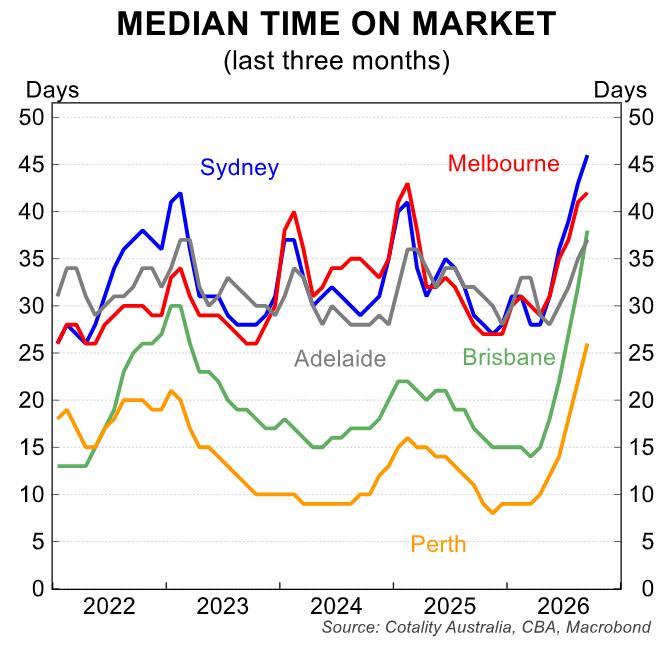
The upshot is that the supply-demand balance has shifted most aggressively against the mid-sized capitals, suggesting they will lead the price correction going forward.
This outcome makes sense, given that these mid-sized markets experienced the strongest price growth over the past six years, whereby median values more than doubled:
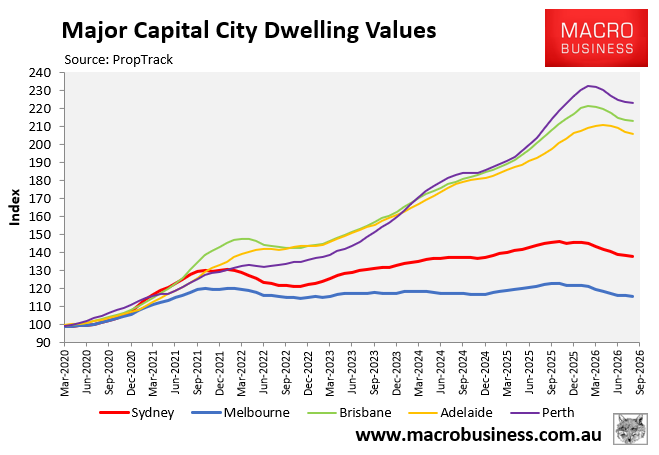
As a result, it makes sense that these markets will experience a form of ‘mean reversion’ following the Reserve Bank’s four interest rate hikes this year and the federal government’s changes to negative gearing and capital gains taxes.
