
Federal Treasurer Jim Chalmers has dashed hopes of any new cost-of-living relief, warning that his Government is about to be hit with billions of dollars in extra costs to service its debt.
“You will see in the mid-year budget update a magnitude of some billions of dollars, unfortunately”, Chalmers told the media on Sunday. “There is very substantial and intensifying pressure on our budget and budgets around the world”, he said.
It comes as federal debt recently surpassed $1 trillion, or 32% of GDP.
Chalmers isn’t wrong. Higher bond yields are driving up debt servicing costs globally.
Australia’s 10‑year yield is now 5.3%, versus around 4.8% at the start of the year. The federal budget assumed that yields would stay around 0.5 percentage points lower.
RBC Capital Markets estimates the rise in yields since May will add around $6 billion to deficits over four years on top of the $146.3 billion already budgeted for interest payments.
Interest costs are now the fastest‑growing major spending item and are projected by Treasury to rise 8.8% per year over the next decade.
Veteran budget watcher Chris Richardson observed last month that “the future is more costly” because the world has shifted from weak demand for money and ultra‑low rates to stronger demand and higher borrowing costs.
The reality of the situation is illustrated below by Alex Joiner from IFM Investors:
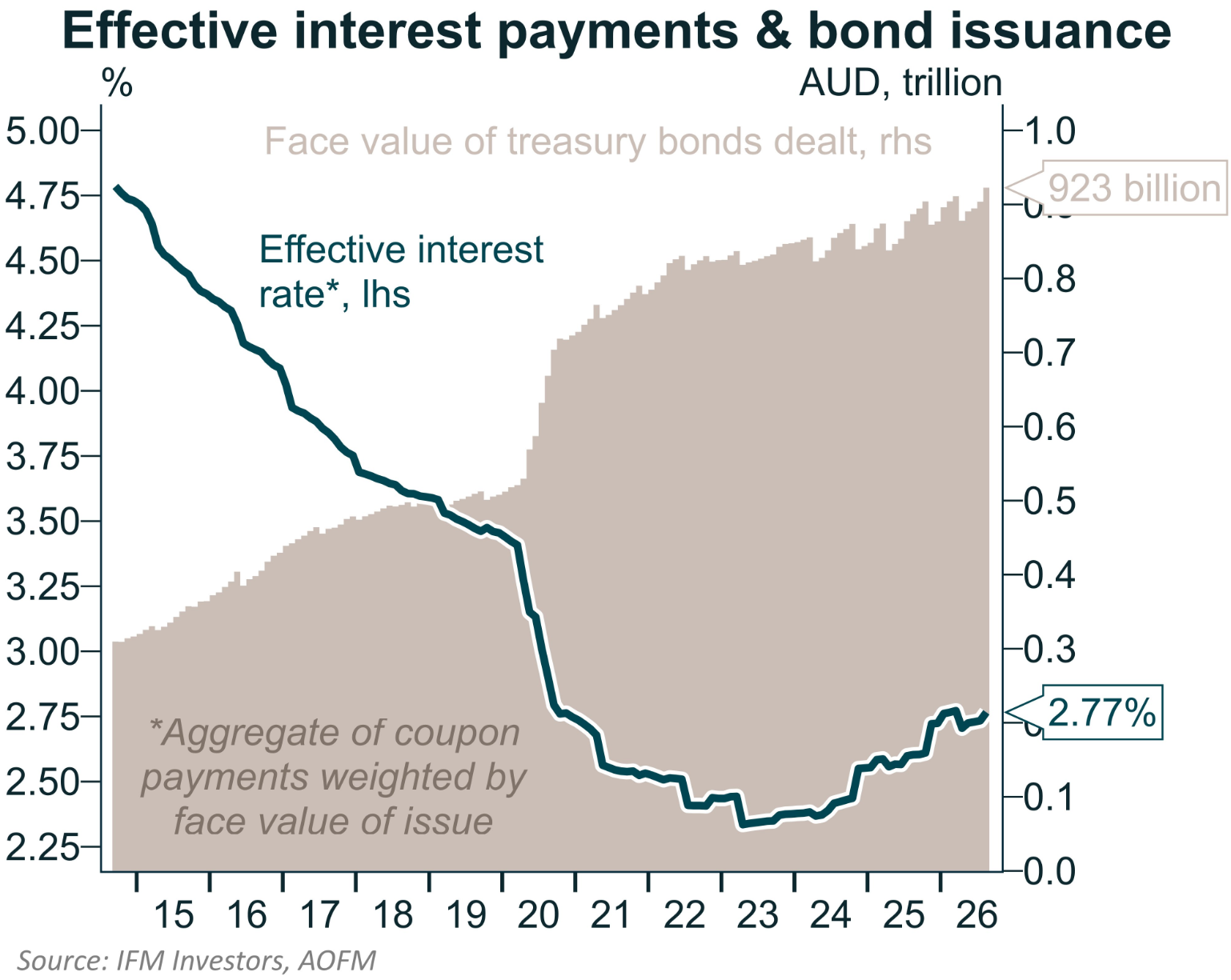
“As low interest rate debt expires, that debt and more will need to be issued by the Commonwealth”, Joiner noted on X (Twitter). “This is true for the states as well and arguably worse for some”.
Indeed, the Parliamentary Budget Office (PBO) expects national interest payments to reach $77.2 billion by 2029‑30 and for the interest costs of paying off debt to rise from 4.1% of government revenue in 2024‑25 to 6.2% in 2029‑30, “reflecting the combined effects of higher debt levels and borrowing costs that remain above historical averages”.

Such an increase would represent a doubling from the recent low of 3.1% in 2021‑22, when interest rates were at a historic low.
“Over time, this may reduce fiscal flexibility by increasing the proportion of revenue committed to unavoidable interest costs”, the PBO warned.
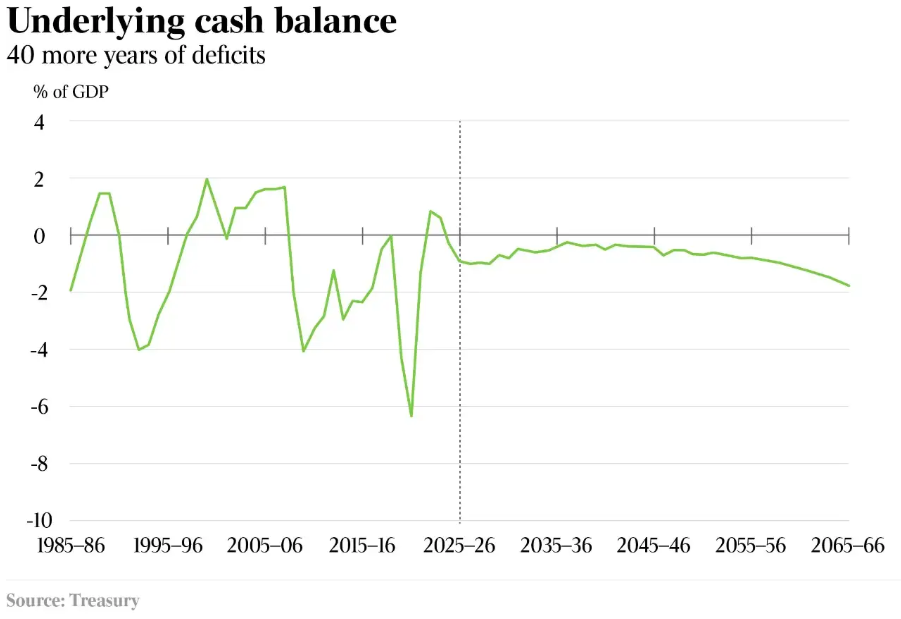
It is good that Treasurer Chalmers has ruled out further cost-of-living bribes and promised fiscal restraint. However, the latest Intergenerational Report forecasts underlying budget deficits for the next 40 years, which makes me sceptical.
Regardless, let’s hope that state governments follow suit and we don’t see irresponsible handouts and election bribes (I am looking at you, Victoria).
Australia’s governments have been living beyond their means for too long, and voters will now have to accept a prolonged period of austerity to reduce debt levels and return budgets to a sustainable position.
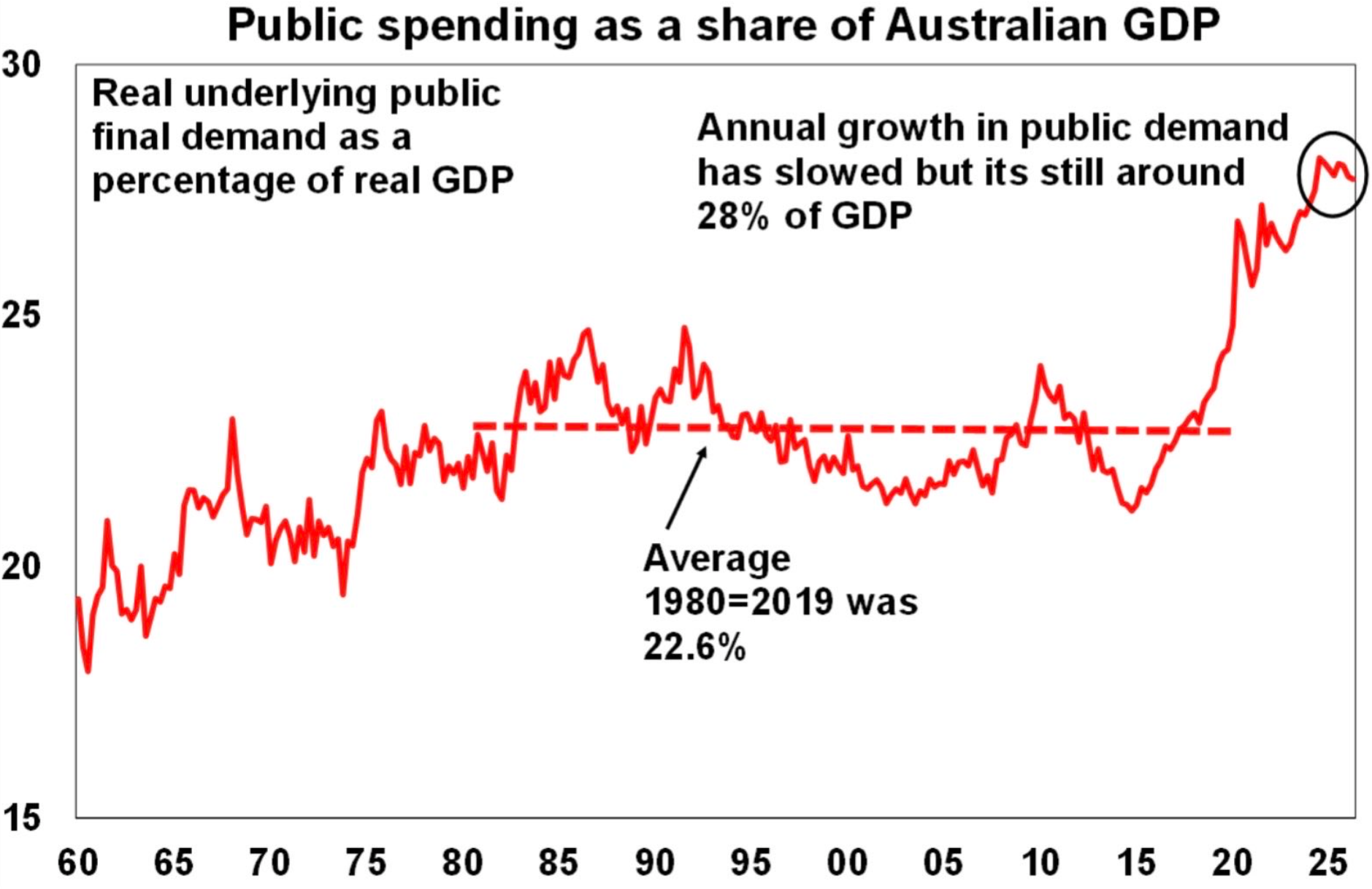
Source: Shane Oliver (AMP)
Rising bond rates only exacerbate the pain and underscore the need for governments to undertake fiscal repair and reduce their interference in the economy.
Reduced government spending will also help to cool aggregate demand, reduce crowding out of the private sector, ease pressure on inflation, and mitigate the need for the Reserve Bank to hike interest rates.
