
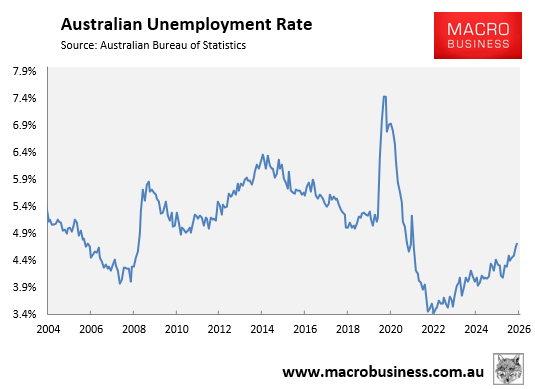
The Australian Bureau of Statistics (ABS) released the September labour force survey, and it was a shocker.
The headline unemployment rate climbed another 0.1% to 4.7% – the highest reading since October 2021 – while all of the sub-indicators were soft.
The following table from the ABS summarises the key components from the survey:
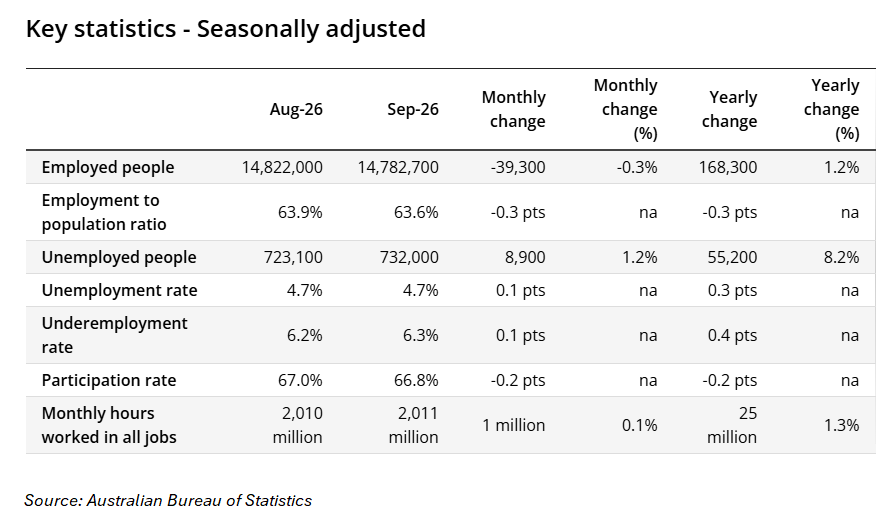
Total jobs declined by 39,300, with full-time jobs rising by 34,400 and part-time jobs falling by 73,700.
The participation rate fell by 0.2%, which helped ameliorate the rise in the unemployment rate.
The underemployment rate also rose by 0.1% to 6.3%.
Finally, monthly hours worked only increased by 0.1%.
That said, the ABS recommended using caution in interpreting its results, noting the following flags:
“This September a higher proportion of people remained unemployed compared to recent years”.
“This follows from last month when a higher proportion of people who were previously not in the labour force moved to being unemployed”…
“The ABS recommends being aware of this potential effect when using the September 2026 seasonally adjusted Labour Force data and continues to recommend trend data as providing the best measure of the underlying behaviour of the labour market”…
Accordingly, the trend summary is presented below:
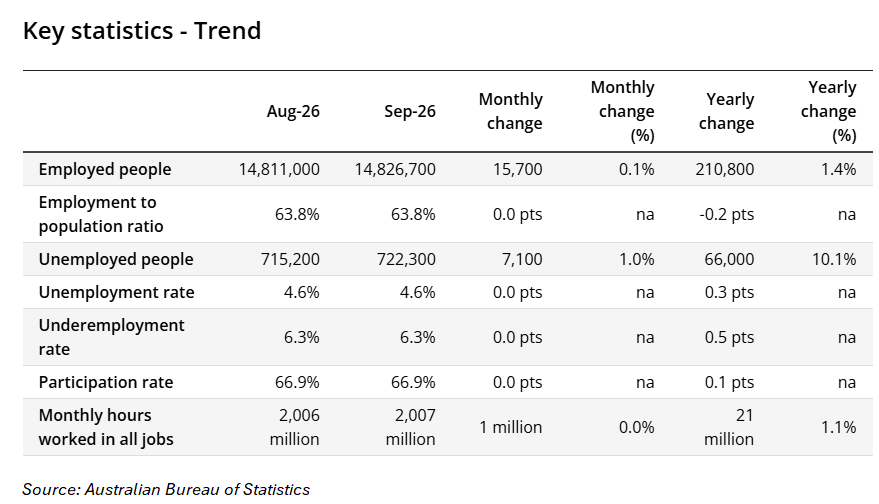
As you can see, there was a modest trend rise in jobs (+15,700) in September and virtually no change in the components, with the headline unemployment rate remaining at 4.6% and the underemployment rate remaining at 6.3%.
Even so, as Alex Joiner from IFM Investors illustrates below, the unemployment rate is tracking well above the RBA’s forecast, both on a monthly:
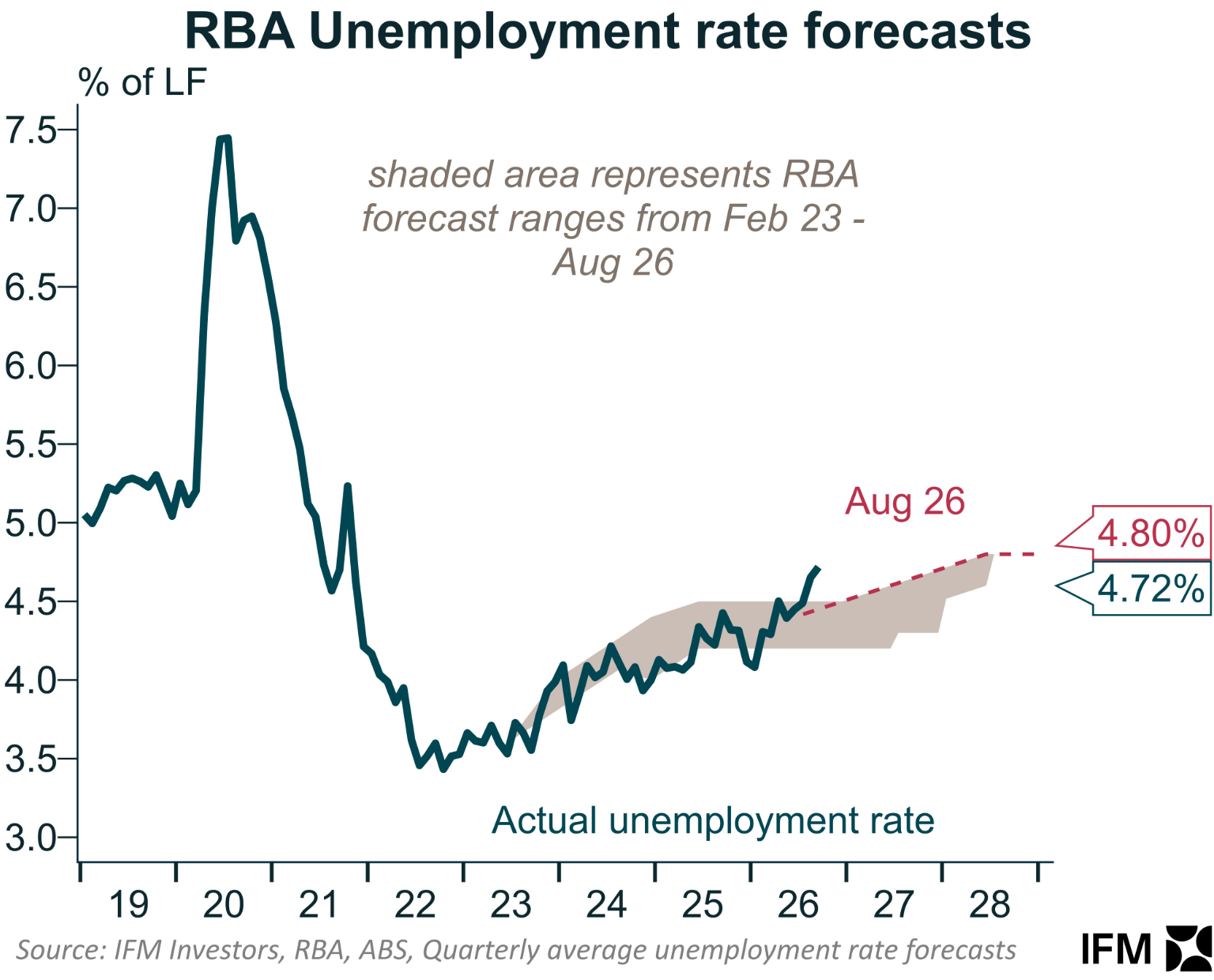
And a quarterly basis:
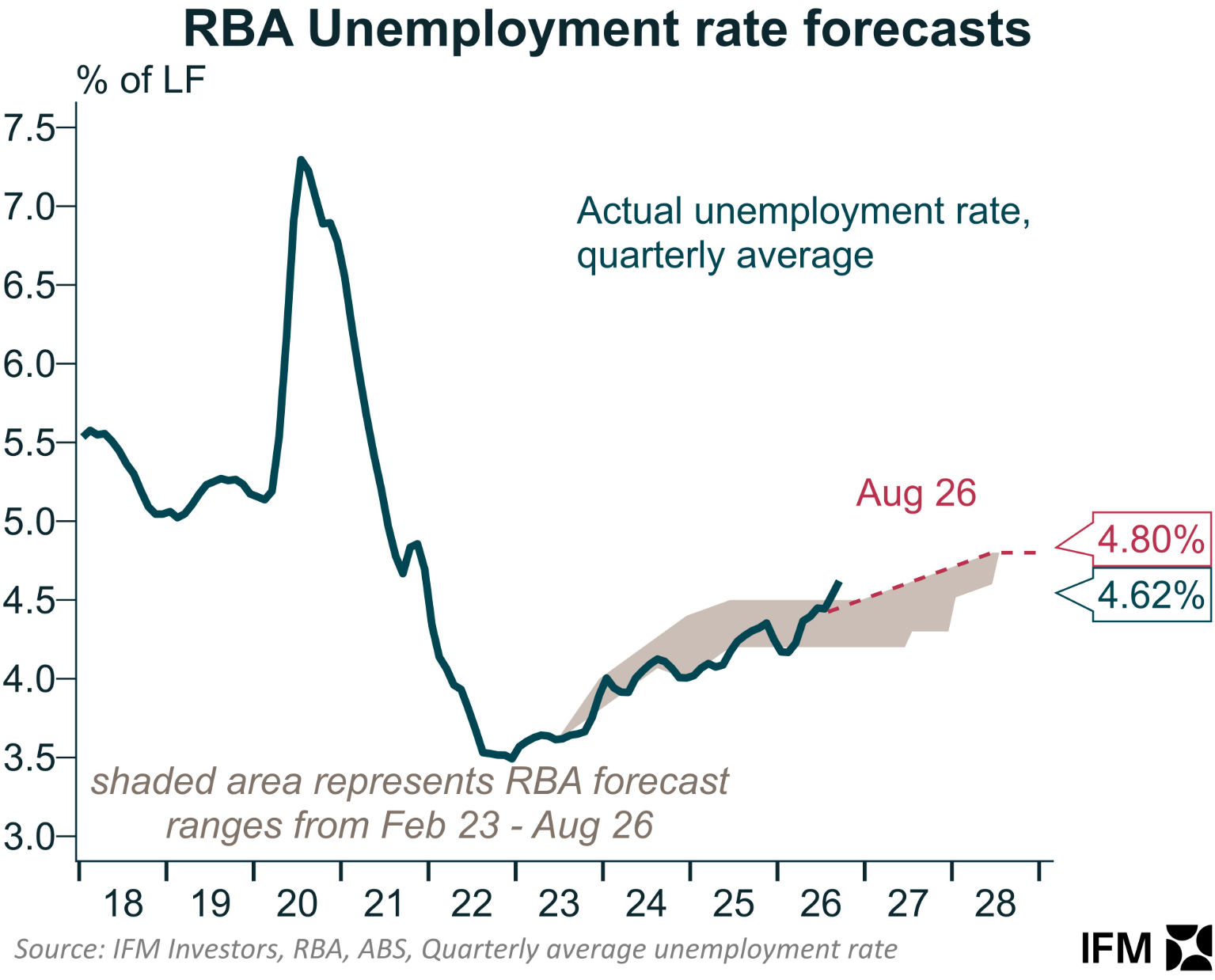
“This will require the Bank to revise upwards its forecasts in November”, noted Joiner on X (Twitter). “Its evolved thinking will have to be fulfilling its inflation mandate while keeping the unemployment rate as low as possible. ‘Full’ employment is seemingly not consistent with inflation at the mid-point of the target band”.
The sharp rise in unemployment at least reduces the chances of the RBA hiking again at its November monetary policy meeting.
