
The 2026 Intergenerational Report, released last month, forecasts that the federal budget will remain in deficit for the next 40 years, with tax receipts falling short of expenditure.
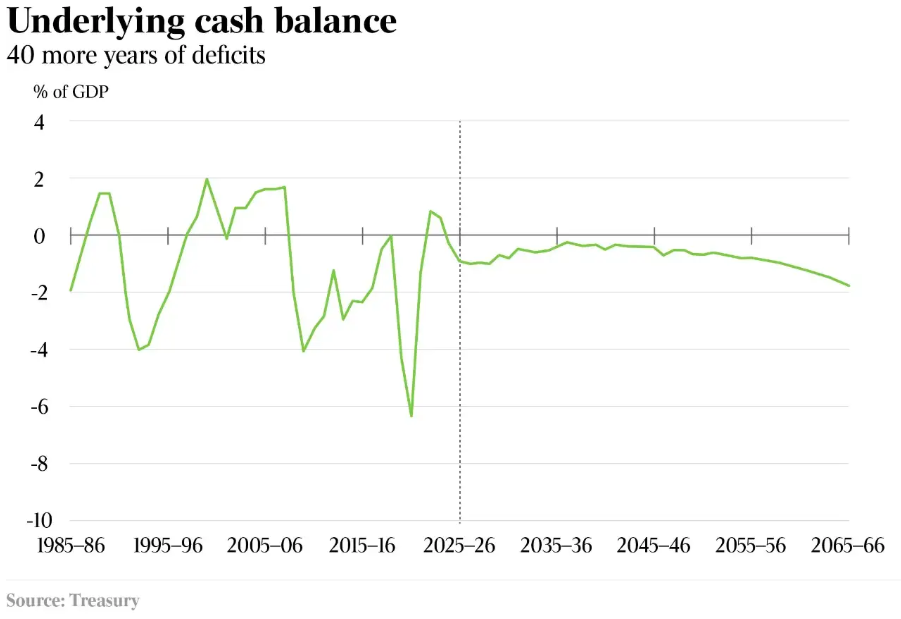
A major headwind for the federal budget is the expected decline in corporate tax receipts from the mining sector amid lower commodity prices.
The Australian Taxation Office’s (ATO) latest corporate tax transparency report shows that the nation’s largest companies paid $87.5 billion in taxes during 2024-25.
The Mining, Energy and Water sector contributed 41.1% of the corporate tax take, or $35.9 billion in 2024-25, despite making up only 8.1% of the total corporations recorded. However, miners paid $12.5 billion less in tax than the previous year, due to weaker commodity prices.
Rio Tinto topped the list with $5.2 billion in taxes, ahead of BHP with a total company tax bill of $3.9 billion.
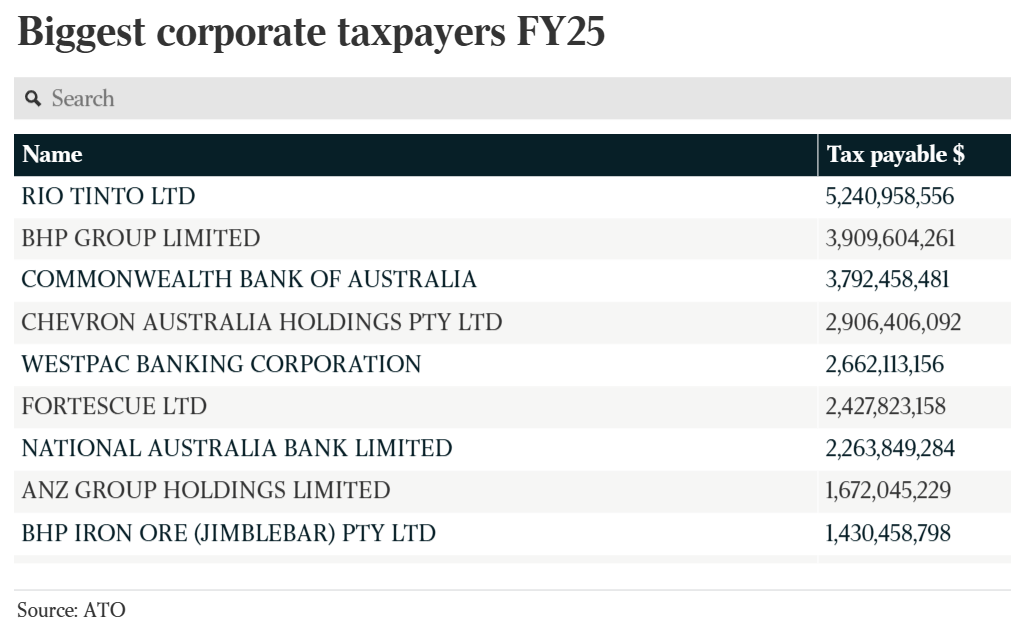
The data also shows that the petroleum resource rent tax raised $1.9 billion in 2024-25. This helped the oil and gas segment to lift its total tax paid to $10.6 billion.
Gravy train over:
The outlook for tax receipts from the mining sector is less rosy.
Australia’s mining and energy export earnings are forecast to rise by $19 billion in 2026-27 to $422 billion, largely on the back of higher energy and gold prices, according to the Department of Industry, Science & Resources’ (DISR) quarterly commodities report. However, commodity export earnings are forecast to decline over the next four years to just $343 billion in 2030-31.
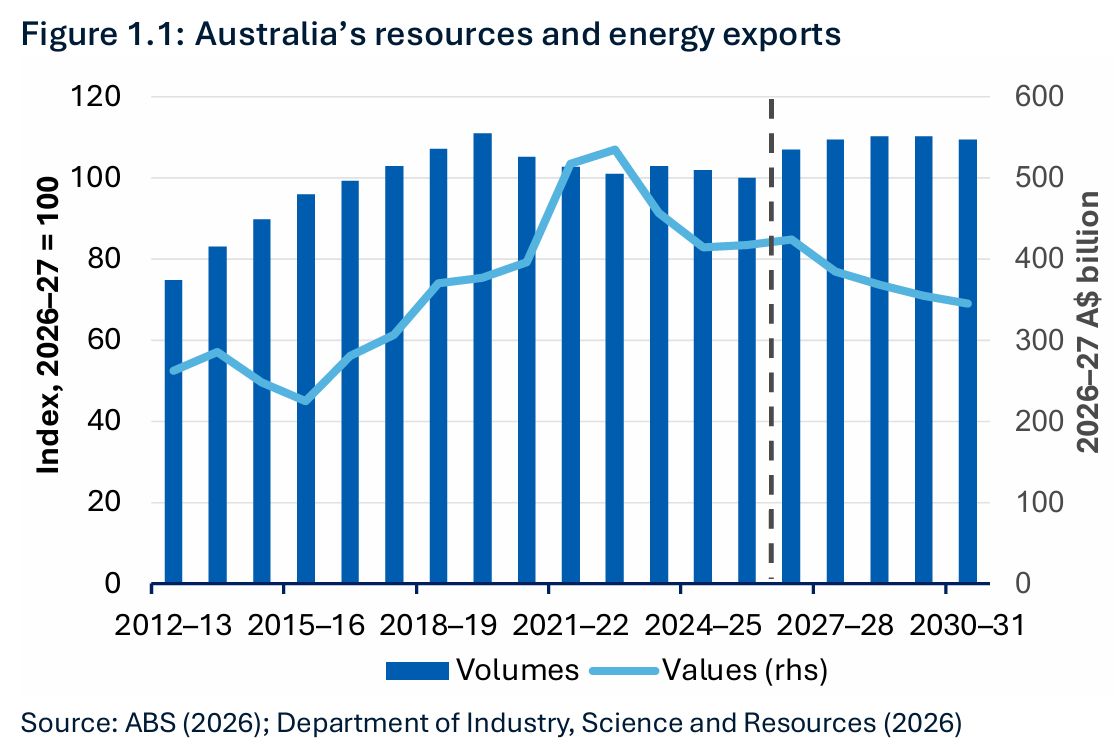
Iron ore export earnings are forecast to fall from $119 billion in 2025-26 to $87 billion in 2030-31, amid slowing Chinese demand for the steel input and rising supply from Africa:
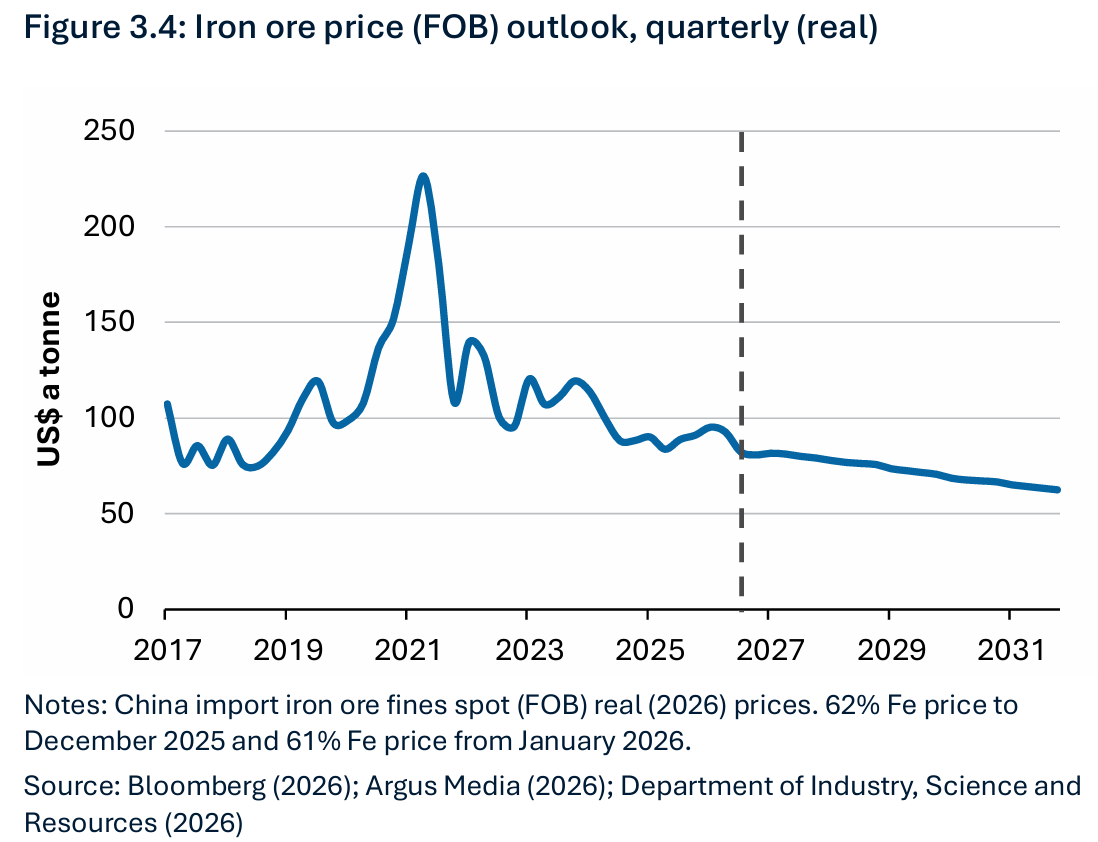
“Since 2021, iron ore prices have been falling, reflecting growing global supply and weaker Chinese demand (China imports 75% of global seaborne iron ore supply), and this is forecast to continue”, DISR warns. “The diesel shock is providing a temporary cost floor under iron ore prices, but it is not likely to reverse the broader downward pressure from abundant seaborne supply, high Chinese port inventories and weak steel demand”.
“Australian FOB prices are forecast to average around US$88 a tonne in 2026, before easing to about US$82 a tonne in 2027. Over the longer term, new lower-cost supply is expected to reduce the real price to around US$64 a tonne in 2031 (Figure 3.4)”, DISR forecasts.
Australia’s LNG export earnings are also expected to rise to $70 billion in 2026-27 and fall to $42 billion in 2030-31.
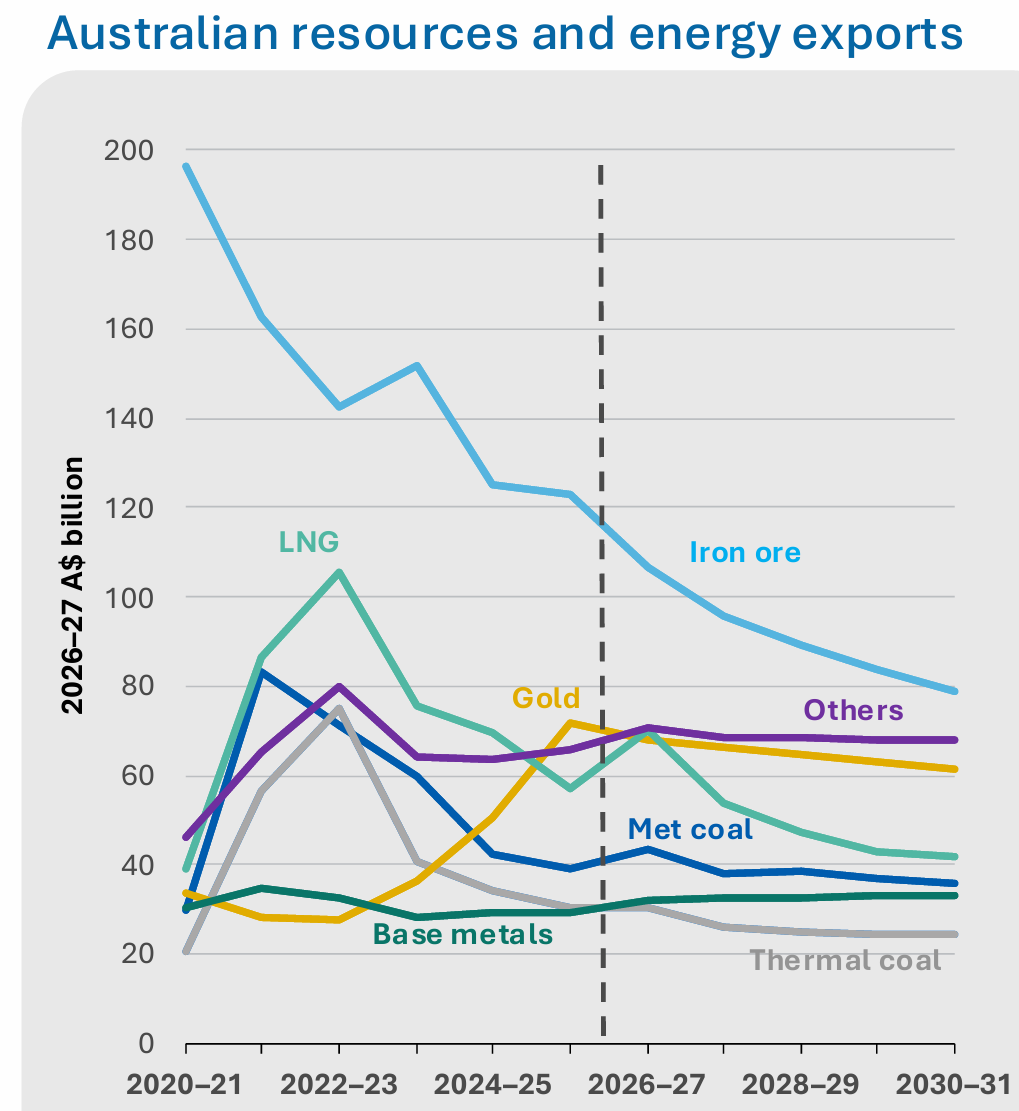
Overall, the commodity export outlook represents another structural headwind facing the federal budget, which benefited greatly from the commodity price surge this century but wasted the proceeds.
As a result, the future will be much harder.
