
Sydney’s housing correction has reached a new milestone, with Cotality’s daily dwelling values index now showing values down 8.0% from its peak in early March 2026.
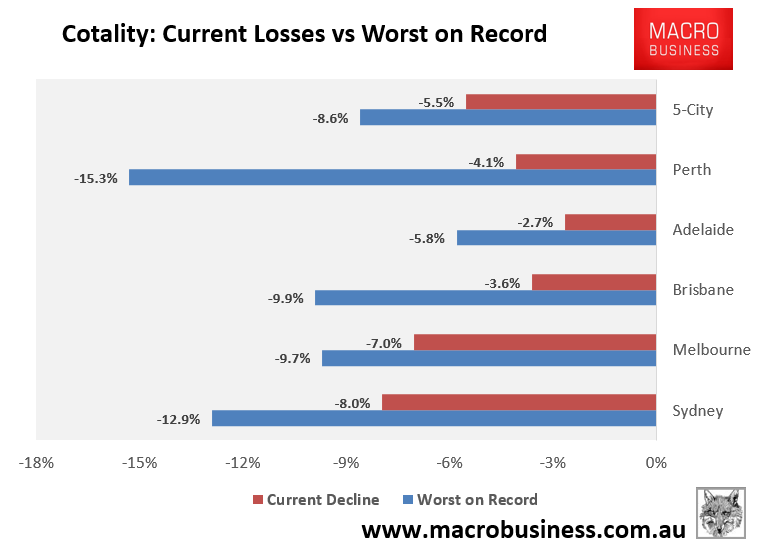
Cotality’s largest decline on record for Sydney is -12.9%, recorded between June 2017 and May 2019. This period was heavily impacted by APRA restrictions on mortgage lending, the banking royal commission, and the promise that a Shorten Labor government would abolish negative gearing and reduce the capital gains tax discount if it won the 2019 federal election.
The downturn ended quickly when the Morrison Coalition government unexpectedly won the federal election on 18 May 2019, ensuring negative gearing and capital gains tax settings would remain. The housing market then rebounded strongly.
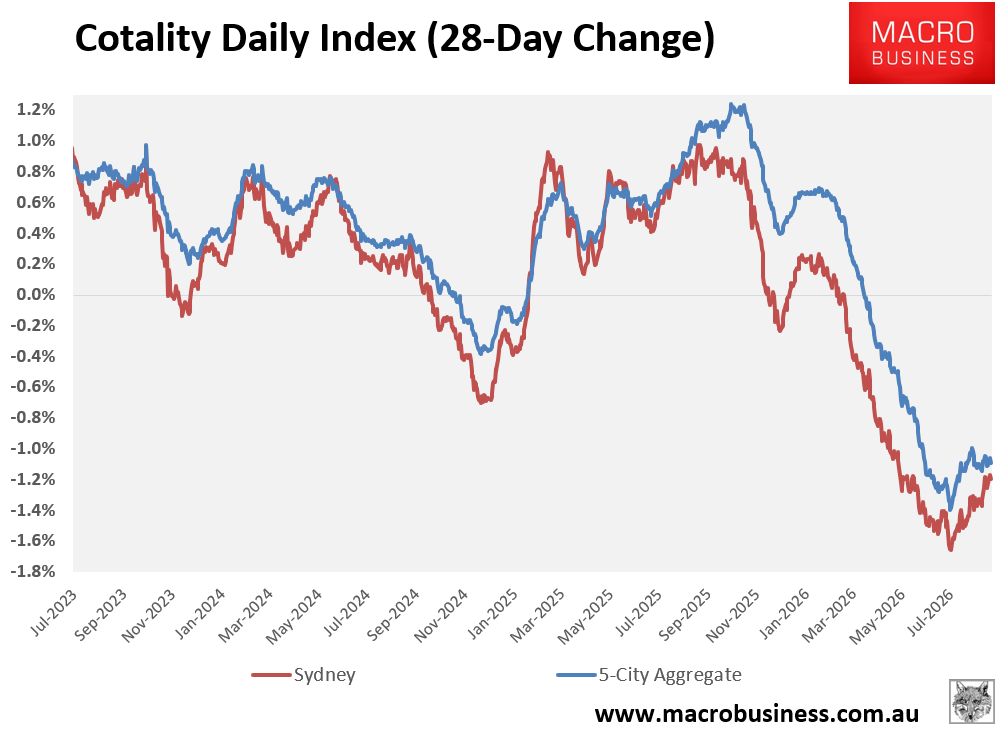
The Sydney housing market faces a very different situation today.
First, there are no signs that the Albanese government will reverse its decision to abolish negative gearing and change capital gains tax to an indexation method.
As a result, Sydney’s market faces a period of adjustment as rental yields rise to a level that makes sense to investors, given the reduced after-tax cash flows now on offer.
Second, given that Sydney is the nation’s most expensive housing market by a wide margin, it is the most sensitive to interest rates.
With financial markets now pricing in two to three further interest rate hikes over the next nine months, Sydney’s market will be most affected if they come to fruition.
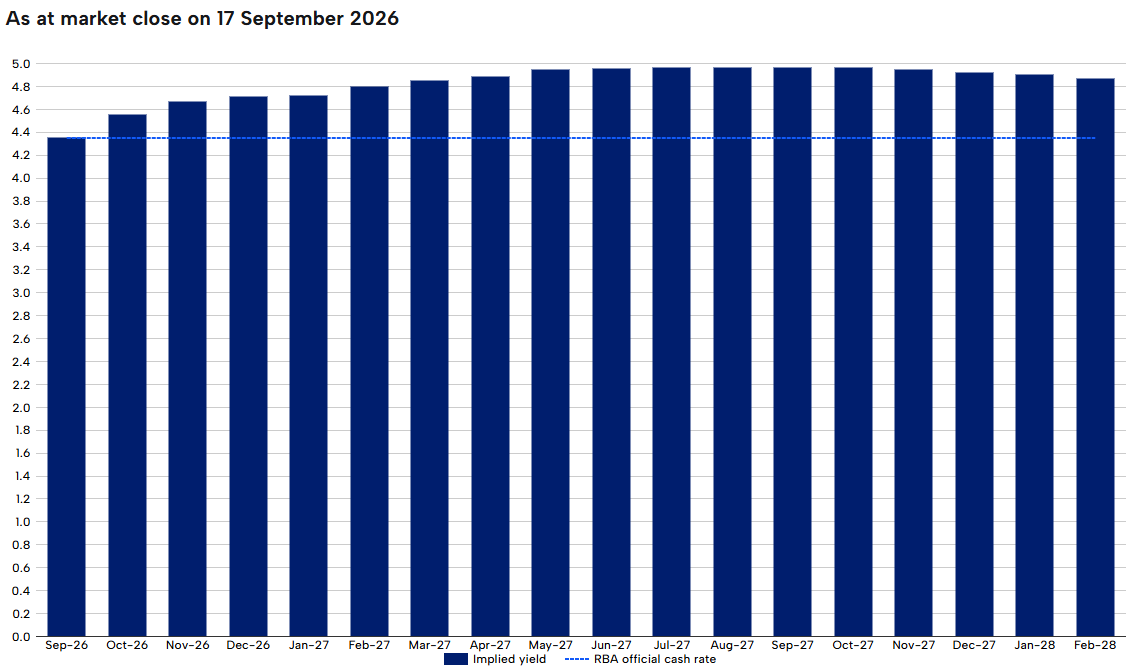
ASX futures interest rate pricing
As a result, Sydney’s housing market is facing a record price decline that could reach 15% or more.
The combined impact of the federal government’s changes to property investor taxes and rising interest rates is a toxic mix for the nation’s most expensive market.
