
Property developer Bathla Group entered voluntary administration late last month after running out of cash, leaving $3.6 billion in private‑credit debt, 2,000 homes mid‑construction, and 15,000 planned dwellings in limbo.
Larry Kaine, managing partner at Corporate Recovery Partners, warned last week that the collapse of Bathla Group – one of Western Sydney’s biggest home builders – could be the biggest in Australian corporate history.
Kaine said the collapse is “unprecedented” in its size, warning the ripple effect could be significant.
“The magnitude of this administration is just so damn big. I mean, I’ve never seen anything like it”, he told nine.com.au.
“The knock on effect is probably and conservatively going to be $20 billion on the broader New South Wales construction sector”,, adding that would lead to “a $20 billion impact” on the New South Wales economy.
“It’s really grim”, Kaine said. “Construction insolvencies are at all time highs… delinquencies or payment arrears, overdue days, that’s on the up”.
Bathla’s collapse is also being described by property insiders as a system‑level shock—not just a cyclical downturn—because it exposes deep structural weaknesses in Australia’s housing market and the private‑credit system that has financed much of the nation’s development over the past decade.
Many insiders say the situation has “the potential to be even worse than 2007”, the lead-up to the Global Financial Crisis.
Bathla wasn’t just another overleveraged developer. Its failure reveals that:
- The economics of property development have fundamentally changed.
- The private‑credit boom that replaced bank lending after the GFC is now showing signs of fragility.
- The May federal budget’s removal of negative gearing for existing properties has caused investor demand to collapse.
Industry players say this combination has created a structural disequilibrium, not a normal downturn.
Developers face impossible economics:
Build‑to‑rent yields are tracking at about 5%, which is now below the 10‑year government bond rate, making projects unviable. Construction costs are also rising.
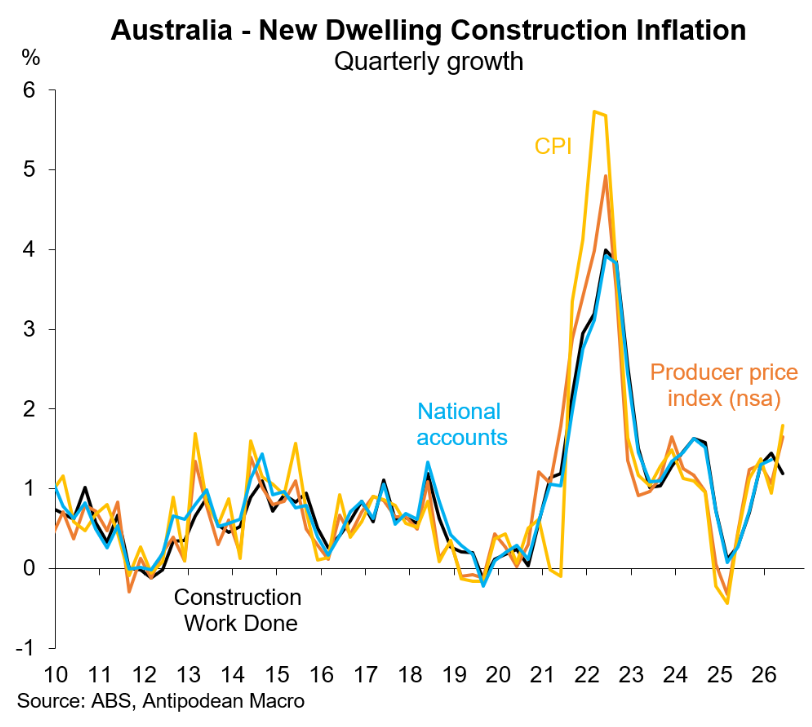
Land values may need to fall materially to restore viability, which is why insiders fear a deep correction rather than a temporary slowdown.
The private credit market “masked the sins” but faces a difficult future:
Bathla’s collapse exposes systemic issues in private credit. For a decade, rising property prices hid shoddy lending. Funds refinanced bad loans using inflated valuations. Competition drove down lending standards.
Investors were drawn to yields that were double those of term deposits, but they did not understand the risks.
The AFR notes recent comments from Howard Marks, which encapsulate the risks facing the sector:
“The onrush of more investors and capital has turned private credit from something special to something ordinary. The competition to do deals has driven down the specialness”.
Now, private‑credit investors face two fundamental risks:
- Capital losses if valuations fall.
- Frozen funds if developers cannot repay.
While many funds expect “normality” to return once Bathla resolves, The AFR’s Jonathan Shapiro labels this view “part‑optimistic and part‑delusional”.
One fundamental difference from the GFC:
The key difference from the GFC is that private investors, family offices and wealthy individuals, not banks, now hold the risky loans. Therefore, the financial system is not at risk.
However, household wealth is at risk, as is the property‑development ecosystem.
As a result, Australia is facing a reckoning, not a banking crisis.
Property also accounts for around 10% of GDP, so a slowdown has broad second‑order effects.
The bottom line:
Bathla Group was the most exposed developer because of extreme leverage. But its collapse signals a permanent shift away from its old model.
Private credit will no longer operate as it did, and investor‑driven apartment development is no longer viable under current tax settings.
As a result, the development sector faces a painful adjustment, which will inevitably reduce housing construction rates even further and make Australia’s housing shortage even worse.
