
More than half of Australia’s renters are struggling financially
Australian renters have been hit with a circa 50% increase in advertised rents since the COVID-19 pandemic, according to Cotality, adding more than $12,500 to the annual cost of renting for the median Australian tenant.
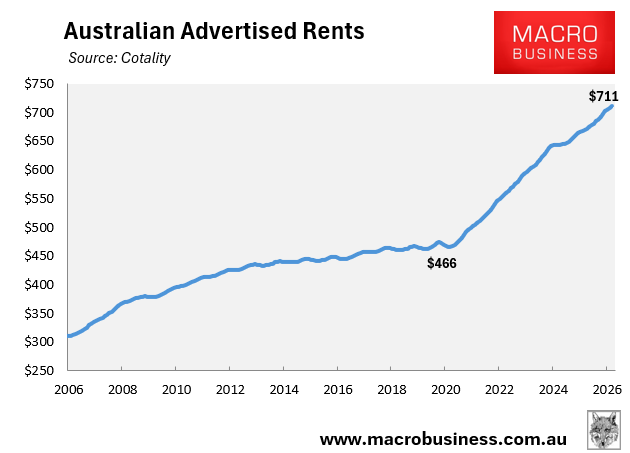
While the rental market is showing signs of easing, with vacancy rates rising and growth slowing, rents continue to rise much faster than wages.
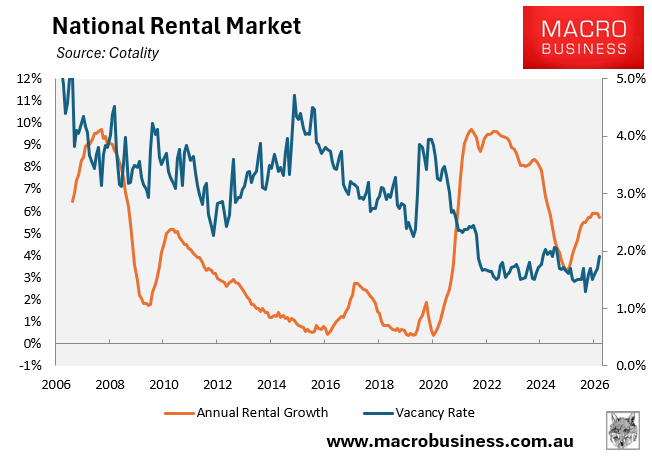
So, rather than improving, the rental market is worsening more slowly than before.
The latest News24.com.au Pulse / YouGov poll shows that Australian tenant households are the most financially stretched, with more than half of renters – 53% – claiming they are struggling, compared with 32% of mortgage holders and just 18% of outright homeowners.
Across the economy, 32% of Australians surveyed said they were struggling, with 9% “a lot” and 23% “somewhat”.
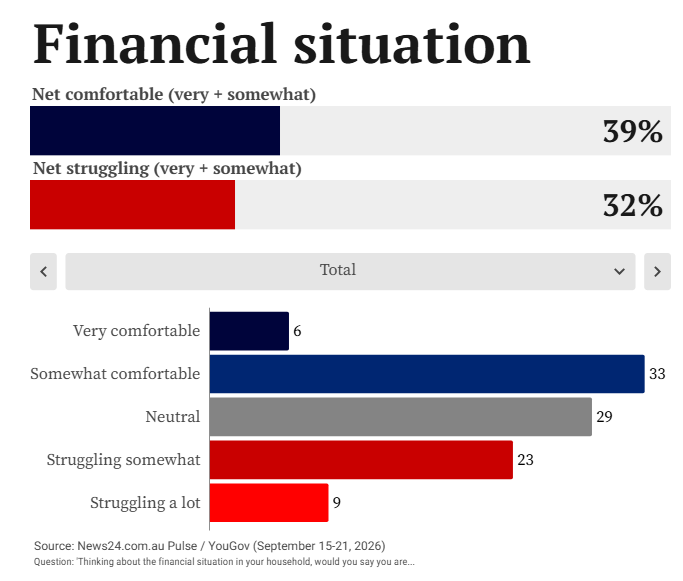
The proportion struggling has climbed two points since January 28, from 30% to 32%, while the number who are comfortable has remained stuck at 39%.
Meanwhile, a record number of Australians (6.9%) are working multiple jobs, with especially strong increases among younger cohorts, who are more likely to be renting.
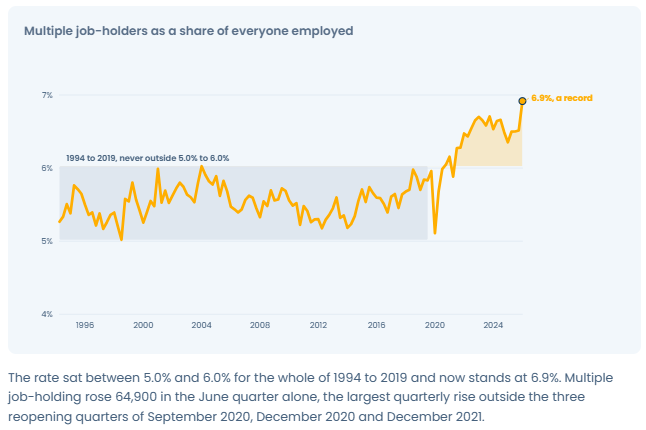
Research commissioned by Credit24 and supplied by Primara Research found that workers aged between 20 and 44 accounted for 88% of the increase in multiple job holders.
The only saving grace for tenant households is that Cotality has reported a solid increase in rental listings across the combined capital cities in recent months:
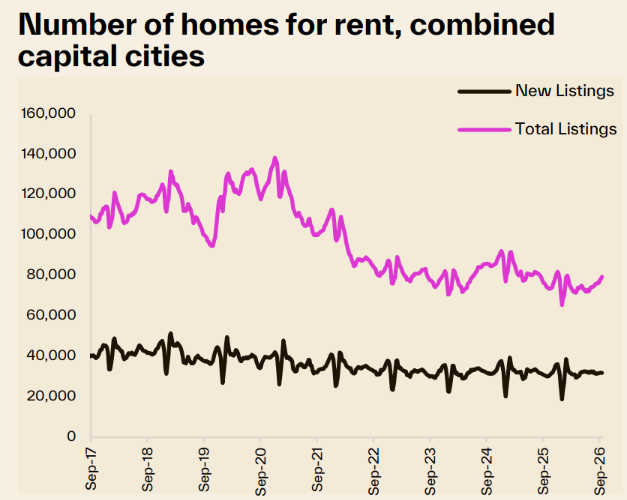
Source: Cotality
Rental listings across the combined capital cities are now tracking 5.3% above the same time last year, with all capital cities other than Darwin recording annual increases:
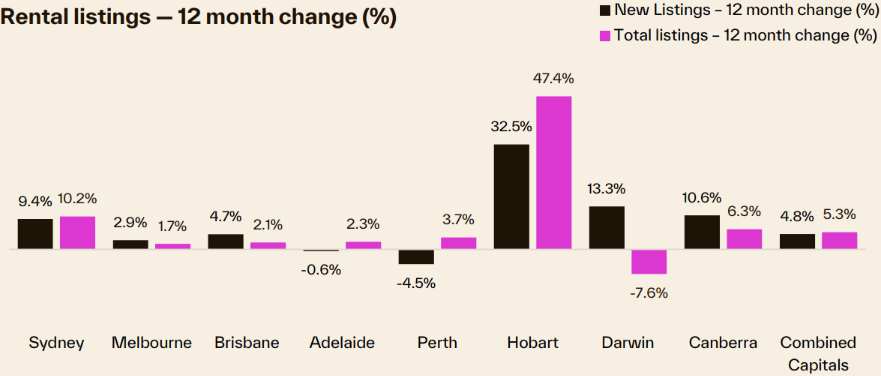
Source: Cotality
Still, rental listings remain low overall, meaning conditions remain tight for tenants.
Thus, rental affordability appears to be degrading more slowly than before, rather than improving.
