
It’s official: Australia’s inflation woes are home grown
I argued last week that Australia’s globally high inflation is homegrown, as illustrated by services inflation tracking at 4.1% in the year to July, well above the broader trimmed mean inflation rate of 3.6%.
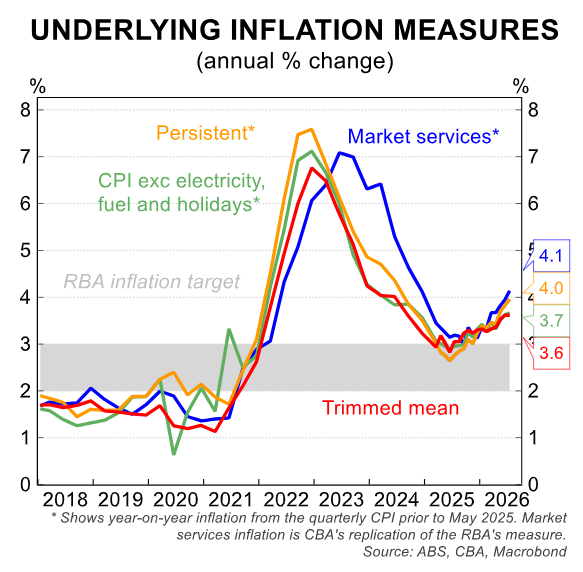
Housing inflation is posing a particular problem for the Reserve Bank of Australia (RBA). It comprises nearly one quarter of the CPI basket and rose by a hot 5.0% in the year to July, helping to drive up overall underlying inflation:
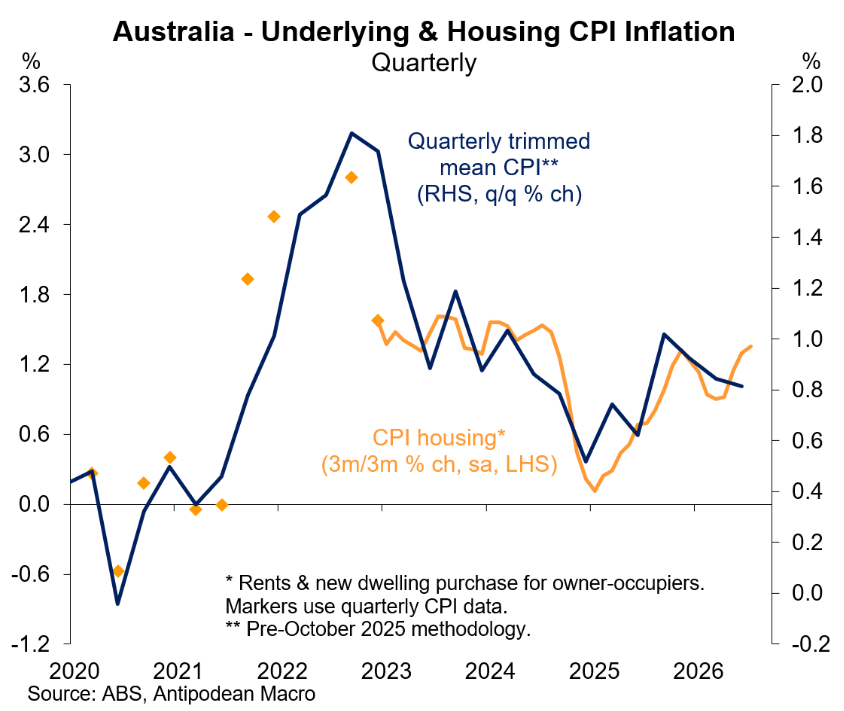
Chart from Justin Fabo at Antipodean Macro
New research from RBA senior analyst Isobel McKay has confirmed that labour and dwelling costs have been major contributors to consumer prices since at least 2023.
This contrasts sharply with the beginning of the pandemic, when soaring import costs and business owner returns were the main drivers. Import prices spiked reflecting global inflation, supply chain disruption and AUD depreciation. Whereas business owner returns surged, especially in mining, due to high commodity prices.
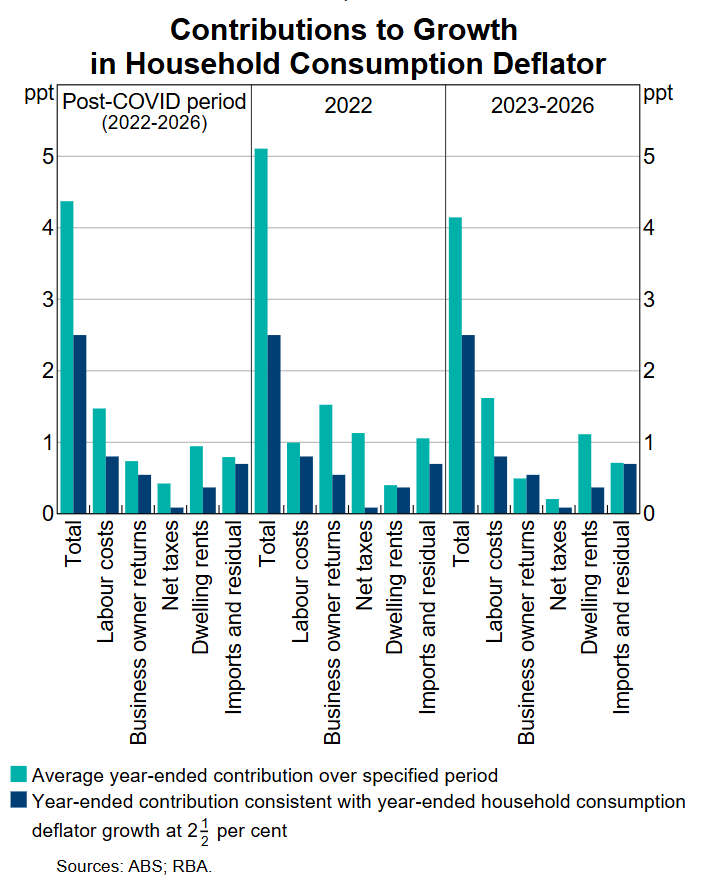
Since 2023, domestic pressures have dominated, with labour costs and dwelling rents becoming major drivers.
Labour cost growth lagged due to multi‑year EBAs but then rose persistently, whereas dwelling rents surged with tight rental markets and strong migration.
“Labour costs… have made a large and persistent contribution… Dwelling rents have also made a sizeable and sustained contribution”, McKay notes.
In short, the RBA’s research confirms that the early inflation burst was global and supply‑driven. But from 2023, inflation became domestically driven, consistent with excess demand.
The results contradict the claims of Treasurer Jim Chalmers, who last week argued that global factors were behind the nation’s stubbornly high inflation.
“The reason why there’s been upwards pressure on inflation in July around the world is because of the movements in the global oil price and all of the volatility that comes from the war in the Middle East”, he said.
The fact that labour and housing costs are now significant drivers of consumer prices has implications for the RBA’s efforts to bring inflation under control.
The RBA will likely need to tighten monetary policy further to bring inflation back under control.
