
Australia has lost the ability to build things
Australia’s construction pipeline is bigger than ever.
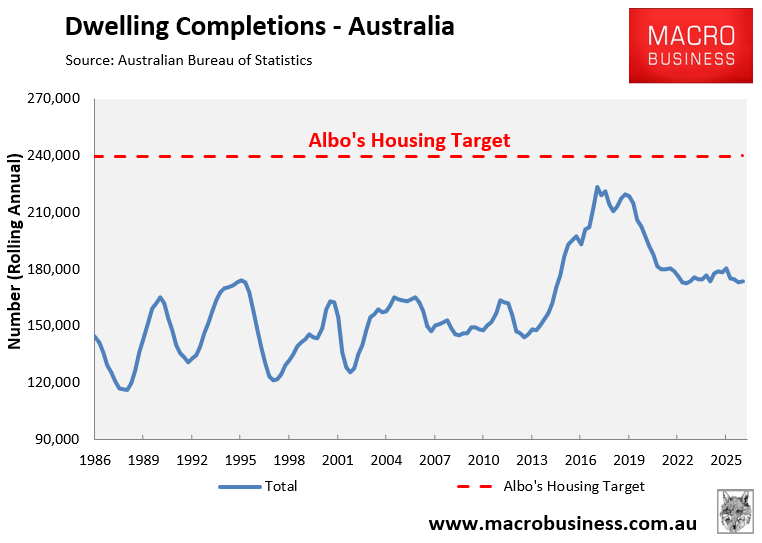
Following decades of mass immigration, Australia is suffering from a chronic housing shortage estimated by AMP chief economist Shane Oliver to be between 200,000 and 300,000 dwellings.
Australia’s current rate of housing construction is tracking at only 173,400 in the year to March 2026, well below last decade’s peak and the federal government’s own housing targets.
Australia also plans to build oodles of new renewable energy transmission and about 6,000 kilometres of transmission infrastructure.
Then there is the construction boom in data centres and ‘big build’ infrastructure projects by state governments.
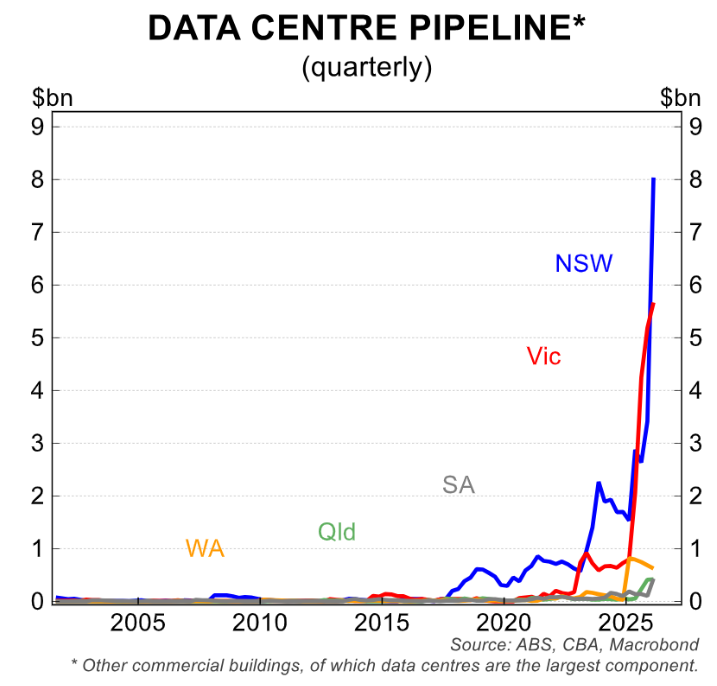
The bottom line is that Australia needs to build many things all at once.
Worringly, at the same time as the nation’s construction needs have never been higher, productivity in the construction sector has collapsed.
As illustrated below by Alex Joiner from IFM Investors,
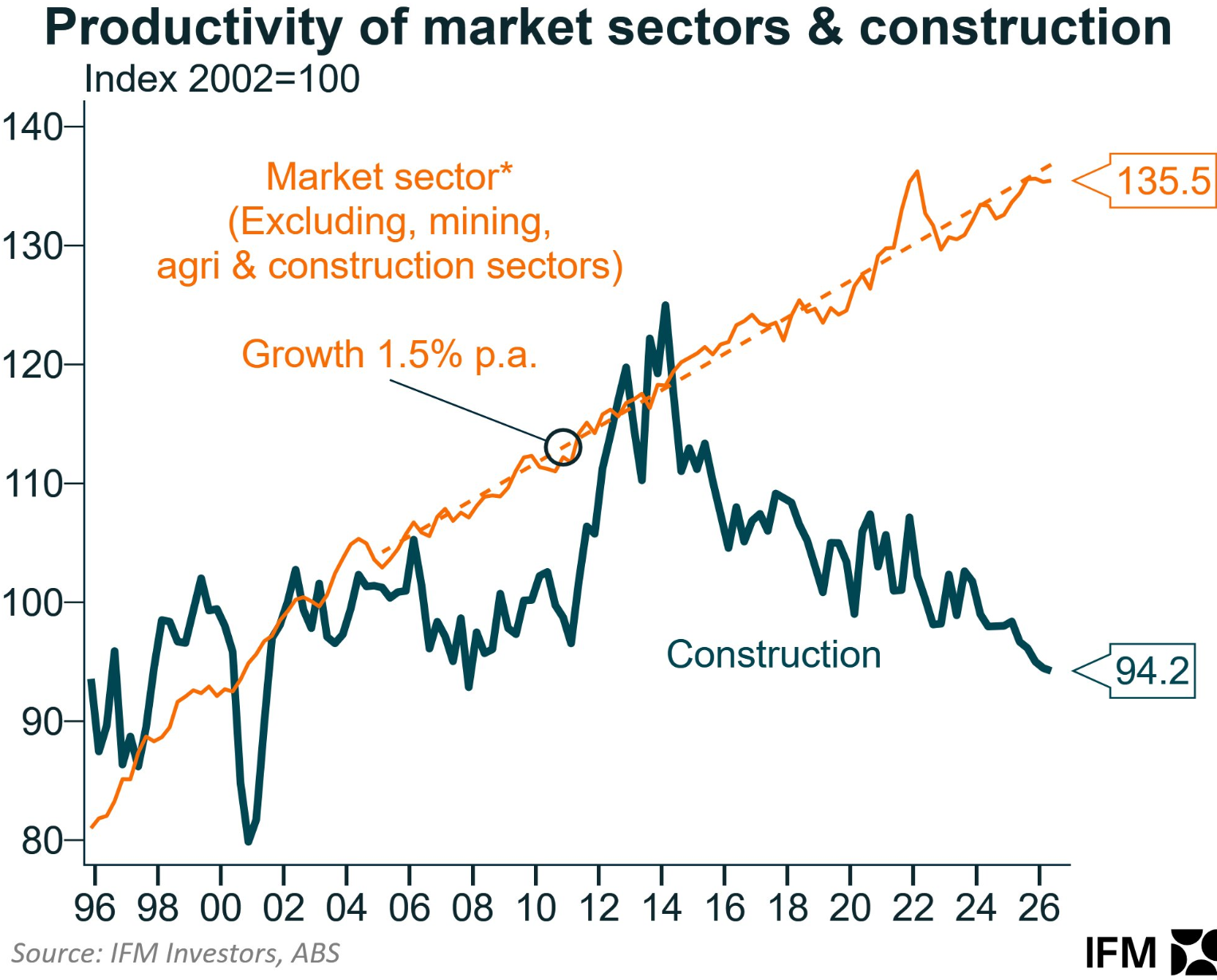
“Construction productivity is lower today than it was in 2002”, Joiner wrote. “Not slower-growing: lower”.
“Manufacturing tells a similar story — consistent with the broader narrative that it’s become genuinely hard to build things in Australia, with high energy costs a meaningful part of that”.
“Neither looks like a cyclical soft patch waiting for the upswing to fix it; both look structural, and both sit right at the centre of the economy’s current investment priorities around sovereign capability, energy transition, affordable housing and data centre build out”, Joiner wrote.
The above chart on construction sector productivity should ring alarm bells for policymakers.
Australia will never meet its construction targets, and the costs will be punitive, unless productivity rapidly improves.
