
The inaugural Intergenerational Report (IGR) in 2002 forecast real GDP per capita at $114,265 today.
However, analysis by independent economist Chris Richardson, reported in The AFR, suggests that real GDP per capita was just $99,742 in the year to 30 June 2026.
Real per capita GDP is lower than expected because productivity growth has collapsed. Meanwhile, governments have masked the problem by supercharging immigration, resulting in the overall economy being around 3% larger today than forecast in the 2002 IGR.
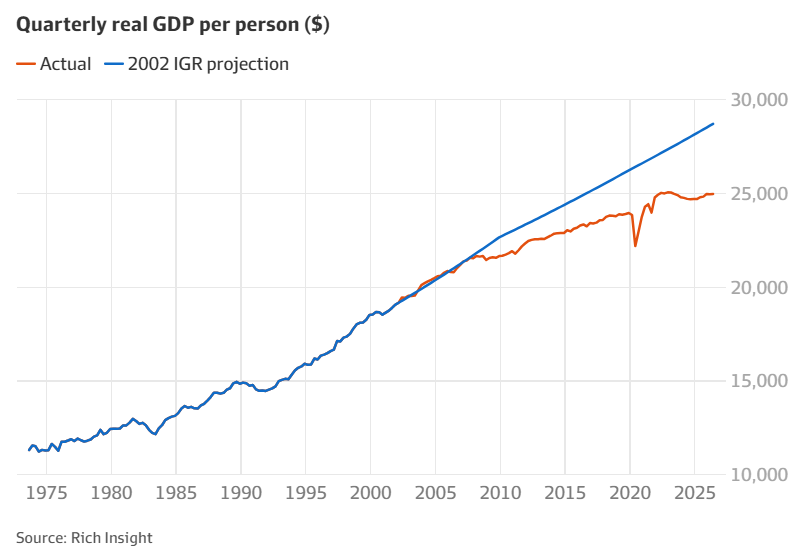
“Since the 2002 IGR, Australia has been good at saying yes to people, but we’ve also said no to the things that help make our people more productive – such as building houses and infrastructure, and keeping the economy flexible”, Richardson said.
Indeed, the inaugural IGR forecast that net overseas migration (NOM) would average 90,000 annually and that the population would reach 25.3 million by 2042:
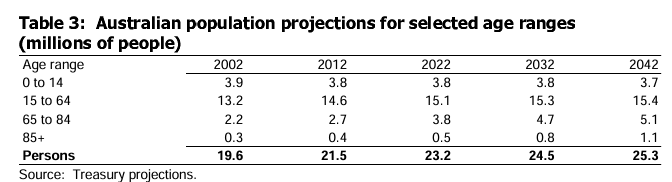
Source: 2002 Intergenerational Report
The population has just exceeded 28.1 million, according to the ABS Population Clock, 19% higher than the 23.6 million originally assumed at this stage in 2002.
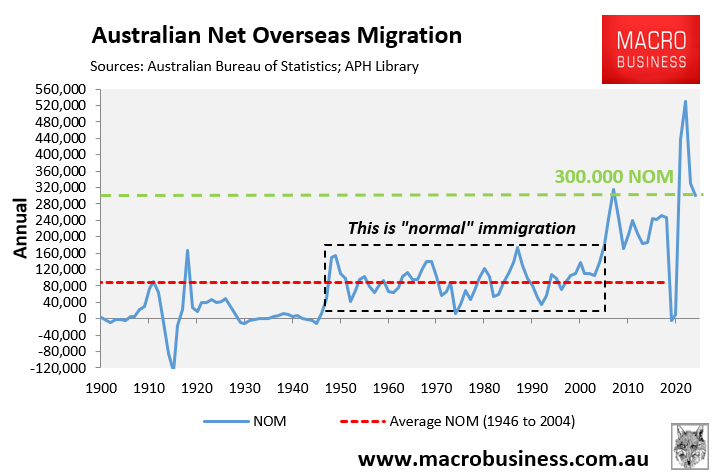
NOM has averaged a whopping 220,000 annually since the end of 2002, 130,000 (144%) higher than originally forecast in innagural IGR.
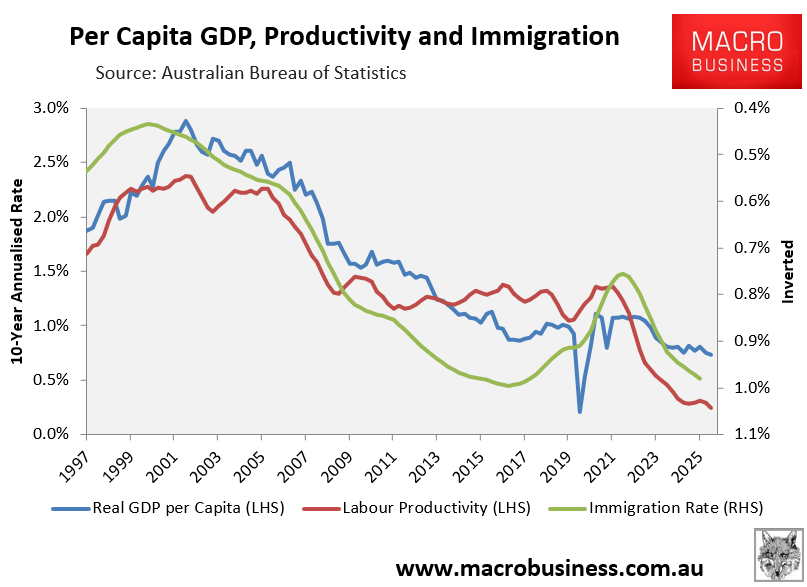
Meanwhile, labour productivity is now 25% below the original projection made in the inaugural IGR almost a quarter of a century ago and has declined alongside the massive increase in immigration.
As illustrated below by The Australian newspaper, Australia is facing its worst decade of productivity growth in more than 60 years of records, following last decade’s anaemic growth, which is currently the worst decade on record:
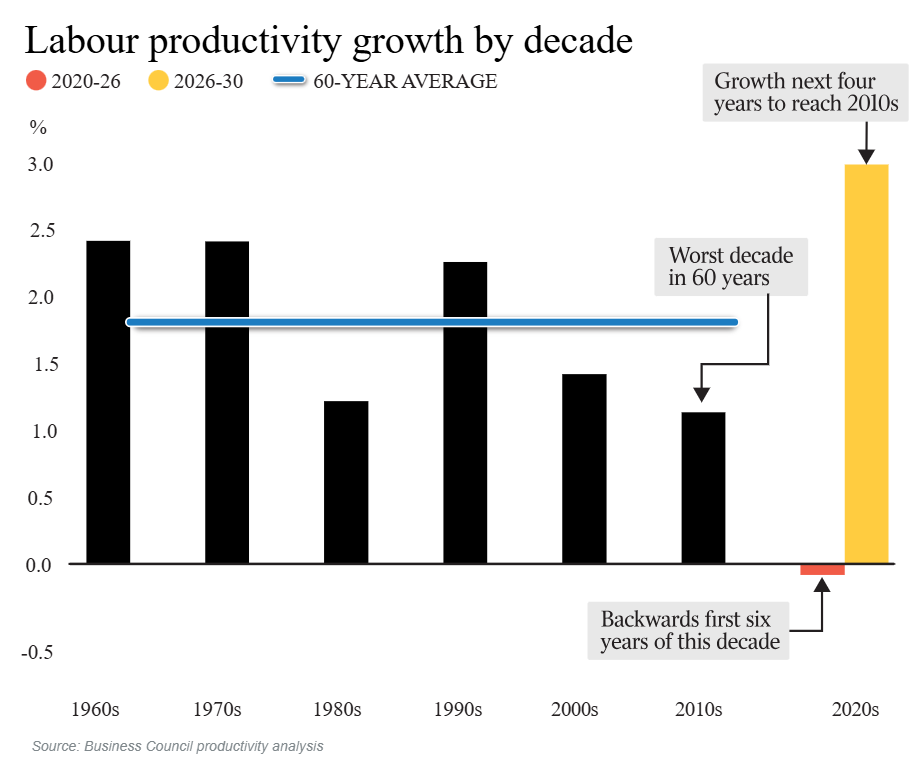
Chart from The Australian newspaper
Australia’s labour productivity growth this decade has ranked among the very poorest in the advanced world:
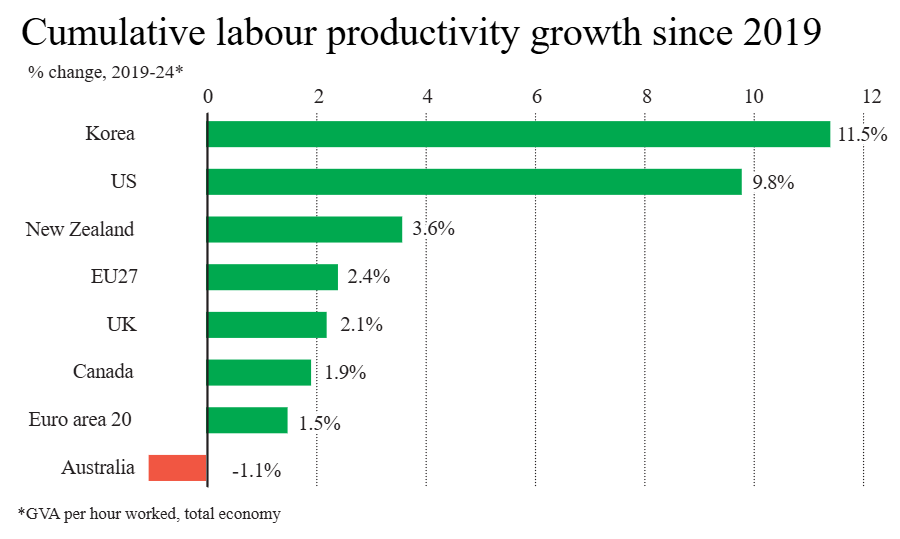
Chart from The Australian newspaper
In fact, Australia is one of the few nations to have recorded negative productivity growth over this period:
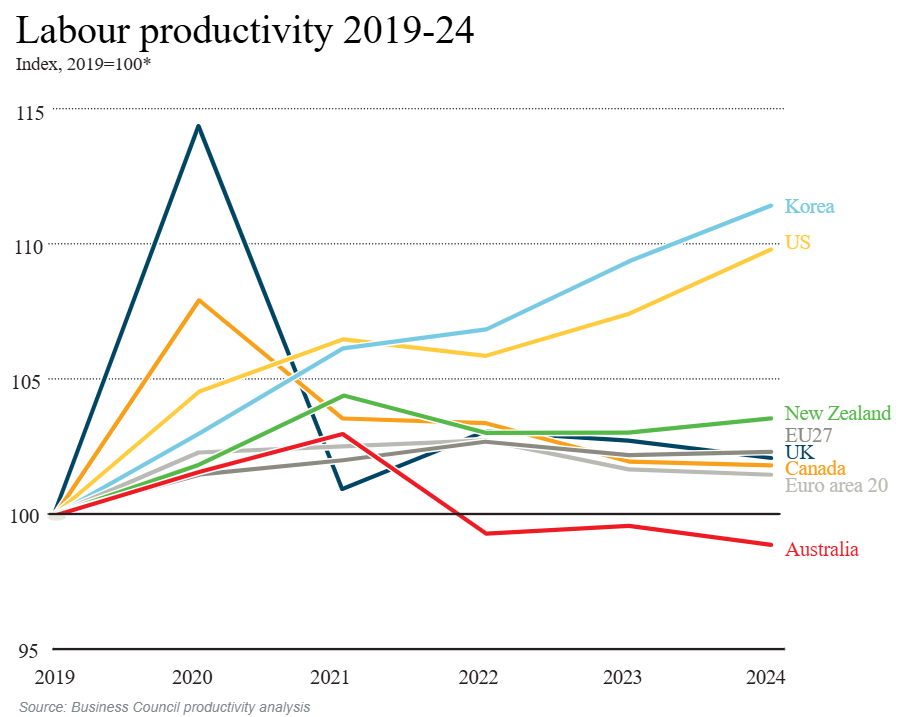
Chart from The Australian newspaper
Not surprisingly, then, Australia’s per capita GDP growth has badly underperformed other advanced nations:
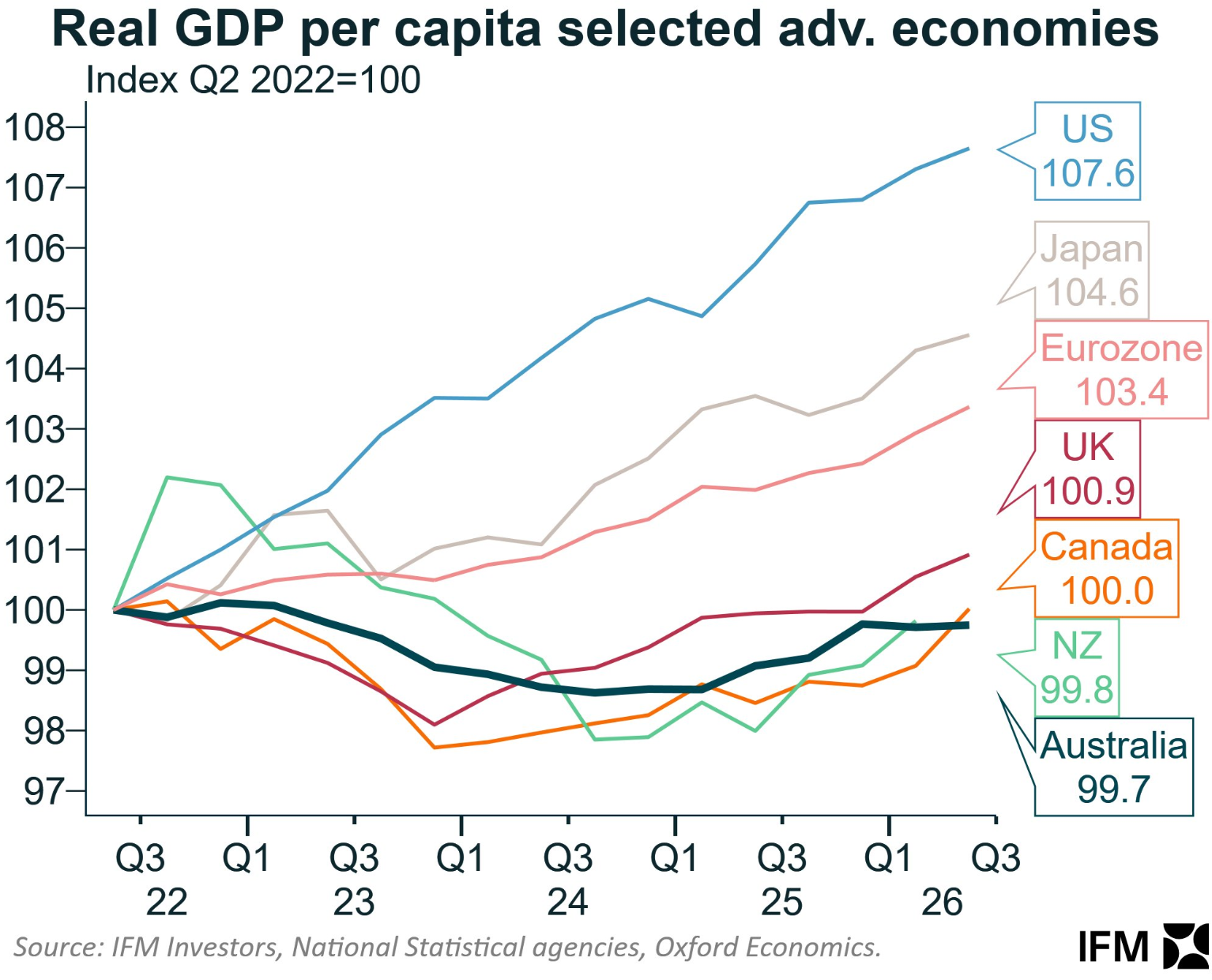
Chart from Alex Joiner (IFM Investors)
One of the main reasons Australia’s productivity growth has collapsed alongside the increase in immigration is ‘capital shallowing’.
Productivity growth mainly comes from capital deepening, which occurs when the amount and quality of capital equipment, buildings, vehicles, infrastructure, and machines per person increase.
Low levels of business investment relative to GDP, combined with Australia’s high population growth through immigration, have led to ‘capital shallowing’ over the past decade, a major driver of Australia’s poor productivity growth.
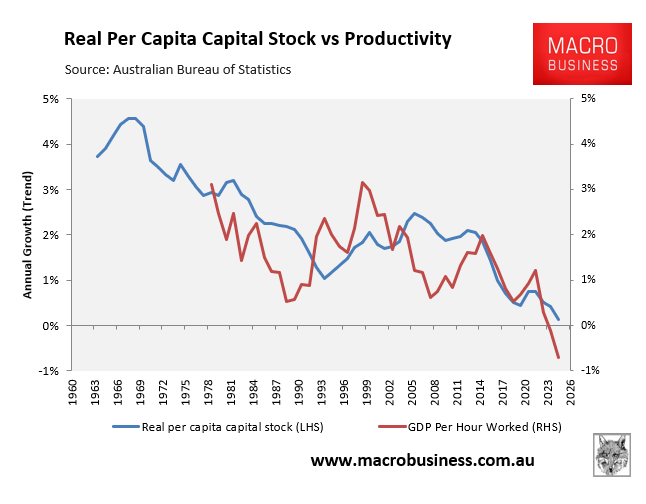
Put simply, the nation’s population has grown faster than business, infrastructure, and housing investment, resulting in less capital per worker.
As a result, most of Australia’s GDP growth has come from population growth rather than productivity, leading to increasingly low growth in GDP per capita.
Macroeconomics Advisory’s Stephen Anthony, a former Treasury economist who worked on the first Intergenerational Report in 2002, labelled Australia’s growth strategy a “population Ponzi scheme”, used by both major parties to hide weak productivity.
Productivity growth has been stagnant since 2016 and has declined since the mid‑2000s, when immigration boomed.
“We don’t really want to rely on population because it’s not a welfare-enhancing strategy. We want to rely on productivity because it’s a free kick for living standards and we’re all better off”, Anthony said.
“But we’ve got a constant undermining of productivity”.
Anthony blamed poor tax, industrial relations, and renewable energy policies for hurting productivity.
Ponzi growth instead of productivity growth:
The bottom line is that Australia’s policymakers have replaced productivity growth with high immigration, supplemented more recently with record government spending.
This approach has grown the overall economic pie, which is 3% larger than forecast in the 2002 IGR. But everyone’s slice has shrunk.
It is a growth strategy that makes the headline economy appear healthy, while actual living standards slide backwards both in a material economic sense and via non-economic measures like traffic congestion and living in smaller, less affordable housing.
The federal government needs to do five things to lift productivity growth:
- run a smaller and better-targeted migration system,
- run a sensible energy policy that prioritises cost and reliability,
- run a significantly tighter budget that minimises waste,
- simplify the IR regime and return to enterprise bargaining, and
- reform the tax system along the lines of the Henry Tax Review.
Only then will productivity growth and living standards in Australia increase.
