
Growthless Canada outperforms Australia’s per capita economy
Like Australia, Canada experienced record net overseas migration (NOM) in the immediate post-pandemic period, increasing the population by 3 million (7.9%) in the three years after it reopened its international border in September 2021.
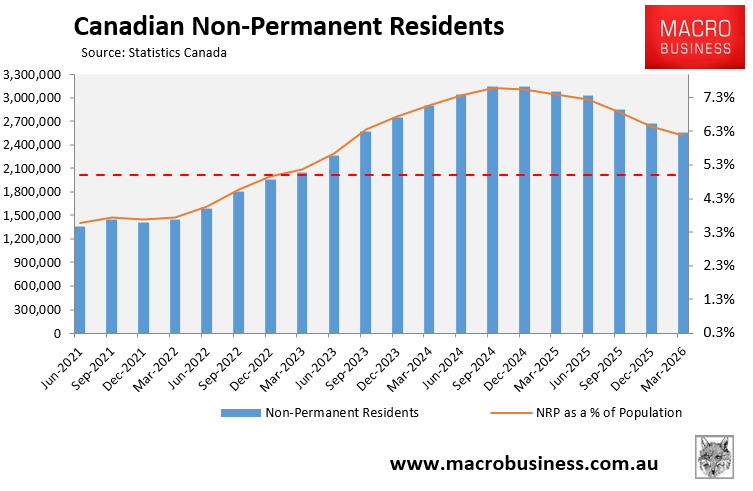
Non-permanent residents (NPRs), meaning temporary migrants, grew by 1.8 million, from 1.36 million to a peak of 3.15 million, making up 60% of Canada’s population growth.
However, in late 2024, Canada chose a different path.
The centre-left Canadian Liberal government announced sweeping immigration reform measures in October 2024 to “pause” population growth. These measures included reducing annual permanent-resident targets from 500,000 per year to 365,000, restricting international-student and temporary-worker admissions, and tightening asylum and border rules.
The policy intent is that by the end of 2027, NPRs will make up about 5% of the Canadian population, down from 7.6% at their peak, and remain below that level.
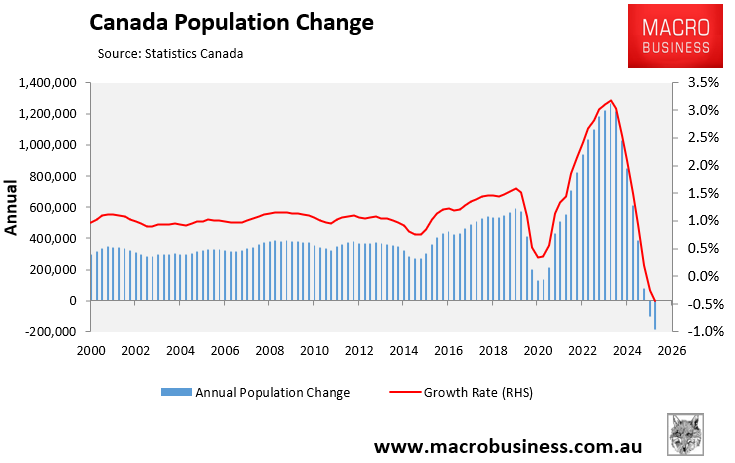
Canada’s 2024 immigration reforms have worked as intended. The population declined by 187,500 (0.45%) in the March 2026 year, marking the first reduction since consistent records began after the Second World War.
The stock of NPRs fell by about 524,000 in the March 2026 year, and their share of the population fell to 6.2%.
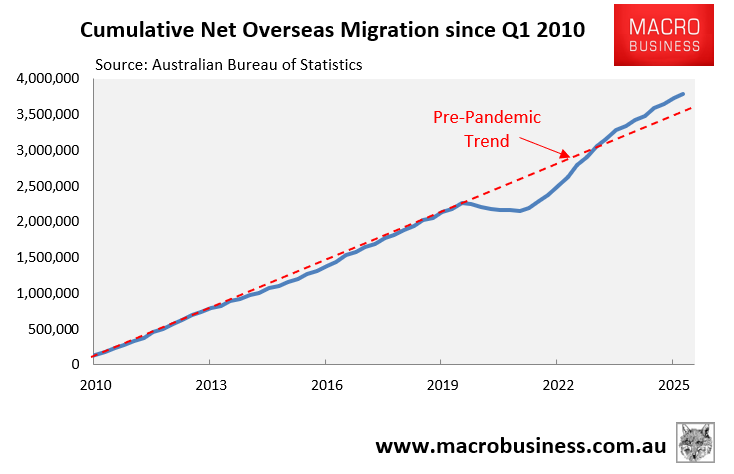
In contrast, Australia has maintained historically high NOM, with nearly 300,000 more migrants now in Australia than if the pre-pandemic trend had continued.
Canada’s immigration changes pay economic dividends:
The population decline is benefiting Canadians economically.
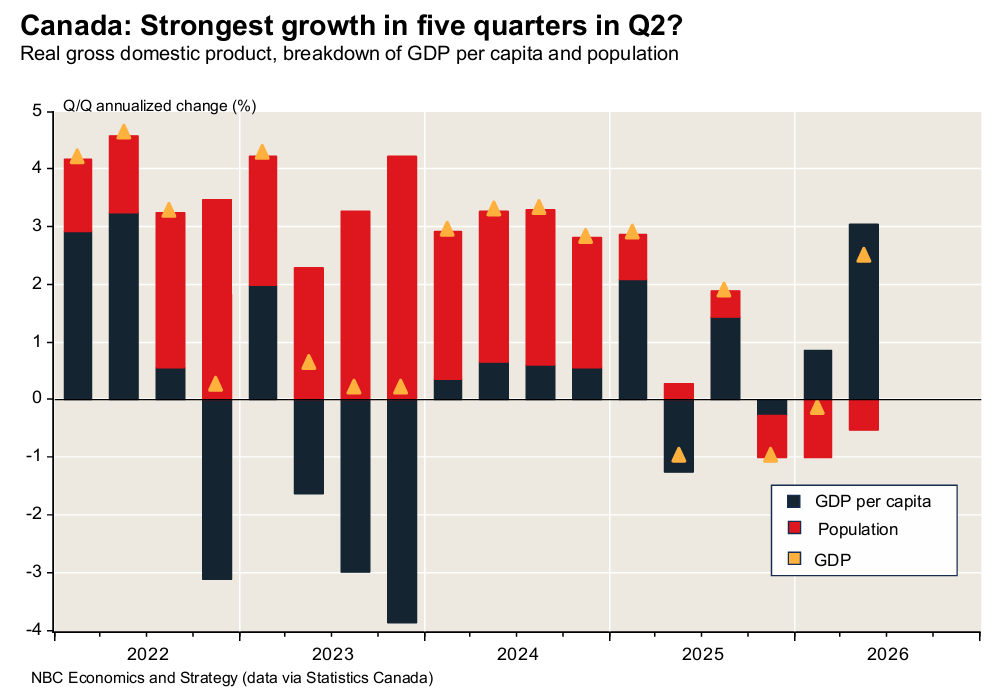
As illustrated below by the National Bank of Canada (NBoC), real per capita GDP growth surged in the second quarter of 2026 and has only declined in two quarters since the immigration cuts were announced:
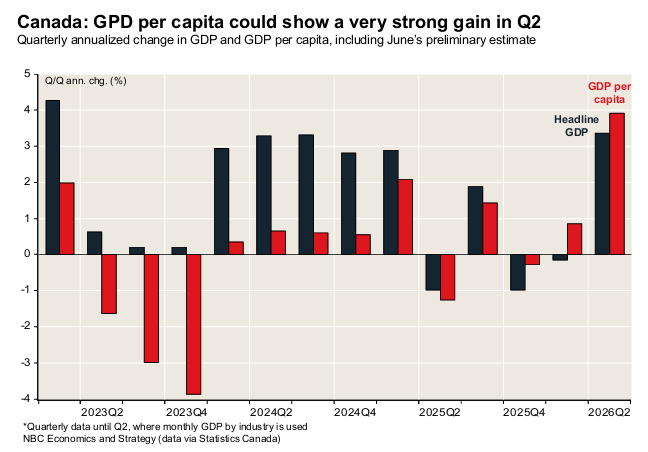
“Based on the data available to date, we estimate that real GDP could grow by 2.5% on an annualized basis during the three months ending in June, which would mark the strongest expansion of the Canadian economy in five quarters”, the NBoC economists wrote.
“This performance is all the more remarkable given that it would occur against a demographic backdrop that is radically different from that observed during previous episodes of strong growth”.
“While the population is now contracting, GDP per capita could post its strongest growth since the second quarter of 2022”, NBoC said.
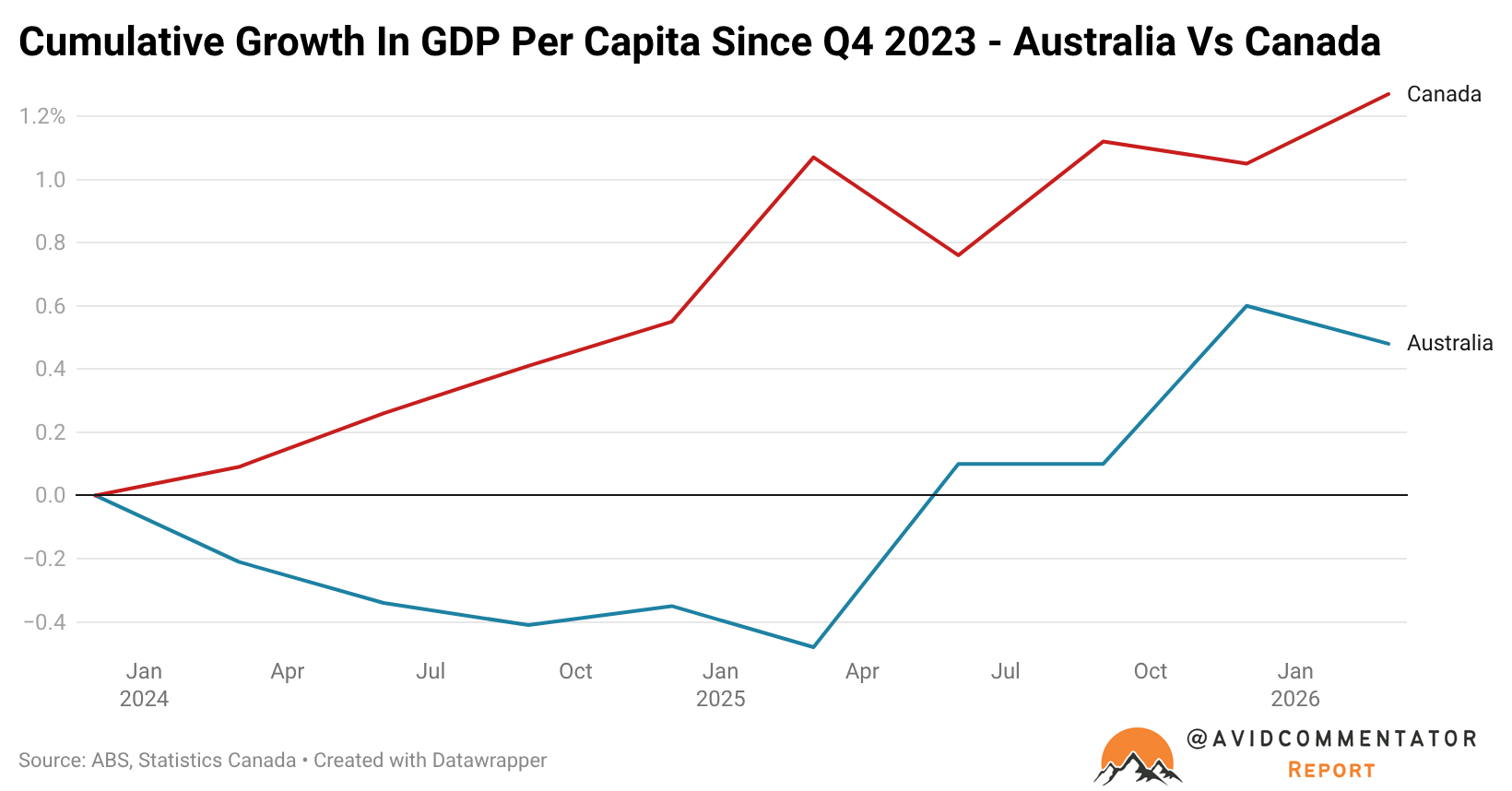
Now consider Canada’s GDP per capita growth against Australia’s, which has declined for 10 of the past 15 quarters:
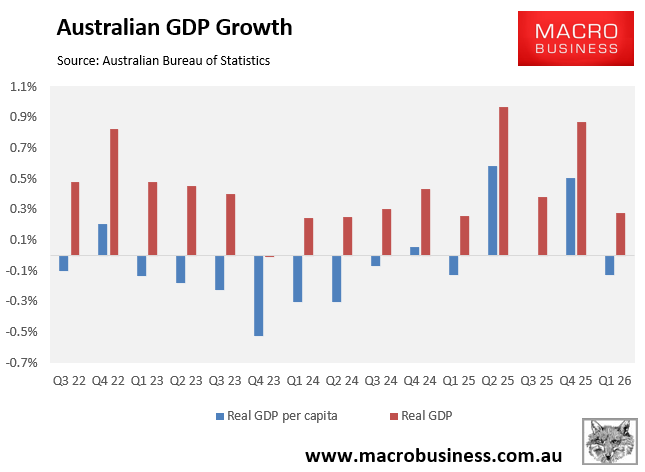
Tarric Brooker charted the divergent GDP per capita outcomes in the following chart:
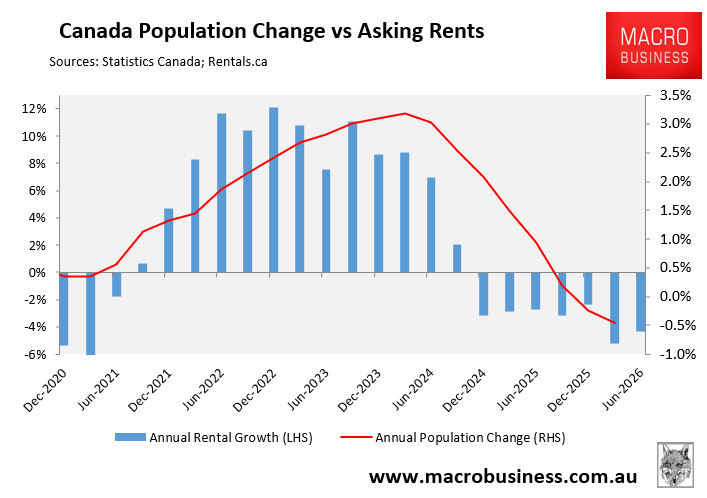
Canadian renters are also benefiting:
The reduction in Canada’s population has also benefited Canadian tenants, with asking rents declining for 21 consecutive months after immigration was cut, saving the typical tenant around 8% on their annual rental costs.
Now contrast this with Australia, where rental vacancy rates are tracking near historical lows, advertised rents continue to rise, and rental affordability is at an all-time low:

The Takeaway:
Since the economic reopening following the pandemic, extremely high levels of migration have been part of the strategy to support Australian headline growth. Despite its costs, this trend does not appear set to change.
In Canada, a combination of the reality surrounding housing, infrastructure and politics has driven a dramatically different approach to migration levels.
The evidence strongly suggests that Canada’s deep immigration cuts have delivered stronger economic and housing outcomes for citizens.
