
According to the latest version of AEMO’s flagship report, the 2026 ISP released in June, over 5 GW of coal is scheduled to close in 2029:
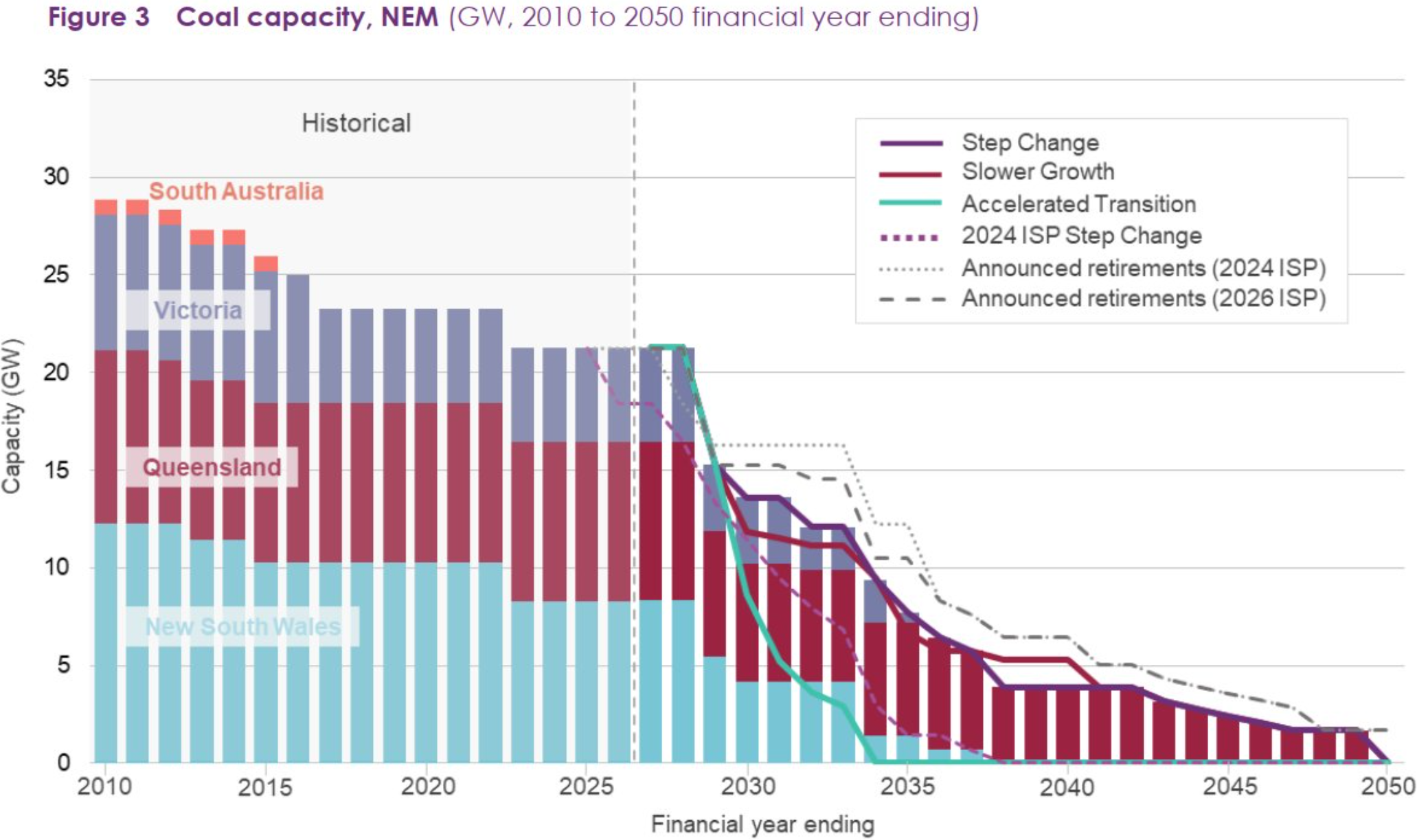
By 2035, Australia is scheduled to have lost around 15 GW of coal capacity, almost all from Victoria and NSW.
Given the challenges that evolving and growing electricity demand will place upon the grid, these targets appear to be entirely unrealistic and present an unnecessary risk to the continued supply of power to homes and businesses.
With Australia’s electricity demand set to soar due to the build-out of data centres, projected strong population growth, the electrification of the vehicle fleet, and the need for more water desalination plants, the notion that we could eliminate 15 GW of baseload non-weather-dependent generation for intermittent wind and solar generation is unrealistic and would lead to energy shortages.
This week, the physics reality hit Victorian and NSW policymakers.
AEMO warned that Victoria and South Australia may face supply shortages from July 2028 because the Yallourn power station’s closure removes nearly 25% of Victoria’s generation, and replacement renewable capacity—especially wind—is not being built fast enough.
As illustrated below by AEMO, coal accounted for 61% of Victoria’s electricity generation in the past 3 months:
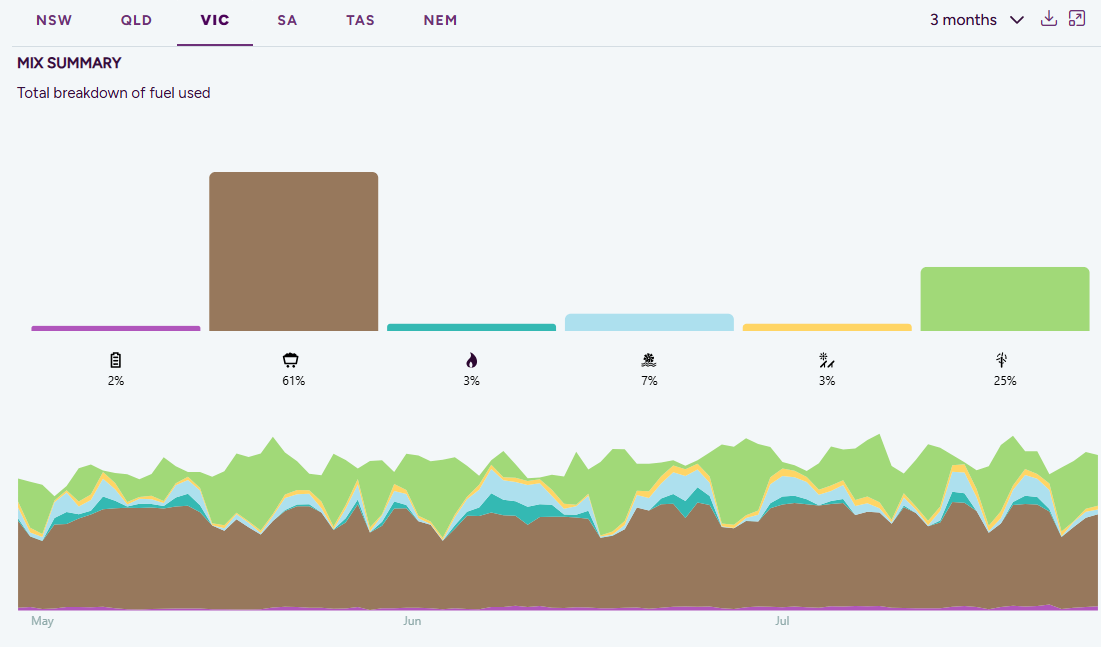
VIC Power Mix – Past 3 Months
Rystad likewise warned that Australia’s east coast electricity market could face an acute supply deficit early next decade if coal-fired power plants retire as scheduled.
Between January 2020 and July 2026, just four wind farms started construction in NSW, with a combined capacity of only 1GW.
“Given the challenges of getting wind farms to financial close, it is unlikely the pace of wind installations will materialise”, Rystad said in a client note published in The Australian newspaper. “Thus the more likely outcome over the next five-to-ten years will be an extension to the coal plants, particularly in NSW, as the volume of wind generation is simply not being built to replace the retiring volumes”.
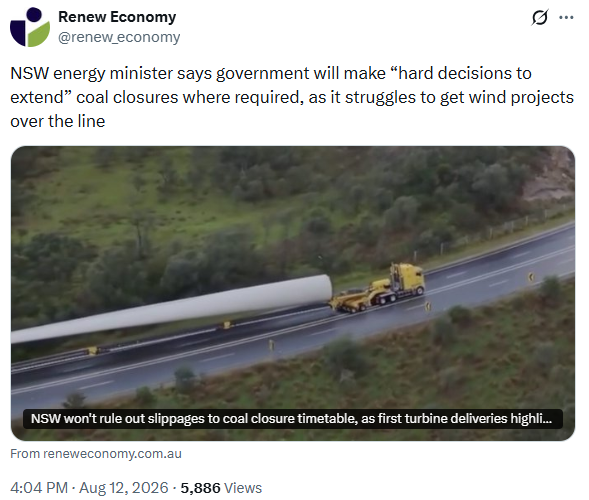
Not surprisingly, the NSW government is actively examining extending the life of the state’s coal-fired generators, which seems inevitable.
Over the past three months, coal has accounted for 70% of NSW’s electricity generation, according to AEMO:
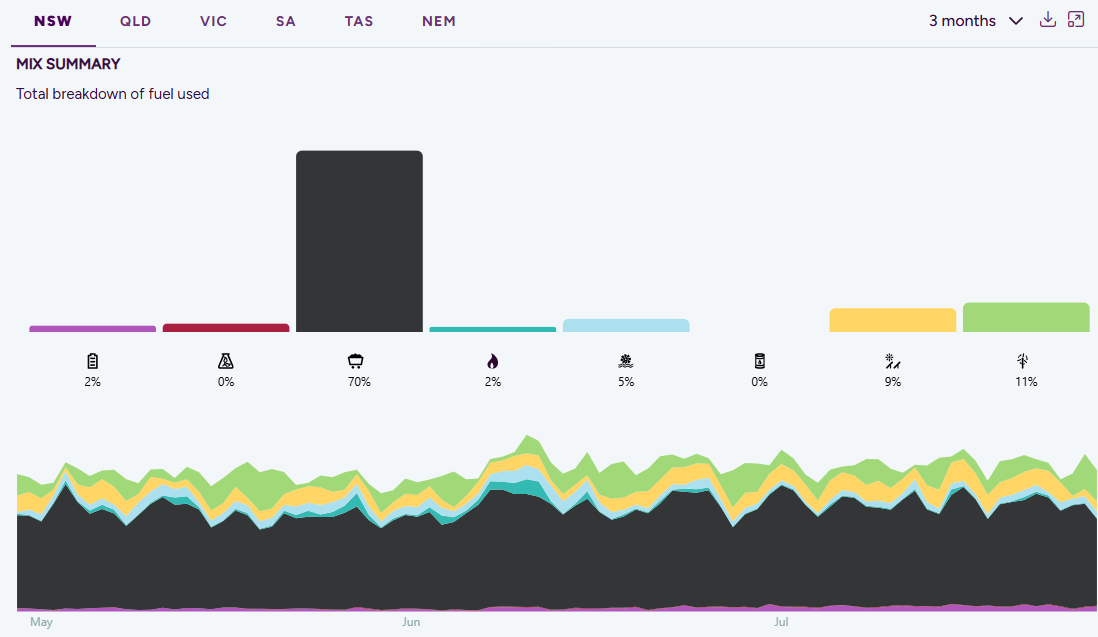
NSW Power Mix – Past 3 Months
The reality is that Labor’s 82% renewable energy target by 2030 was never achievable nor desirable from an economic perspective. The situation is worse now with the rapid build-out of data centres, especially in NSW and Victoria.
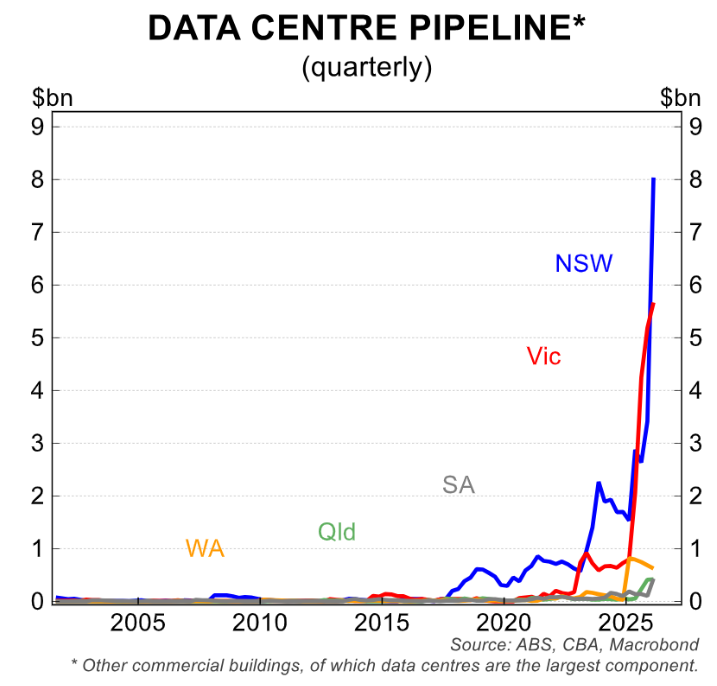
My view remains that Australia should emulate China’s approach to energy. That is, aim for energy abundance with a balanced diet of generation sources.
I am interested in readers’ views. Am I right or way off base?
