
Developers send warning as new home sales collapse
As has been well documented, Australian dwelling completions are tracking 27% (112,400) below the National Housing Accord’s target of 1.2 million homes over five years, which requires a construction run rate of 240,000 homes a year.
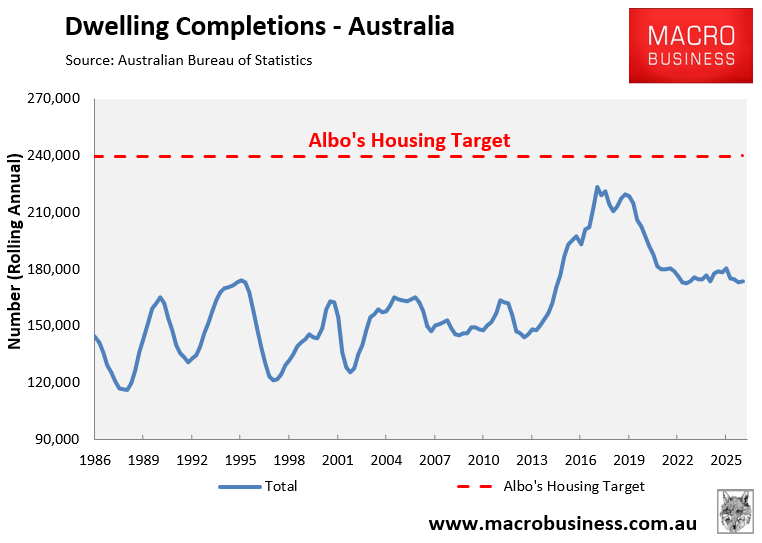
The outlook has also worsened recently amid soaring construction costs and the steep house price correction, which has made developments more financially risky.
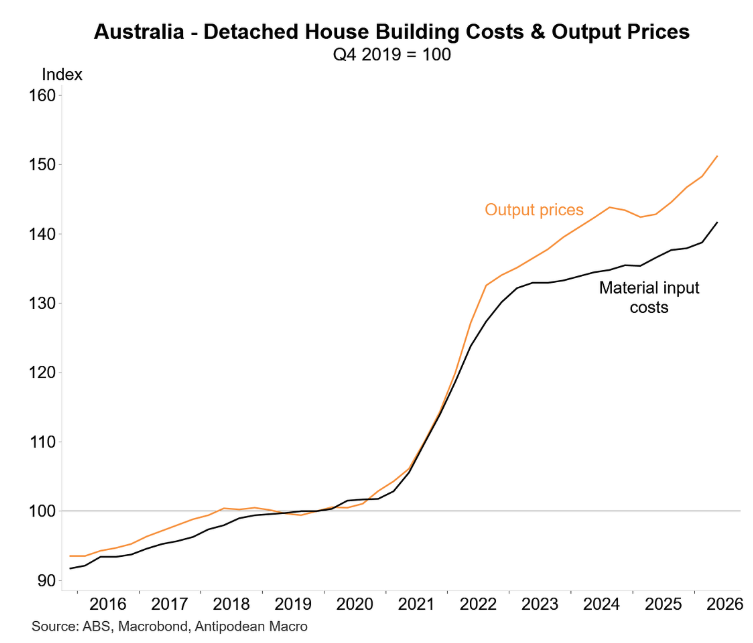
Earlier this month, leading apartment developer Tim Gurner warned that the house price correction, coupled with the federal budget’s investor tax changes, elevated interest rates, and rising construction costs, has made development problematic:
“Right now you’ve got sentiment problems, you’ve got debt problems, capital problems, construction issues”, Gurner said. “It’s never been harder to develop residential real estate. What we’re seeing in the market now with clearance rates and pricing, that’s not a fundamental real estate issue; that is purely a sentiment and sentiment of fear that has been created by the government”.
“It is saying directly to the government: your policies will limit supply. That’s as simple as that”.
Australia’s largest private residential land developer, Nigel Satterley, has forecast a 36% decline in combined residential land sales from developers across the country this coming year.
“When the market is normal the demand for lots is 50,000 per annum and our forecast for this year will be about 32,000”, he said.
Satterley blamed the federal government’s changes to negative gearing and capital gains tax for the collapse in buyer sentiment.
“The new budget and the changes to the rules. It’s made the buyers very cautious because the investors can’t buy established houses and get a tax deduction. Since the federal budget and the tax change announcement that have come out, the first homebuyer inquiry has dropped by 50% and first home buyers have become very cautious”.
Listed developers Stockland and Mirvac also reported slower sales and enquiries following the budget’s changes.
Indeed, the latest new home sales data from the Housing Industry Association (HIA), presented below by Justin Fabo from Antipodean Macro, show that new detached house sales by large builders fell 3.7% in July, taking the cumulative decline since April to 23.4%:
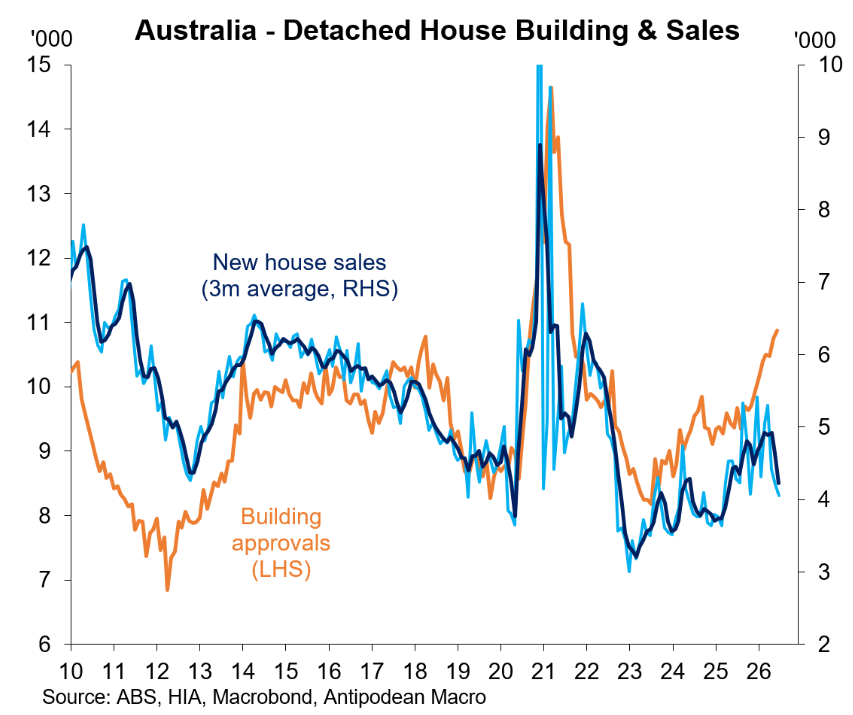
The upshot, according to Nigel Satterley, is that rents would continue to rise amid strong immigration and falling housing construction.
“The rental market is very, very strong because today, there’s about 460,000 shortfall of dwellings”, he said. “We’ll never catch up, and that’s why there’s so much pressure on rents. The immigration should be at least 240,100. The rents are going to continue to rise, and I would use the word quickly, well above inflation rate because of the shortage”.
With new housing supply likely to remain constrained for the foreseeable future, the only realistic way to alleviate the housing shortage and ease pressure on rents is to reduce immigration, as Canada has done.
