
Cotality’s rental data for July confirmed that the market remains extremely tight. Rental affordability has also hit a fresh record low, with tenant households paying a record share of their incomes on rent.
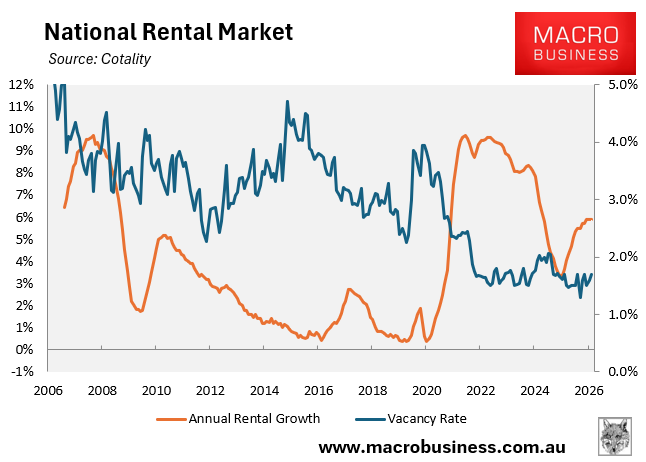
Advertised rents nationally grew by 0.4% in July, leaving the annual growth rate at a cyclically high 5.9% for the third consecutive month, adding the equivalent of $40 per week to the national median rent.
The national rental vacancy rate also remains historically tight at 1.7%, although it has lifted marginally from May’s low of 1.5%.
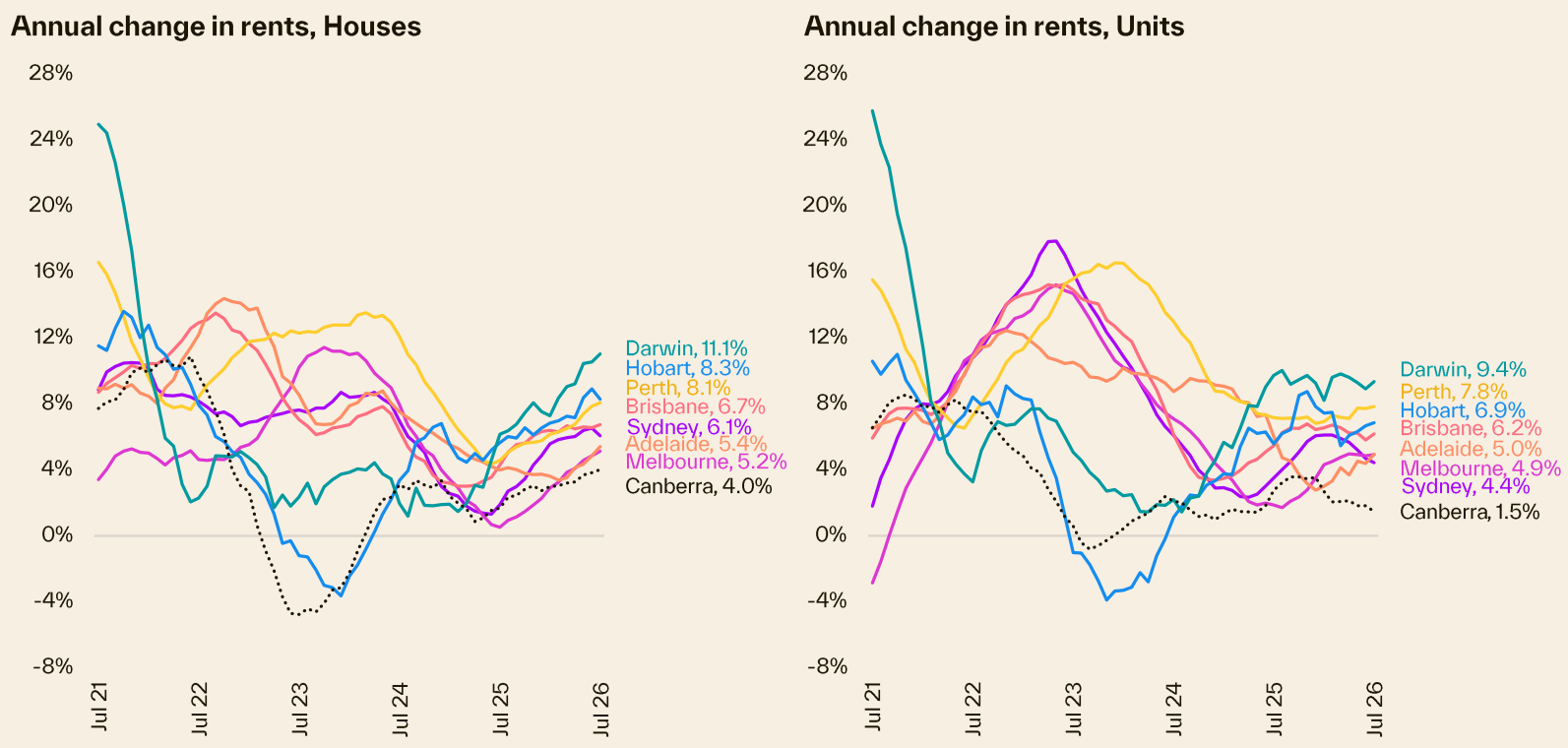
The following chart from Cotality’s July housing report shows that annual advertised rental growth has accelerated across most capital city markets.
Source: Cotality
Gerard Burg, Cotality’s Head of Research, noted that “extremely low rental vacancy rates continue to put upward pressure on rents”. However, “despite the tight market conditions, there are question marks about how much further rents can rise”.
“The median rent has risen by over $200 per week in the last five years. Rental affordability is already stretched, with households paying a record proportion of their income to rent in the March quarter”, he said.
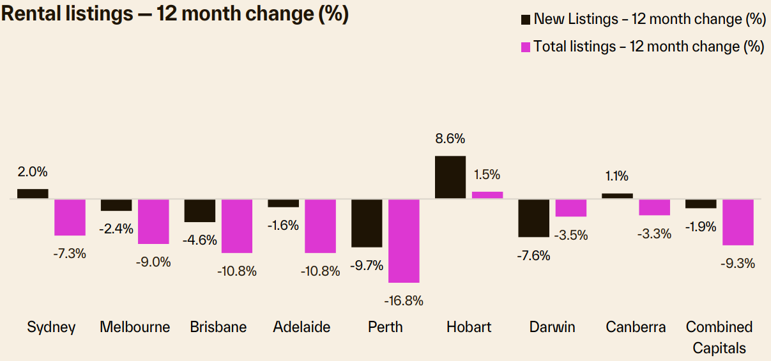
The immediate outlook for tenants is concerning given that the number of rental listings across all capital cities on the mainland has fallen over the past 12 months.
Source: Cotality
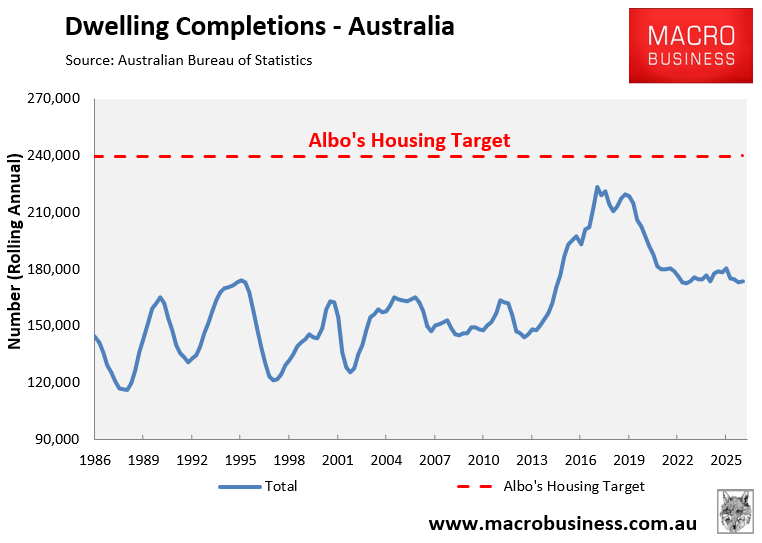
Actual dwelling completions also remain depressed, tracking 27% below the federal government’s housing targets.
The one saving grace is that net overseas migration looks like it may finally fall below 300,000 annually, albeit it remains historically elevated.
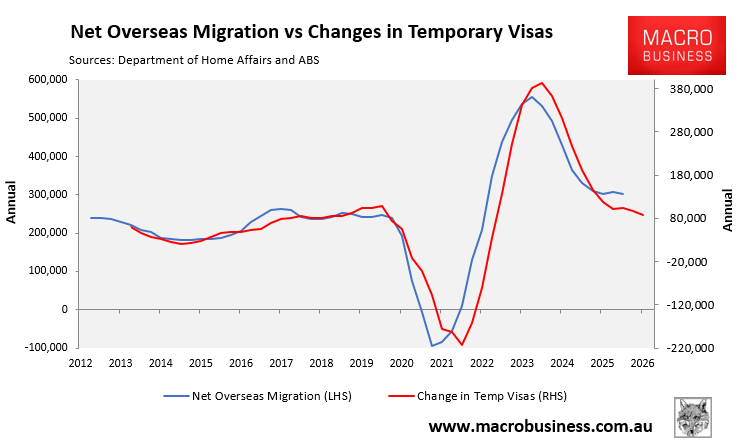
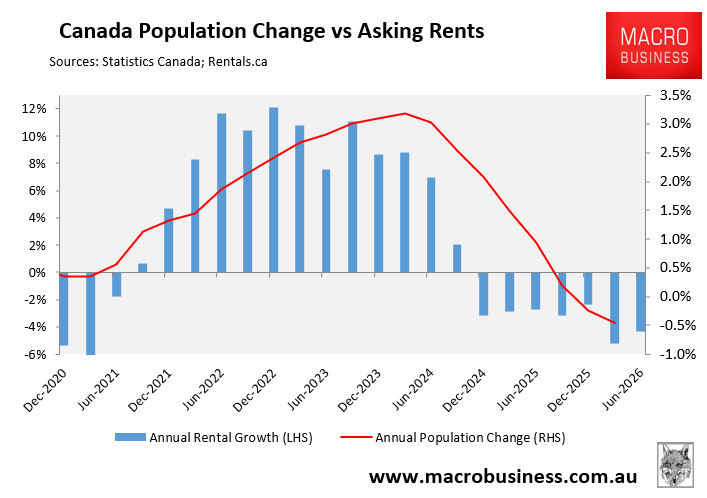
The reality is that if rental affordability is to dramatically improve in Australia, it will require the government to significantly cut immigration, as Canada has done.
Canada’s deep immigration cuts have resulted in 21 consecutive months of declining asking rents, lowering them by around 8% from their mid-2024 peak.
Australia’s housing shortage and rental crisis will only resolve when there is an extended period of supply running ahead of populationm demand.
