
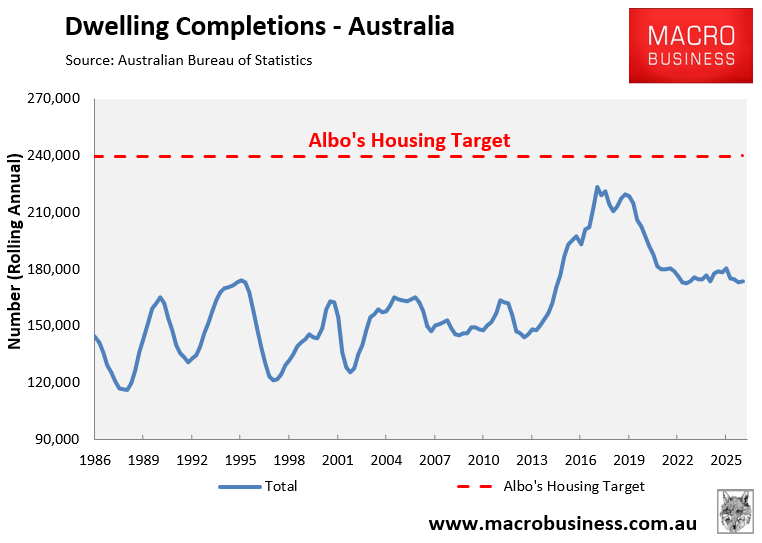
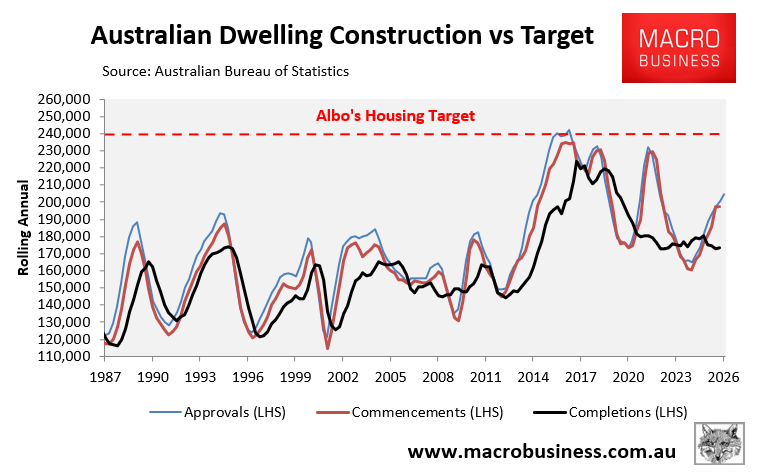
The latest dwelling completions data from the Australian Bureau of Statistics (ABS) showed that only 173,400 homes were built in the year to March 2026, 66,600 (28%) fewer than the 240,000 annual run rate required to meet the National Housing Accord’s target of building 1.2 million homes over five years.
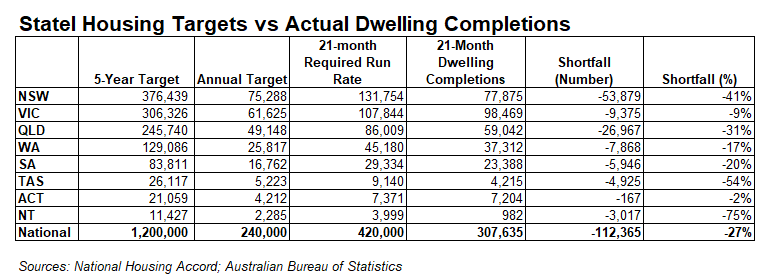
Over the first 21 months of the National Housing Accord, 112,400 fewer homes have been constructed than the target, representing a 27% shortfall. NSW and Queensland, in particular, are tracking well behind the target.
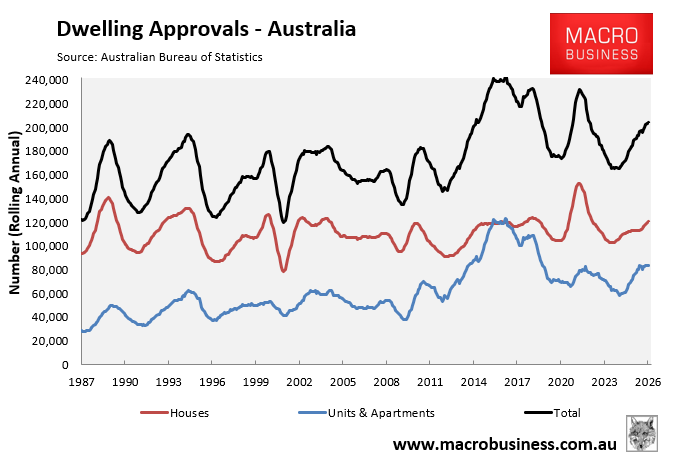
On Thursday, the ABS released dwelling approvals data, which showed that over the year to June 2026, 204,600 homes were approved for construction, 35,400 (15%) fewer than the National Housing Accord’s annual target:
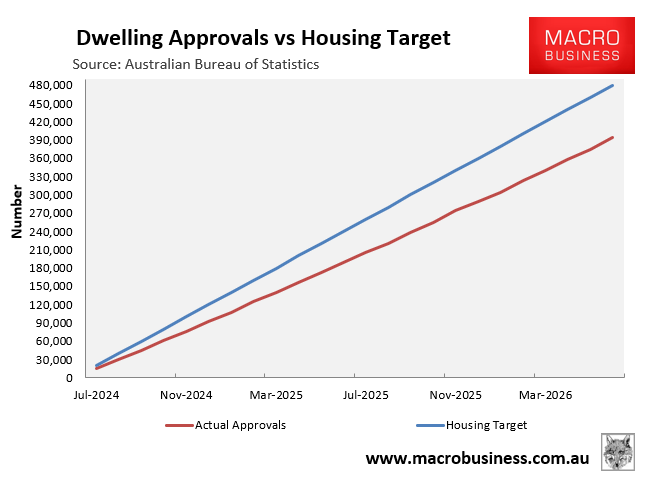
Over the first two years on the National Housing Accord, dwelling approvals were tracking 86,600 (18%) behind the run rate required to meet the target:
As illustrated below, a large gap has opened up between dwelling approvals and actual dwelling completions, with the latter lagging badly:
As of the March quarter of 2026, there were 243,900 dwellings in the construction pipeline, the highest amount on record.
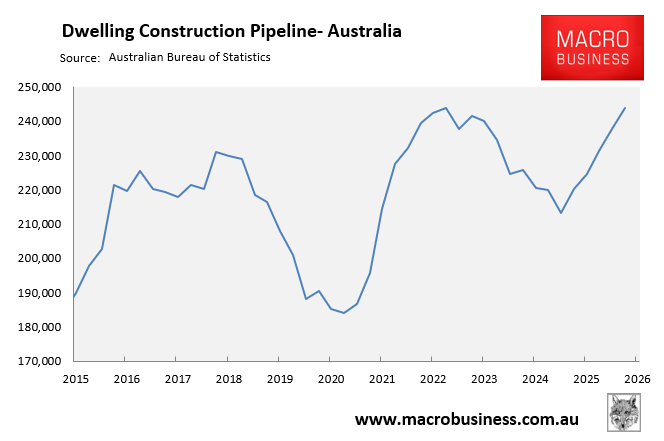
The construction pipeline is bulging because the sector is having difficulty building homes due to soaring costs, labour shortages, high interest rates, and other supply bottlenecks.
As a result, the time taken to build a home in Australia has blown out:
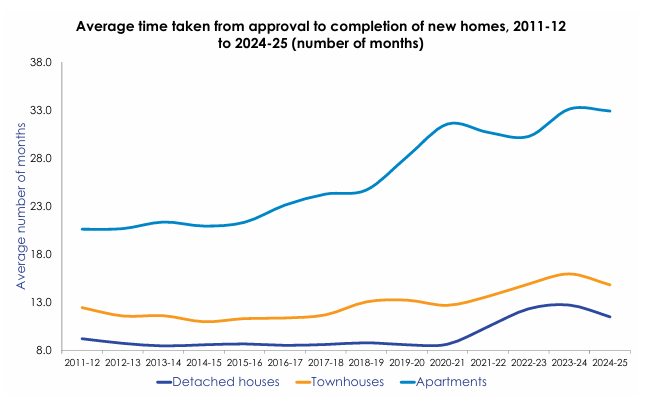
Source: Master Builders Australia
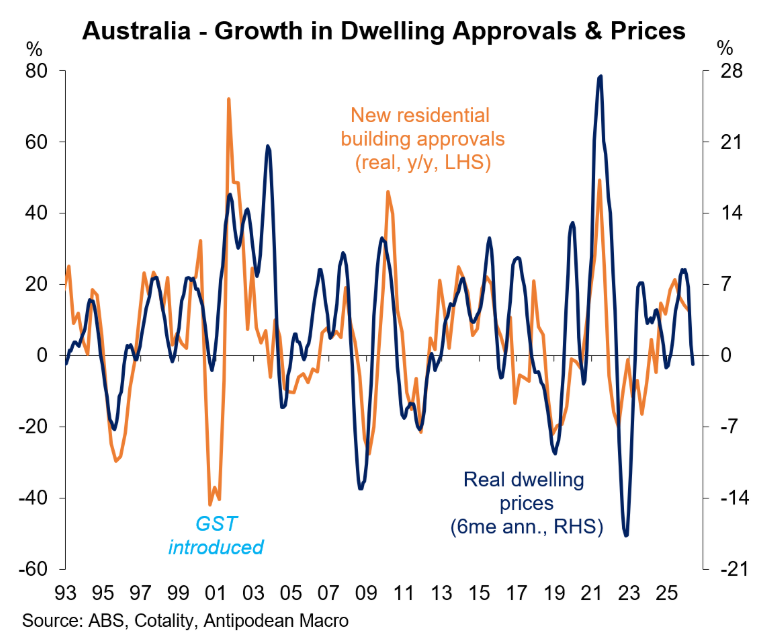
As illustrated below by Justin Fabo from Antipodean Macro, dwelling approvals and ergo construction tend to decline when values are falling:
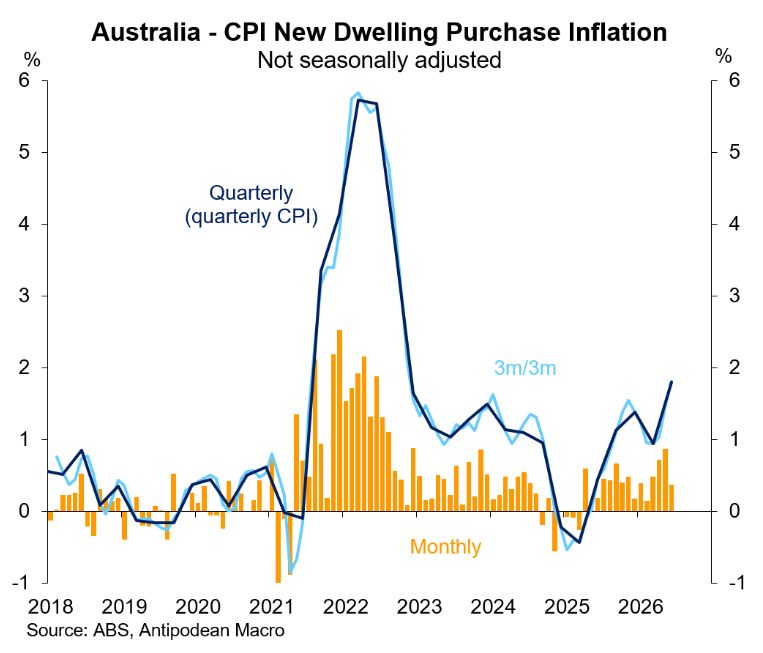
This week’s CPI release from the ABS also showed that dwelling construction costs are rising quickly:
Thus, the macroeconomic conditions are against a rebound in construction.
