
The massive rise in state debt has placed Victoria in a precarious financial position.
When the state Labor government took office in 2014, Victoria had very low debt. Now it is the most indebted state government with the lowest credit rating.
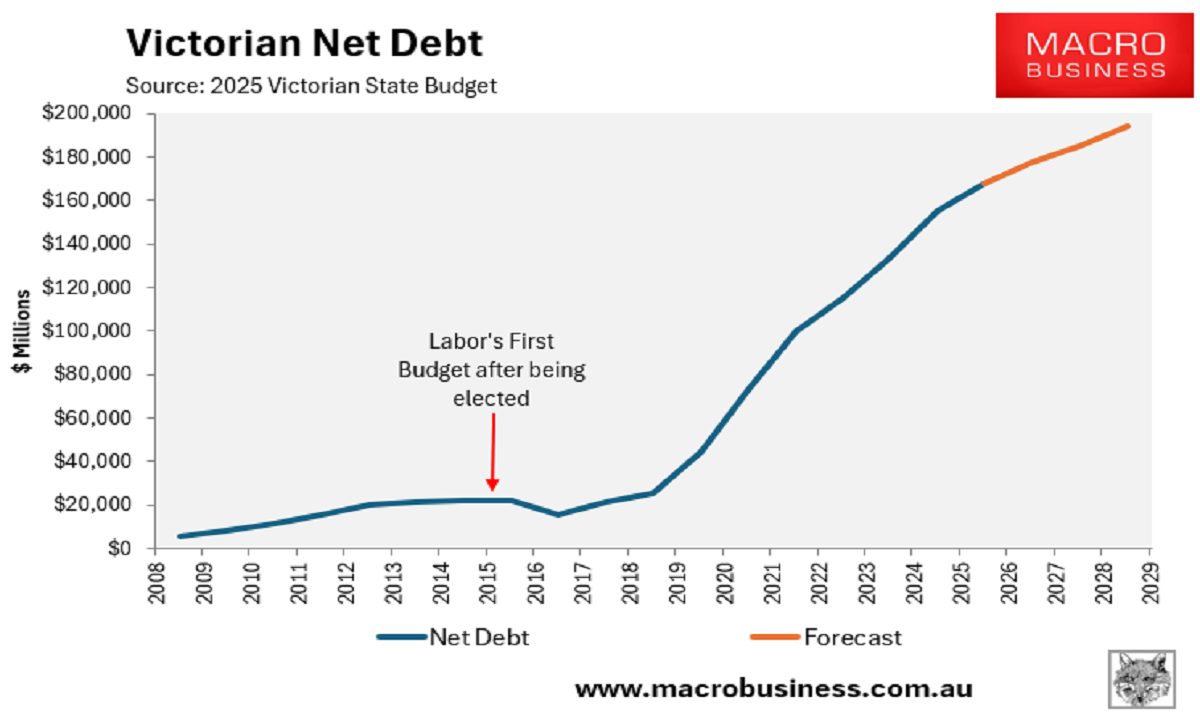
Victoria’s debt binge has been brought about by profligate spending on the public service, which has ballooned in size, as well as infrastructure, which has been mired in rorts and CFME corruption.
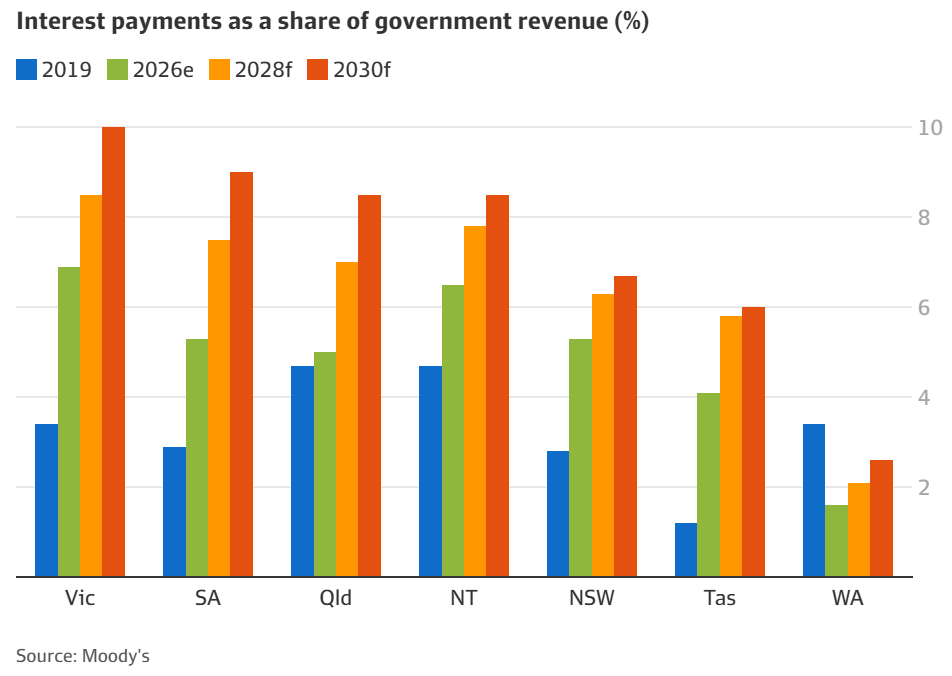
Moody’s last week warned that Victoria is heading for a severe debt‑affordability crunch, with interest costs set to consume one in every ten dollars of state revenue by 2030 (up from 3.5% in 2019).
Jacinta Allan is now one of the most unpopular state leaders in Australian history. Rumours are growing that Allan will be ousted this week, which could provide a short-term boost to Labor’s polling.
However, the Coalition still looks set to win the November election under leader Jess Wilson, who is tipped to serve as both premier and treasurer.
Wilson contends voters are very angry at the Labor government and Premier Jacinta Allan, and that the Liberals are the only “people on the ground offering a plan” to fix what she contends is a “broken” state
With one in every 10 dollars of revenue projected by Moody’s to go towards debt repayments, turning around Victoria’s debt trajectory is the key challenge facing the next government.
With Victorians already ‘tapped out’ paying the highest state taxes in the nation, the bulk of the fiscal repair will need to come from spending cuts, which means austerity.
Victoria’s bloated bureaucracy, which has driven the state’s operating expenses, will need to be downsized significantly.
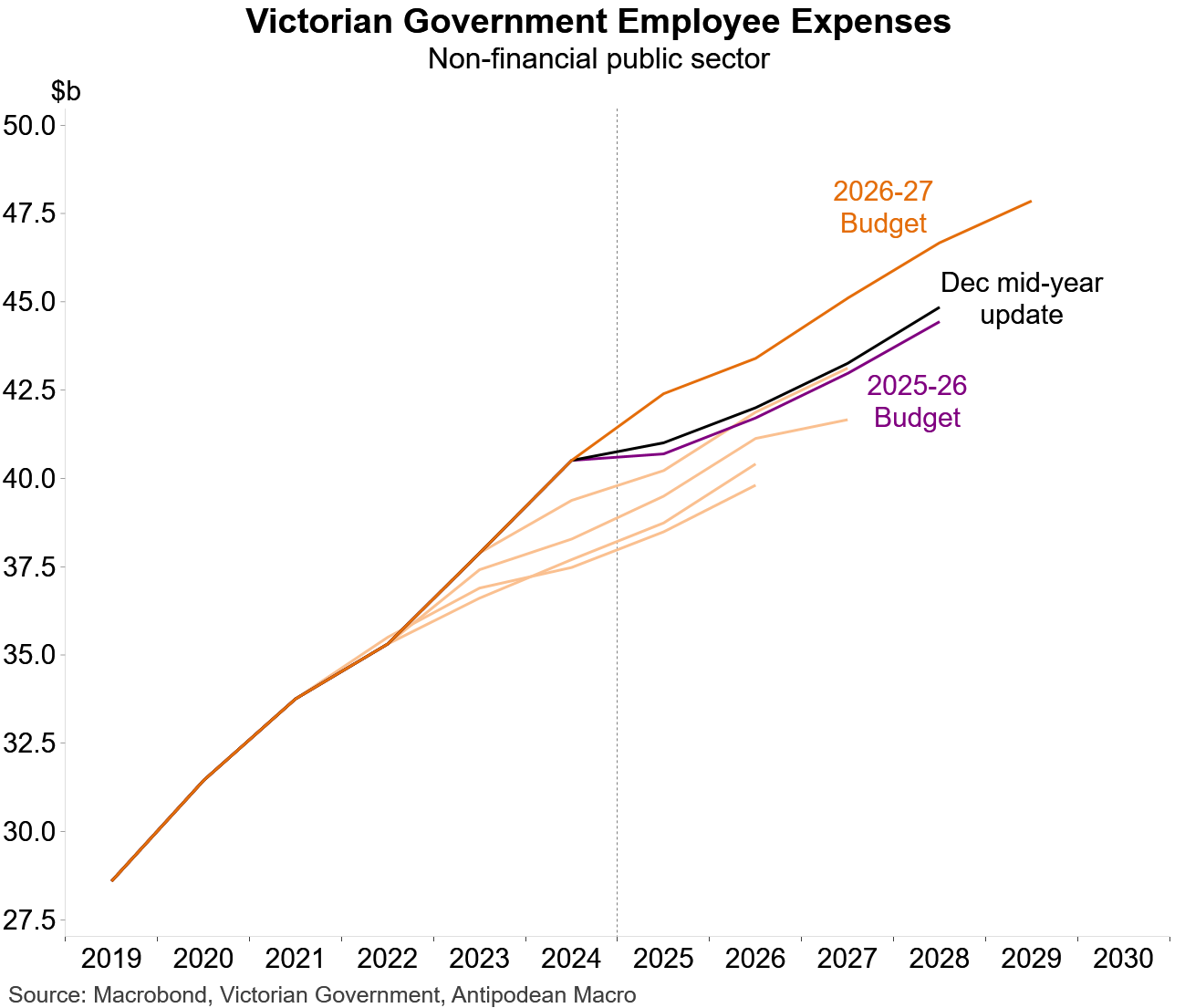
Chart by Justin Fabo from Antipodean Macro
Victoria will also need to dramatically streamline infrastructure investment, ensuring it is ‘fit for purpose’ and delivers the greatest ‘bang for the buck’.
However, budget austerity will necessarily lower the state’s aggregate demand and growth in the short-to-medium term, at the same time as Victoria already has the highest unemployment and underemployment in the nation.
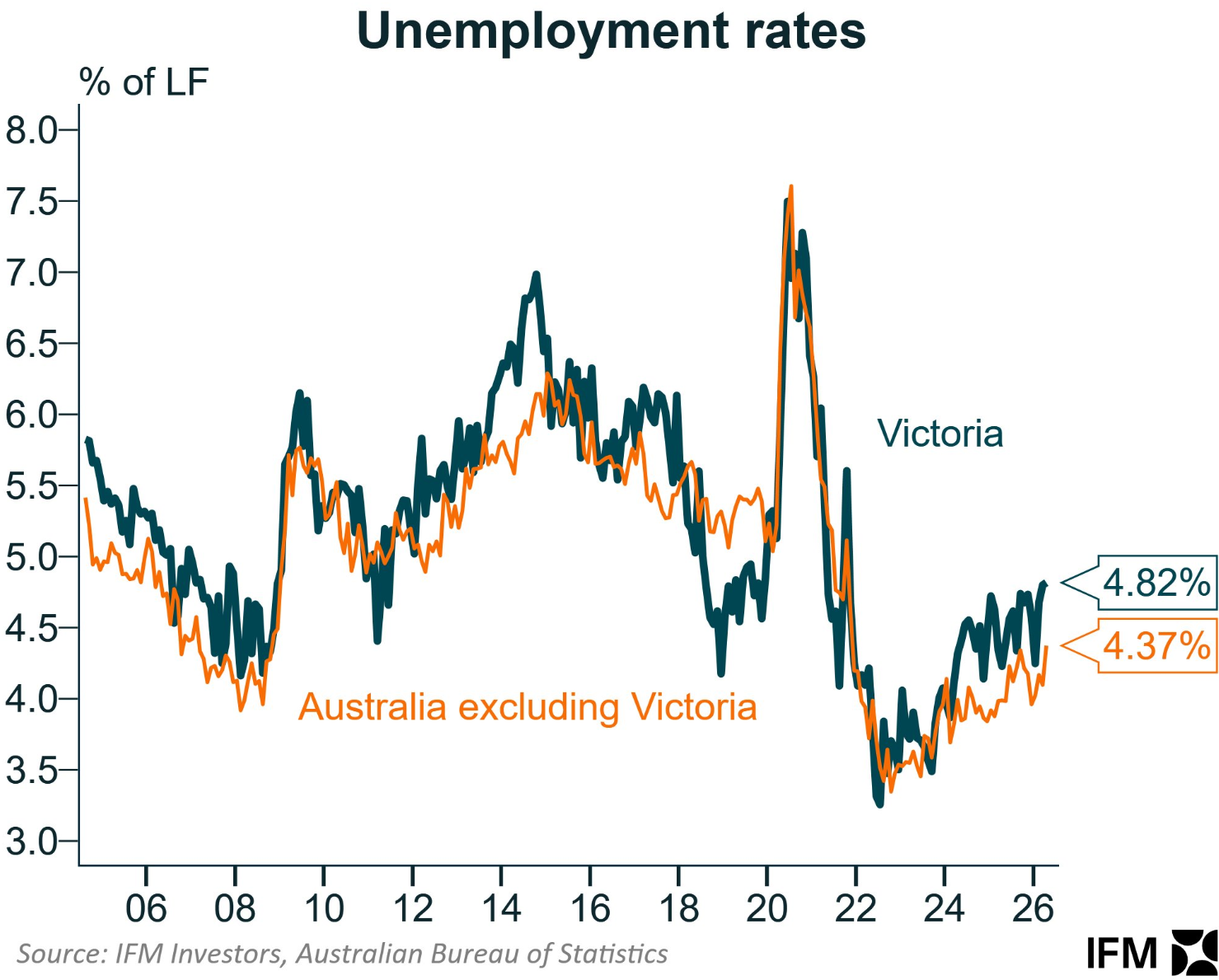
Chart by Alex Joiner (IFM Investors)
Thus, placing Victoria on a more sustainable debt trajectory will be a painful but necessary process if the state’s budget and economy are to return to long-term health.
Victoria has been in a similar position before. In the early 1990s, the Kennett Liberal government embarked on a similar austerity program to return the state to a sound financial position. And it worked.
The difference this time, however, is that most of the state’s assets have already been sold (privatised), making austerity more difficult this time around.
