
Australia’s dwelling construction is already running well behind the Albanese government’s 1.2 million five-year target, as set out in the National Housing Accord.
The target requires a construction run rate of 240,000 homes annually – a level of dwelling construction that Australia has never achieved before.
In the year to March 2026 – the latest data available – only 173,400 homes were built, 66,600 (28%) fewer than the 240,000 annual target.
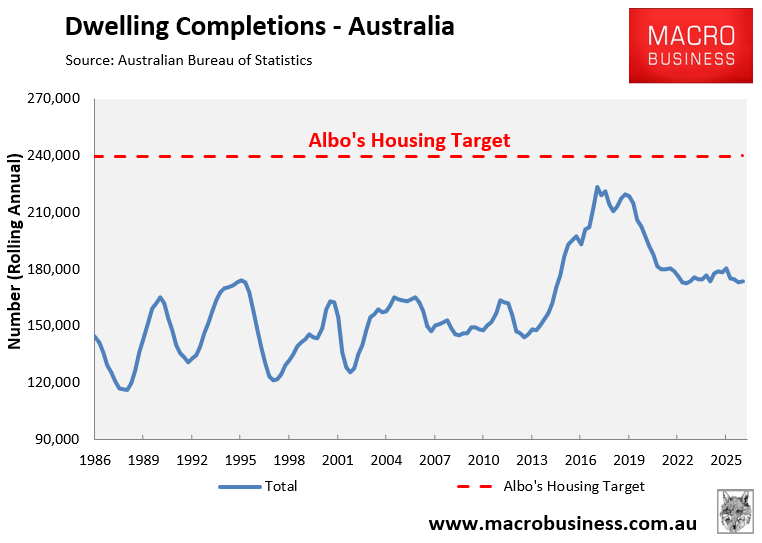
In fact, over the first 21 months of the National Housing Accord, 112,400 fewer homes have been constructed than the target, representing a 27% shortfall.
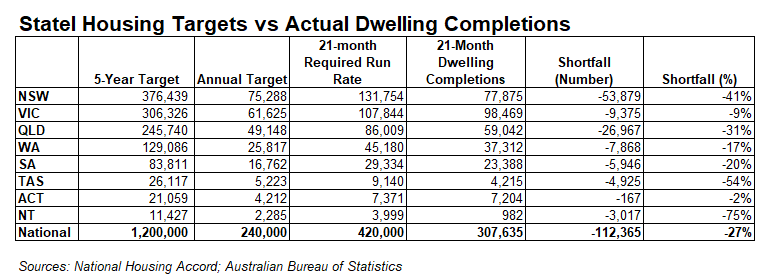
As illustrated above, NSW and Queensland are tracking severely behind target.
The reality is that the construction pipeline in Australia is severely bottlenecked, negatively impacted by soaring costs, labour shortages, builder insolvencies, and timeline blowouts.
The news around costs worsened on Wednesday, with the June ABS CPI release revealing that new dwelling purchase prices rose a strong 1.8% over the June quarter and by 5.4% year-over-year:
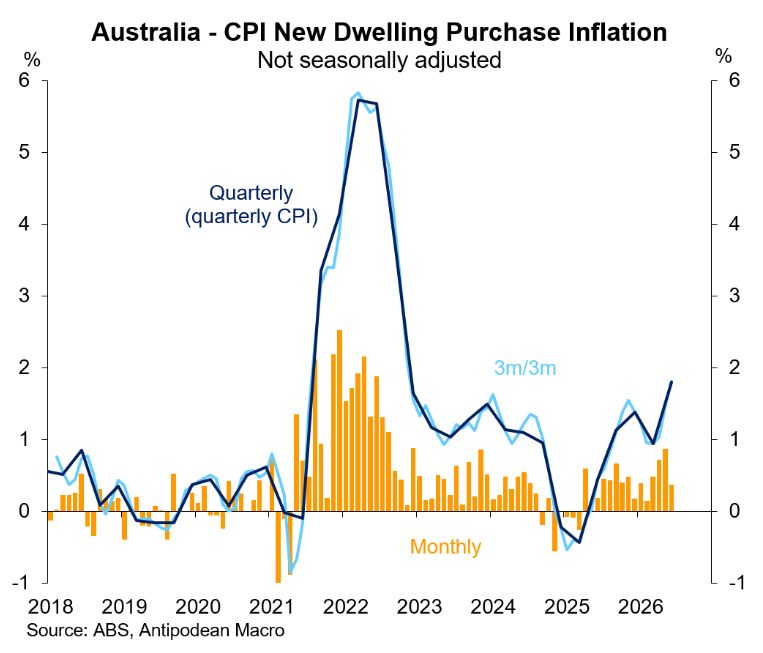
Chart from Justin Fabo (Antipodean Macro)
The trajectory of construction costs presented above is obviously worrying and reflects, to a significant extent, inflation arising from the Middle East energy shock.
The upshot is that, with costs rising in the construction sector, the likelihood of boosting housing construction to meet the government’s lofty (read: unrealistic) targets has taken another hit.
