
Data centres are incompatible with renewable energy targets
The Northern Territory government is backing plans for a $40 billion data centre industry, with several ‘hyper-scale’ AI data centre campuses to be built on land around 30 kilometres from Darwin.
These data centres would be powered by 3 GW of electricity generation, which in turn would be powered by gas from the NT’s Betaloo Basin.
The plan puts the NT government at odds with the federal government, which has drafted rules that would force data centres to power their operations with new renewable energy sources.
The issue is expected to come to a head at a meeting of energy ministers this week, with the Queensland government publicly opposed to the renewable-only proposal, given a lack of modelling and clarity over how the plan would work.
Data centres are incompatible with renewable energy targets:
The debate comes as Australia is on the verge of a major boom in data centre investment.
Based on public announcements, CBA estimates that there is around 6GW of potential capacity in Australia’s pipeline.
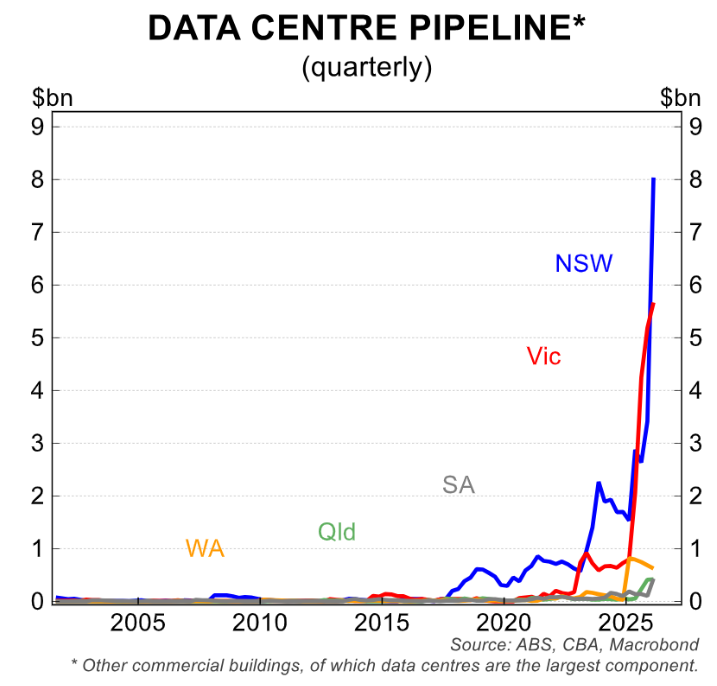
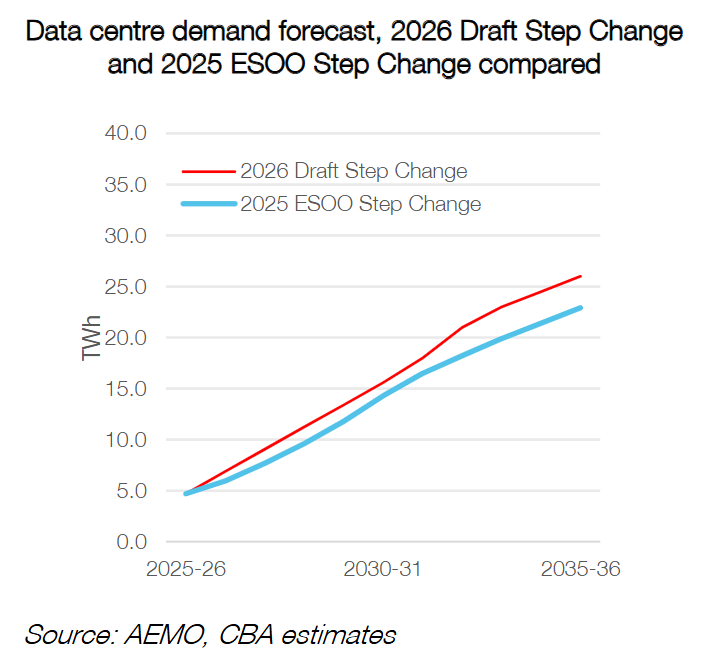
Data centres are estimated to have accounted for 2% of Australia’s electricity consumption in 2024-25, but this figure is forecast to grow to more than 6% by 2031 and to around 9% of electricity consumption by 2036.
Data centres will also be significant consumers of water for cooling purposes, especially in greater Sydney.
Sydney Water estimates data centre demand could reach around 260 megalitres per day by 2035, equivalent to ~95bn litres per year or 15–20% of current Greater Sydney supply.
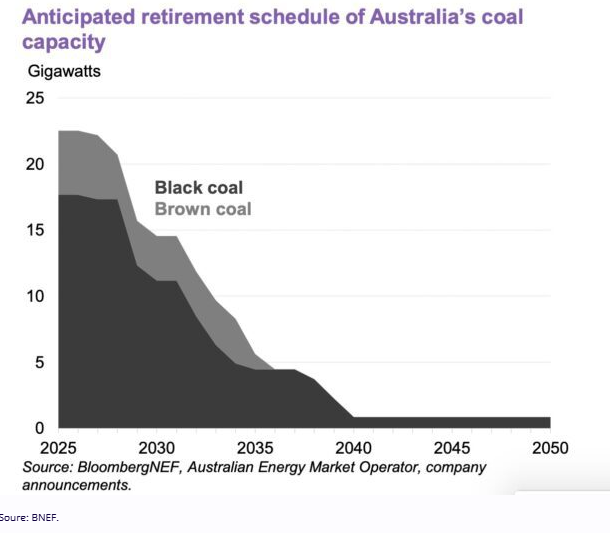
To meet the federal government’s 82% renewable energy target (RET) by 2030, the majority of Australia’s current coal fleet must be retired and replaced with approximately 6–7 GW of new large-scale renewable generation annually, along with several gigawatts of storage.
Nearly every major renewable energy project over the past decade has been heavily subsidised by the government (taxpayers).
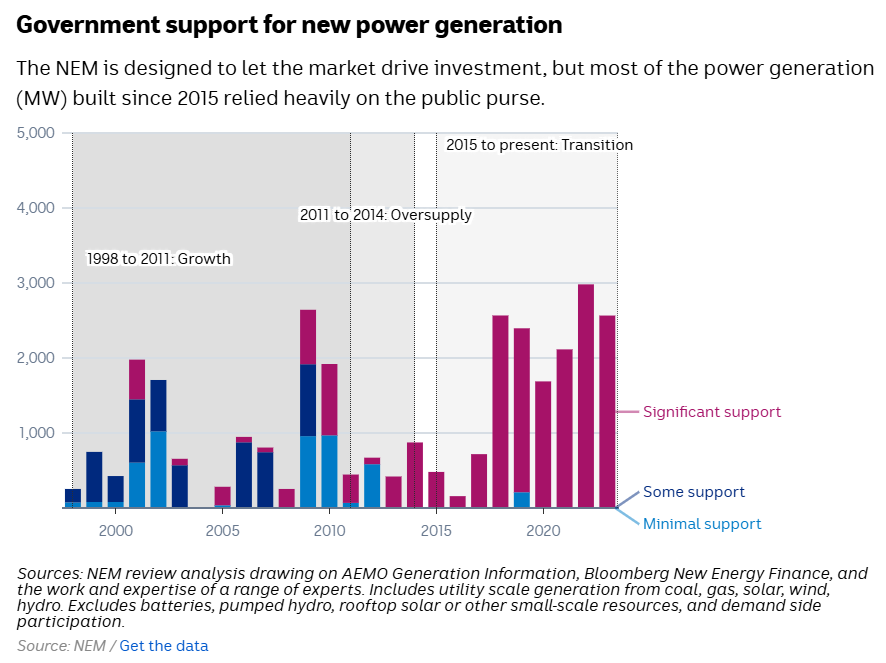
Despite these subsidies, Australia’s transition to large-scale renewable energy has slowed to a crawl.
Investment in large‑scale renewable energy in Australia collapsed by 50% in 2025, falling to a 10‑year low.
New financial commitments for large‑scale renewable projects fell from $8.8 billion (2024) to $4.4 billion (2025) — a 50% crash and the lowest investment level in a decade.
Federal climate change and energy minister Chris Bowen wants data centres to underwrite new renewable energy projects.
“Clean energy is not a barrier to data centres. It is an essential ingredient”, Bowen said. “But it has got to be done right. Data centres bringing their own new renewable energy is an important part of that”.
However, the expansion of data centres, which require a 24/7 power supply, is incompatible with the closure of baseload coal generators and the transition to intermittent, weather-dependent renewables.
Data centres run 24/7 and cannot tolerate outages. Their power demand is continuous and rising.
Renewables like wind and solar are variable and weather-dependent, so they cannot guarantee uninterrupted supply, as was illustrated yet again on Sunday evening when wind power stalled and coal and gas accounted for 70% of the NEM’s power supply:
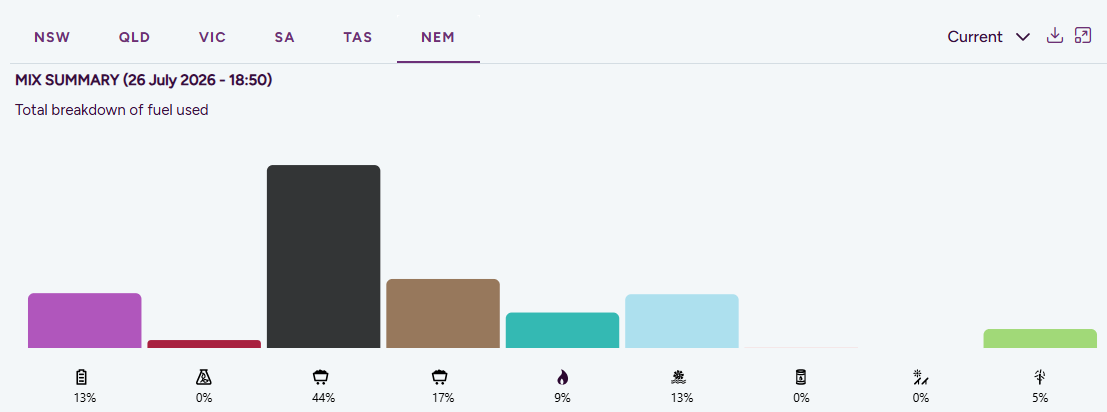
Another wind drought hit the NEM on Sunday evening (26 July 2026)
S&P Global warns that renewable intermittency is increasingly clashing with the round-the-clock power needs of the booming data-centre sector, which is extending the life of fossil-fuel generation.
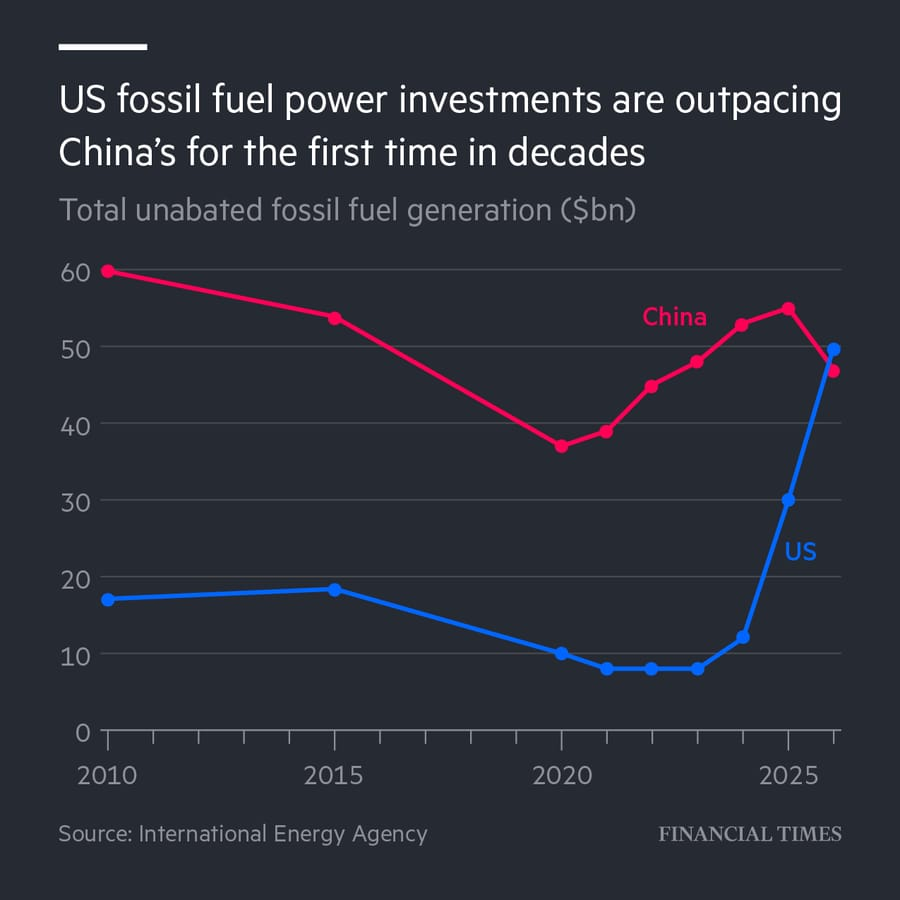
Indeed, the following chart from the Financial Times, derived from the International Energy Agency, shows that the United States is now the largest driver of new fossil fuel power generation, overtaking China, due to the rapid expansion of data centres:
BlackRock CEO Larry Fink also stated at the latest WEF meeting in Davos that solar and wind energy alone “can’t reliably keep the lights on”:
“The world is going to be short power. Short power”, Fink told the audience in Davos.
“And to power these data companies, you cannot have just this intermittent power like wind and solar. You need dispatchable power because you can’t turn off and on these data centres”.
Australia is set up for energy failure:
The reality is that Australian electricity demand will surge in the future due to:
- The rapid expansion of data centres;
- The projected 13 million expansion of the population over the next 40 years;
- The expected electrification of the vehicle fleet; and
- The build-out of water desalination plants.
Data centres, and the Australian economy more generally, require reliable 24/7 power, which can only be provided by dispatchable, non-weather-dependent sources such as coal, nuclear, and gas.
In my view, it makes no sense for Australia to be the largest coal exporter to Asia, which accounts for more than 80% of the world’s coal consumption and 60% of the world’s carbon emissions, but to ban burning coal at home to meet ‘net zero’.
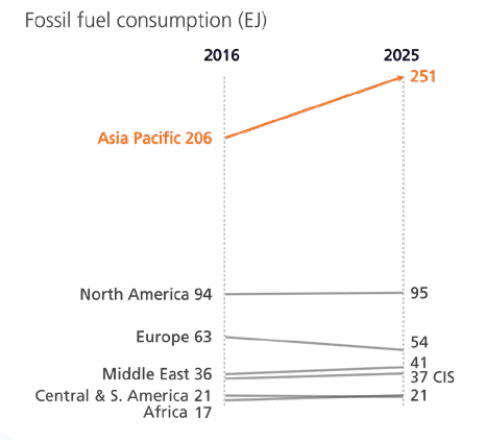
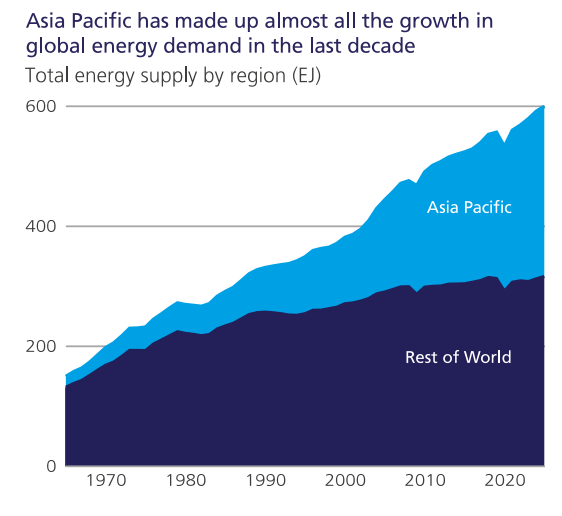
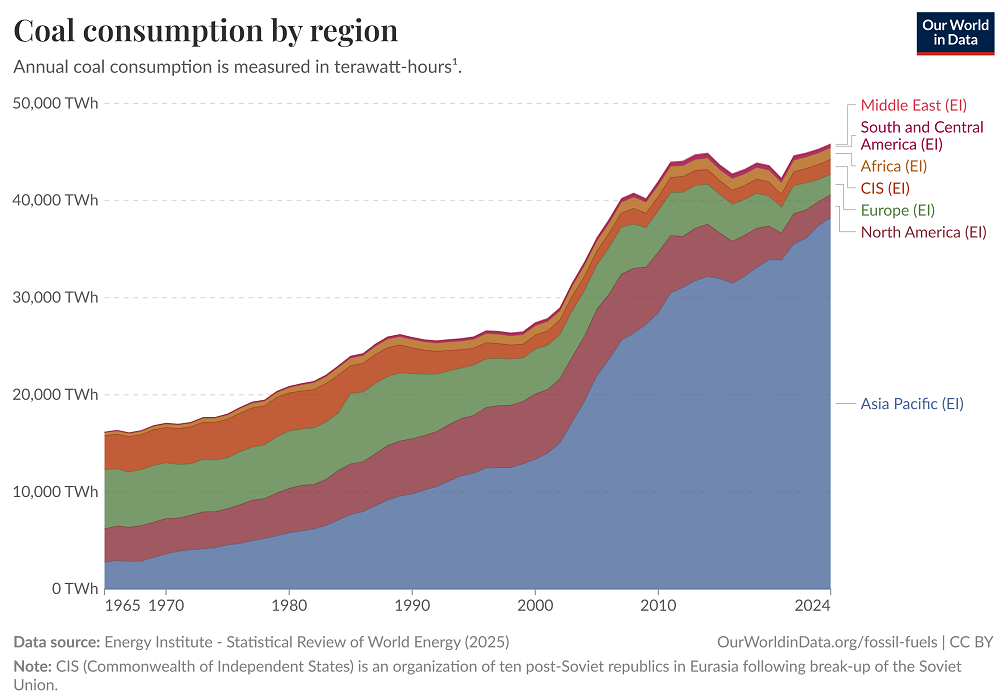
Wouldn’t we be better off burning coal in Australia, in a cleaner, more modern coal plant like those in Japan, than sending it overseas to be burnt in a less clean manner that increases pollution and emissions?
