
Later this morning, we will receive the June labour force accounts from the Australian Bureau of Statistics (ABS), which will be a key input into the Reserve Bank of Australia’s (RBA) decision-making matrix ahead of next month’s monetary policy meeting.
With trimmed mean inflation remaining stubbornly high and the global oil price ticking higher amid the escalating conflict in the Middle East, the RBA will need to see a rise in the unemployment rate and/or a moderation of inflation in the quarterly CPI release to prevent it from hiking further.
The latest batch of unofficial labour force statistics has been soft, suggesting unemployment should rise.
The latest unemployment estimate from Roy Morgan Research, released last week, recorded its highest unemployment rate (11.7%) since January 2021.
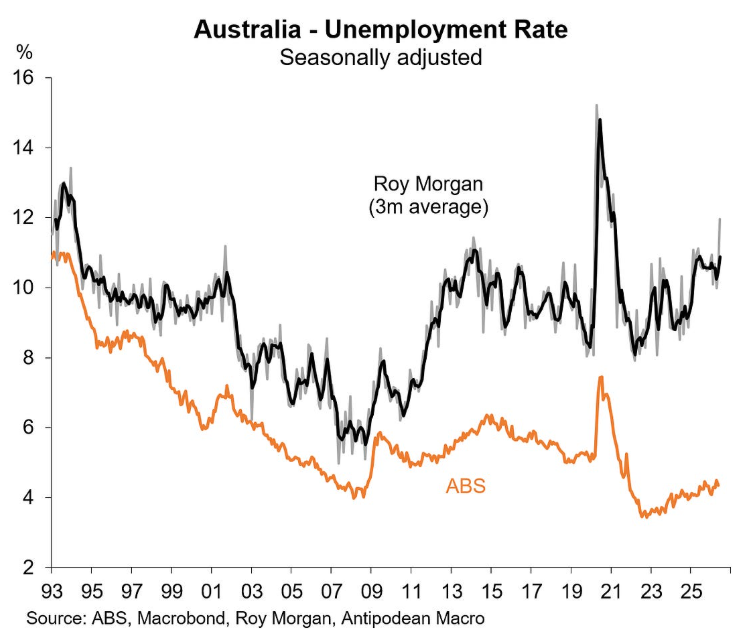
Chart from Justin Fabo (Antipodean Macro)
The latest NAB business survey, released last week, showed that employment growth has slowed sharply.
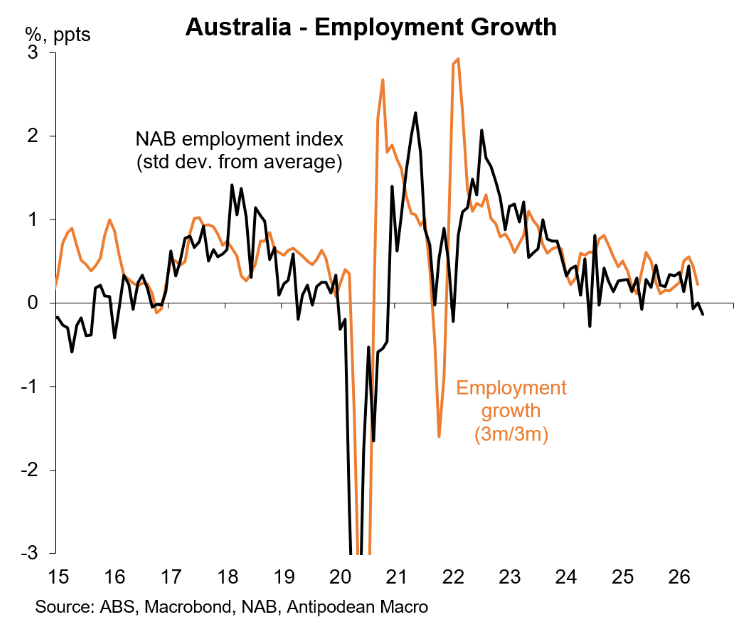
Chart from Justin Fabo (Antipodean Macro)
The latest batch of job ads and vacancy data has been released, indicating softening labour demand.
First, SEEK’s Job ads series fell 0.9% in June, extending the trend of gradual decline, which has continued for the past eleven months. Applications per job ad also grew by 2.0% and are now at their equal highest level on record.
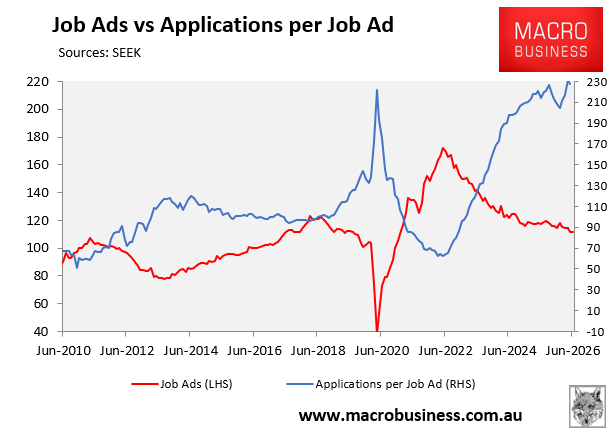
The decline in SEEK’s job ads series is pointing to rising unemployment in the period ahead:
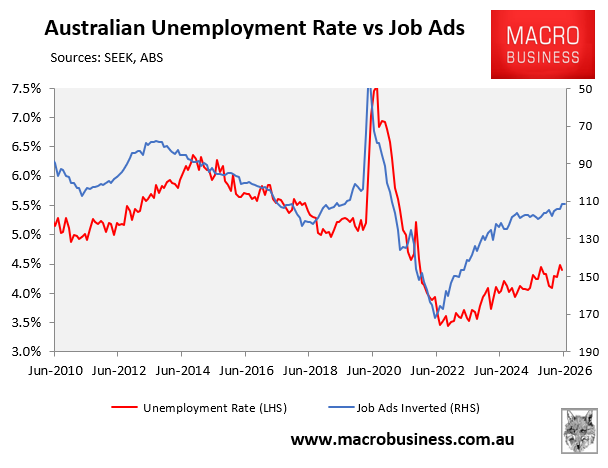
In contrast, Jobs & Skills Australia’s Internet Vacancy Index (IVI) report recorded a 0.7% seasonally adjusted rise in job ads, but a 4.0% decline year on year:
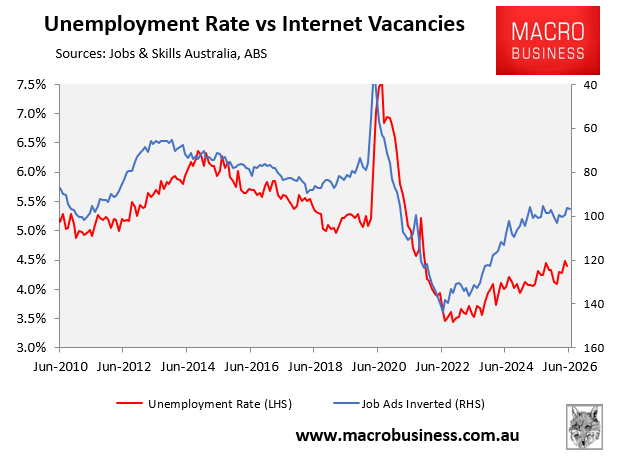
Like SEEK’s measure, it too continues to point to a rise in unemployment.
It will be interesting to see what this morning’s June labour force report from the ABS delivers and whether it bucks the trends illustrated by the non-official indicators.
