
Wind power uneconomic without much higher electricity prices
When you are in a hole, stop digging.
Australia has spent countless billions subsidising renewable energy via the Capacity Investment Scheme, the National Reconstruction Fund (NRF), and a bunch of other federal and state government programs.
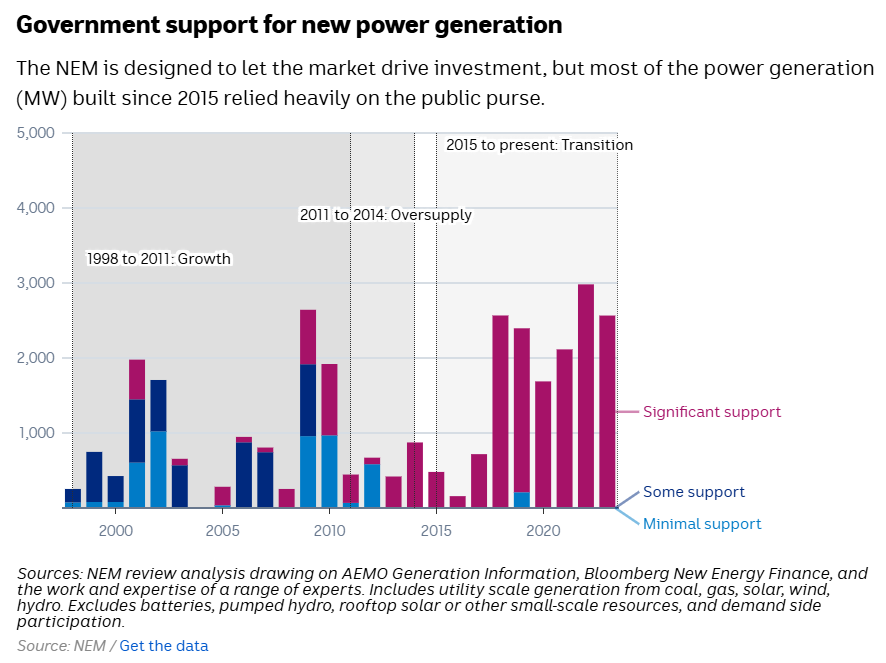
Over the past decade, taxpayers have heavily subsidised virtually every large-scale renewable project undertaken in Australia.
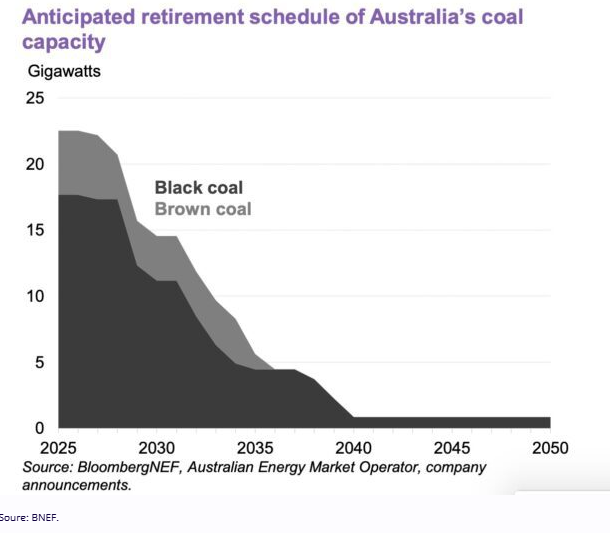
To meet the federal government’s 82% renewable energy target (RET), the majority of Australia’s current coal fleet must be retired and replaced with approximately 6–7 GW of new large-scale renewable generation annually, along with several gigawatts of storage.
Despite these subsidies, Australia’s transition to large-scale renewable energy has slowed to a crawl.
Investment in large‑scale renewable energy in Australia collapsed by 50% in 2025, falling to a 10‑year low, wiping out $4 billion in project commitments and putting the Albanese government’s 82% renewables by 2030 target at serious risk.
Energy company CEOs told the Australian Energy Council conference in Sydney last week that despite the heavy taxpayer subsidies, the economics of renewables are “getting worse, not better”.
Alinta and AGL, for example, warned that the cost of wind power has soared and projects have become unfeasible.
Indeed, Mark Collette, managing director of Energy Australia, the country’s third-largest electricity and gas supplier, highlighted the jump in the cost of building wind farms, which he said requires wholesale power prices of about $120 a megawatt-hour to go ahead, well above forward prices of around $95.
“That is a very big challenge when you are building the future system, is that the revenues you receive don’t cover the costs”, he said
Collette also said that he was particularly concerned about the affordability of energy for heavy industry, which must compete on a global stage.
“Bottom line, if two-thirds of energy is going to be for industry and industry is competing on a world scale, the price of electricity matters, so having enough of it and adding it to a grid that is cheap enough to compete internationally is the main game”.
Anybody who still believes that a renewable-dominated grid will be cheaper and more reliable is either misinformed or lying.
Australia faces an expensive, energy-insecure future as it phases out stable baseload coal power for intermittent, weather-dependent wind and solar power at the same time as electricity demand is forecast to boom due to:
- Nearly 50% growth in the population over 40 years
- The build-out of energy-hungry data centres
- The planned electrification of the vehicle fleet
- The build-out of energy-hungry water desalination plants.
Asia is not following this path, instead doubling down on coal and nuclear power.
So why is Australia happy to supply Asia with coal and uranium to power its generators but deprives itself of their use?
