
On Tuesday, both the NSW and Queensland state governments delivered their budgets.
The NSW government now expects to post a budget deficit of $2.3 billion in the 2026-27 financial year, compared with a previous forecast of $1.1 billion. However, the budget papers show that the Treasury anticipates a surplus of $1.1 billion in 2027-28, rising to $1.76 billion in 2028-29.
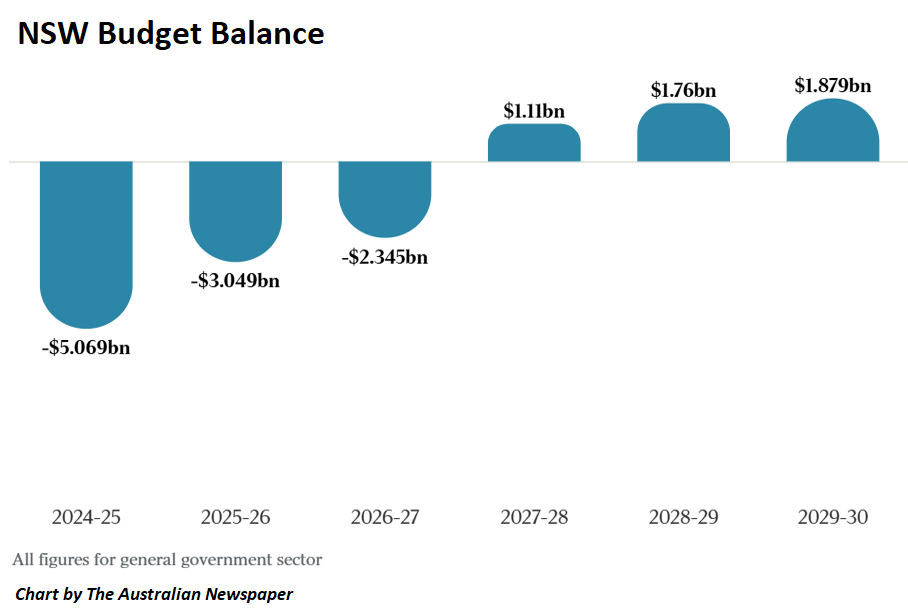
The NSW budget includes a range of cost-of-living measures, including reducing the weekly toll road to $50, a 12-month freeze on public transport fare increases, and a temporary discount on registration fees for private cars and motorbikes.
Despite these measures, Treasurer Daniel Mookhey advised that growth in government spending will be capped at 2.7% a year.
The Queensland government’s budget papers show that the state’s operating deficit for 2025-26 will be slightly higher than previously forecast, at $8.8 billion.
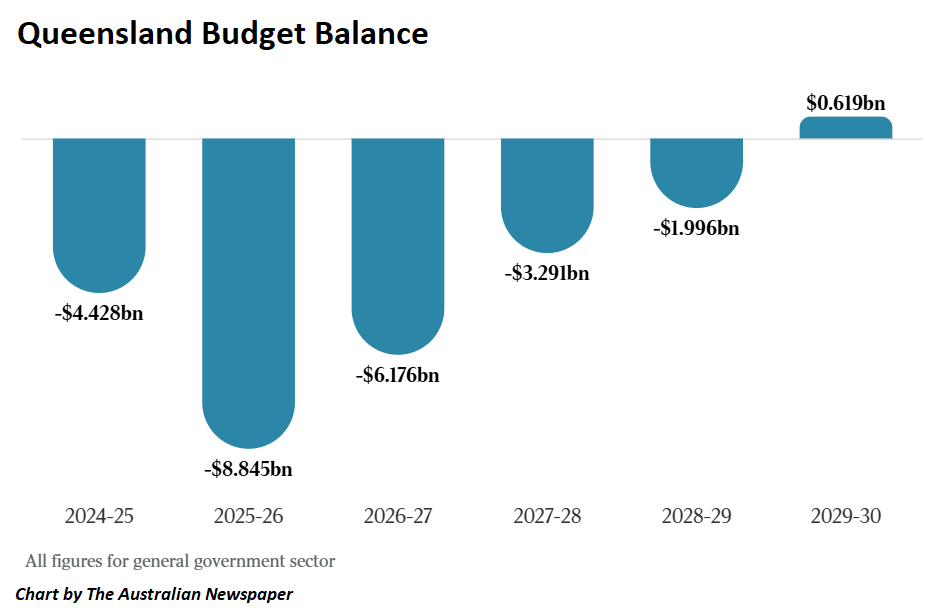
However, Treasurer David Janetzki advised that the government expects to post a slim surplus of $619 million in 2029-30, although total state government debt is projected to top $216.4 billion in that financial year.
Judith Sloan at The Australian newspaper argues that state budgets are like watching out-of-control bushfires that have been raging since Covid took hold.
All of the states apart from Western Australia are in various states of fiscal distress, according to Sloan, and the total size of their debt is approaching the level of the federal government’s debt, and is likely to worsen as stamp duty receipts fall, driven in part by the federal government’s stamp duty reforms.
Her award for the worst fiscal performance by a state is a tie between Victoria and Tasmania:
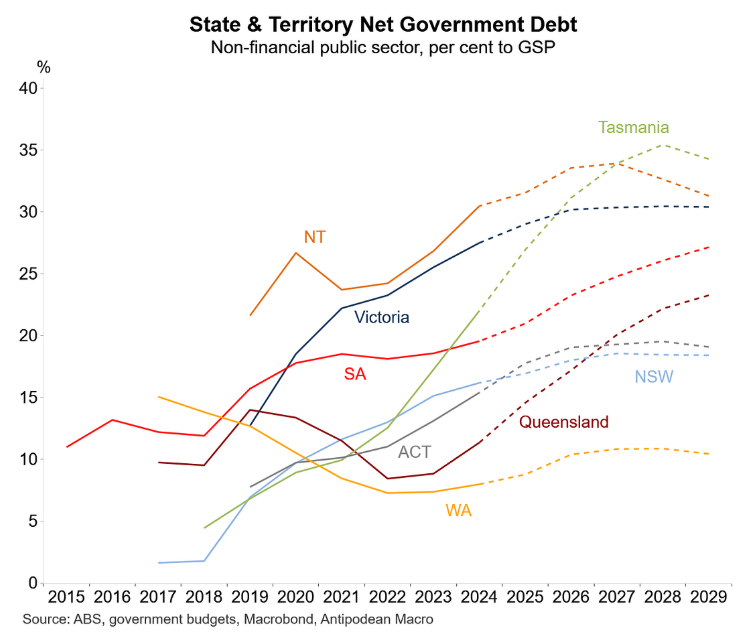
State government debt in Tasmania goes from $6.82bn this year to nearly $10bn in 2029 – the speed of this deterioration sets a new sort of depressing benchmark for that state.
This state thinks it can’t live without a wildly expensive new stadium that will be used a few times each year because it must have an Aussie rules team. The difference between want and need obviously has escaped those living in the Apple Isle.
In the case of Victoria, were it not for creative accounting in its budget papers, it would be fiscal toast. Oh, that’s right, it’s already fiscal toast, with state debt easily sailing past $200bn when you include government agencies, and everything in the state that could be sold off already flogged.
But the rating agencies, perhaps not altogether naively, think that the federal government will bail out the state. There’s quite a bit going on under the table already – the funding of the biggest white elephant of them all, the Suburban Rail Loop, for example.
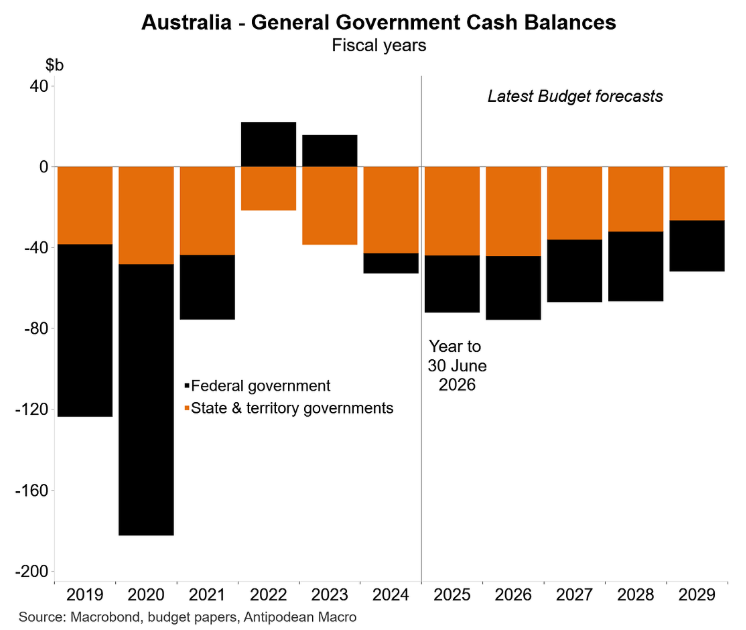
The following charts from Justin Fabo at Antipodean Macro plot the degradation of state finances, with state general government deficits greater than the federal government:
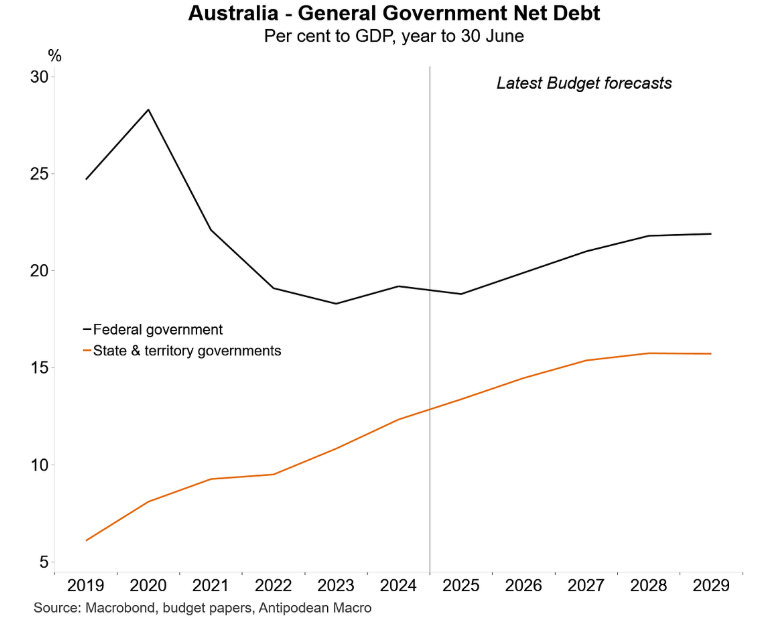
General government net debt relative to GDP is forecast to rise in coming years for both the federal government and the states & territories.
Finally, state and territory net debt is forecast to rise across most jurisdictions:
The 2020s is the decade of budget deficits.
