
The 25-year boom in Australian house prices looks to have come to an end amid a ‘perfect storm’ of headwinds.
According to Cotality, the largest peak-to-trough decline in Australian dwelling values was 8.2%, recorded between 2017-19 amid the banking royal commission and an APRA-induced tightening of credit standards for property investors.
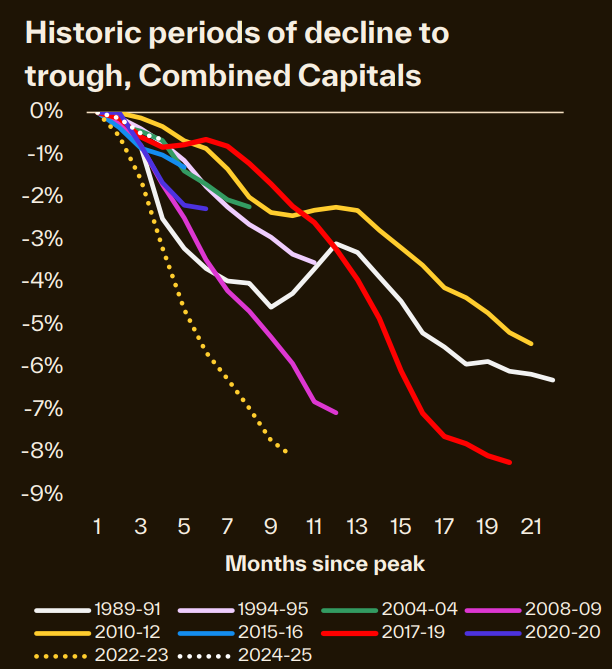
Source: Cotality
Cotality research director Tim Lawless noted that “previous downturns, where we’ve seen housing values fall around 8%, [were] generally under a singularity of a catalyst in the market. It’s either interest rates rising or credit conditions tightening”.
However, this time around, Lawless argues, “This downturn is quite multifaceted. You’ve got higher interest rates, you’ve got a global oil crisis and a sheer drop in confidence, you’ve got structural changes in the federal budget against a backdrop of significant affordability challenges”.
As a result, Lawless “wouldn’t be surprised if it equalled previous significant downturns”.
My view is that the downturn will likely hit ‘double digits’ nationally and be the largest in 40 years. Here’s why.
First, the market is beginning the correction with record unaffordability, and the gap between prices and capacity to pay has never been greater.
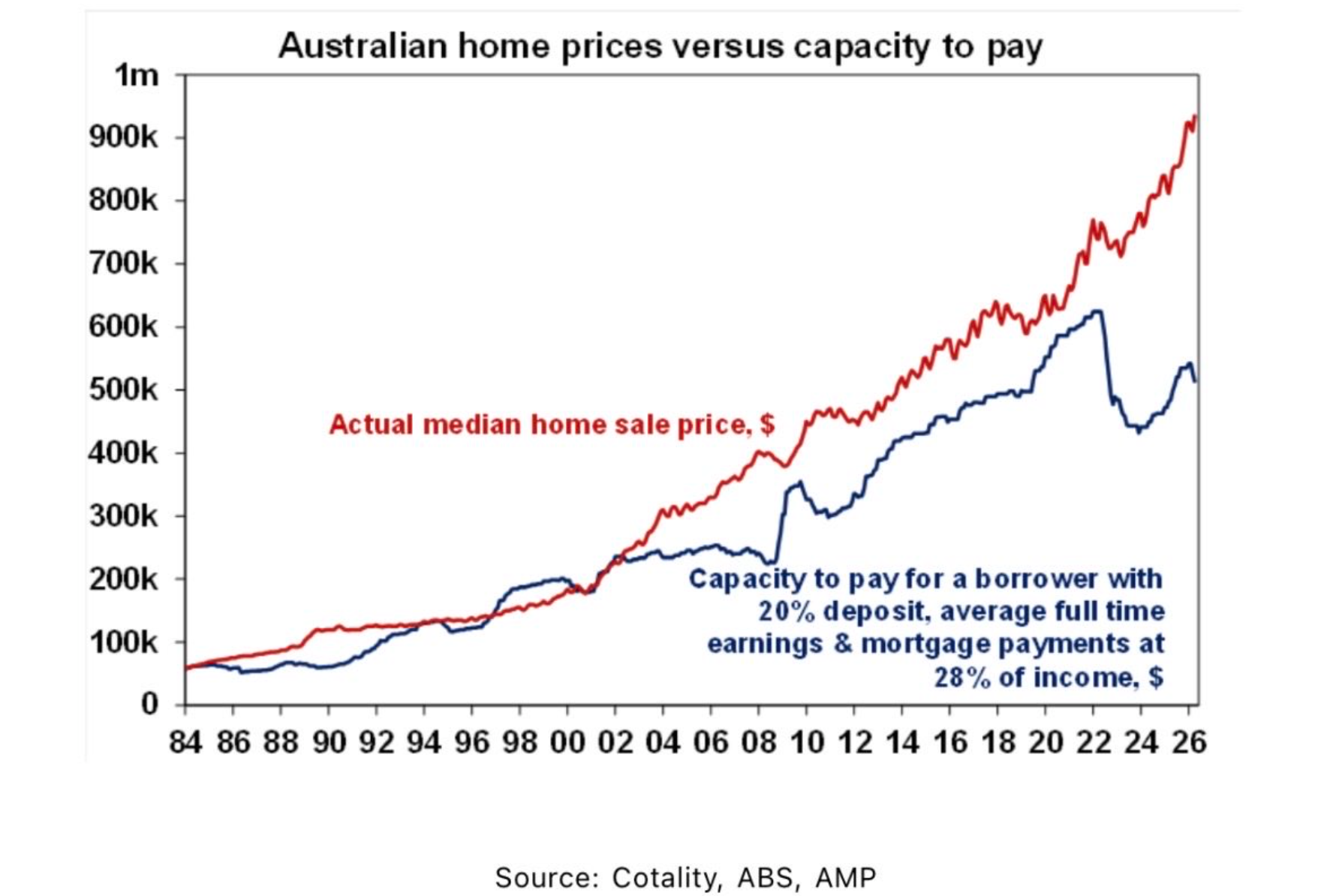
Chart by Shane Oliver (AMP)
Second, interest rates are already tracking at their equal higher level in nearly 15 years, with financial markets predicting another 25 bp hike before the year is over.
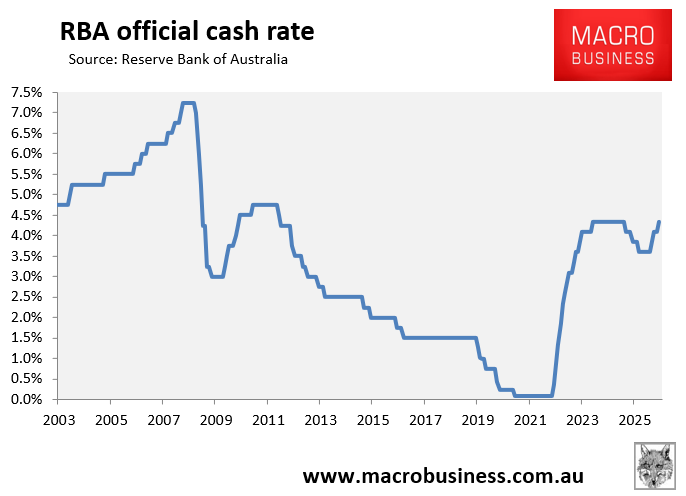
Third, higher interest rates combined with the federal budget’s negative gearing and capital gains taxes have slashed borrowing capacity. Following the budget’s changes, investor borrowing capacity has been reduced by up to 30% due to lower after-tax cash flow.
As a result, the blue “capacity to pay” line in Shane Oliver’s chart above will continue to fall, separating it further from home prices.
Fourth, consumer sentiment is tracking near its lowest rate in 50 years, according to Roy Morgan, which is likely to result in buyer paralysis at the same time as for-sale listings are rising.
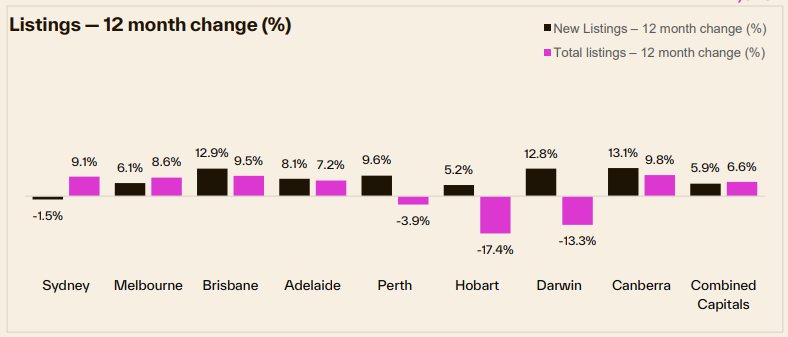
Source: Cotality
Finally, unemployment is trending higher and will likely increase materially in the year ahead amid the RBA’s monetary tightening, slowing economic activity, and the rollout of AI.
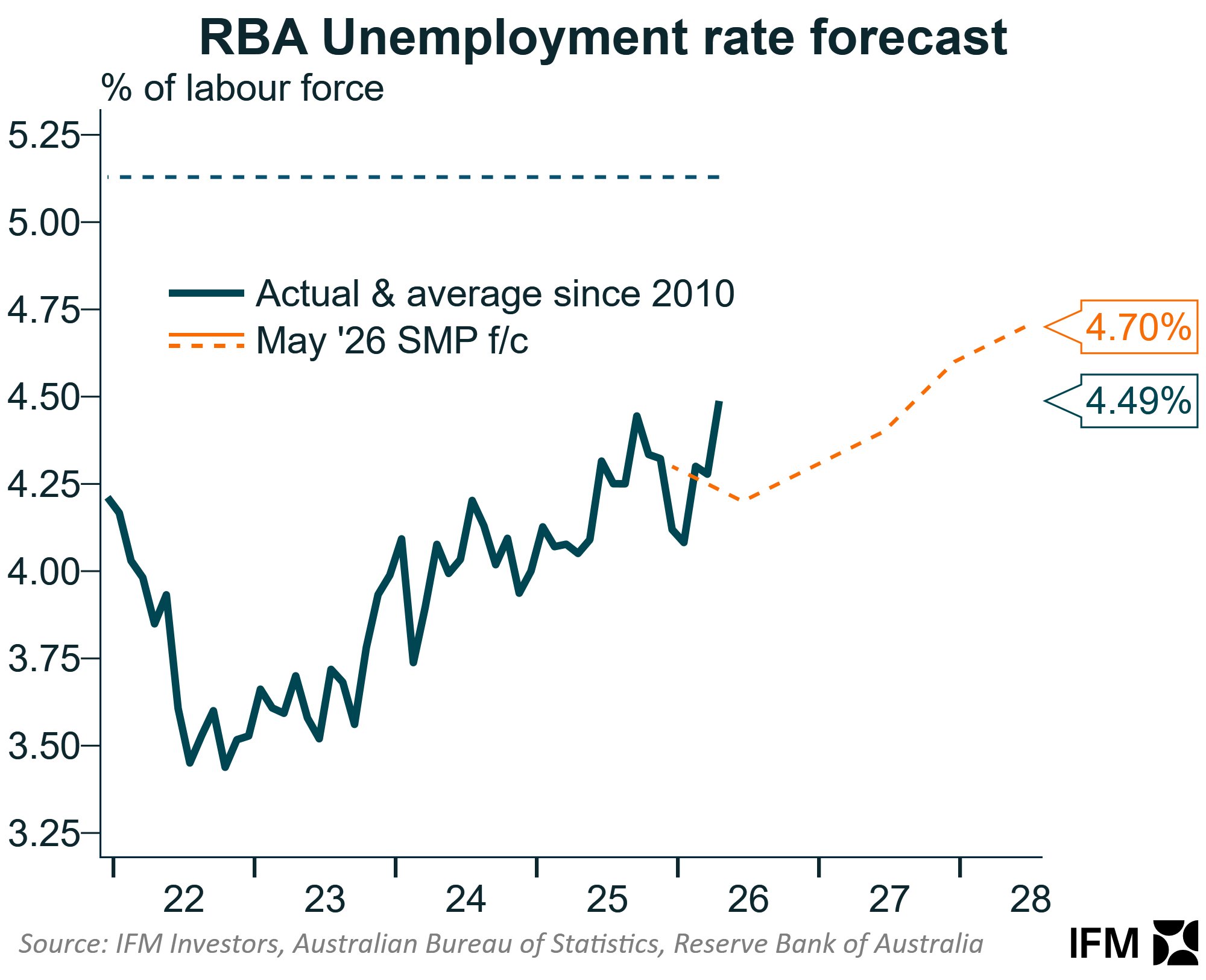
Chart by Alex Joiner (IFM Investors)
Indeed, the RBA forecasts rising unemployment over the years ahead, as illustrated above.
The upshot is that the housing market faces a multitude of headwinds that will likely converge to drive prices lower, including unaffordability, higher interest rates, reduced borrowing capacity, consumer gloom, weakening economic activity, and rising unemployment.
This is why I expect Australia to record its largest house price correction in 40 years.
