
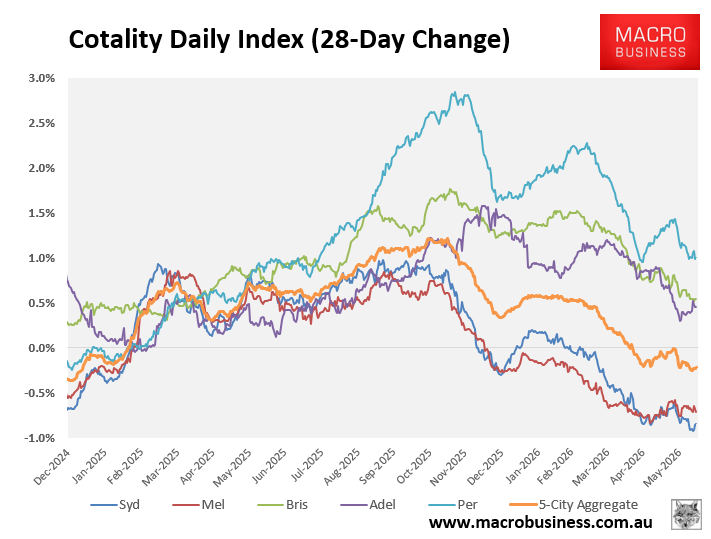
Australia’s housing market is now experiencing a price correction, led by Sydney and Melbourne.
Property sales have also declined, falling below the five-year average.
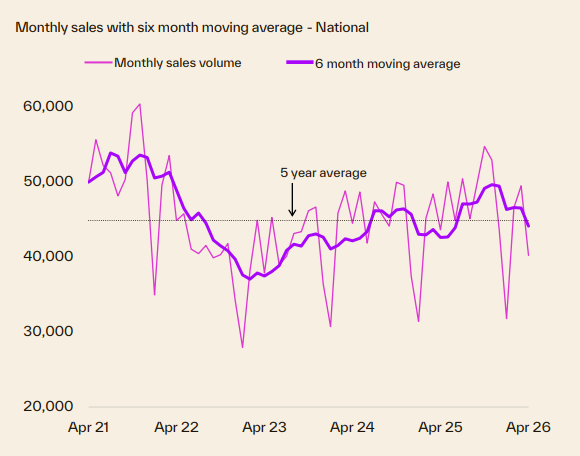
Source: Cotality
The AFR reports that rising interest rates and uncertainty over federal tax changes (negative gearing and CGT) are forcing NSW and Queensland to downgrade stamp duty forecasts, echoing Victoria’s earlier $600 million drop.
NSW Treasurer Daniel Mookhey expects a $5 billion decline in stamp duty receipts over four years. Queensland Treasurer David Janetzki is also preparing to downgrade receipts, citing the Middle East conflict, interest rate hikes, and federal budget uncertainty as drivers of volatility.
The housing market slowdown has exposed states’ dependence on this volatile revenue source, with auction clearance rates below 50 % and home prices falling.
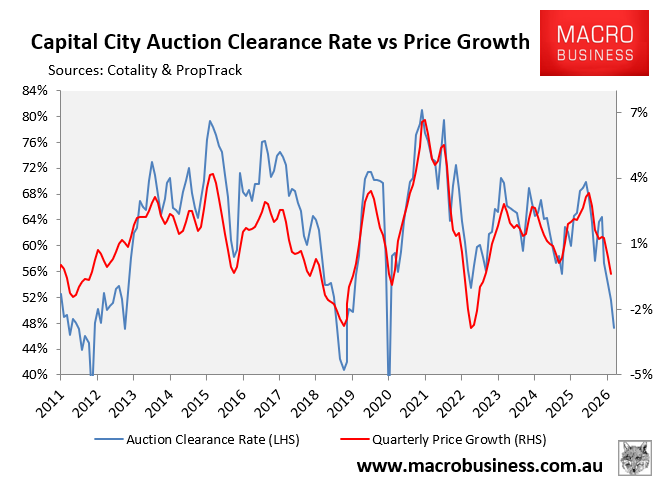
Economists cite cost‑of‑living pressures, geopolitical instability, and interest rate hikes as the main factors behind weaker stamp duty receipts.
Westpac’s June consumer sentiment survey also shows a sharp fall in house-price expectations, especially in NSW and Victoria — early signs of deeper stamp duty declines.
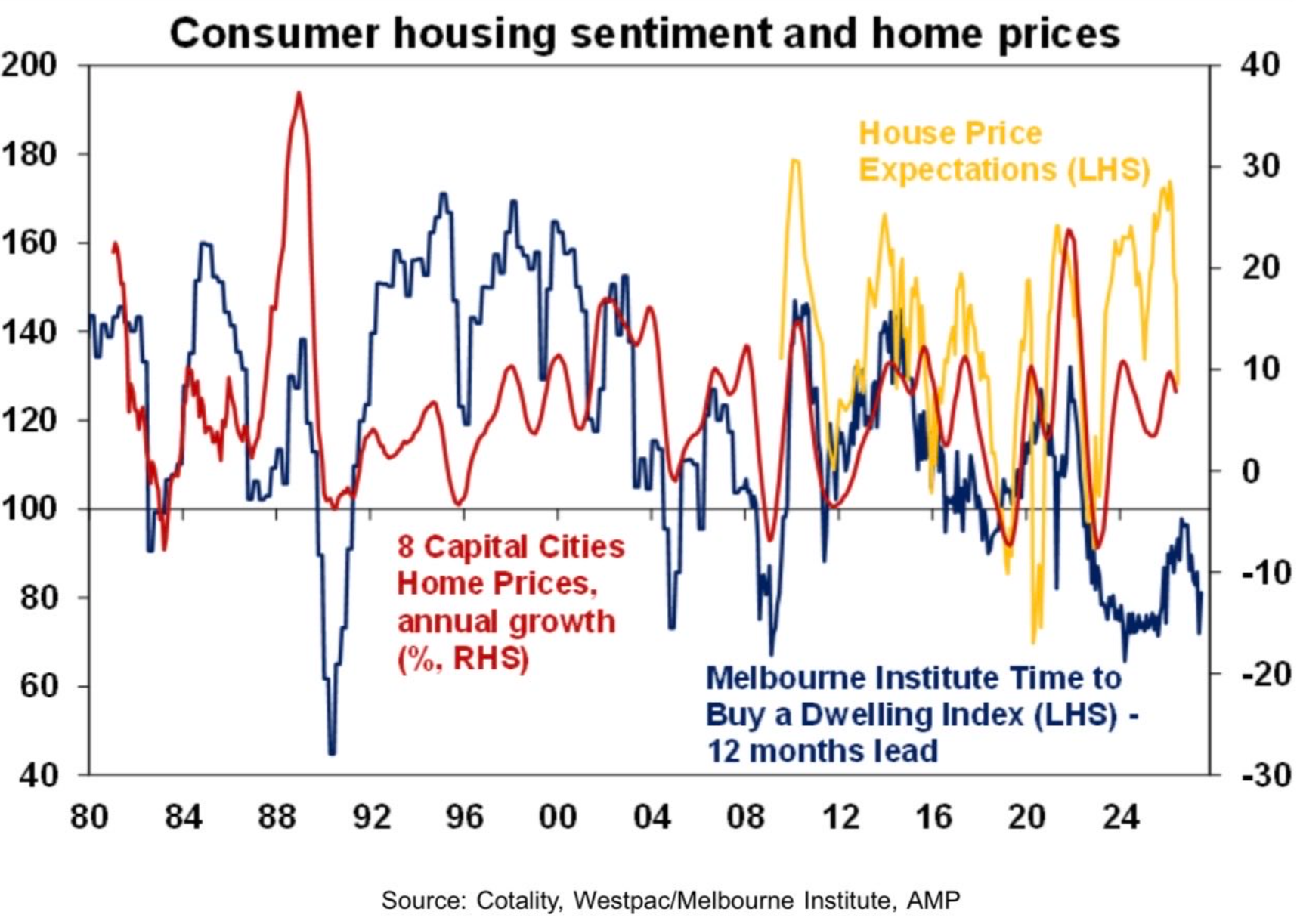
Chart by Shane Oliver (AMP)
Victoria’s budget assumes a recovery from 2027‑28, but analysts like Saul Eslake and Stephen Koukoulas warn forecasts may be too optimistic.
“My inclination if I were compiling a state budget would be to skew assumptions to the downside on both price and volume of sales”, Koukoulas said. “I don’t see stamp duty roaring back in 2027-28”.
Economists agree the volatility strengthens the case for replacing stamp duty with annual land taxes, which would provide steadier revenue and fairer outcomes for homeowners.
The irony of the above is that while the federal budget’s changes to negative gearing and CGT are expected to bolster federal revenue, they could deprive the states of stamp duty revenue by lowering prices and stifling turnover.
