
Australia’s housing market is experiencing a sharp investor retreat, collapsing auction activity, and weakening apartment demand.
While first‑home buyers are temporarily stepping in, economists warn their participation is not enough to sustain new housing supply, raising the risk of a multi‑year development slowdown.
Investors have pulled back dramatically since the federal budget’s CGT and negative‑gearing reforms. And there are concerns that without investors, new apartment projects will struggle to pre‑sell,
“Three interest rate rises were bad enough, the war made it worse, and the federal budget was the straw that broke the camel’s back”, Urban Taskforce CEO Tom Forrest warns.
The preliminary auction clearance rate across the combined capital cities collapsed to 47.4% over the weekend—the lowest result since the COVID lockdowns.
Final figures are expected to fall into the low 40s after revisions.
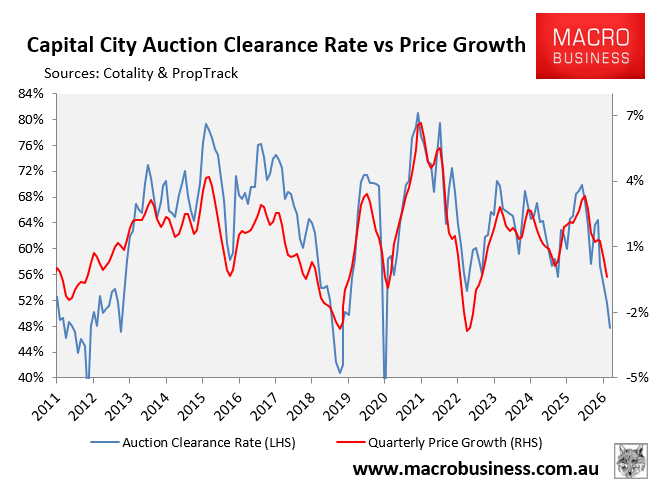
Stock withdrawals before auction are surging, and vendors are selling only when they must, causing listings to fall.
Principal Sydney buyer’s agent at OH Property Group, Henny Rahardja, was especially pessimistic, telling The Australian newspaper that “there is no area or price bracket that has been immune”, with price falls “anywhere from 10% to 15% since the peak” in the areas she services.
Rahardja claimed that demand for strata properties (i.e., apartments, townhouses, and villas) has dropped sharply. Investors who planned to “flip” off‑the‑plan units are now stuck with empty, loss‑making apartments.
A large wave of new apartment stock will arrive in 3–4 years, worsening the risk of a glut. Melbourne already shows signs of a stock overhang, with other cities likely to follow.
Falling pre-sales and the investor retreat make it harder to finance new projects. Many developments may be delayed or cancelled, worsening long‑term housing shortages.
The combination of higher interest rates, construction cost inflation, and investor policy changes has created a hostile environment for developers.
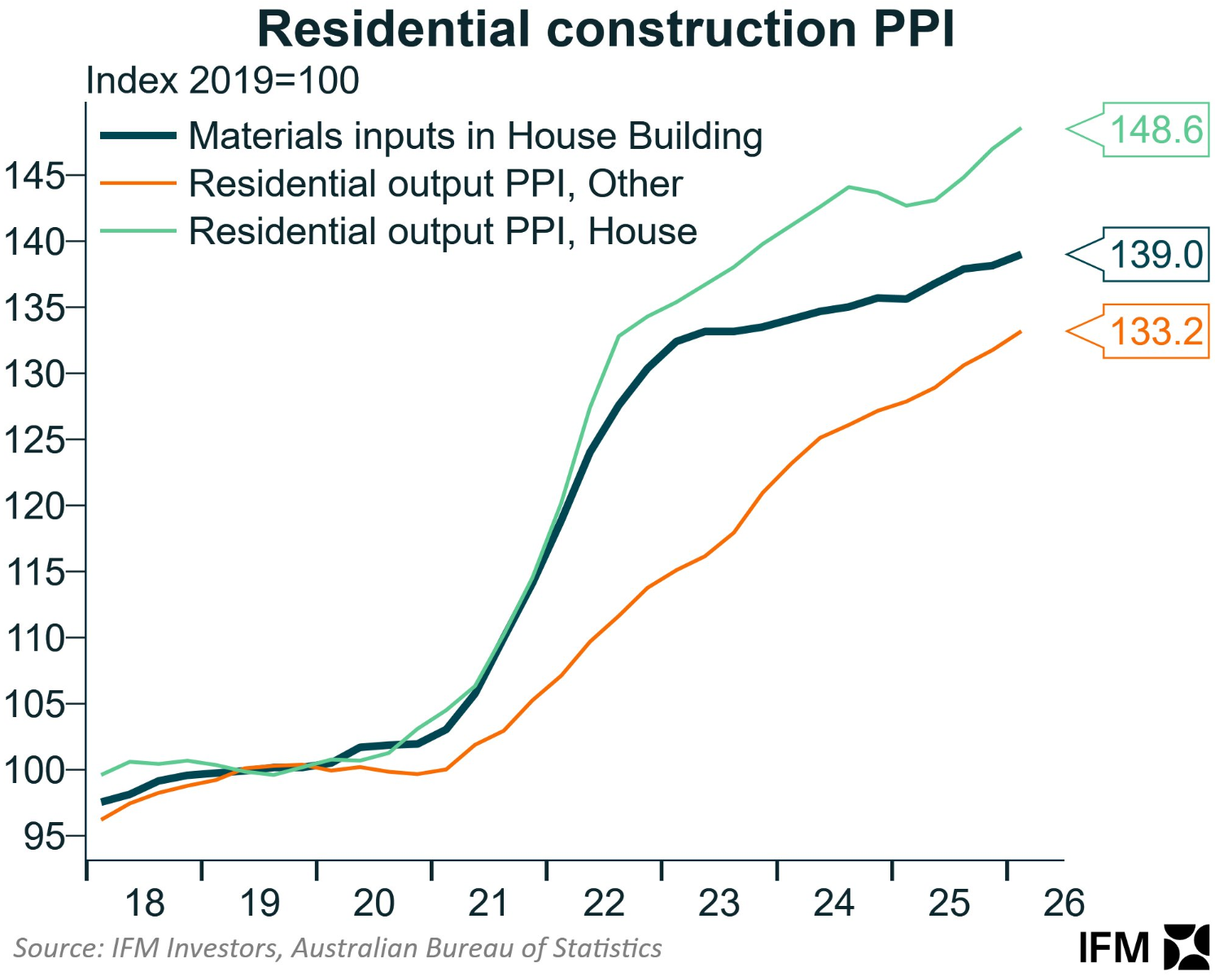
I will add that falling dwelling values are an additional barrier to new construction.
As illustrated below by Justin Fabo from Antipodean Macro, there has historically been a strong correlation between the growth in home prices and dwelling approvals:
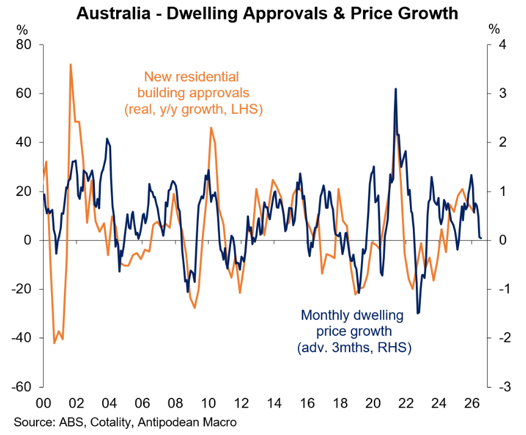
The current house price correction, therefore, portends lower construction in the period ahead.
The reality is that macroeconomic factors are working against housing construction, suggesting that the structural undersupply will worsen unless demand also moderates.
The federal government must dramatically slow population growth by cutting immigration to match housing demand with supply.
