
Cotality’s housing results for April warned that Australia’s rental crisis continues to worsen.
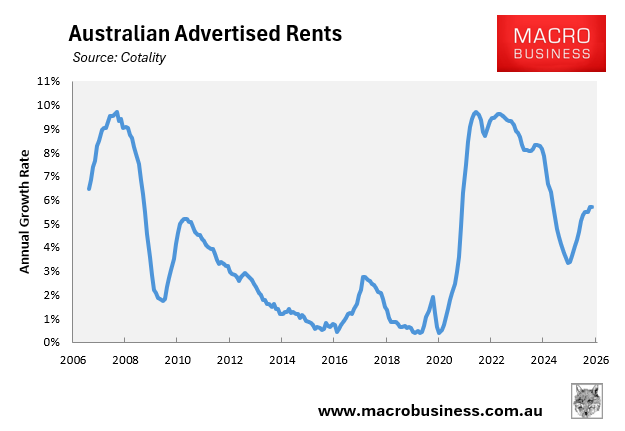
The national rental vacancy rate remained at 1.6% in April, well below the historical average of 2.5% to 3.3%. Advertised rents also continue to grow significantly faster than income, increasing by 5.7% in the year to April 2026.
The commentary from Cotality should ring alarm bells for renters and policymakers alike:
There is no evidence that the rental market is starting to loosen, with the rental vacancy rate holding at 1.6% across Australia in April, lower in the unit sector (1.5%) and higher for houses (1.7%). Every capital city recorded a vacancy rate of 1.8% or lower, well below the national average of 2.5% over the decade. Over the ten years before 2020, the national rental vacancy rate averaged 3.3%.
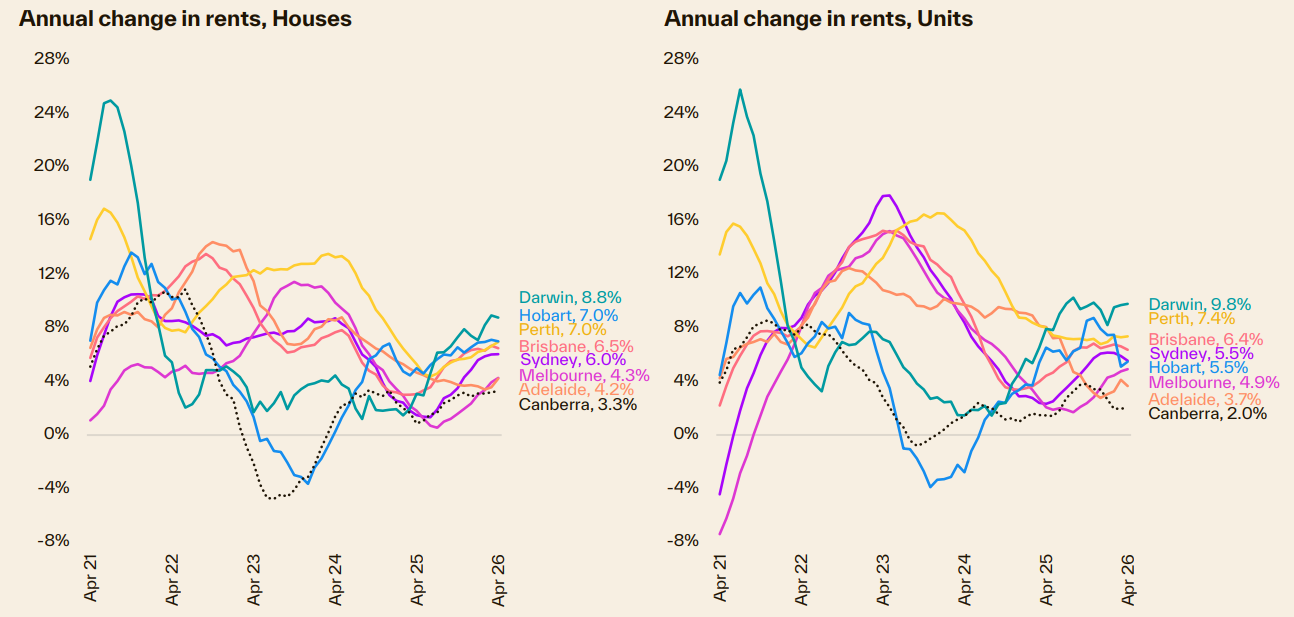
With vacancy rates remaining low, rents continue to rise, up a further 0.6% in April. Rents were 5.7% higher over the year, the fastest annual pace of growth since October 2024, adding approximately $38 per week to the national median rent.
Source: Cotality
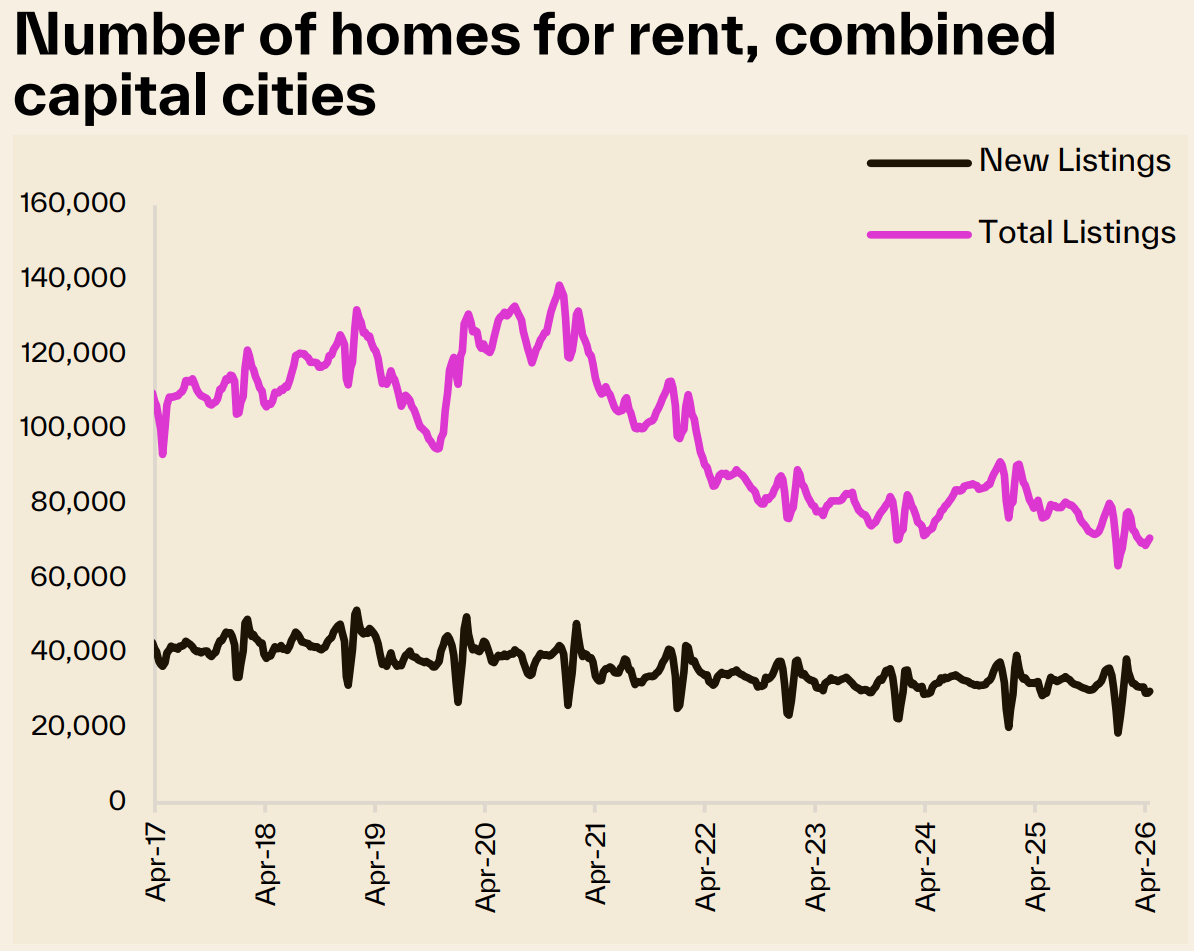
The latest weekly indicators report from Cotality also showed that the number of homes listed for rent across the combined capital cities is tracking at historically low levels, down by around one-third from the pre-COVID norm:
Source: Cotality
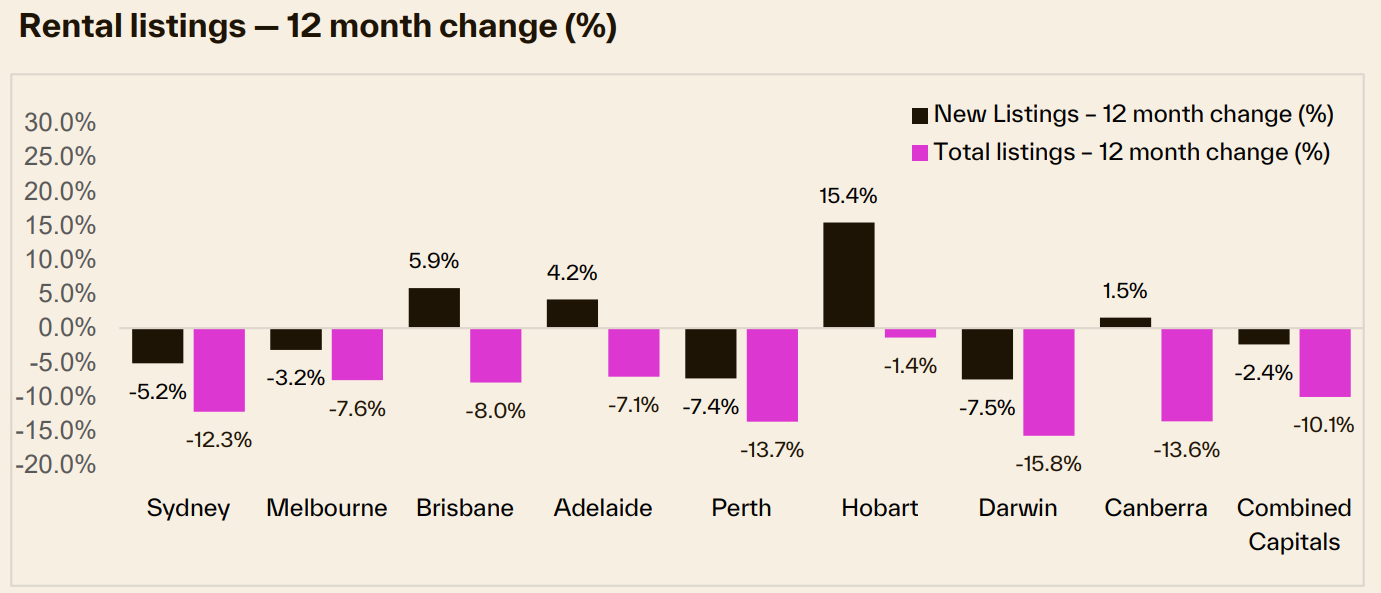
The number of rental listings has also fallen across all capital city markets over the past year, according to Cotality:
Source: Cotality
The latest rental data from SQM Research, released a fortnight ago, painted an equally bleak picture for Australia’s tenants, with the national vacancy rate declining to a record low of only 1.0%:
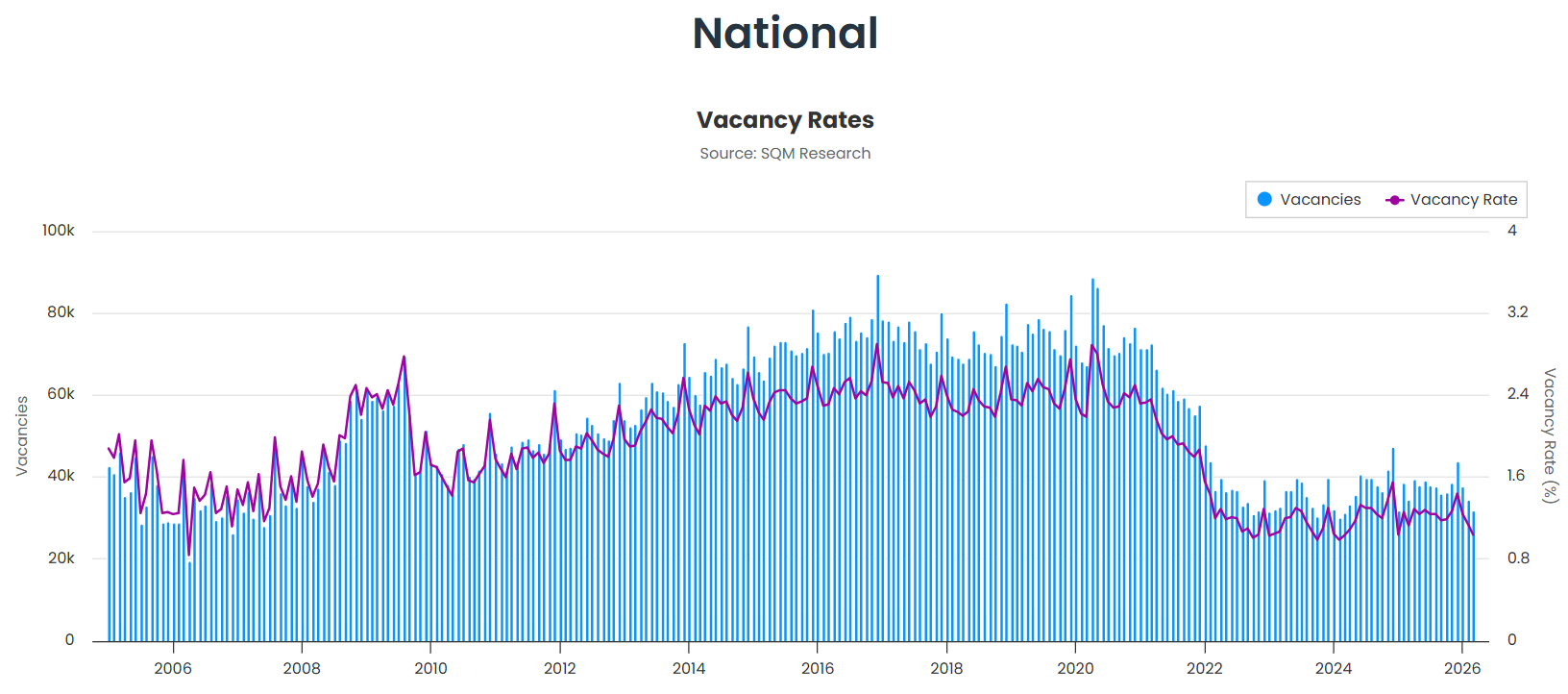
Commenting on the results, SQM Research founder Louis Christopher was blunt in his assessment:
“The national vacancy rate dropping to 1.0% highlights just how tight Australia’s rental market has become. We are now seeing vacancy rates at critically low levels in several cities, particularly Perth, Darwin and Hobart.
“While some markets are showing brief pauses in rental growth, the overall trend remains upward due to the ongoing imbalance between supply and demand.
“Without a significant increase in new housing supply and/or a stabilisation of population growth rates, it is likely that rental pressures will remain elevated throughout 2026. These accelerated rates of rental increases will no doubt feed through to the CPI at some point this year”.
The unfortunate reality is that the rental market will continue to tighten as long as the federal government continues to import hundreds of thousands of tenants into Australia through immigration.
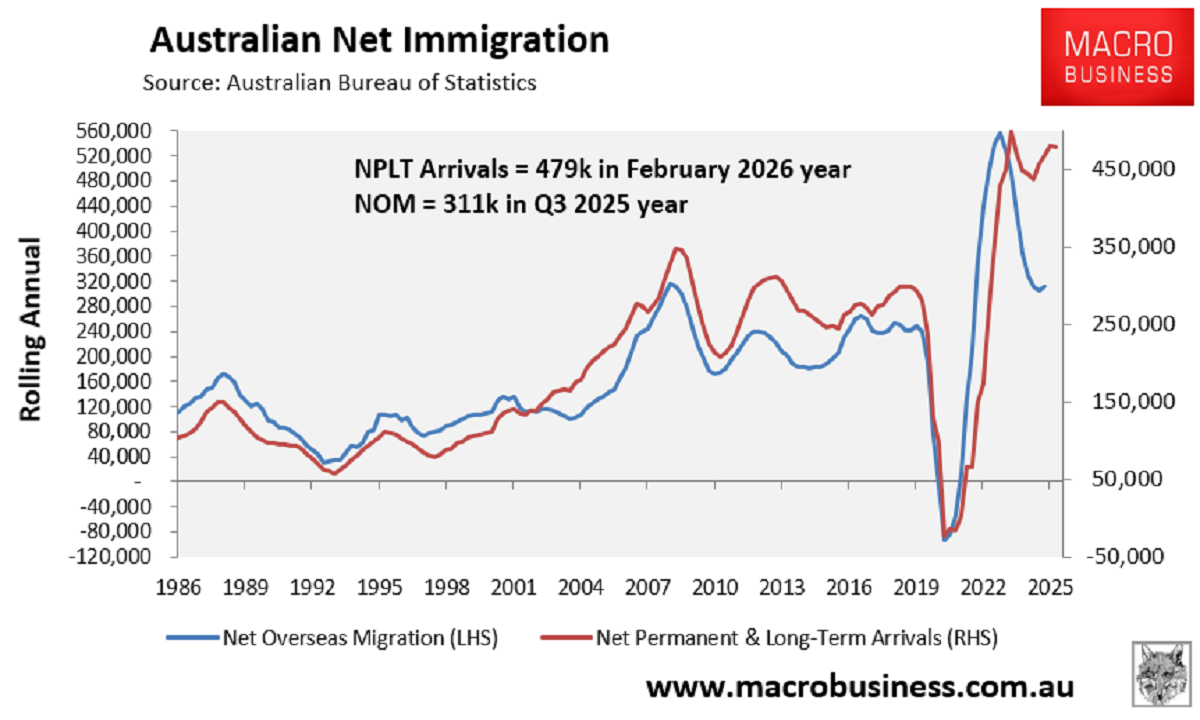
In March, Treasurer Jim Chalmers told reporters that net overseas migration (NOM) will be higher than expected in the upcoming federal budget.
The May budget will reportedly forecast NOM of more than 300,000 this financial year, up from 260,000 in last year’s budget.
NOM in the forward budget estimates is also likely to be higher than initially forecast.
As a result, demand from immigration will remain strong amid tight supply, leading to upward pressure on rents.
The logical policy solution is to significantly reduce the number of migrants arriving to balance supply and demand, as Canada has done.
Australia’s rental crisis will worsen so long as the government persists in running a high-migration policy.
