
This month’s federal budget upgraded the forecasts for net overseas migration (NOM) by 35,000 this financial year and by 20,000 in the next financial year, compared with December’s MYEFO and last year’s budget.
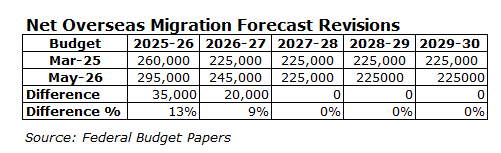
The upgrade was par for the course for recent federal budgets, which have repeatedly underestimated NOM:
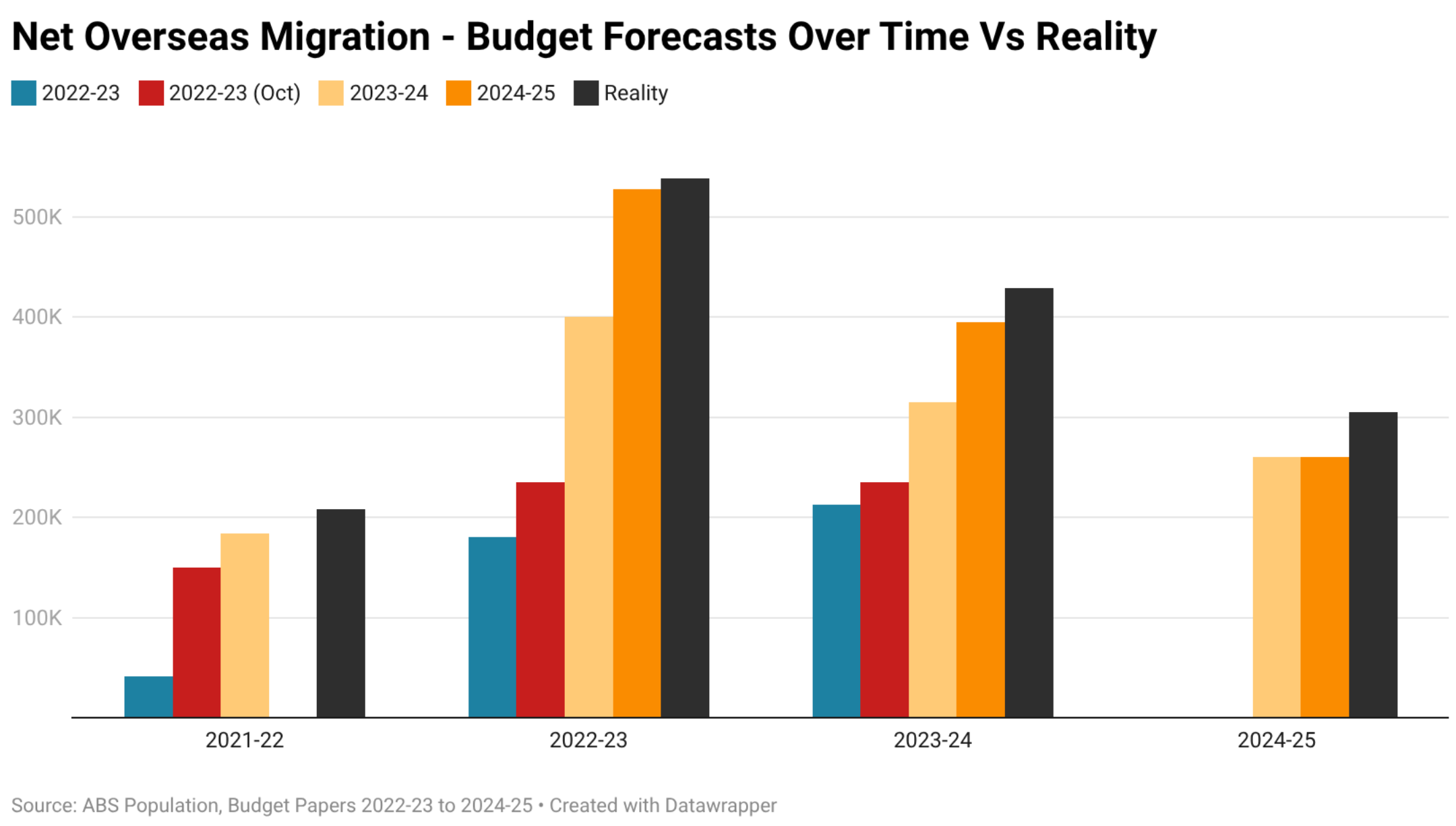
Chart from Tarric Brooker (Avid Commentator)
As illustrated below by Alex Joiner from IFM Investors, April’s labour force report from the Australian Bureau of Statistics (ABS) reported that the growth in the 15-plus civilian (working age) population jumped, suggesting that NOM could be accelerating:
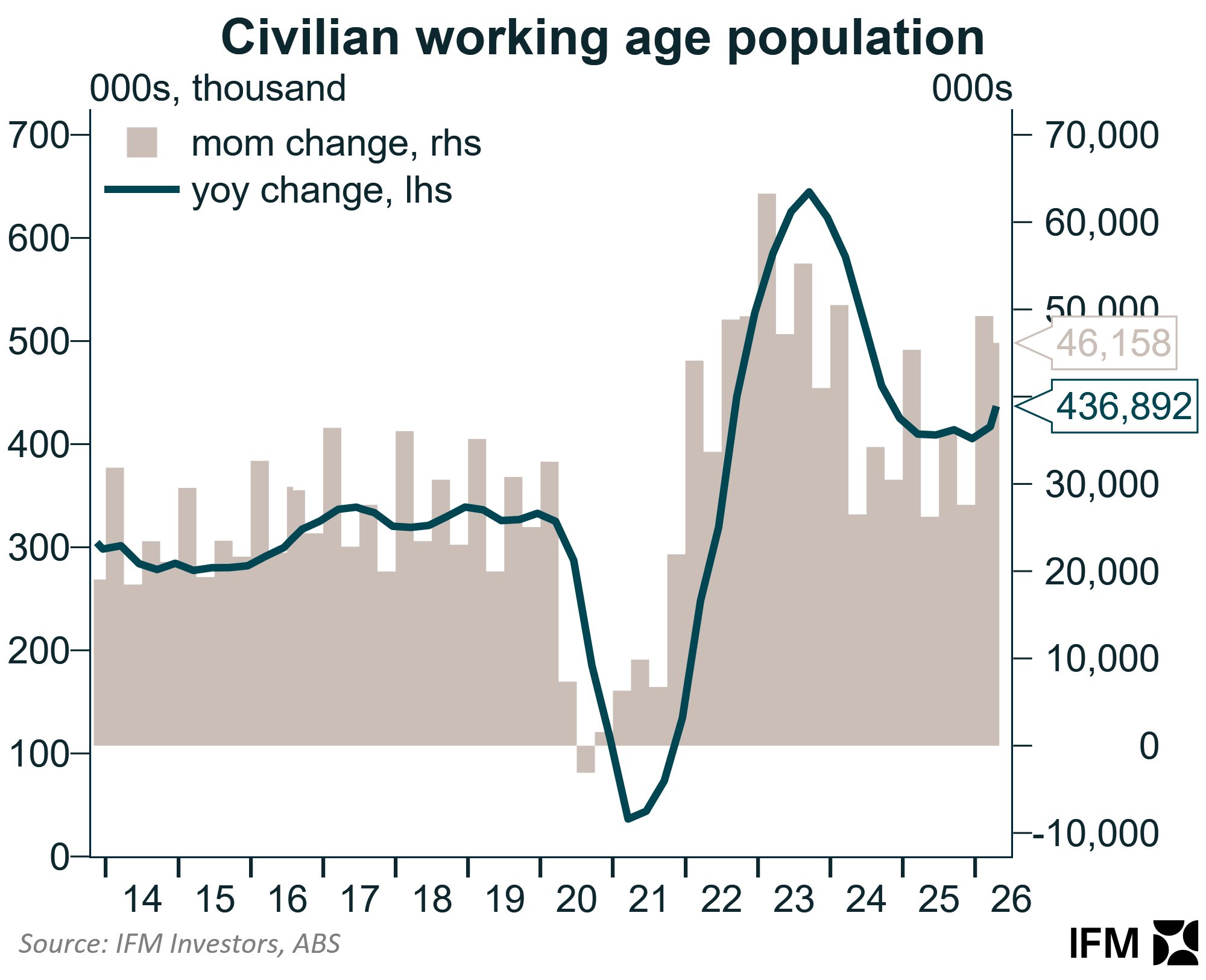
Over the year to April 2026, the working-age population grew by 436,892, the largest annual increase since October 2024.
As Joiner shows below, the uplift in the working-age population is completely at odds with the federal budget’s NOM forecast, which has historically tracked each other closely:
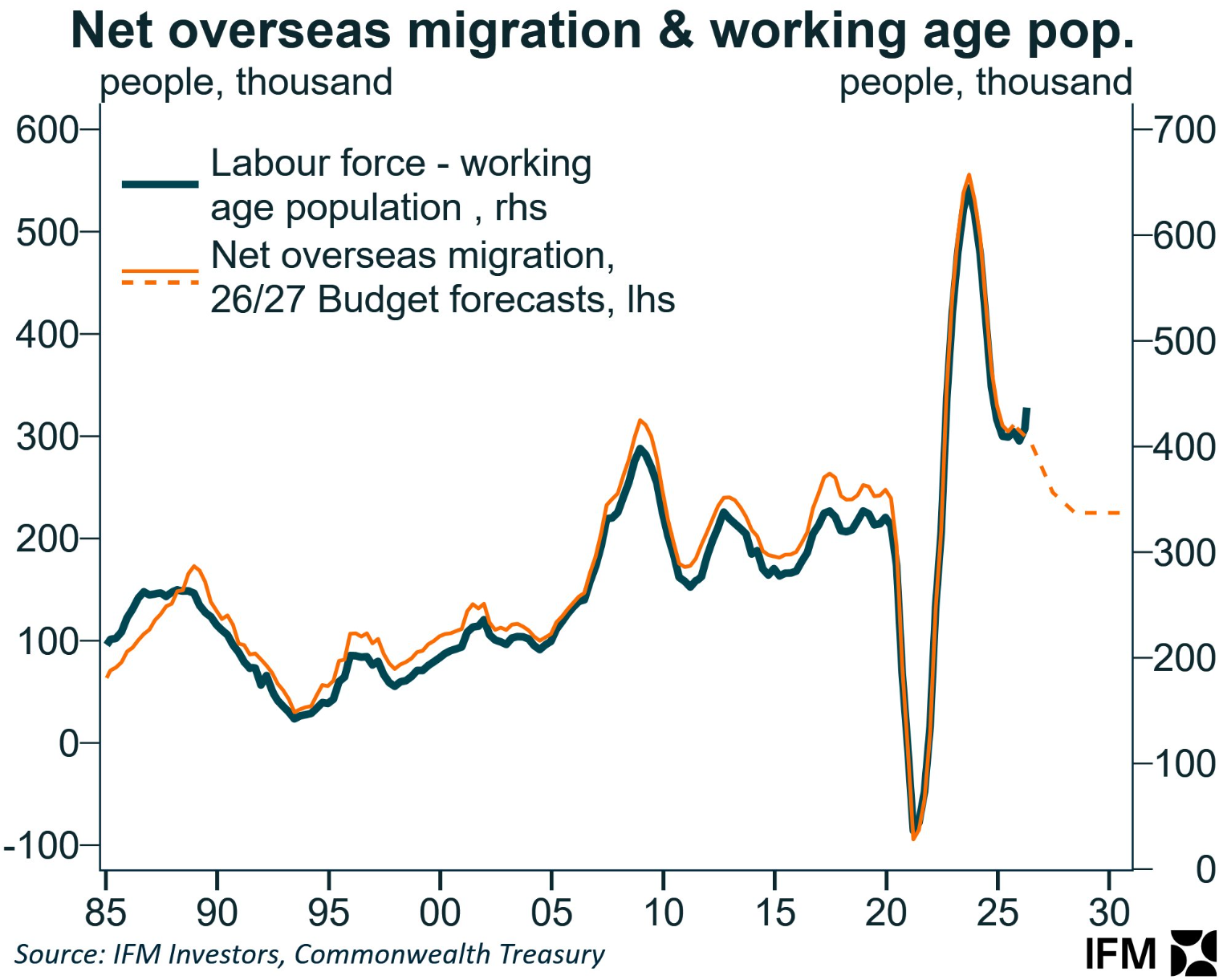
Therefore, the ABS’s working-age population estimates do suggest that NOM is increasing, rather than trending lower.
However, this has happened before, whereby the civilian working-age population has broken away from NOM only to be downgraded later, after the official quarterly NOM figures are released.
This suggests that the ABS’s civilian working-age population estimates take their cue from the monthly net permanent and long-term (NPLT) arrivals data, which historically tracked NOM in a directional sense but has recently diverged:
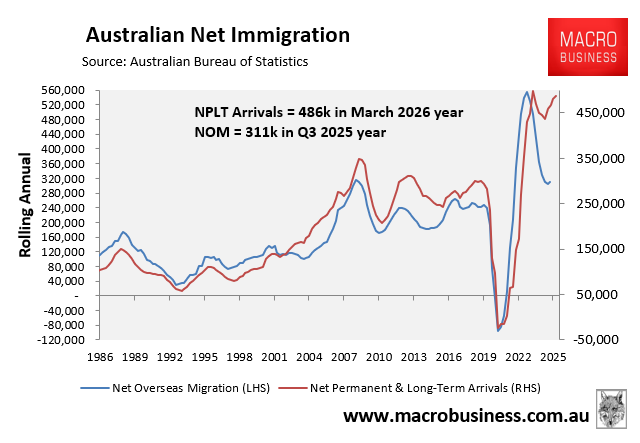
Hilariously, the ABS last year chastised commentators for using NPLT arrivals as a leading indicator for NOM in line with how the Centre for Population uses it.
Yet, the ABS seems to use the same NPLT arrivals data as the leading indicator for its civilian working-age population estimates.
You have got to love the hypocrisy.
