
Why this is as good as it gets for Australian housing construction
Australia’s level of dwelling construction is tracking well below the National Housing Accord’s target of building 1.2 million homes over five years.
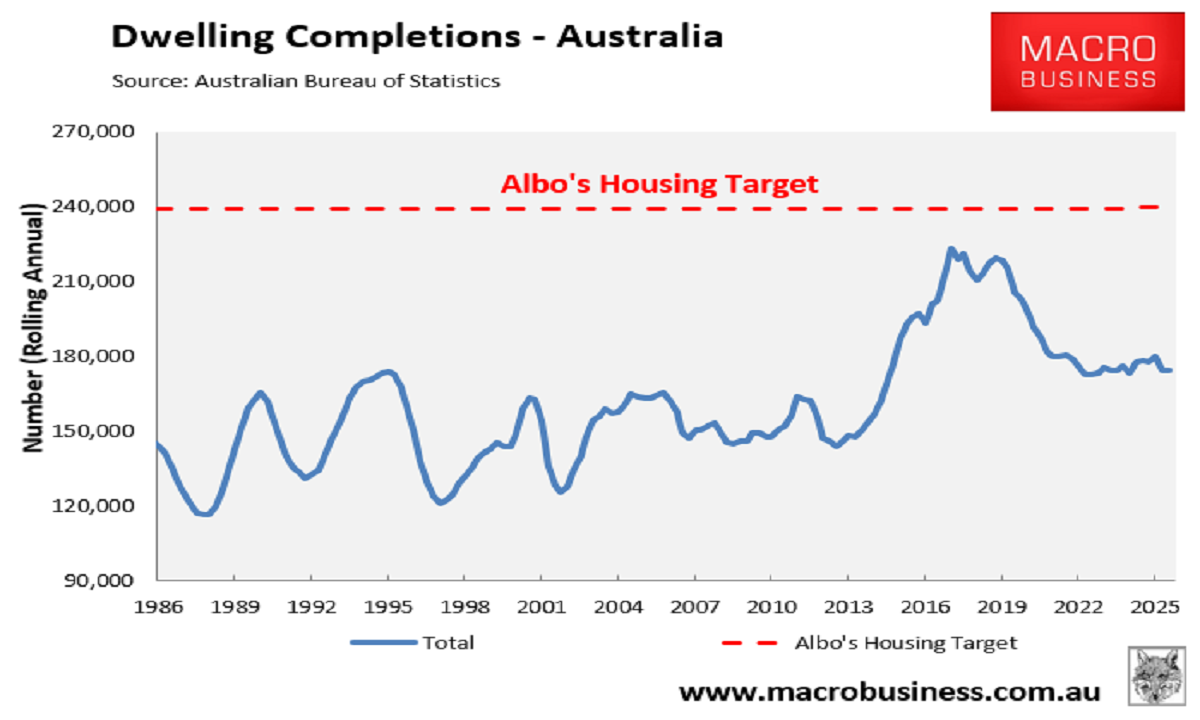
The most recent dwelling completions data from the Australian Bureau of Statistics (ABS) revealed that only 219,000 homes were built over the first 15 months of the national housing accord (i.e., to the September quarter of 2025), 81,000 (27%) fewer than required to meet the target.
Data on dwelling approvals is more positive, with 322,300 homes approved for construction over the first 20 months of the National Housing Accord, 77,700 (19%) fewer than required to meet the target:
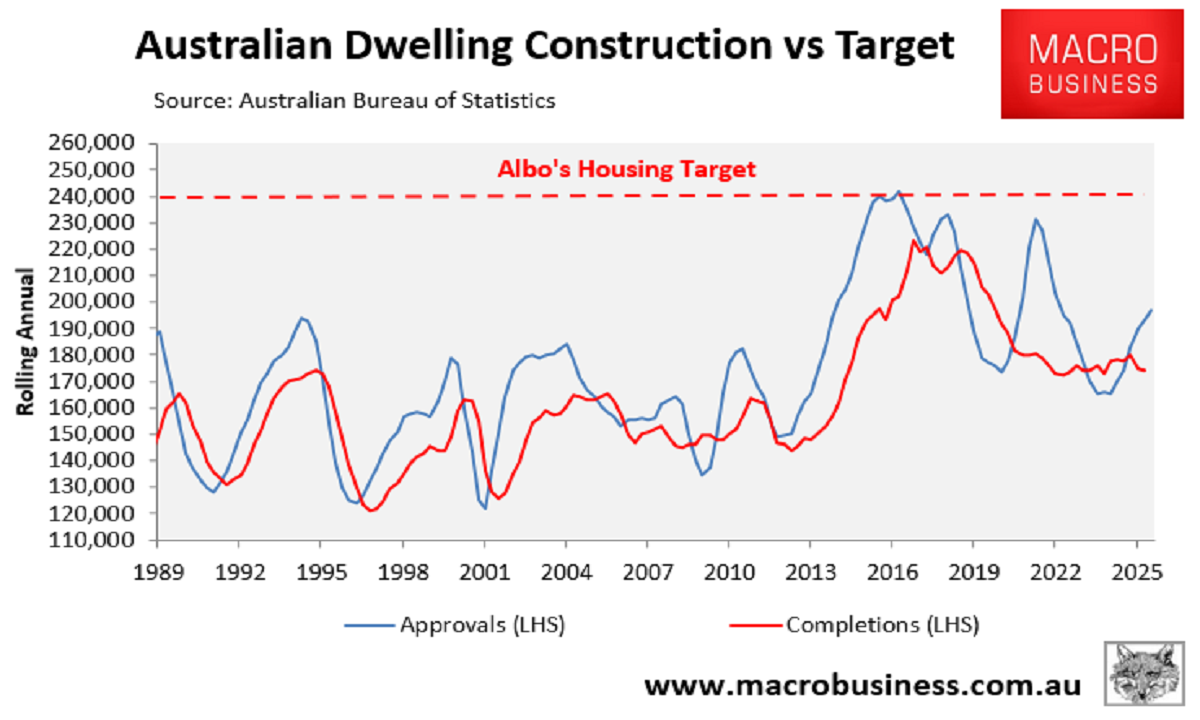
However, just because a home is approved for construction doesn’t mean that it will be built. Over the past decade, 5% fewer homes were built than were approved.
Several macroeconomic factors have dampened housing construction since the onset of the COVID-19 pandemic, including:
- Structurally higher interest rates.
- A circa 40% rise in construction costs.
- A circa 33% rise in residential lot values.
- Labour shortages and high insolvency rates in the construction industry.
Nigel Satterley, CEO of Australia’s second-largest residential land developer, Satterly Property Group, warns that the Middle East war could add another $50,000 to the cost of building new homes.
For example, the cost of PVC piping has increased by 37% due to the war, while cement has risen by 25%, and quarry products are up 50%.
The rise in diesel fuel prices has already increased the cost of preparing a block of land at the Satterly Property Group’s housing estates by up to $20,000.
“The biggest surprise is the aggression of suppliers; it’s a lot more aggressive than COVID-19, which surprises us”, Satterley said.
“The impact on housing supply is significant. Higher and more volatile construction costs reduce the feasibility of new developments”.
“If these costs stay there, people building a new home could be facing significant costs, $35,000 to $50,000, in that range. It’s a moving feast”, he said.
Ray White Group chief economist Nerida Conisbee agreed, noting that rising diesel costs and supply chain bottlenecks are acting as handbrakes on housing construction.
“The impact on housing supply is significant. Higher and more volatile construction costs reduce the feasibility of new developments”, she said.
The supply situation will worsen if the Reserve Bank of Australia delivers another two to three rate hikes, as projected by economists and financial markets:
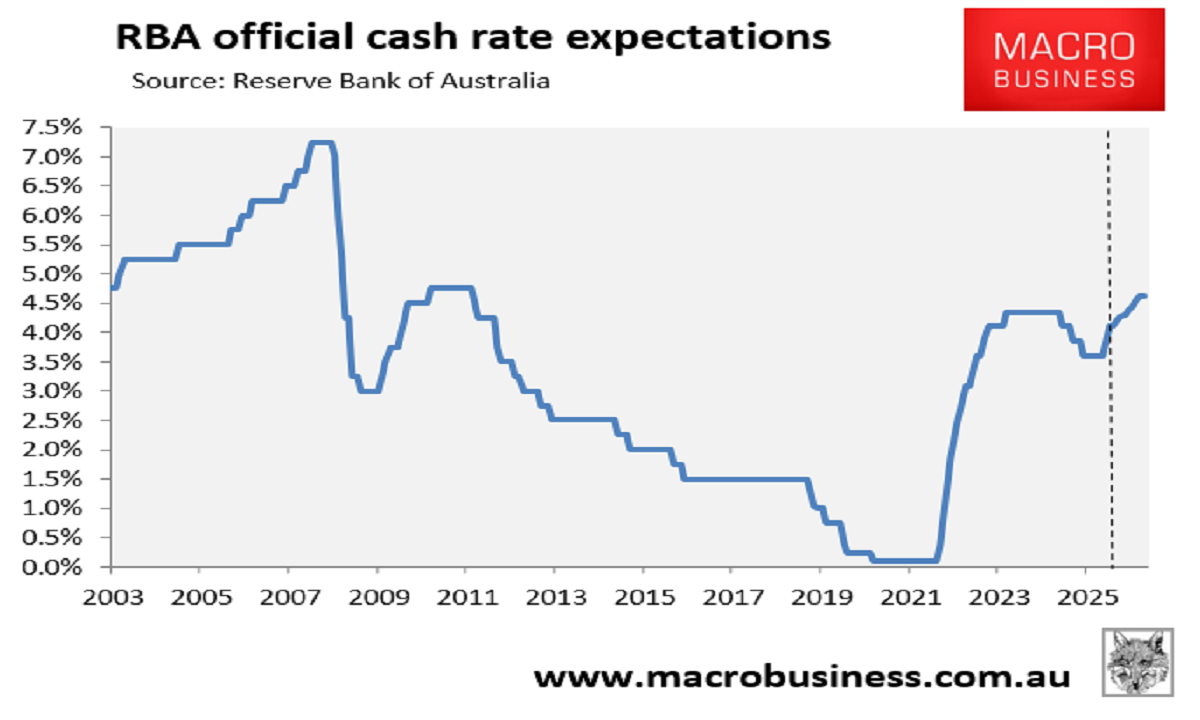
Higher interest rates will increase financing costs for developers and reduce buyers’ capacity to pay.
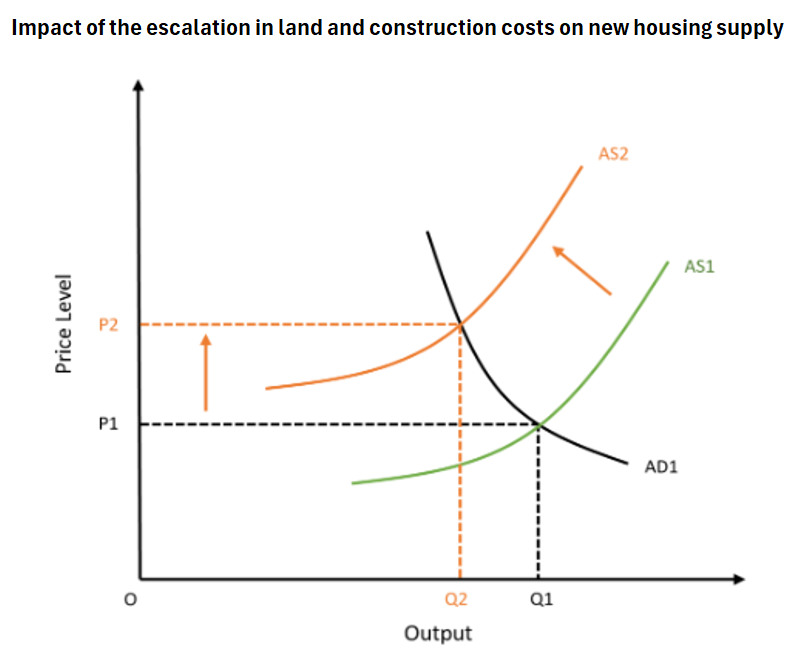
In economic terms, the supply curve for housing has shifted to the left, making it costlier to build homes at every price point.
Meanwhile, Treasurer Jim Chalmers conceded last month that net overseas migration (NOM) will be higher than expected due to fewer departures.
The upcoming federal budget will reportedly forecast NOM of more than 300,000 this financial year, up from 260,000 in last year’s budget.
NOM in the forward budget estimates will also likely be revised higher.
Therefore, Australia is facing a situation in which housing demand from immigration continues to expand, while supply is tightening amid worsening economic conditions.
The Albanese government needs to follow Canada’s playbook and slow the inflow of migrants to alleviate pressure on the housing market.
Otherwise, the housing shortage and rental crisis will worsen.
