
On Tuesday, the Australian Bureau of Statistics (ABS) released data showing that Victorians pay the highest state and local taxes in the nation.
As illustrated below, state and local government taxes in Victoria were $6,605 per capita in 2024-25, $582 (9.7%) higher than the state and territory average.
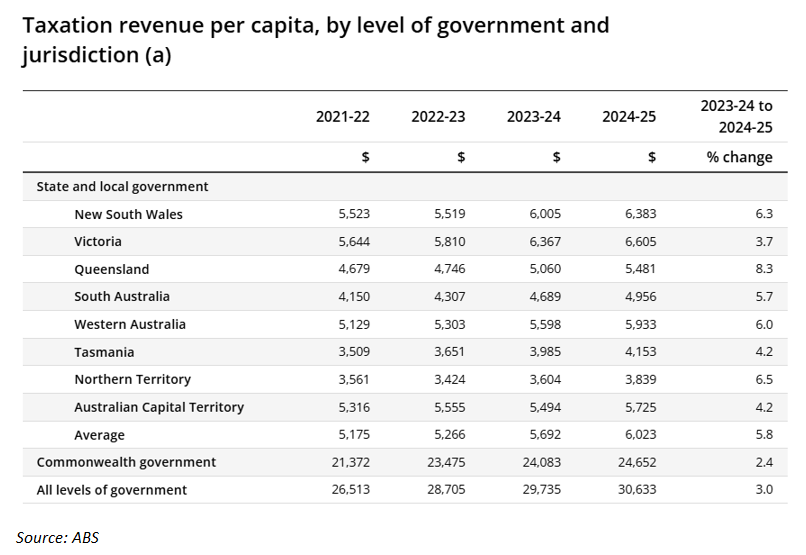
Victoria’s state and local government taxes have increased by $961 per capita since 2021-22, 13.3% faster than the $848 increase recorded across the state and territory average.
Bizarrely, Victoria’s local government taxation in aggregate ($6,636 million) was greater than New South Wales’ ($6,241) in 2024-25:
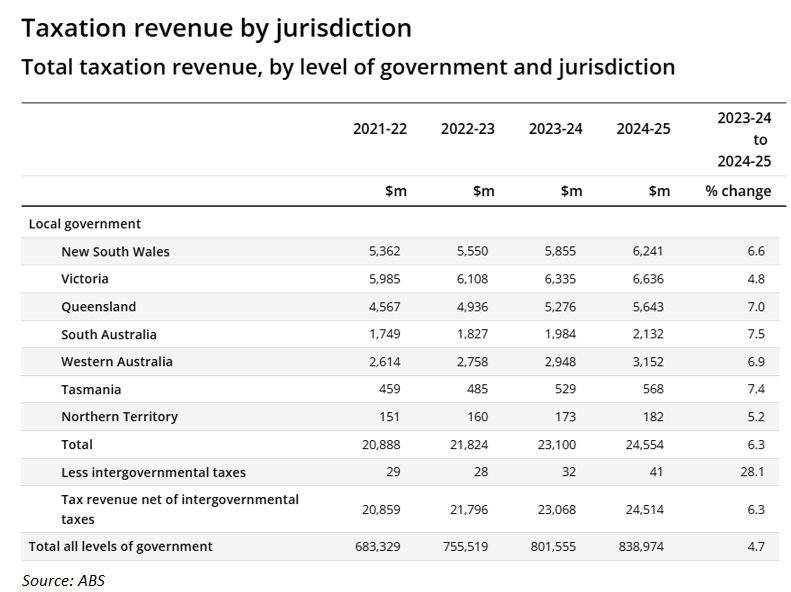
One must rightfully ask: why is Victorian local government more expensive than New South Wales local government?
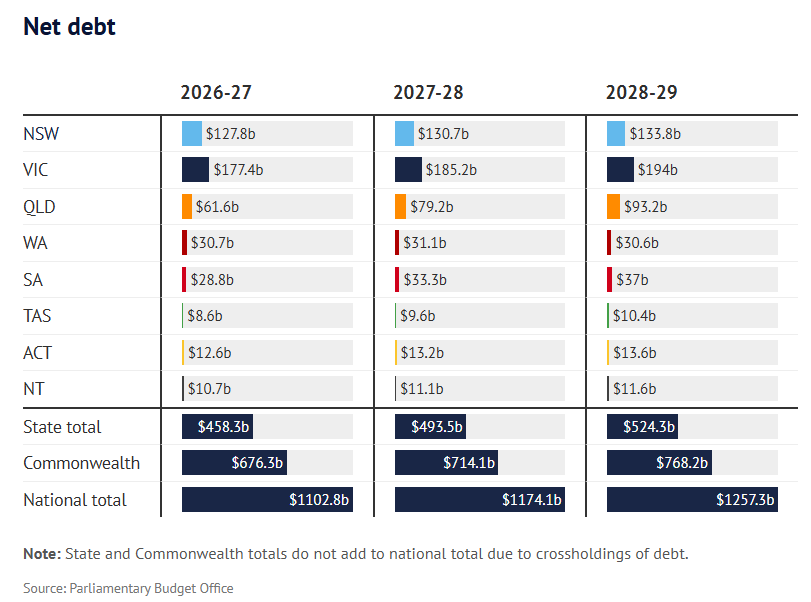
Regardless, while taxes continue to bleed Victorians dry, the state is also drowning in debt, according to the Parliamentary Budget Office:
According to the Victorian Auditor General’s 2024-25 report, Victoria made a $12.8 billion cash deficit in 2024-25, with deficits projected to continue over the four-year forward estimates:
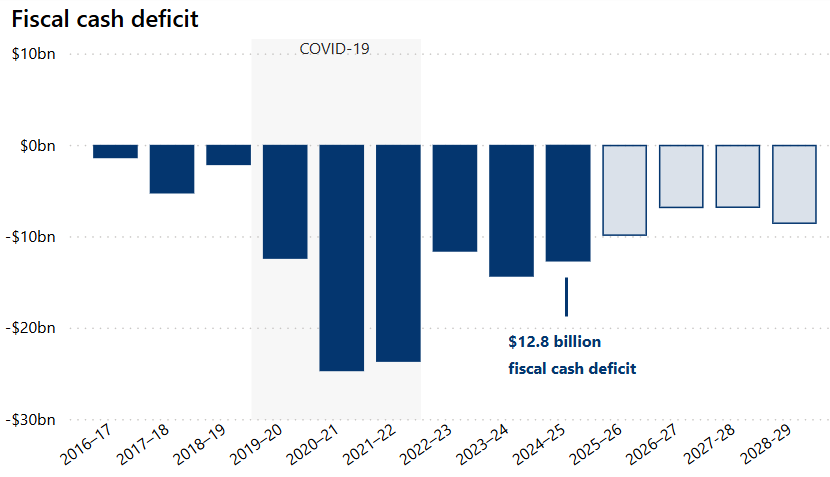
Source: Victorian Auditor-General
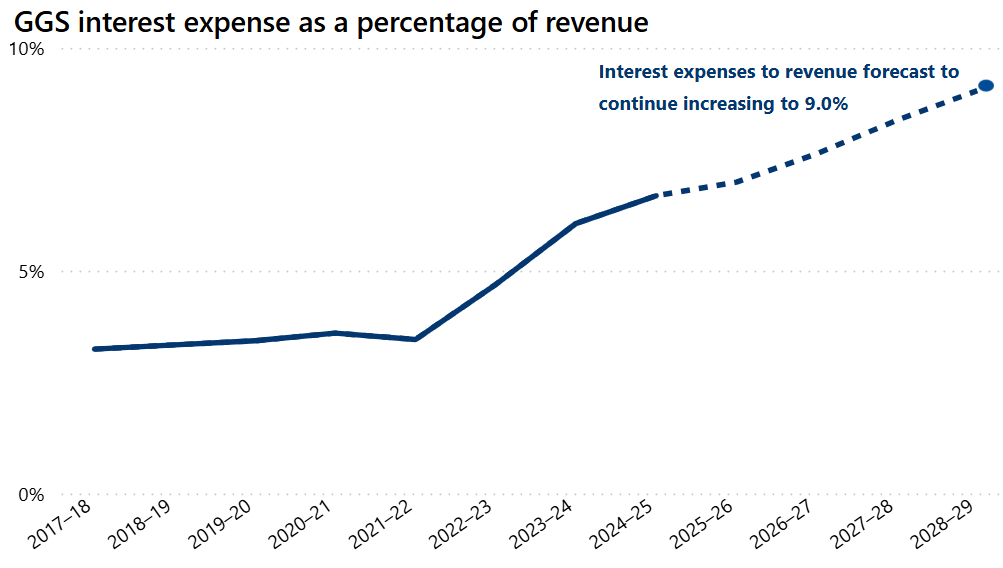
Victoria’s interest expense is also projected to rise to 9.0% by 2028–29 to $10.6 billion:
Source: Victorian Auditor-General
The Victorian government has spent far too much money on bureaucrats and wasteful infrastructure projects.
Wage expenditures are Victoria’s highest cost.
The latest state budget showed that employee expenses rose by $1 billion year over year, reflecting new enterprise bargaining agreements and higher staffing levels.
Employee expenses reached $23 billion in the first six months of 2025–26, already at 52% of the full-year budget estimate, signalling the annual wage bill will again exceed forecasts.
This continues a long‑running pattern in which wage growth remains structurally higher than government forecasts.
The Parliamentary Budget Office has found that while Labor governments forecast annual wage growth of 3.1–5.2%, actual growth has been 5.7–8.7% since 2014.
Meanwhile, the Victorian Auditor-General’s Office also revealed last year that the costs of 110 large projects have increased by $11 billion since last year.
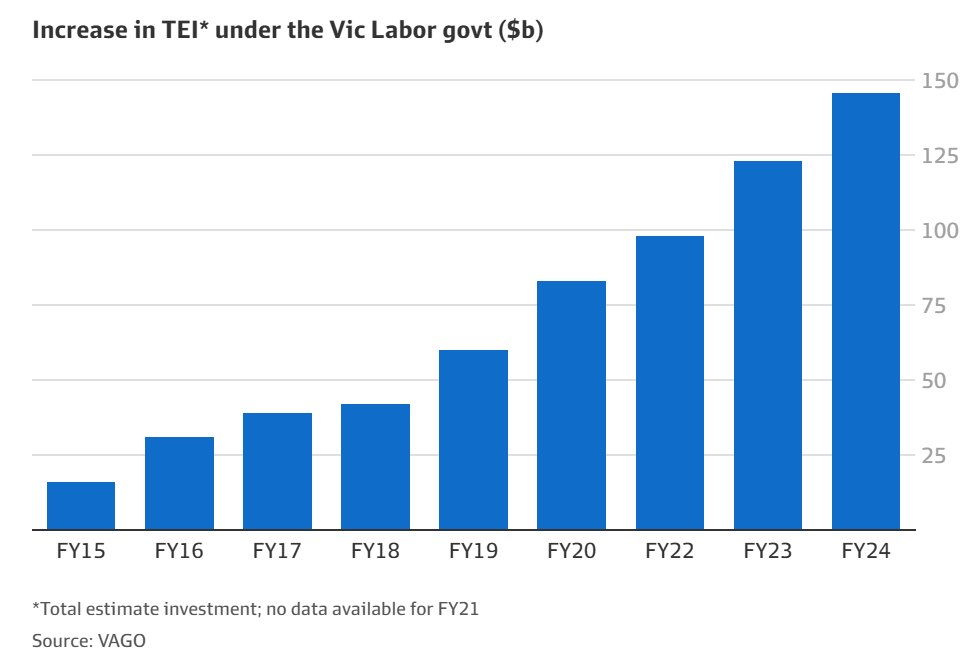
The Auditor-General’s Office evaluated 110 significant projects, and nearly half saw an increase in total expected investment.
No matter how you cut it, Victoria’s financial situation is bleak, and it is costing residents dearly.
