
Victoria issued tens of billions in long‑dated bonds during 2020–21 at very low interest rates (i.e., 1.25–1.5%).
These bonds begin maturing from 2026 through 2031, forcing the state to refinance at today’s 5–6% rates.
Major upcoming maturities include the following:
- $10.7 billion at 1.25% → matures Nov 2027
- $14.4 billion at 1.5% → matures 2030
- $19.7 billion at 1.5% → matures Sept 2031
Rolling these bonds over at current rates would add around $1.8 billion per year to interest costs.
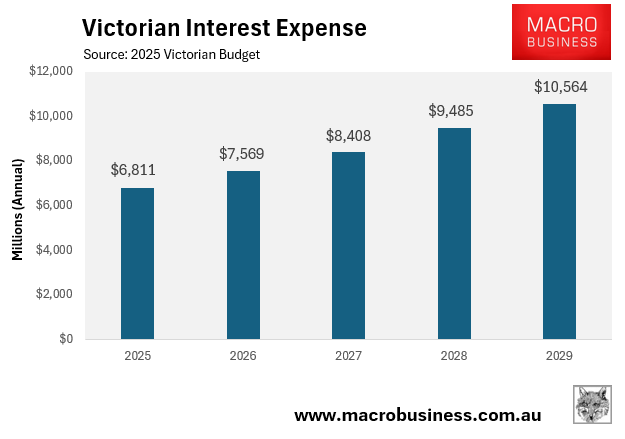
Victoria’s budget forecasts show an interest bill of $7.5–7.6 billion in 2025–26, increasing to $10.5–10.6 billion by 2028–29.
Further increases are likely as more cheap debt matures after 2030.
The federal budget forecast that Victoria’s population would increase to 7.54 million by 2028-29:
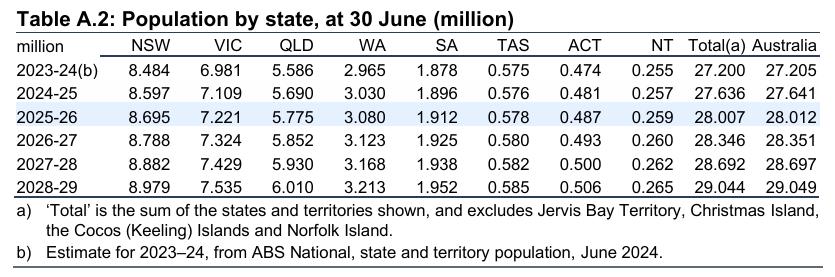
As a result, Victoria’s interest bill per capita is forecast to increase to $1,400 by 2028-29.
Former Productivity Commission chair Michael Brennan notes that most of this rise is already embedded in the forward estimates, but recent increases in bond yields since late 2025 will add further pressure.
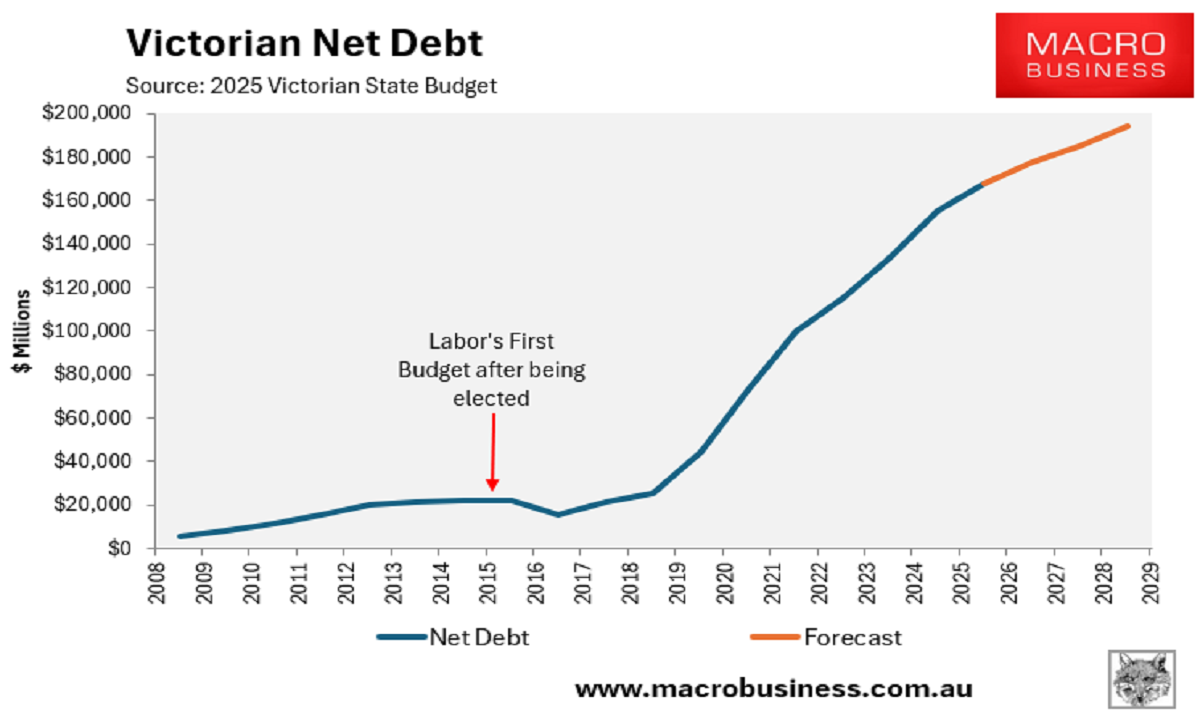
Internal Treasury documents indicate the government is using its narrow operating surplus as justification for additional spending, even as net debt is projected to approach $200 billion by 2030:
“By carefully managing our state’s finances – and addressing government spending on inefficient and non-priority programs – we’ve been able to use our budget to invest more in ‘what really matters to Victorian families”, the “Key messages and Questions & Answers” guide for ministers ahead of the 2025-26 budget states.
Overseas investors now hold at least 23% of Victoria’s debt, and the foreign turnover of Victorian bonds doubled last financial year.
The Opposition Liberal Party argues that refinancing at higher rates will worsen Victoria’s financial position. It highlights that interest payments now exceed the combined operating budgets of Victoria Police, Ambulance Victoria and family violence services.
“As Victoria’s alternative premier, restoring proper financial management is my top priority”, Opposition Leader Jess Wilson.
The reality is that Victoria faces a structural rise in interest costs as more than $25 billion of ultra‑cheap pandemic‑era debt matures and is refinanced at much higher rates.
Interest expenses are set to climb above $10 billion a year, net debt is heading towards $200 billion, and yet, unbelievably, internal documents show that the government is using its operating surplus to justify further spending ahead of the November state election.
Victorians will pay the price of Labor’s financial negligence for decades to come.
