
Cotality’s March housing report has been released, showing that Australia’s rental crisis is deteriorating at an accelerating pace amid strengthening demand.
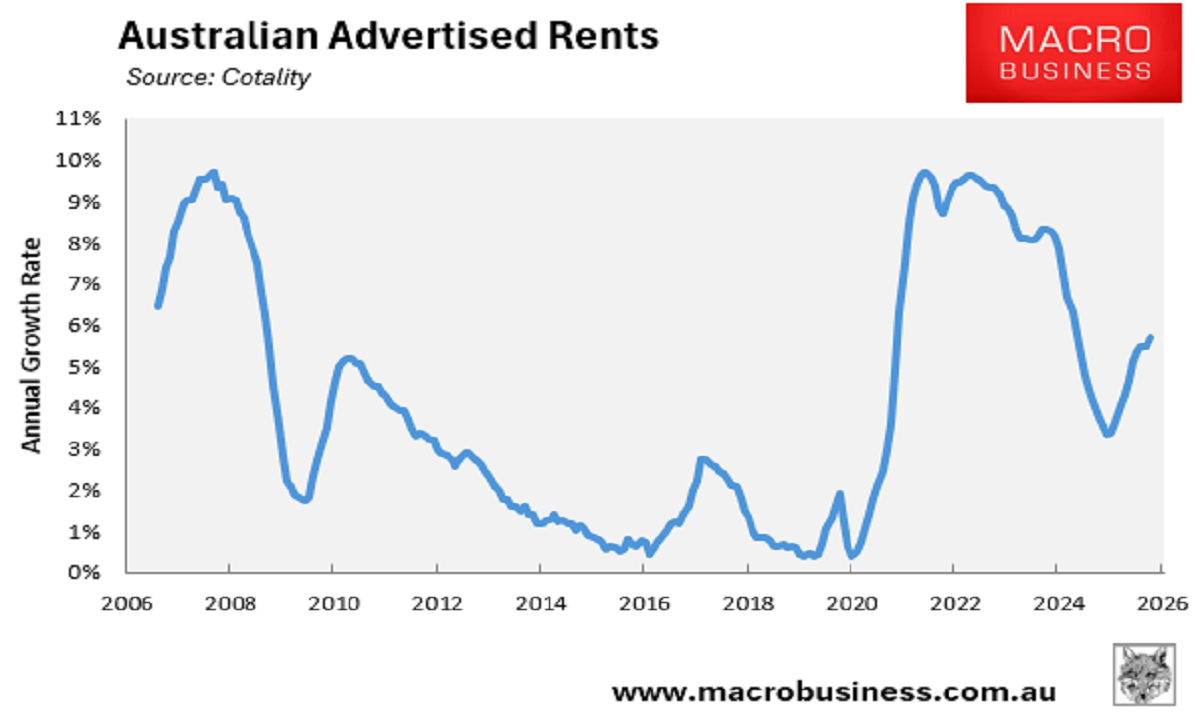
Monthly advertised rental growth has held steady at 0.7% over the past two months, taking quarterly growth to 2.1%, the largest increase since May 2024.
Over the year to March 2026, advertised rents rose by 5.7%, the largest annual increase since October 2024:
As illustrated below by Cotality, most capital cities have seen the annual rate of rental growth accelerating since mid-2025 amid persistently low vacancy rates:
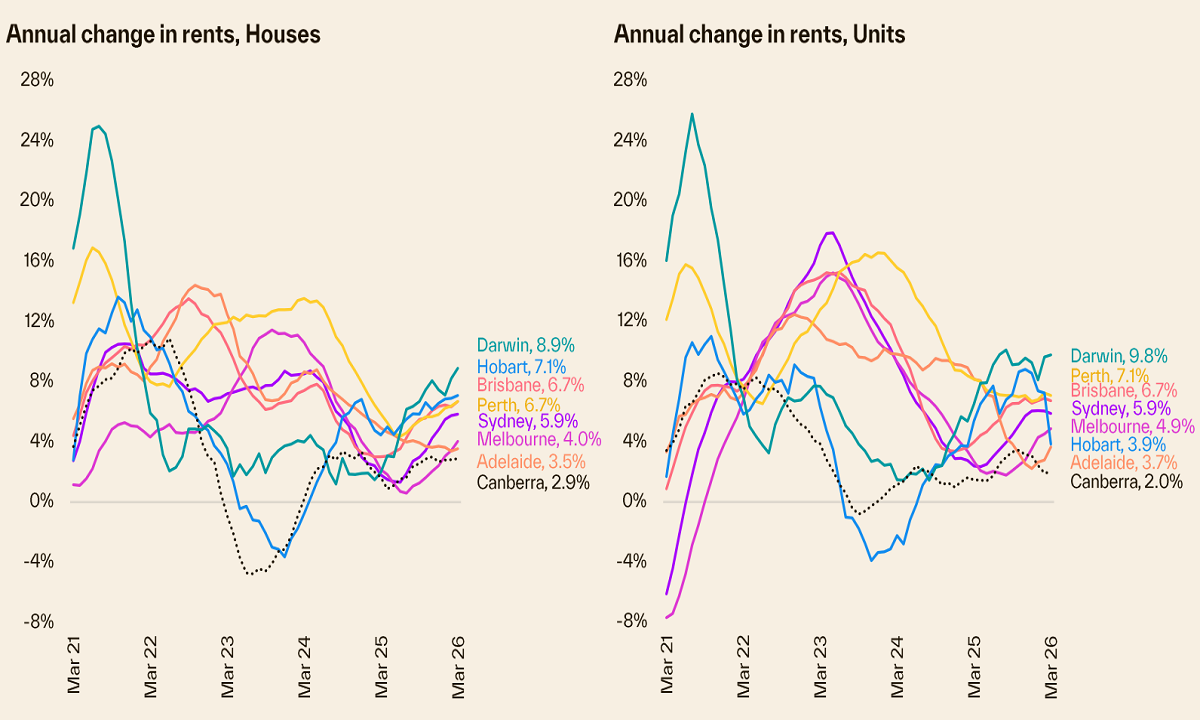
Source: Cotality
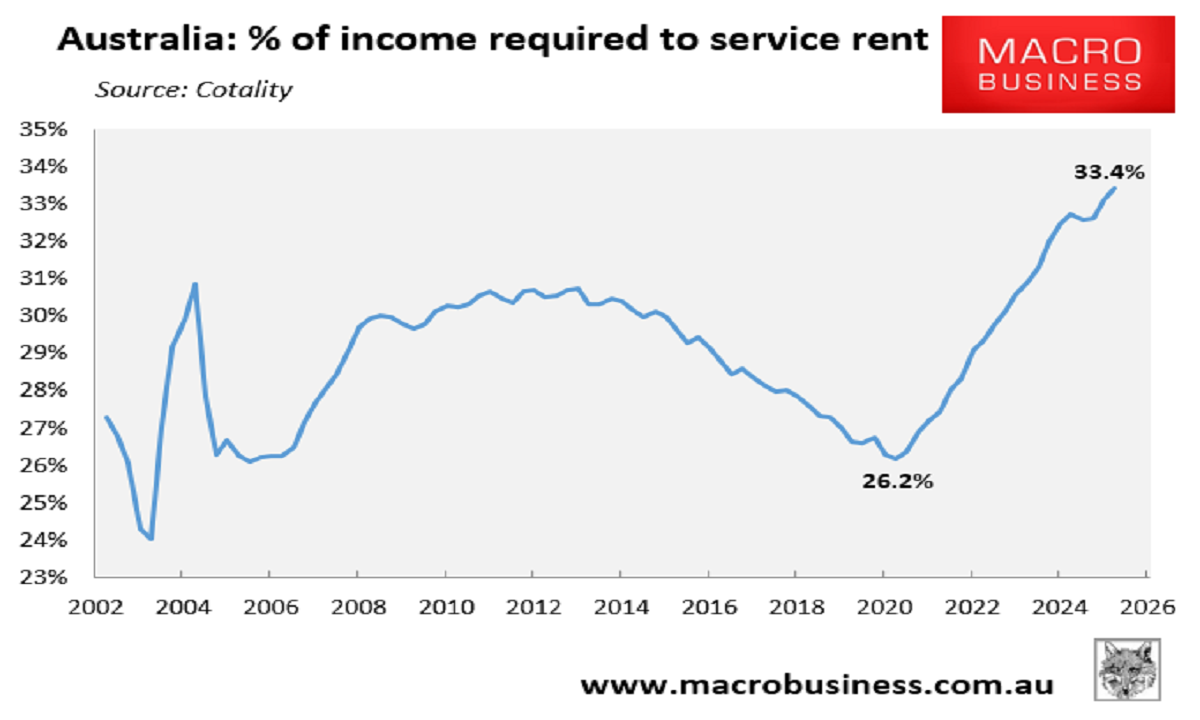
“The reacceleration in rental growth is occurring at a time when rental affordability measures are already stretched to record levels”, noted Cotality.
“Assuming a household on the median income is renting at the median rate, they would be dedicating around 33% of their pretax income on rental payments”.
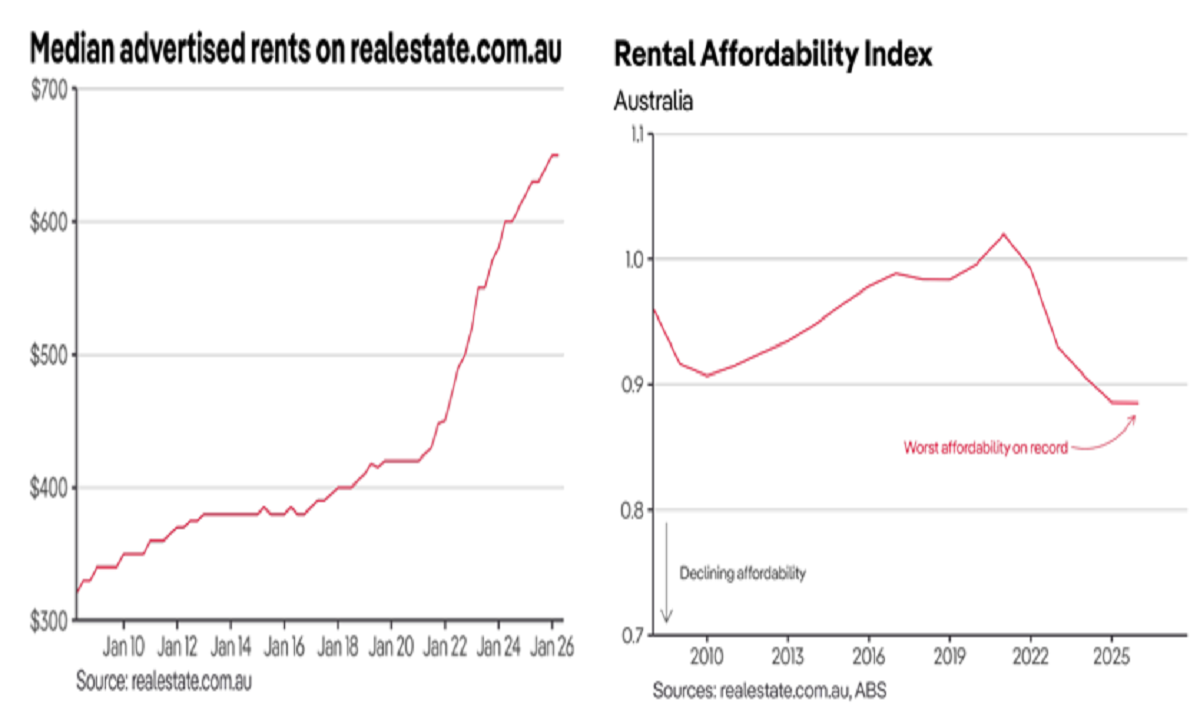
Cotality’s latest data follows last week’s rental affordability report from REA Group, which reported that rental affordability has collapsed to a record low in the December quarter of 2025, following a 55% rise in median asking rents since the beginning of 2020.
The primary driver of the reacceleration in rental growth is the rebound in net overseas migration and net permanent and long-term (NPLT) arrivals:
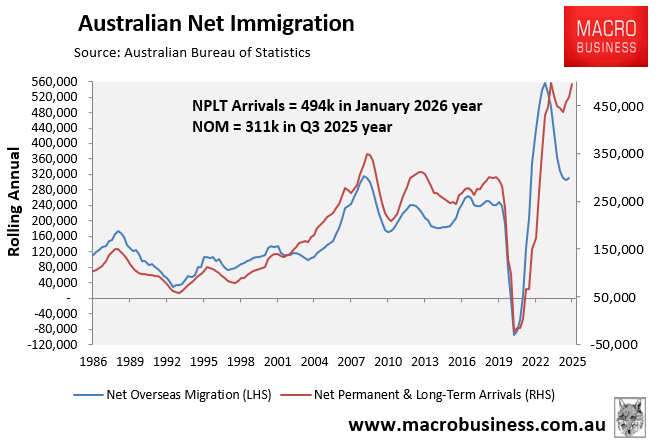
Last month, the Australian Bureau of Statistics (ABS) reported that 494,000 NPLT arrivals landed in Australia in the year to January 2026 – the highest January month on record and the equal highest annual figure on record.
In the year to September 2025, 311,000 net overseas migrants landed in Australia, up from 305,000 in the year to June 2025.
In an address to the Australian Business Economists in Melbourne last month, Treasurer Jim Chalmers conceded that net overseas migration would be higher than forecasted in last year’s federal budget, with more than 300,000 net migrants expected to land in 2025–26, above the previous forecast of 260,000.
Higher migration will obviously increase rental demand and worsen the rental crisis.
Cotality also warned that “the reacceleration in market rents is bad news for inflation”.
“Rents have a significant weighting in the CPI calculation, at 6.6%. Historically, CPI rental inflation tends to follow market rents with around a 12-month lag”, Cotality noted.
Thus, Australia’s rapidly rising rents pose an affordability headache for tenants and an inflation headache for the RBA.
