
Net permanent & long-term arrivals remains historically high
The Albanese government continues to import people into Australia at a furious rate, with 96,110 net permanent and long-term (NPLT) arrivals in February, the third-strongest February result on record, behind 2025 (111,740) and 2024 (105,460).
Over the year to February 2026, 478,910 NPLT arrivals landed in Australia, down from the all-time peaks of 498,270 recorded in February 2024 and 494,540 recorded in January 2026:
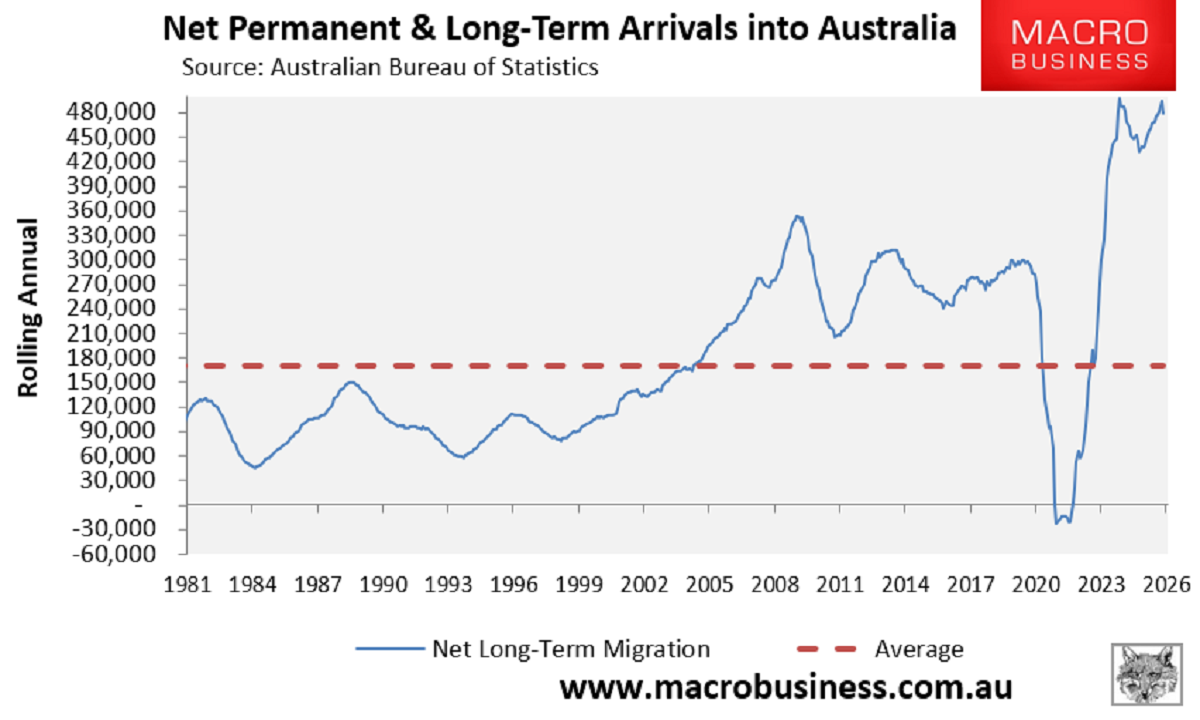
However, as you can see above, NPLT arrivals are tracking at historically high levels.
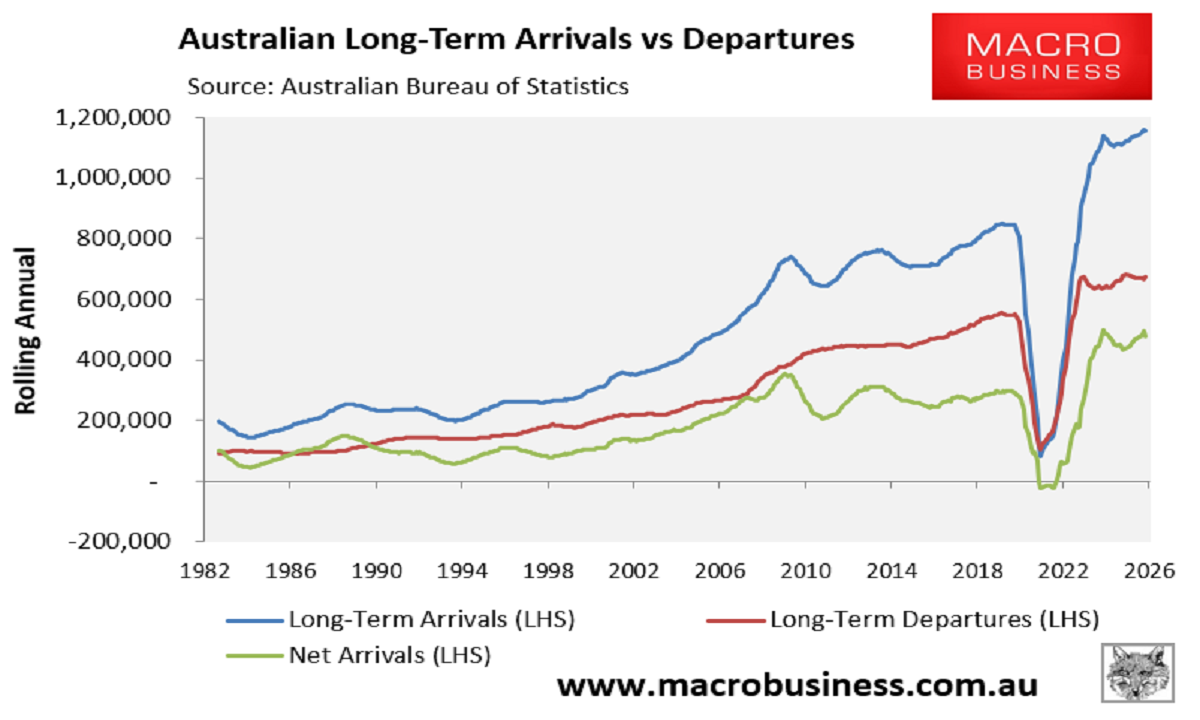
The annual breakdown of arrivals and departures is presented below. 1,154,320 people arrived in Australia on a long-term or permanent basis in the year to February – a whisker below the all-time high – partly offset by 675,410 long-term and permanent departures – also just below a record high:
Despite variations in raw numbers, the NPLT arrivals series had maintained a consistent correlation with the official quarterly net overseas migration (NOM) for over three decades. However, this relationship has collapsed over the last two years.
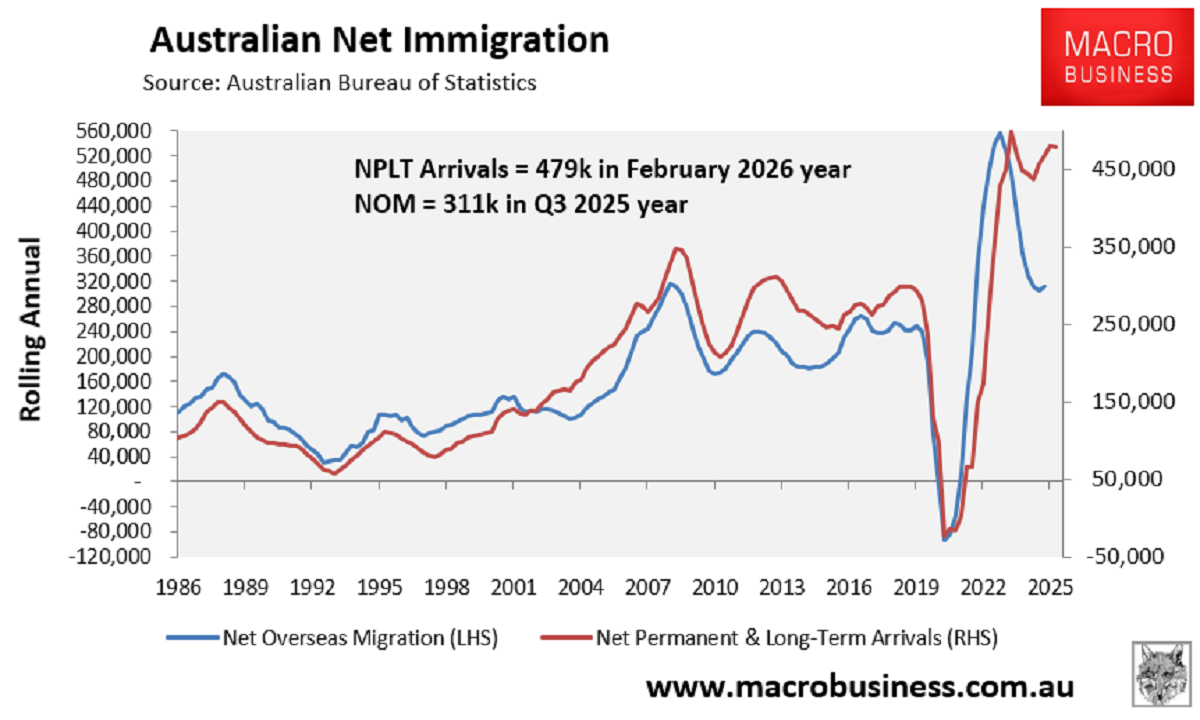
NOM is based on observed behaviour rather than visa type or declared purpose, and it counts those who relocate for at least 12 months during a 16-month period.
NPLT arrivals are based on the expected duration of stay specified on passenger cards, and they are not adjusted for the actual duration.
As shown above, the annual number of NPLT arrivals has climbed dramatically since March 2025, whereas the number of NOM declined to a still-historically high 305,000 as of Q2 2025 before rebounding slightly to 311,000 in Q3 2025 (the most current available data).
The Q4 2025 ABS national accounts also recorded strengthening population growth over the second half of 2025:
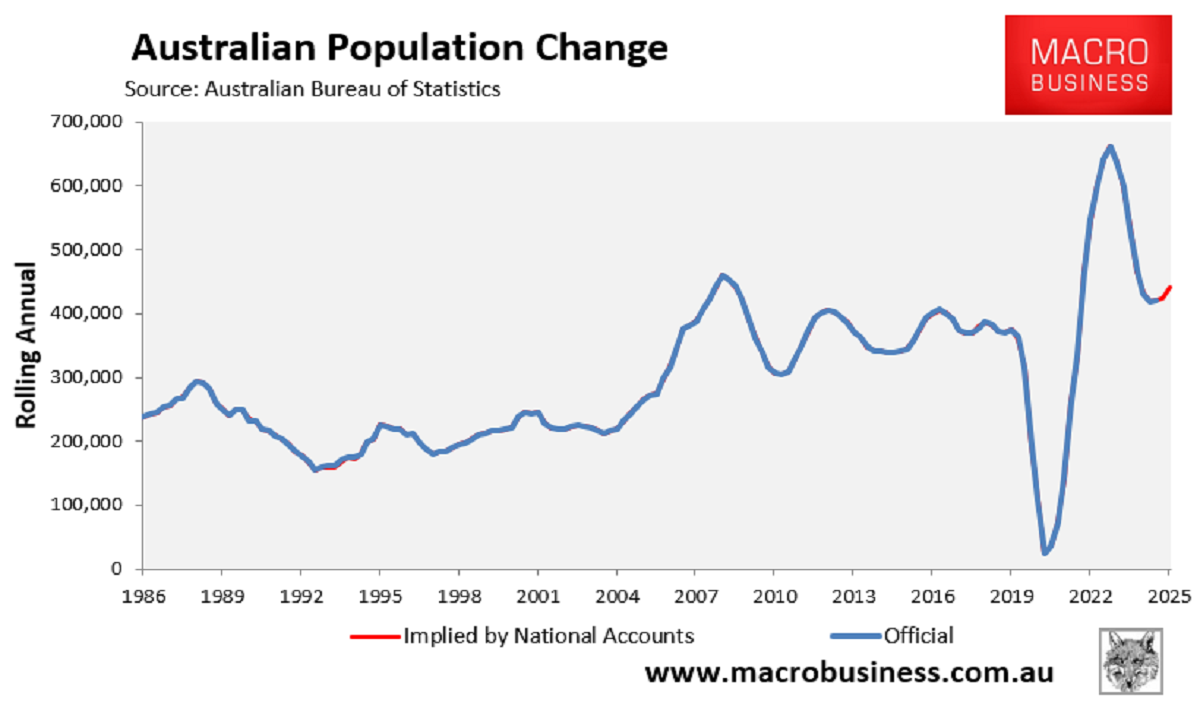
Despite the methodological differences, the data clearly show that immigration and population growth have re-accelerated, placing additional pressure on the rental market by driving vacancy rates lower and rents higher.
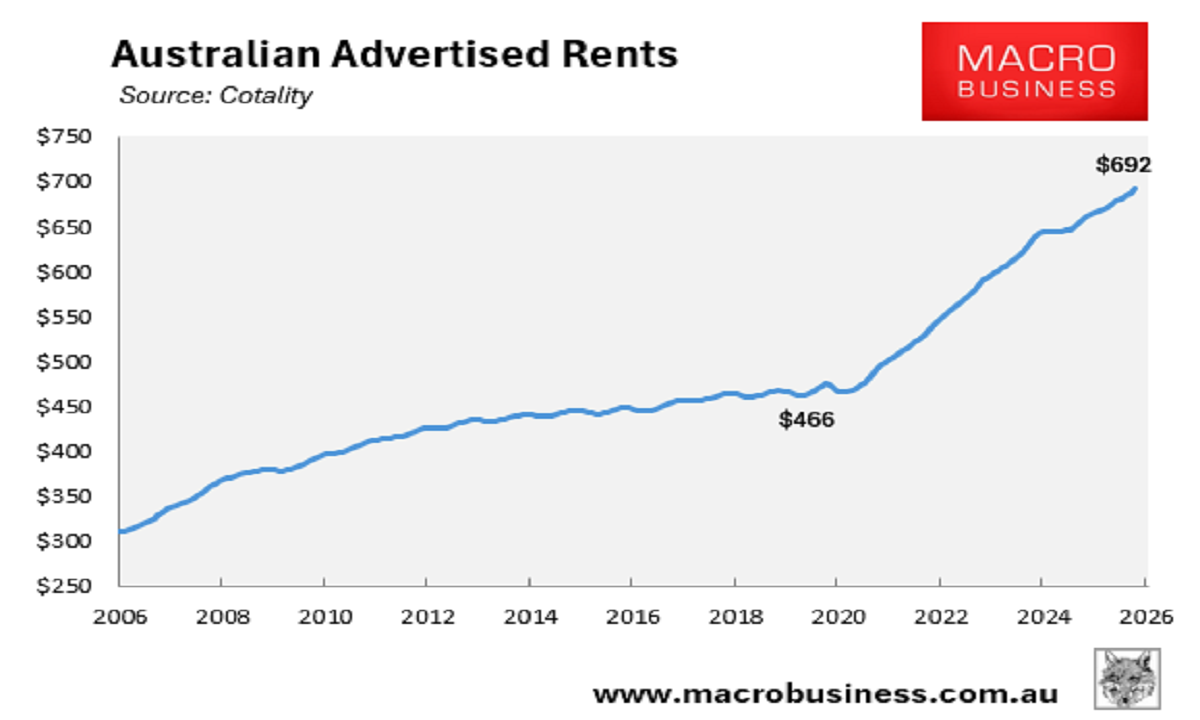
Australia’s long-suffering renters should be marching in the streets against the federal government.
