
It’s official: EV tax breaks are upper-class welfare
The federal government is facing calls to scrap or amend its Fringe Benefits Tax (FBT) exemption for battery electric vehicles (EVs) in the May budget, as the exemption’s estimated annual cost is projected to rise from an initial $90 million to $1.4 billion in 2025-26.
The government has claimed that the exemption is mainly benefiting middle-income earners. But data from the Australian Taxation Office (ATO) show that more than 30% of motorists accessing it earned more than $190,000 per year, while 24% earned between $135,000 and $190,000:
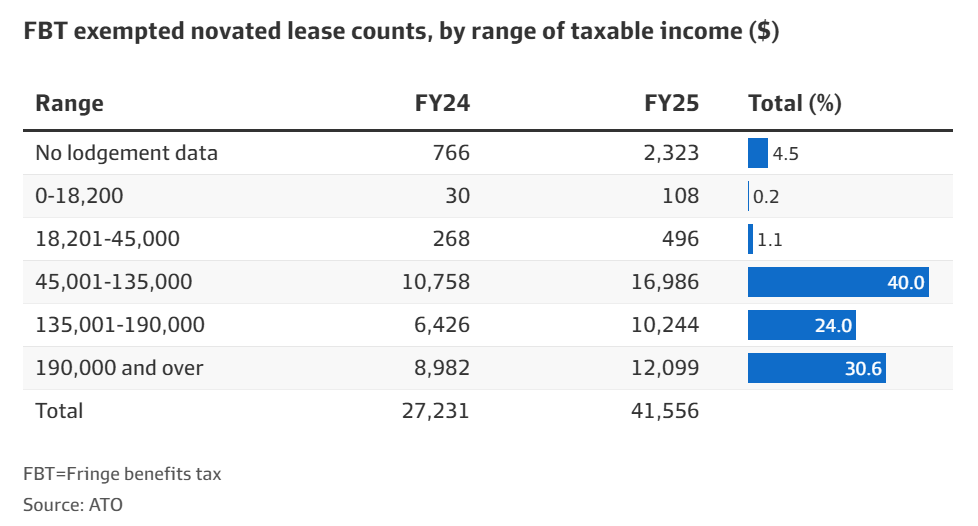
“According to the Grattan Institute, only 4.4% of Australians earn above $190,000, while more than three-quarters earn less than $104,765. The average taxable income in 2025 was $73,381”, the AFR reported.
Veteran economist Chris Richardson has described the FBT exemption for EVs as “a very good way to make cars cheaper for rich people”.
Abolishing EV subsidies would save the budget billions of dollars while improving equity:
The Australian Treasury forecasts that the total cost of the FBT exemption for battery EVs will be $9.7 billion between 2026-27 and 2029-30, with a potential $20 billion cost over the next decade. Costs will climb if fuel shocks persist and EV use increases.
Battery EVs have even lower operating expenses because they are exempt from road user charges paid under the 52.6 cents-per-litre fuel excise, which increases twice a year as part of the biannual CPI indexation.
Yes, the fuel excise has been reduced for three months, but this reduction does not level the playing field.
Excise and customs duties on petrol, diesel, and other fuel products earned nearly $27 billion in revenue for the federal government in the most recent financial year.
As a result, when drivers shift from traditional combustion vehicles to battery EVs and hybrids, revenue from the fuel excise declines.
In short, subsidising battery EVs places a significant strain on the federal budget, which is already heavily in deficit.
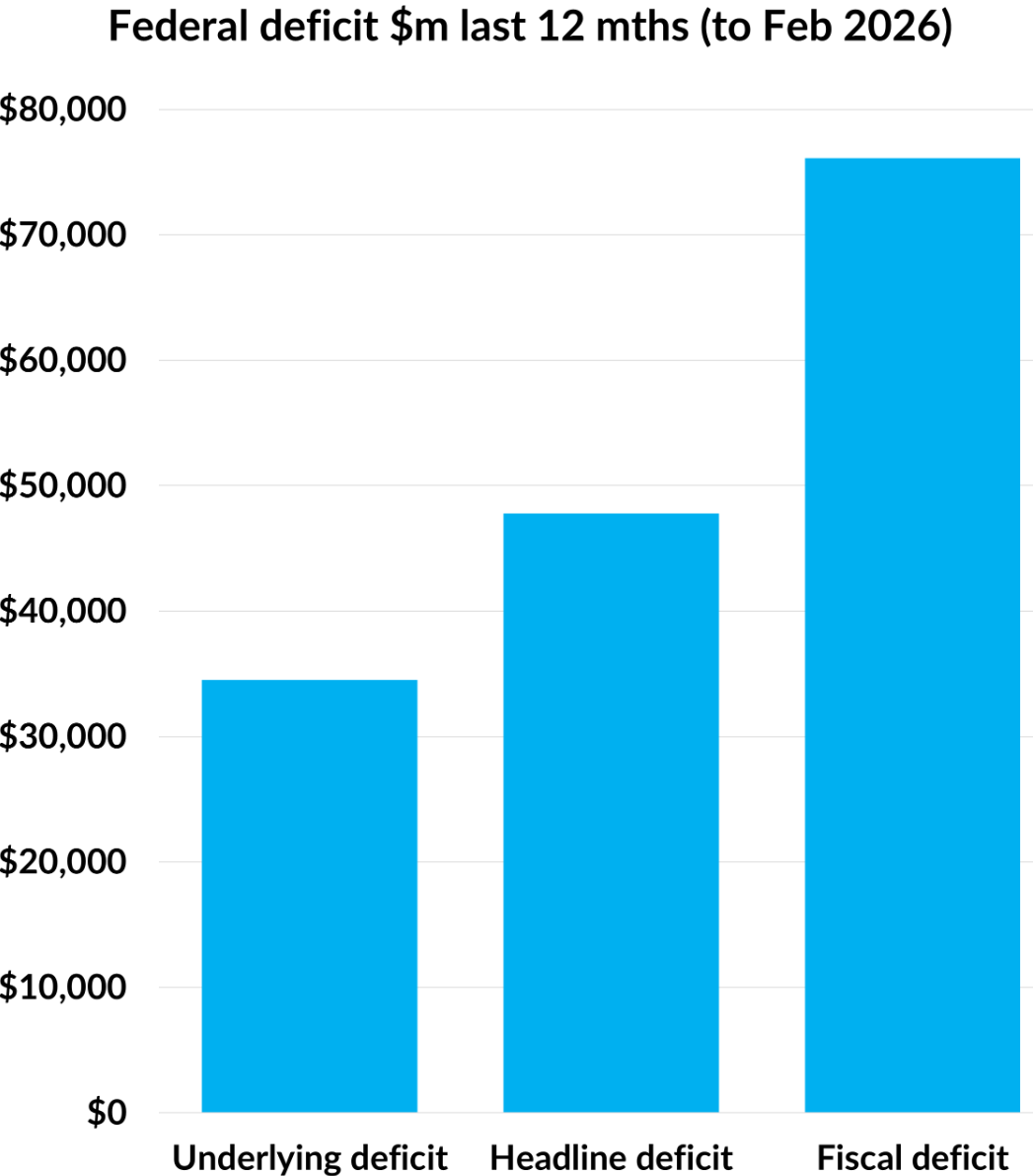
Source: Chris Richardson
The Productivity Commission (PC) is one of the bodies calling on governments to discontinue EV subsidies.
“Now that the Australian Government has implemented the New Vehicle Efficiency Standard, it should phase-out the exemption of electric vehicles from the Fringe Benefits Tax”, reads the PC said in a recent interim report.
The report also advised that “state and territory governments should phase-out the exemption of electric vehicles from vehicle stamp duty and registration discounts”.
The PC also cautioned that the FBT exemption is the most expensive form of carbon abatement, costing between $987 and $20,084 per tonne.

It is time for our governments to stop squandering taxpayer money on private car subsidies.
The majority of these subsidies benefit wealthier inner-city residents, exacerbating inequality. They also cost the federal and state governments billions of dollars in foregone tax revenue, even as they are drowning in debt.
Finally, with petrol and diesel prices rising due to the Middle East conflict, Australian consumers are financially incentivised to purchase battery EVs. They don’t need government incentives.
Make EV users pay the true cost of their vehicle purchases and charging.
Scarce taxpayer funds should be used where they are most needed and benefit the most Australians. Subsidising EVs fails this important principle.
