
Developers and builders across Australia warn that the conflict in the Middle East has triggered a fresh supply chain shock, pushing up the cost of key construction materials and fuel and threatening the viability of new housing projects.
Many say the situation now resembles the pandemic‑era disruption and are calling for governments to reintroduce Covid‑style relief measures to keep projects alive.
Earlier this week, Nigel Satterley, CEO of Australia’s second-largest residential land developer, Satterly Property Group, warned that the war could add another $50,000 to the cost of building new homes.
Satterley cited a 37% increase in the cost of PVC piping due to the war, while cement has risen by 25%, and quarry products are up 50%.
The rise in diesel fuel prices has also increased the cost of preparing a block of land at the Satterly Property Group’s housing estates by up to $20,000.
Other developers told The Australian newspaper that rising costs are pushing more projects from marginal to unfeasible, worsening the already severe housing-supply bottleneck.
As a result, the Albanese government’s 1.2 million housing target, which is already tracking 27% below its required run rate, risks falling even further behind.
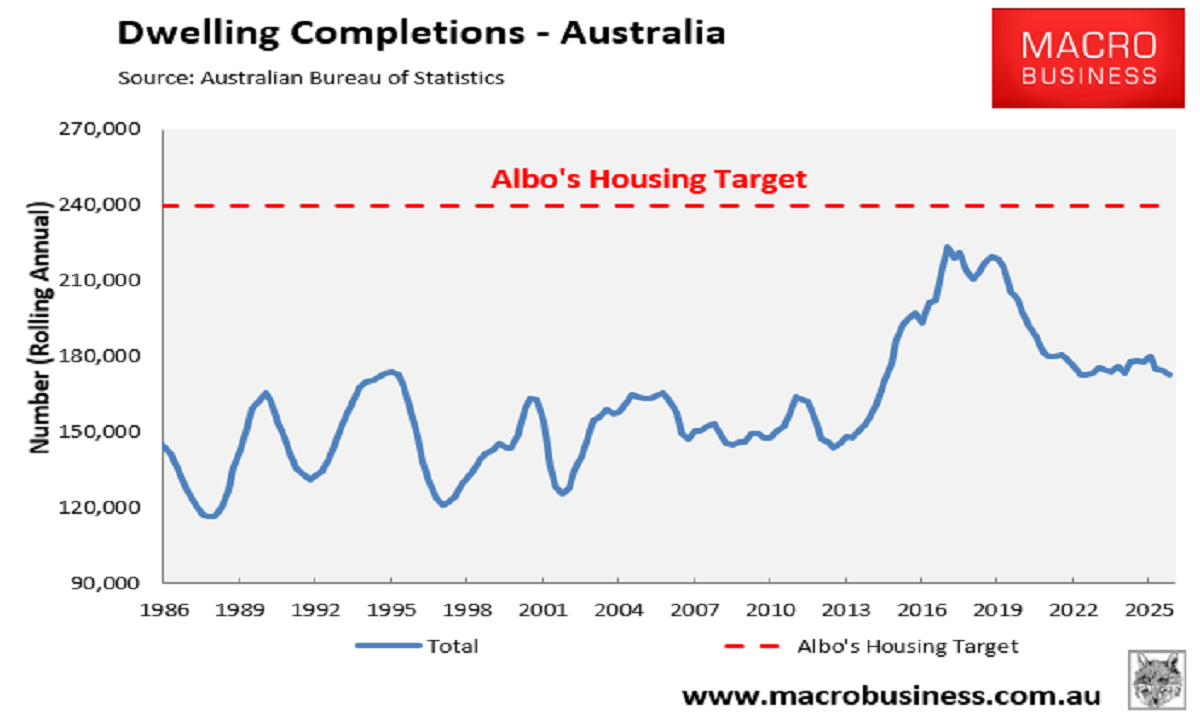
Developers say fewer projects will start, those that proceed will cost more, and new homes will be more expensive to buy.
“Feasible projects are now marginal, and marginal projects are now unfeasible”, Deicorp warns.
Builders locked into fixed-price contracts—a major cause of insolvency in recent years— are again exposed. Rider Levett Bucknall says rising input costs are squeezing margins, and projects with high exposure to fuel‑linked inputs (concrete, asphalt, steel, and earthworks) are most vulnerable.
Brisbane’s Hutchinson Builders expects 10–20% cost increases, whereas Meriton says costs could rise by around $50,000 per apartment if the conflict drags on.
Developers are urging governments to revive pandemic‑era relief measures, such as extending site working hours and deferring government charges, to prevent a collapse in new housing supply.
The futures market continues to price a strong likelihood of three additional 0.25% rate hikes this calendar year, which would take the official cash rate to an 18-year high of 4.85%:
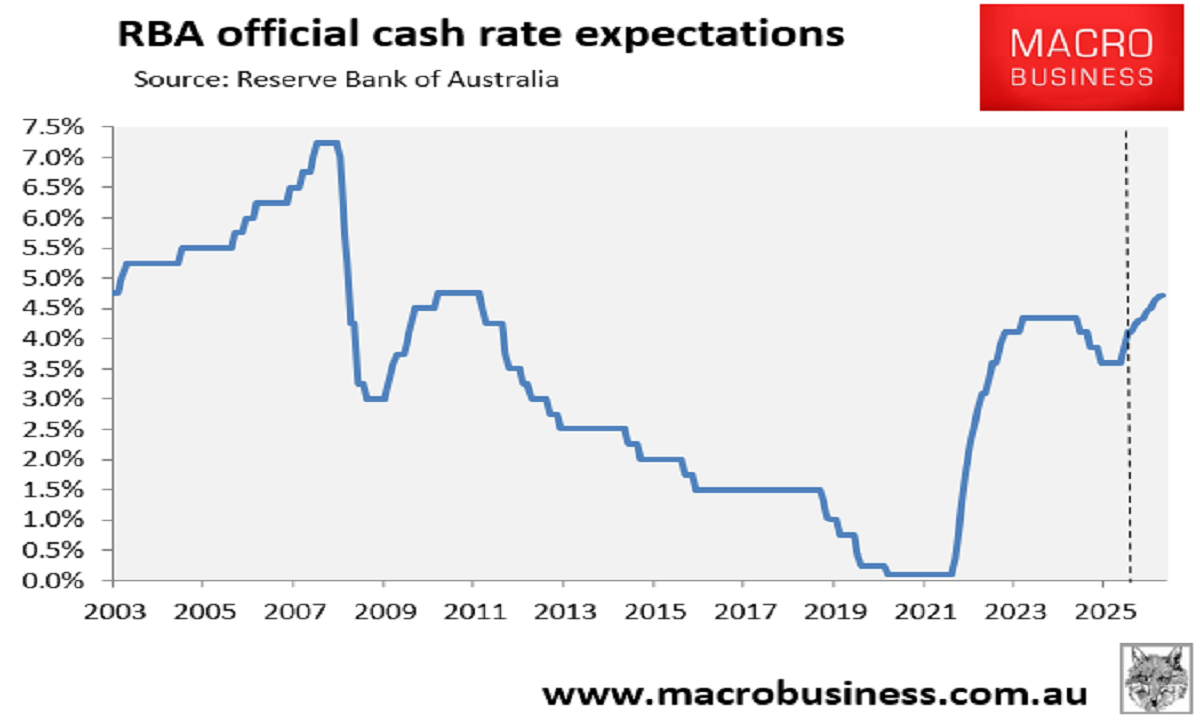
Higher interest rates will increase financing costs for developers and reduce buyers’ capacity to pay, thereby acting as another constraint on housing construction.
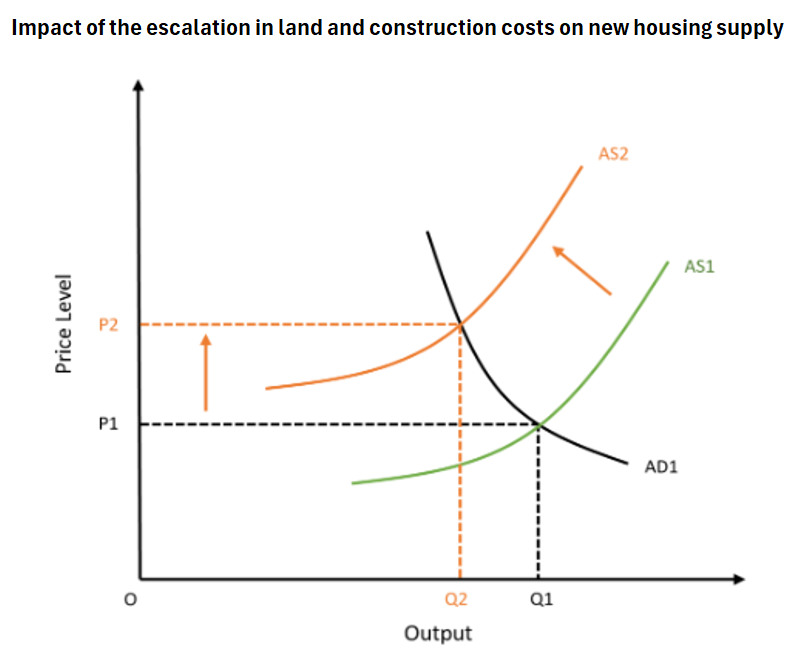
The economic reality is that the housing supply curve has shifted leftward, meaning fewer homes will be built and they will cost more.
At the same time, population growth via immigration continues to run hot.
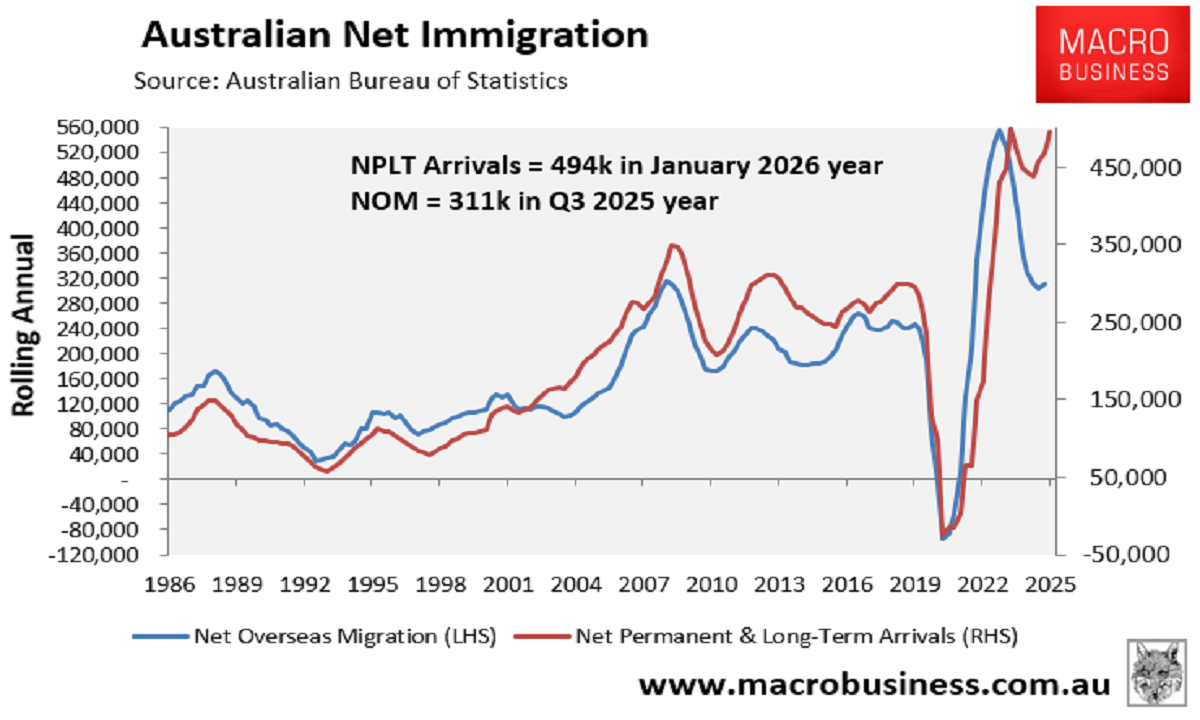
Treasurer Jim Chalmers admitted last month that net overseas migration (NOM) will be higher than expected due to fewer departures.
The upcoming federal budget will reportedly forecast NOM of more than 300,000 this financial year, up from 260,000 in last year’s budget.
NOM in the forward budget estimates will also likely be revised higher.
Australia is, therefore, facing stronger housing demand amid tightening supply, meaning the housing shortage will worsen.
The Albanese government must respond by copying Canada’s playbook and slashing immigration to alleviate pressure on the housing market.
