
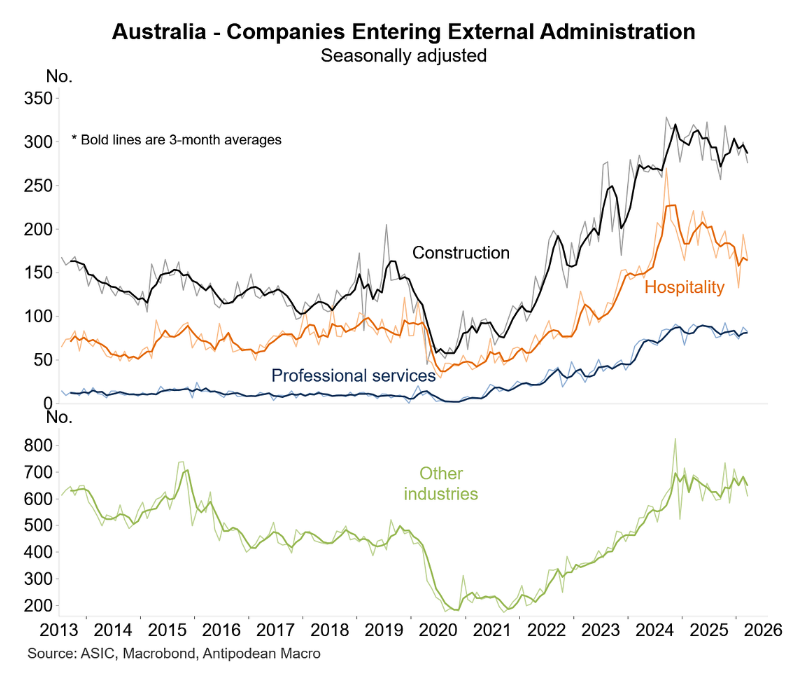
I noted last week how the construction industry has experienced an unprecedented surge in insolvencies since the COVID-19 pandemic:
This surge in insolvencies was caused by a ‘perfect storm’ of factors, including material cost inflation, supply‑chain disruptions, and labour shortages, which drove up construction costs by more than 40%:
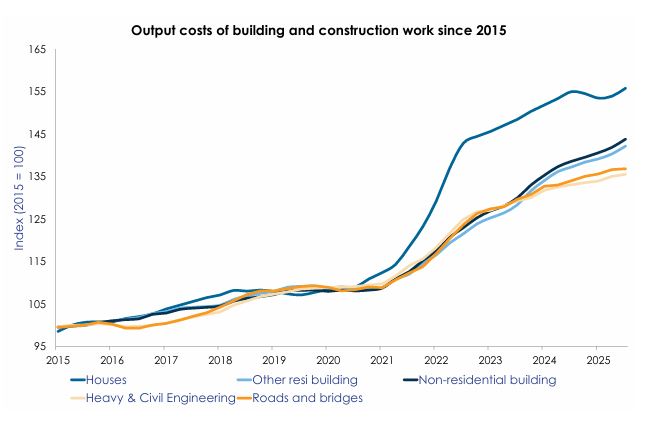
Source: Master Builders Australia
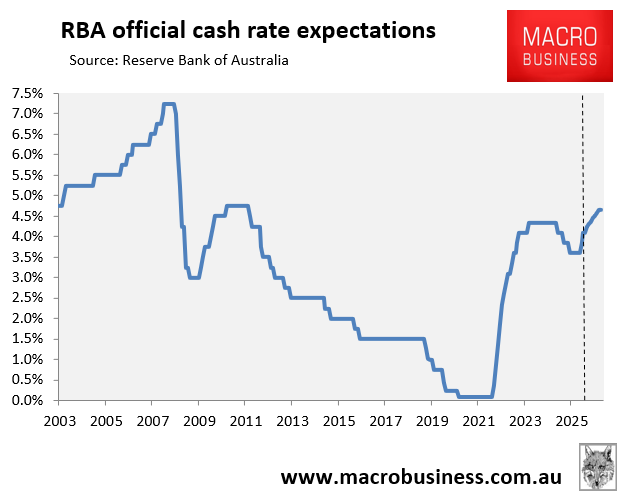
Rising interest rates, which increased financing costs for builders and developers and cooled demand for new builds:
Now homebuilders are facing another surge in construction costs, courtesy of the global energy crisis brought about by the war in the Middle East.
The AFR reported that two of Australia’s biggest concrete suppliers — Heidelberg Materials and Holcim — will double their fuel surcharges on 1 May, which follows Boral’s surcharge doubling on 13 April.
These surcharges will add to a new wave of cost pressures hitting home builders and will increase the cost of a typical concrete slab by $400.
Other inputs into the construction process have also experienced increasing costs, as illustrated below:
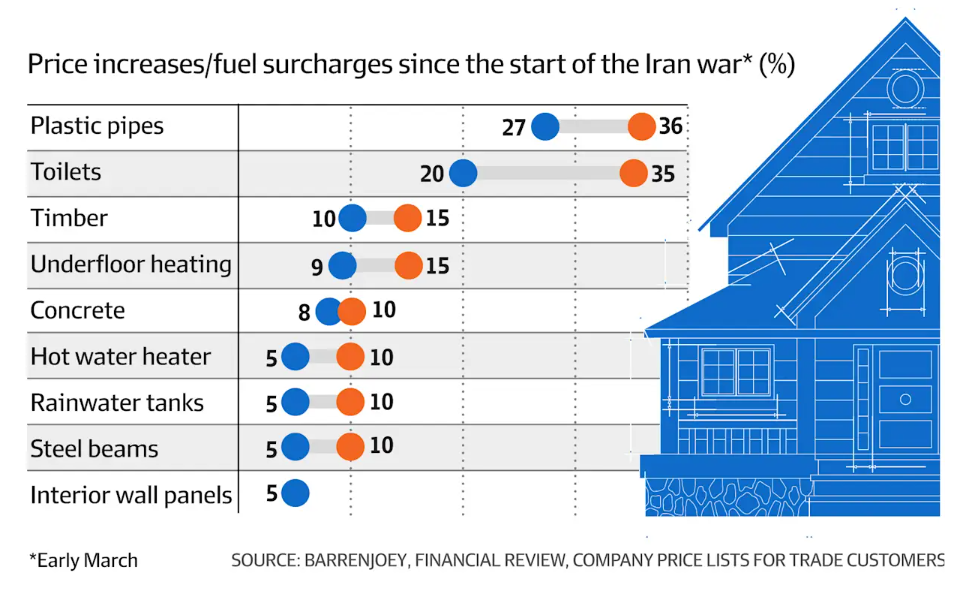
The biggest price increases, between 27% and 36%, are for plastic pipes used in plumbing.
Barrenjoey’s new building input cost index forecasts 1.3% quarterly construction inflation over the next three quarters and 5.5% annual inflation by September. This alone will add 42 bps to headline CPI.
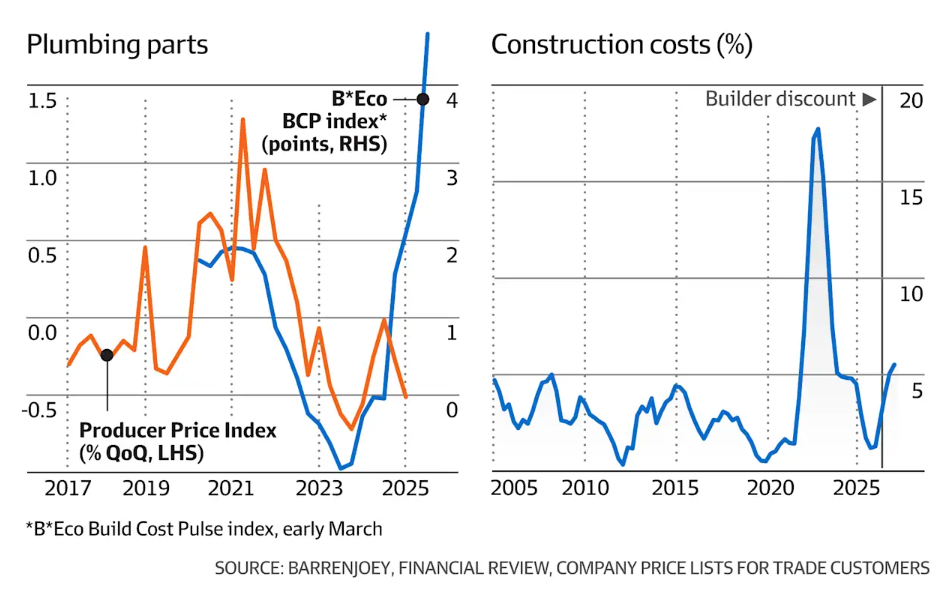
“There’s a big backlog of work to be done, the oil shock is adding fuel to the fire”, chief economist Jo Masters said.
“History tells us in the construction space you rarely get price falls”, she said, adding that an ongoing shortage of tradespeople reinforces the upward pressure on project costs.
Adam Dal, director of Sydney East Building & Renovations, said prices for building supplies had risen by between 7% and 8% since the start of March.
“At the time of quoting, no one knew there was going to be a war in the Middle East”, Dal said.
The economic reality is that Australia’s housing supply curve continues to shift leftward. This means that fewer homes will be built and they will cost more.
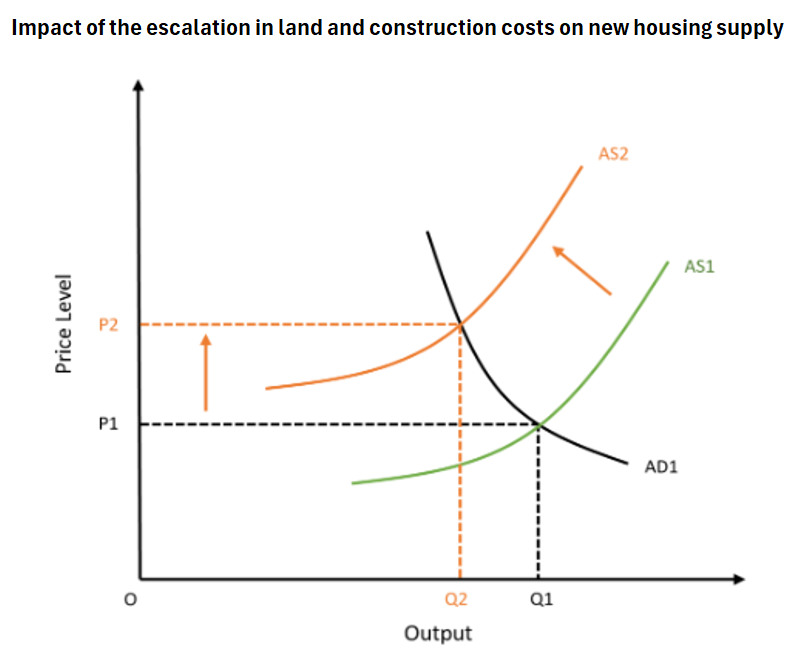
It also means that the Albanese government’s 1.2 million housing target, which is already tracking 27% below its required run rate, will inevitably lag further behind.
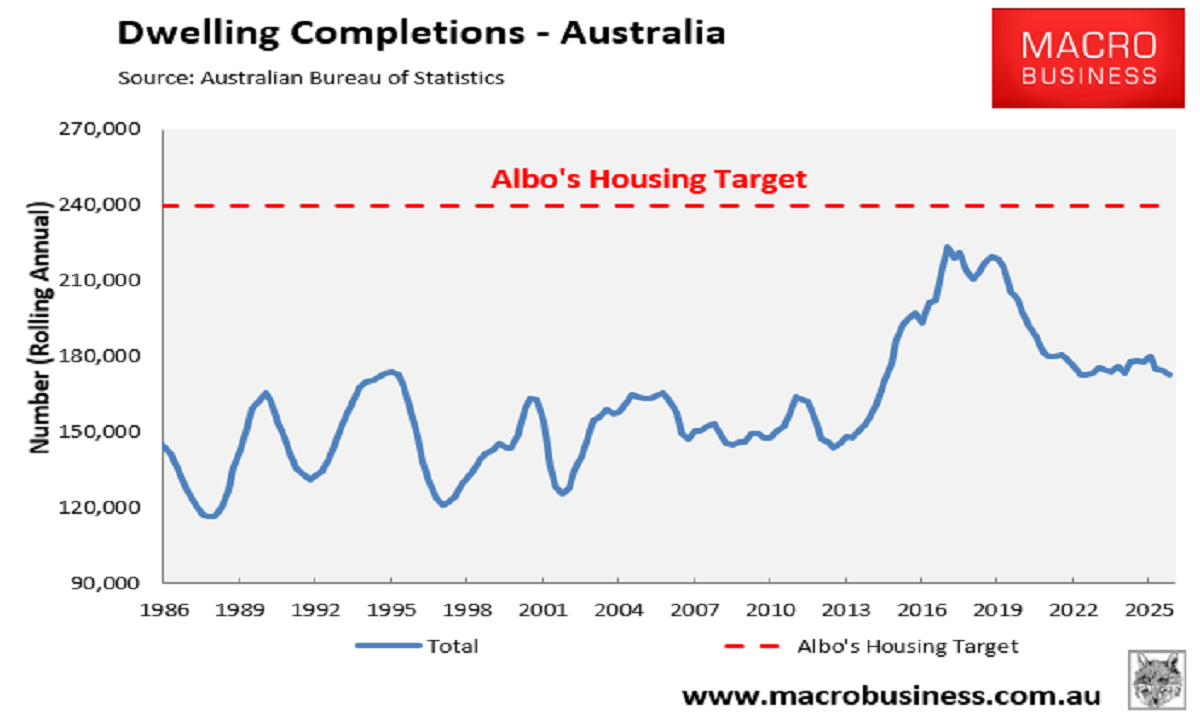
At the same time, Treasurer Jim Chalmers last month upgraded the nation’s net overseas migration forecast by around 15%, meaning that housing demand is stronger than expected.
The result is that Australia’s housing crisis is bound to worsen as supply falls and demand strengthens.
