
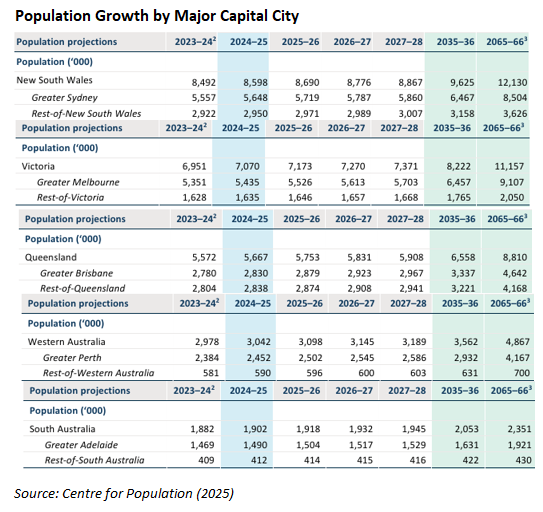
The Centre for Population’s latest Population Statement forecast that Australia’s capital cities will swell by 10,850,000 people over the next 41 years.
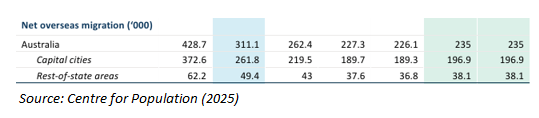
Melbourne (9.1 million) and Sydney (8.5 million) are projected to become megacities by the mid-2060s, while Brisbane is tipped to grow by around 1.8 million to 4.6 million, and Perth by 1.7 million to 4.2 million.
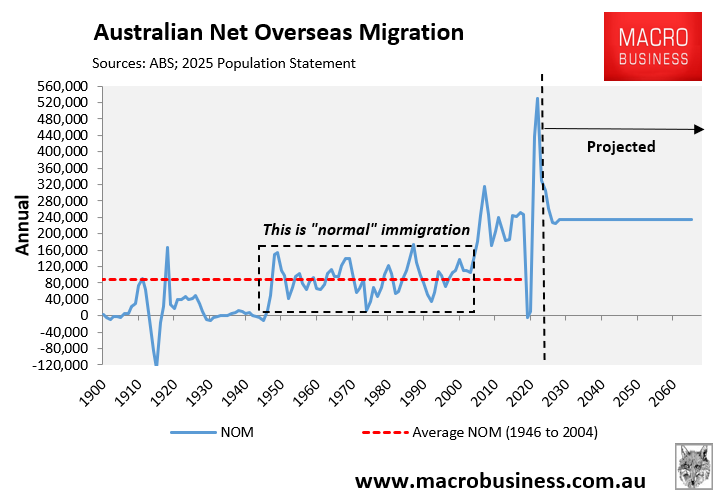
Such extreme population growth will place severe pressure on housing, infrastructure, and services, which have already suffered shortages over the past two decades of high immigration.
One major pressure point is water. Australia has exhausted its water supplies from natural rainfall and will require expensive, energy-intensive technological solutions to augment them as the population expands.
Reflecting this reality, five of the 15 projects on Infrastructure Australia’s updated priority list revolve around water supply.
Infrastructure Australia notes that the nation’s growing population will increase demand for water in the coming decades, and CEO Adam Copp says that having sufficient access to water and wastewater is one of the biggest barriers to increasing housing supply.
He adds that further investment in desalination plants will be needed to ensure that Australia’s major cities do not run out of drinkable water.
“One of the biggest barriers to housing is water and having appropriate water and wastewater, we’ve got climate change and we’ve got ageing assets in the ground”, Copp said.
“So we need more water infrastructure, but we also need more climate-independent sources of water, things like desalination plants”.
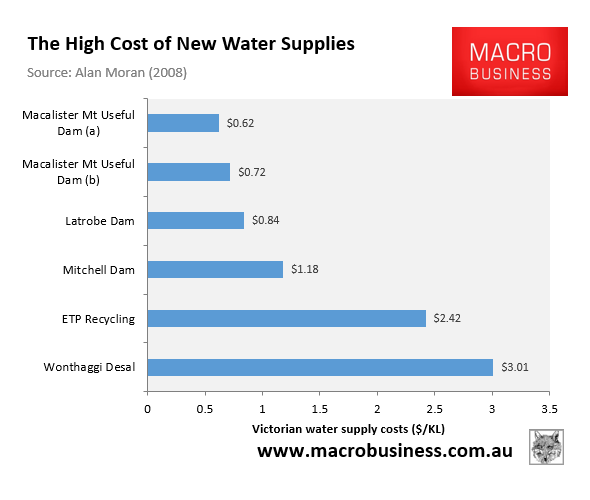
While technologies such as desalination and recycling can supplement water supplies, they are far pricier than traditional water sources:
Previous modelling from Infrastructure Australia projected that real household water costs would more than quadruple from $1,226 in 2017 to $6,000 in 2067, driven by surging population growth requiring technological solutions to water supplies:
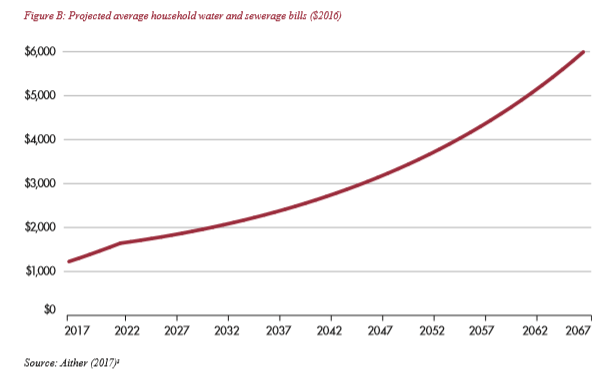
The endless expansion of Australia’s cities through immigration will necessarily require a portfolio of expensive, energy-hungry desalination plants.
Water is therefore another prime example of how running a mass migration policy harms the welfare of incumbent residents.
Such costs could be avoided altogether by not growing the population so aggressively in the first place.
