
The Australian Bureau of Statistics (ABS) released monthly CPI inflation data for February, which obviously pre-dates the Middle Eastern energy shock.
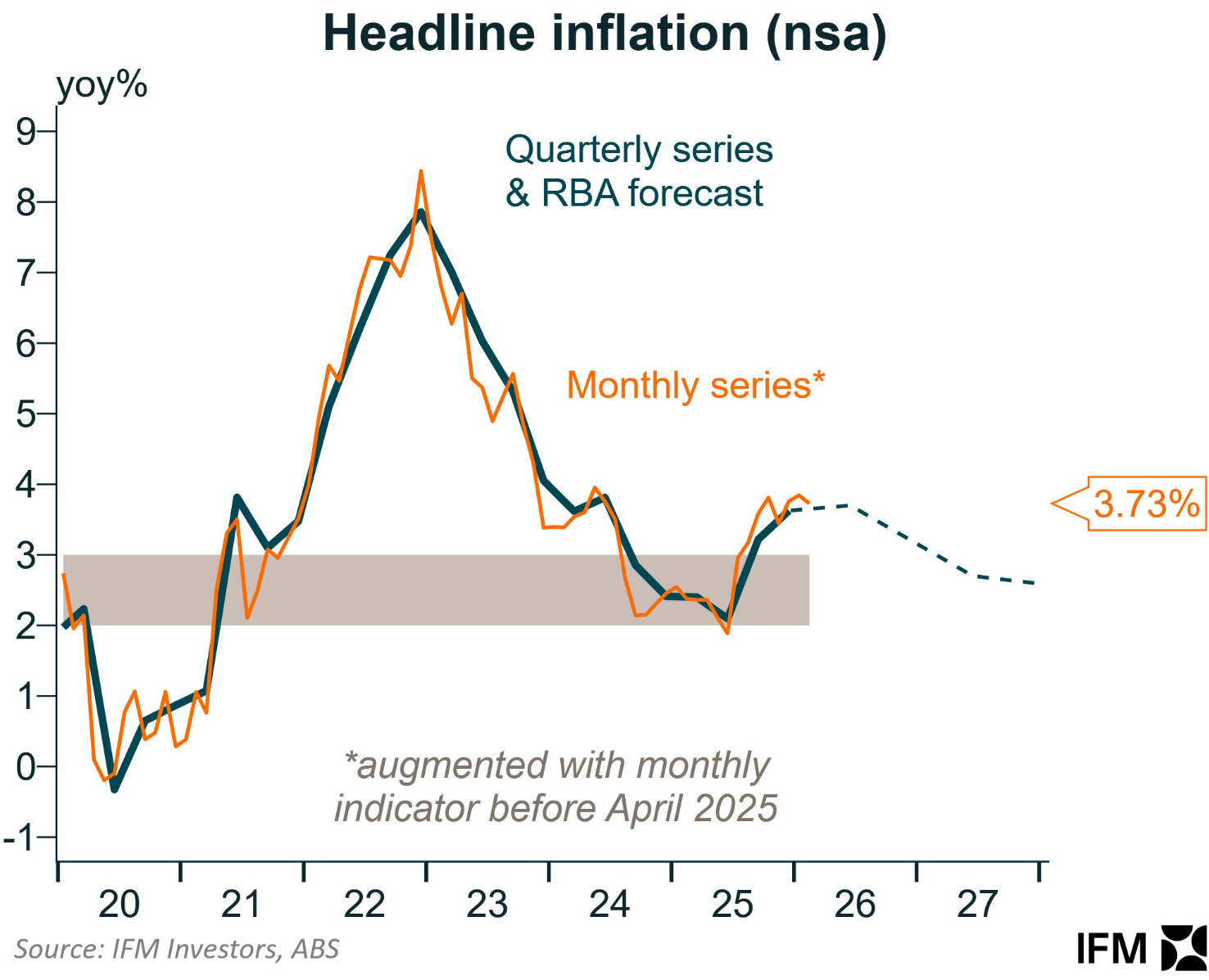
As illustrated below by Alex Joiner, chief economist at IFM Investors, headline CPI inflation rose by 3.7% in the 12 months to February 2026, down slightly from 3.8% in January.
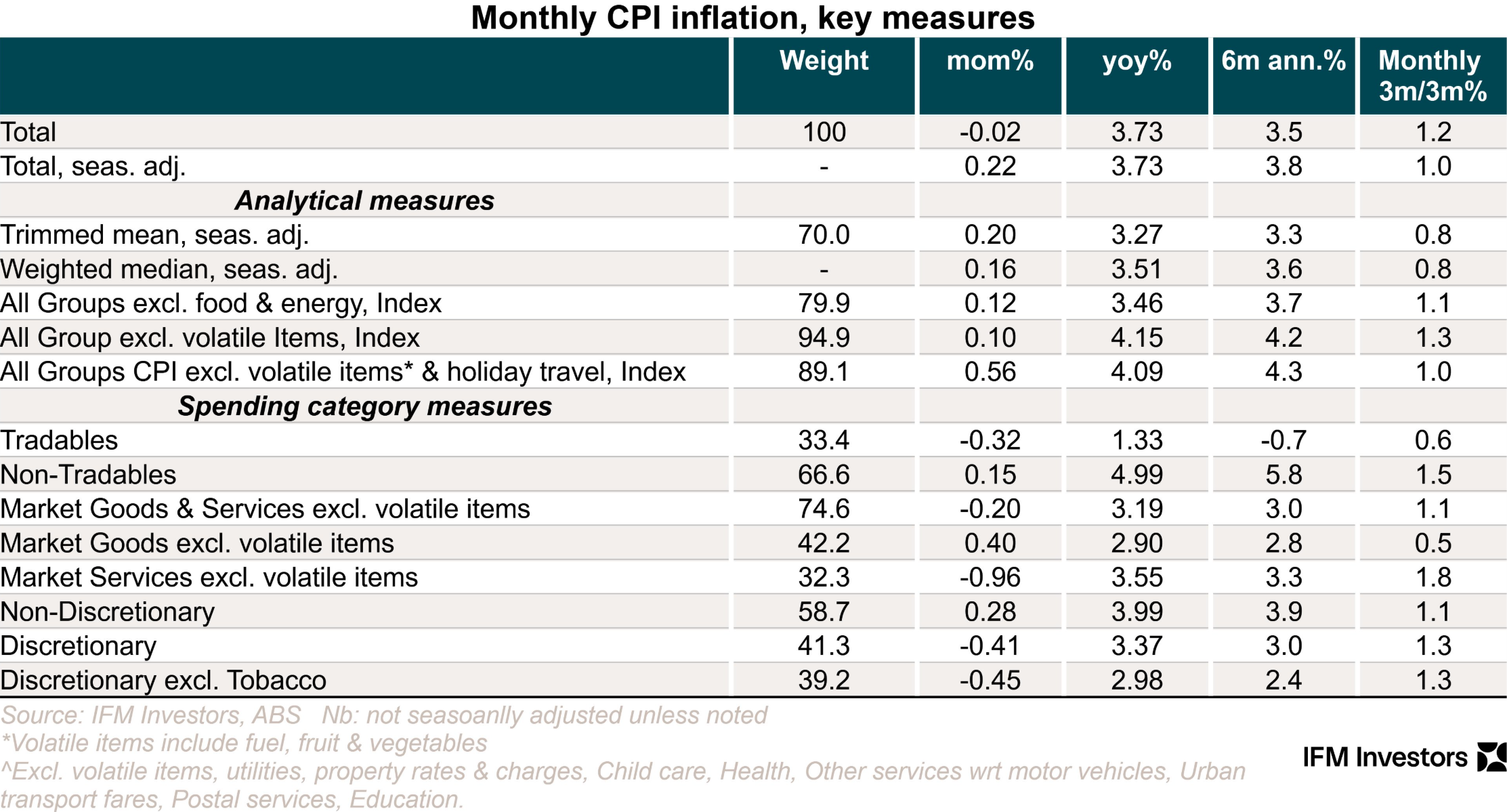
The largest contributor to annual inflation in February was housing, which rose by 7.2%. This was followed by a 3.1% rise in food and non-alcoholic beverages and a 4.1% rise in recreation and culture.
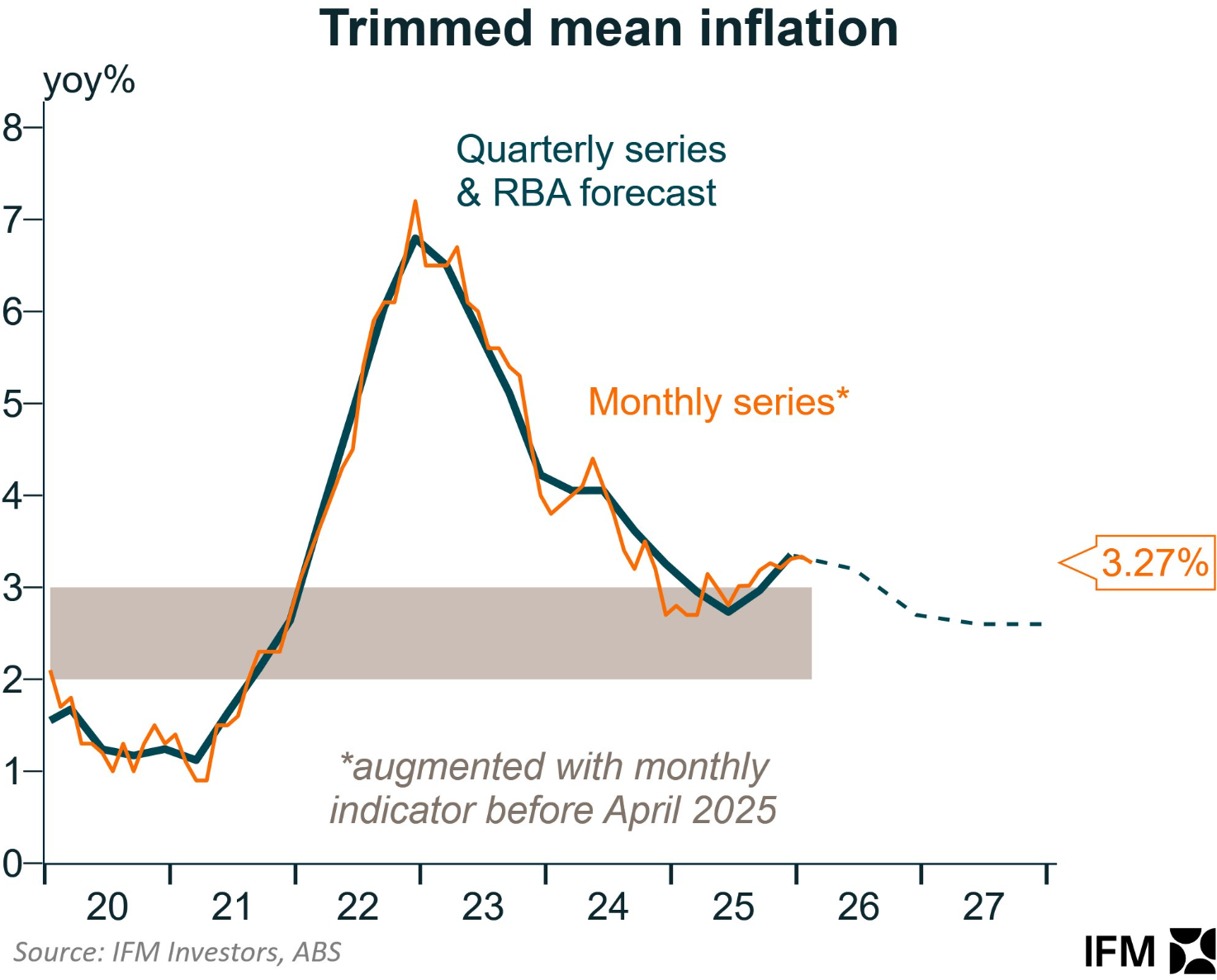
The policy-relevant trimmed mean inflation was 3.3% in the 12 months to February 2026, unchanged from the 12 months to January 2026.
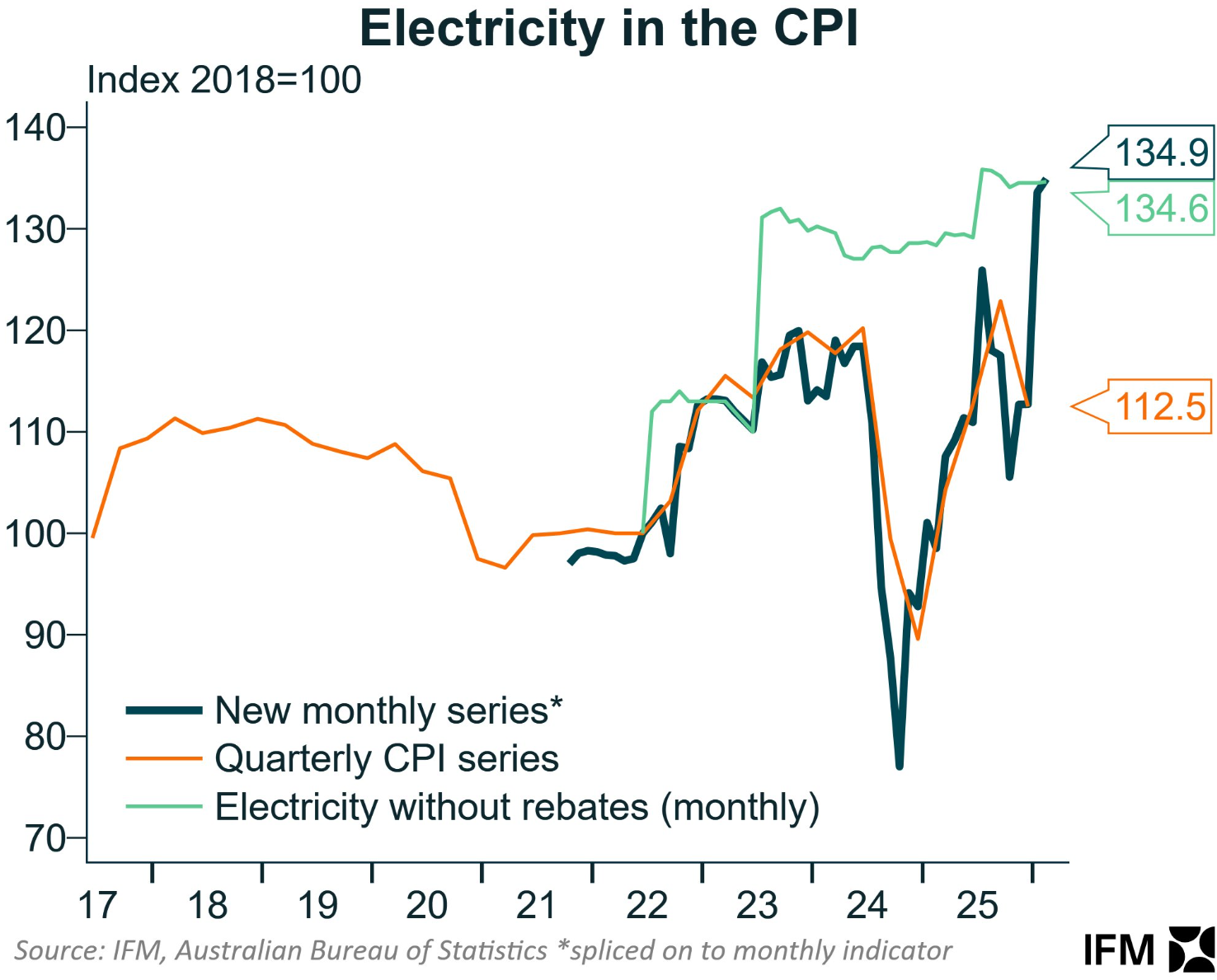
Electricity costs rose 37.0% in the 12 months to February, up from 32.2% in January, and have fully caught up following the expiry of energy rebates, and now reflect reality:
As shown below by Joiner, headline CPI inflation in February was tracking in line with the RBA’s latest forecasts:
Trimmed mean inflation was also tracking in line with the RBA’s latest forecasts:
While it is good to see that inflation behaved itself in February, it is largely irrelevant given the recent spike in petrol and diesel prices, which will drive up inflation going forward.
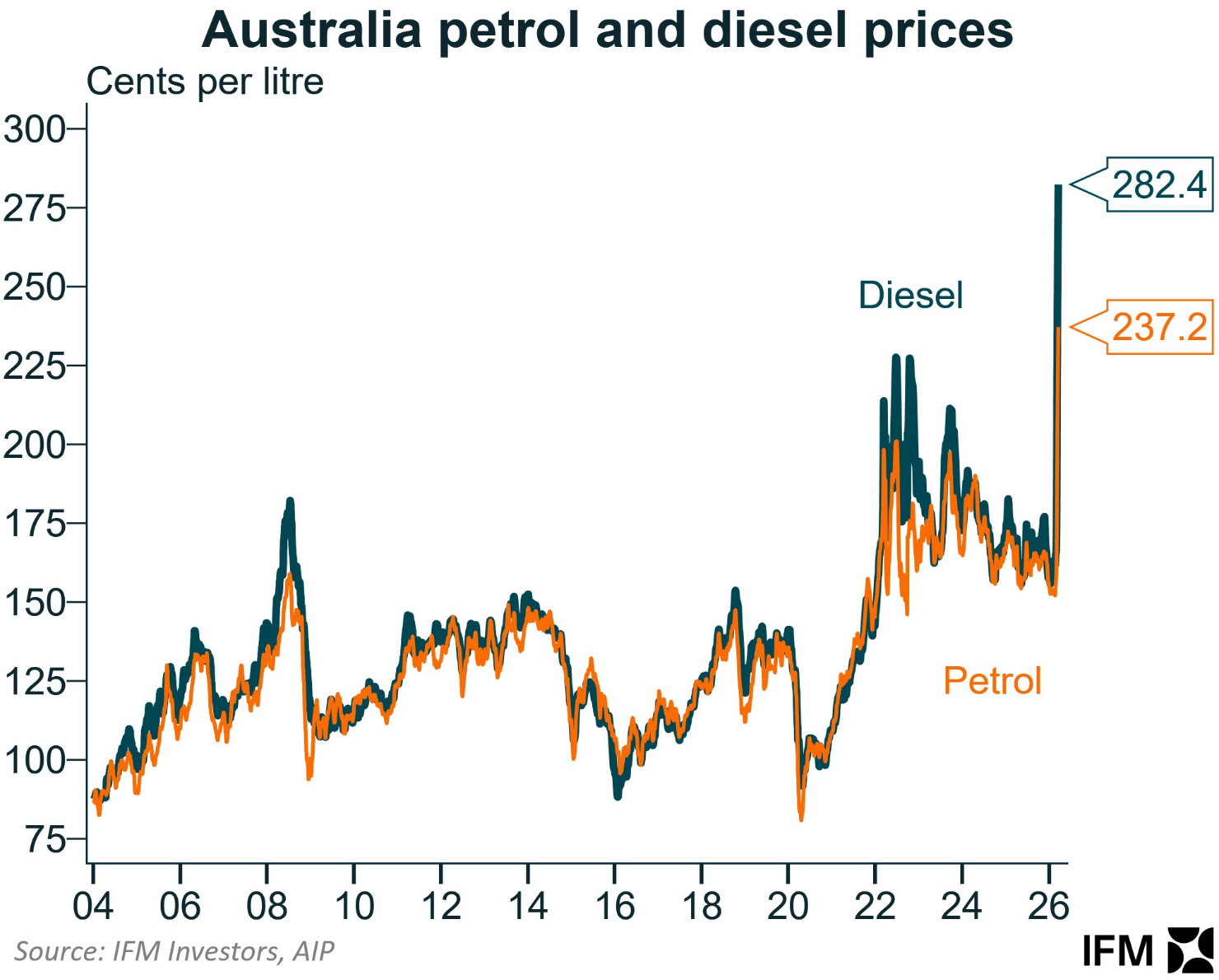
This data represents the calm before the storm.
