
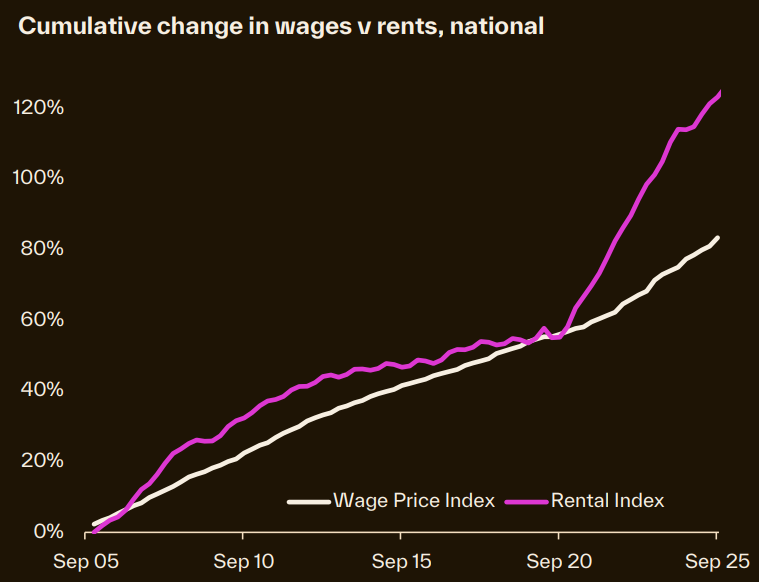
Australian tenants have suffered immensely over the past five years, with rents growing nearly three times as fast as wages, according to Cotality.
Source: Cotality
In the five years to February 2026, advertised rents have risen by 42% nationally, adding around $10,600 to the annual cost of renting the median home.
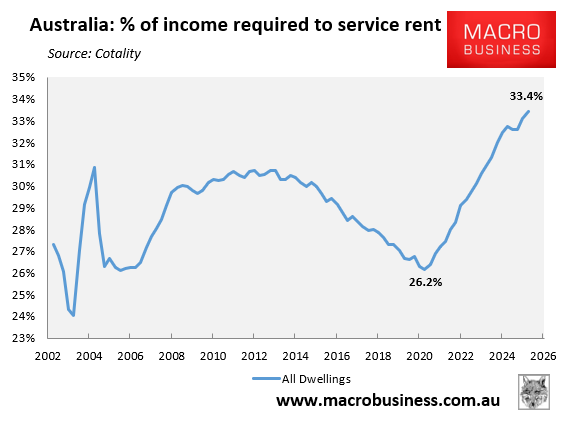
As a result, the percentage of household income required to rent the median home in Australia is at its highest level on record.
Cotality has released its housing market results for February 2026, which show that conditions continue to deteriorate for Australian renters.
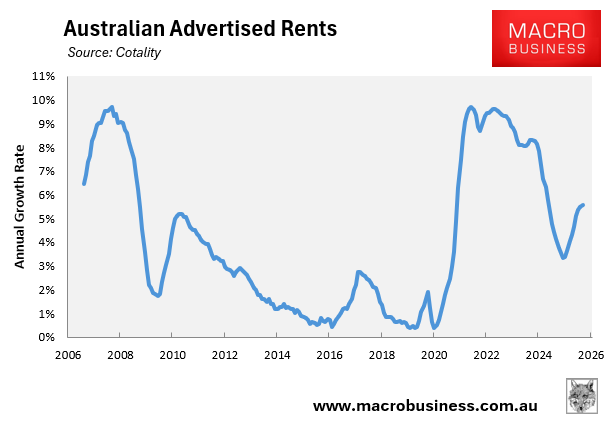
Cotality reported that the national rental value index rose another 0.7% in February, “continuing an accelerating trend in rental growth evident since October last year”.
Nationally, rents rose by 1.7% over the three months to February, the highest rolling quarterly rise since April last year.
In annual terms, the national rental index rose by 5.5%, which is the strongest 12-month gain since the year ending October 2024.
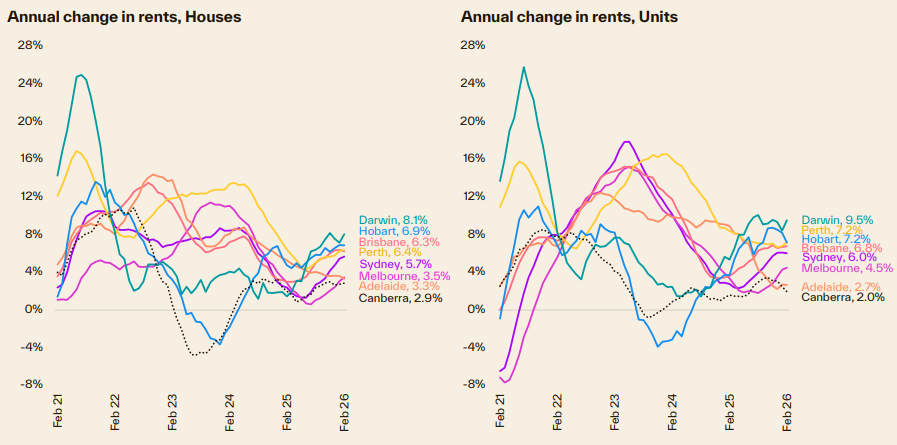
As illustrated below by Cotality, annual rental growth has accelerated across most capitals:
Source: Cotality
The cause of Australian renters’ suffering:
The primary cause of the explosive growth in rents is clear: Australia experienced the largest immigration surge in history.
Between Q4 2019 and Q2 2025, Australia recorded an average annual net overseas migration (NOM) of 266,000—the strongest 5.5-year period of migration in the nation’s history:
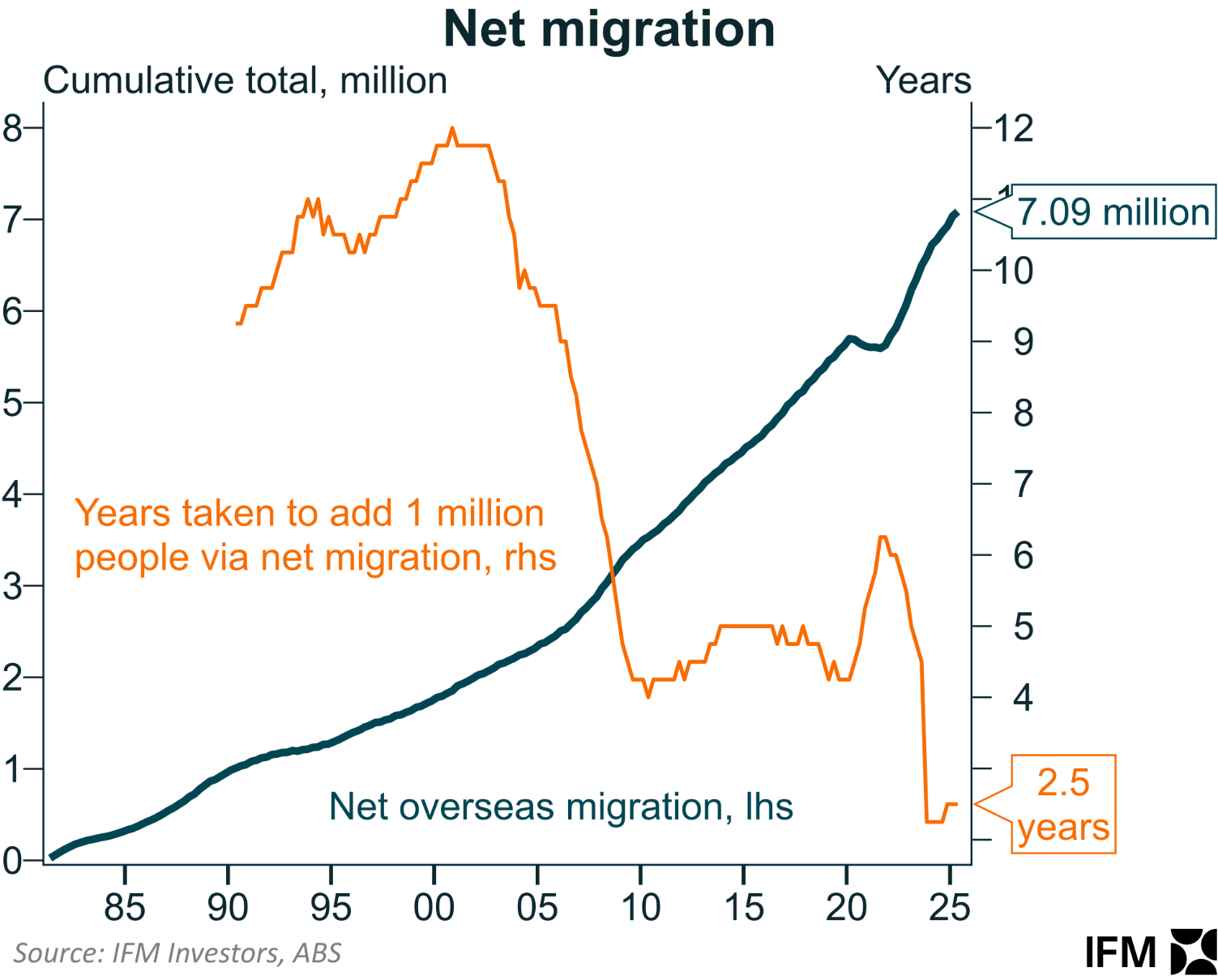
Chart from Alex Joiner at IFM Investors
The 1.46 million net migrants who have arrived since the end of 2019 have driven vacancy rates to historical lows and pushed rents into the stratosphere.
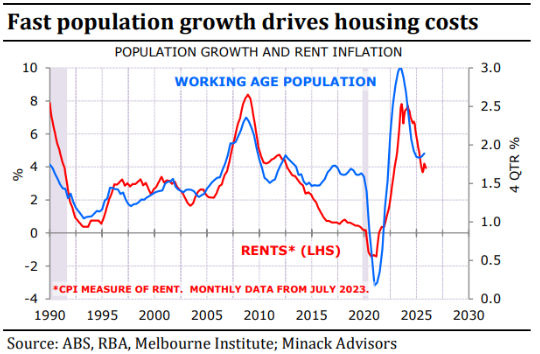
Thus, the rental crisis has been caused directly by the federal government’s high immigration policy.
The government forecasts a worsening rental crisis:
According to the latest State of the Housing System report from the federal government’s own National Housing Supply and Affordability Council (NHSAC), the nation’s housing shortage will deteriorate by 79,000 over the next five years to 2028-29, based on migration forecasts from the Centre for Population:
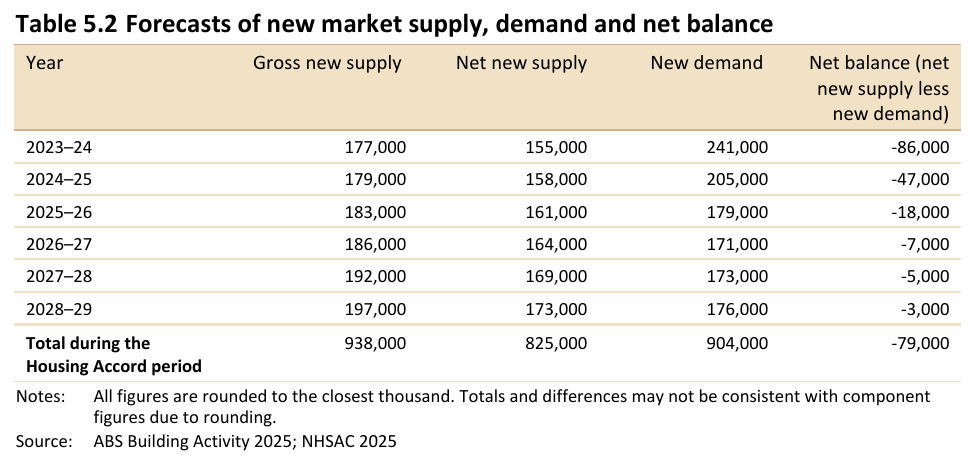
As illustrated above, NHSAC predicts a housing shortfall each year until 2028-29.
However, NHSAC’s sensitivity analysis revealed that if the population grew at a 15% slower rate than forecast by the Centre for Population, Australia’s cumulative housing deficit would be reduced by 40,000 as housing supply exceeded decreased population demand:
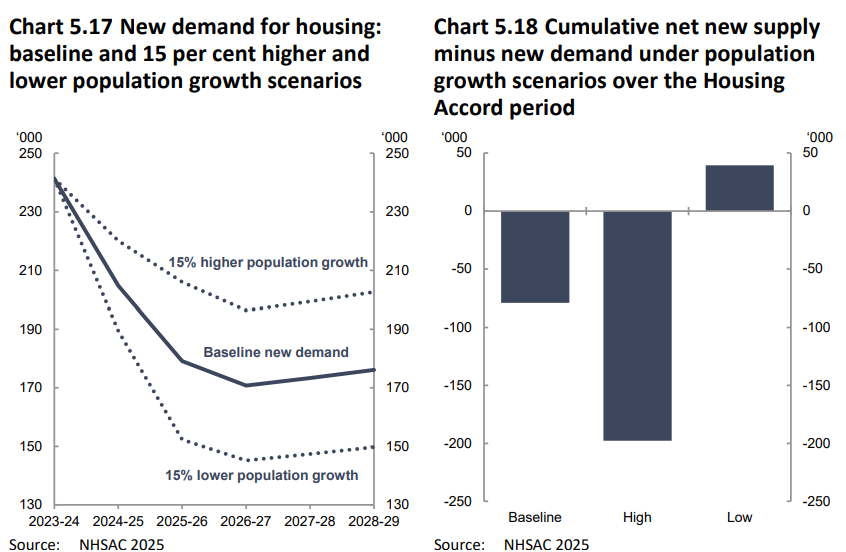
NHSAC therefore shows that if the Albanese government reduced immigration, it would alleviate the country’s housing shortage.
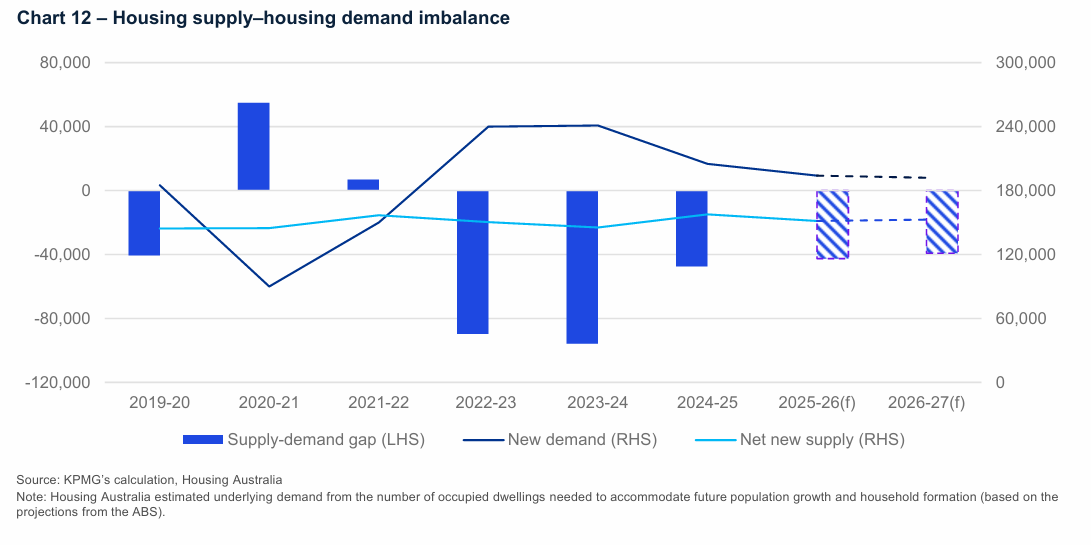
KPMG’s most recent housing research also forecasts a worsening housing shortage as population demand continues to outpace supply:
How to end Australian renters’ suffering:
Canada provides a template for ending Australia’s rental crisis.
In 2024, Canada’s centre-left Liberal government imposed major immigration curbs intended to alleviate housing and infrastructure strains while also rebalancing the economy towards sustainable growth.
The measures include lowering annual permanent resident targets, limiting international student and temporary worker admissions, and tightening asylum and border policies.
The Canadian population fell by 76,000 in the third quarter of 2025, the first decline in the country’s history (excluding the pandemic), caused by a decrease in temporary (non-permanent) residents:
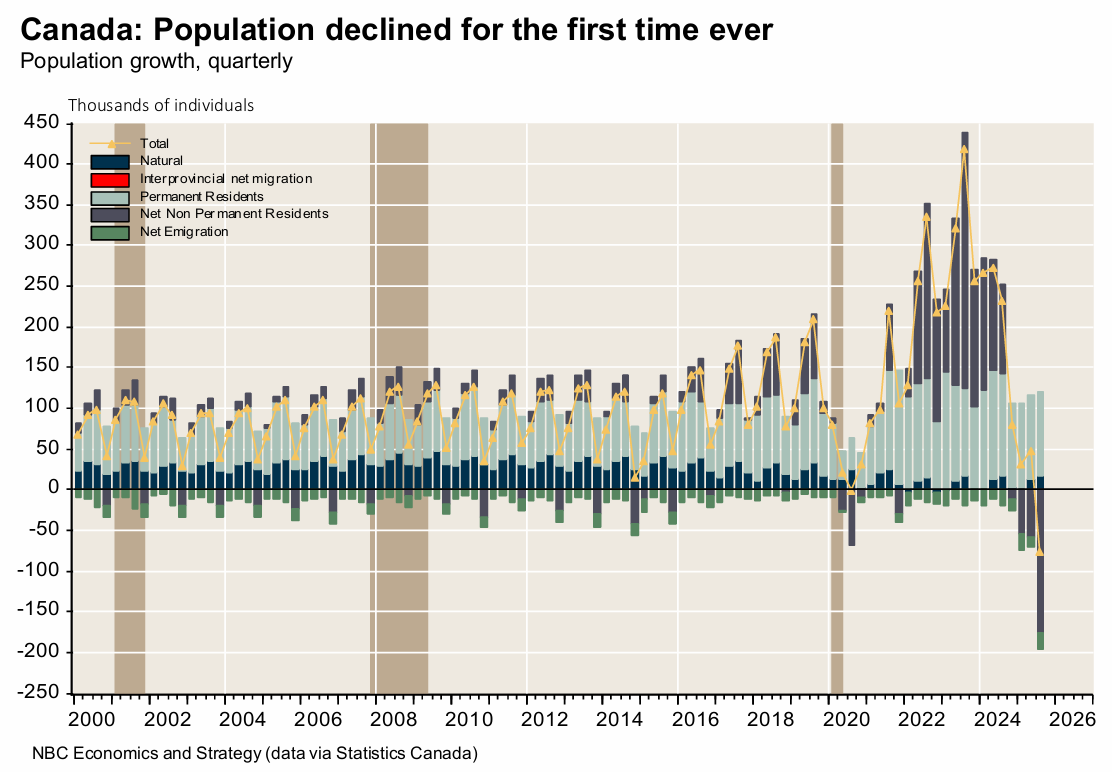
Chart from the National Bank of Canada
The sharp deceleration of Canada’s population growth has been most noticeable in the country’s rental sector.
According to recent Rentals.ca data, yearly Canadian asking rents have fallen for 16 straight months and are now at a 31-month low.
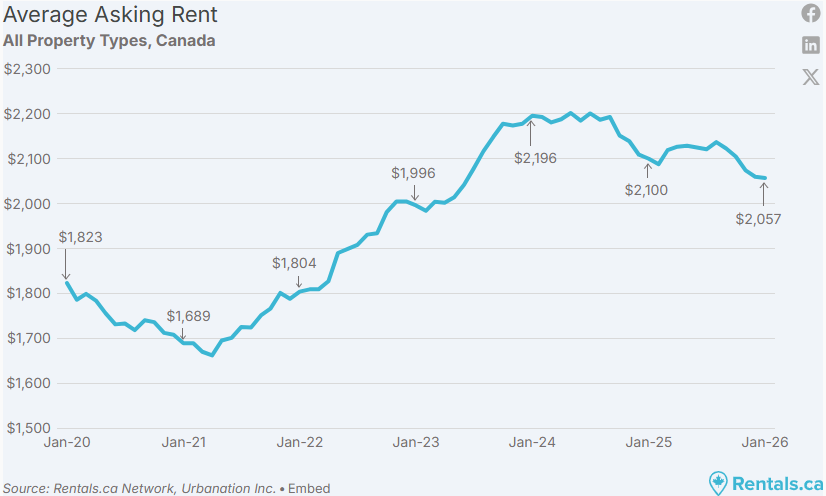
Canadian asking rents have declined by 6.6% from their peak in May 2024, saving the typical tenant $145 per month ($1,740 per year) on rental expenditures.
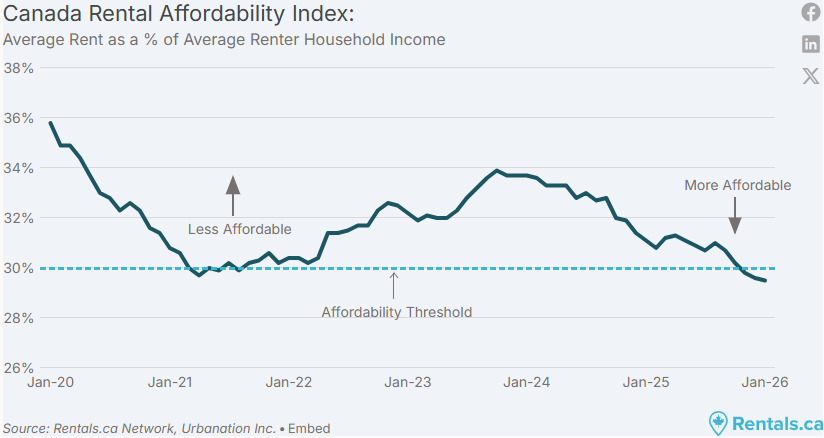
Rental affordability is now at its best level in six years, tracking below the 30% affordability threshold:
Canada is actively solving its rental crisis by curbing immigration. Why won’t the Albanese government do the same for Australia?
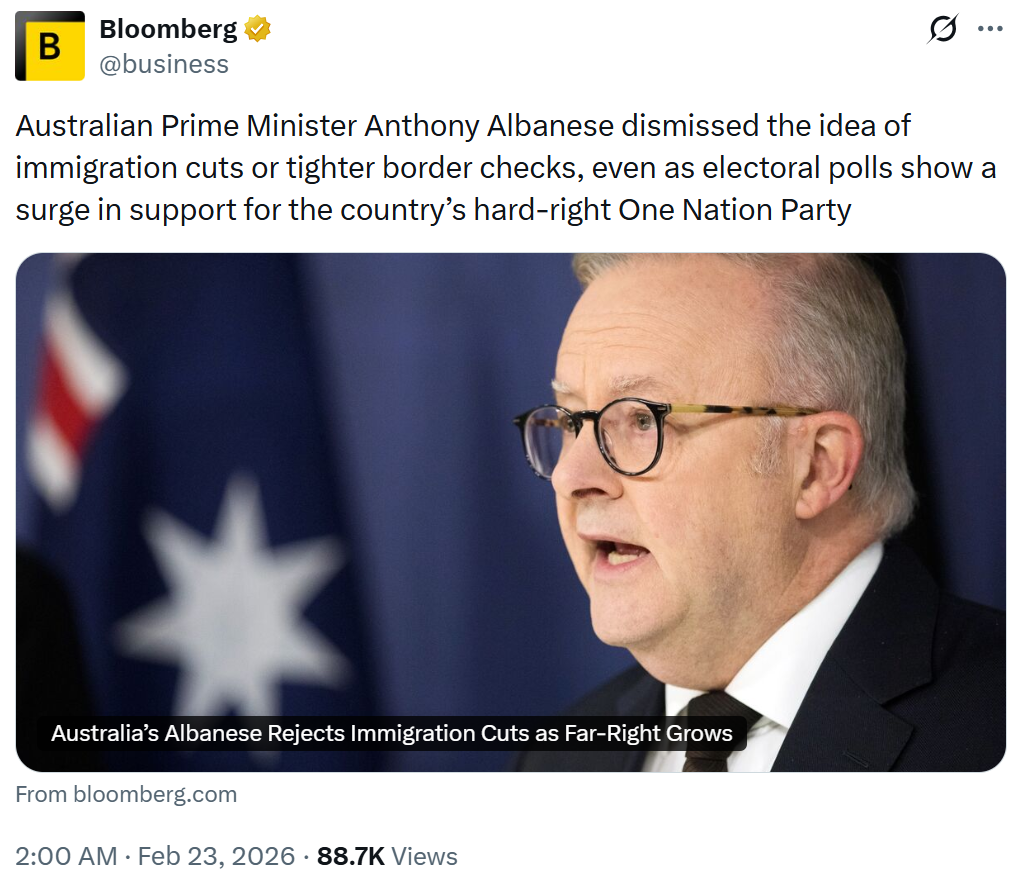
Prime Minister Anthony Albanese has instead committed to permanent housing shortages by continuing historically high immigration rates.
As a result, Australian tenants will continue to suffer needlessly.
