
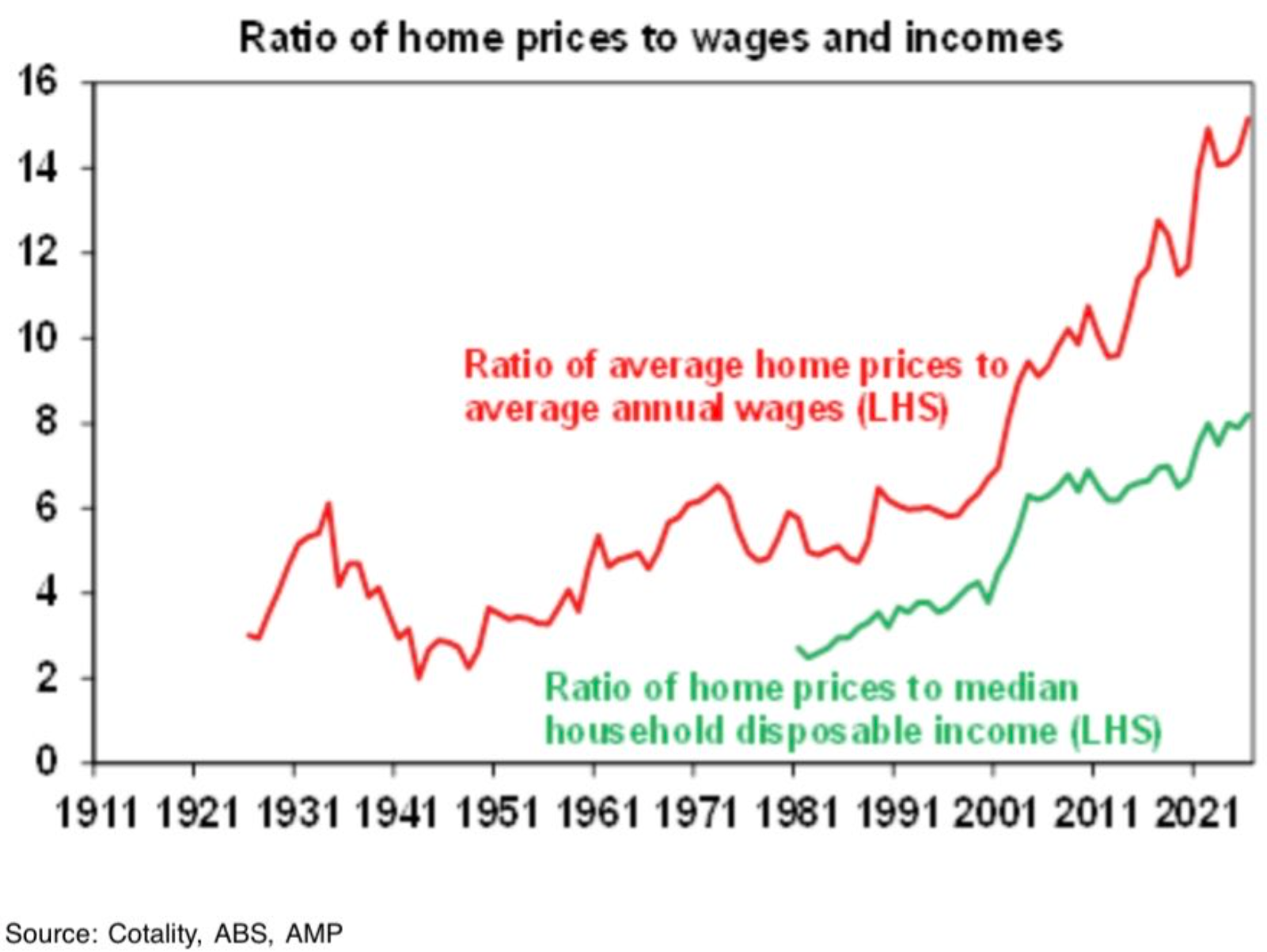
Australia’s housing market has never been this expensive.
According to Shane Oliver, chief economist at AMP, home prices nationally are tracking at their highest level ever relative to wages and household disposable incomes:
The Reserve Bank of Australia (RBA) has already delivered one 0.25% interest rate hike, with the interest rate futures market expecting at least one and a strong possibility of two more rate hikes by the end of 2026.
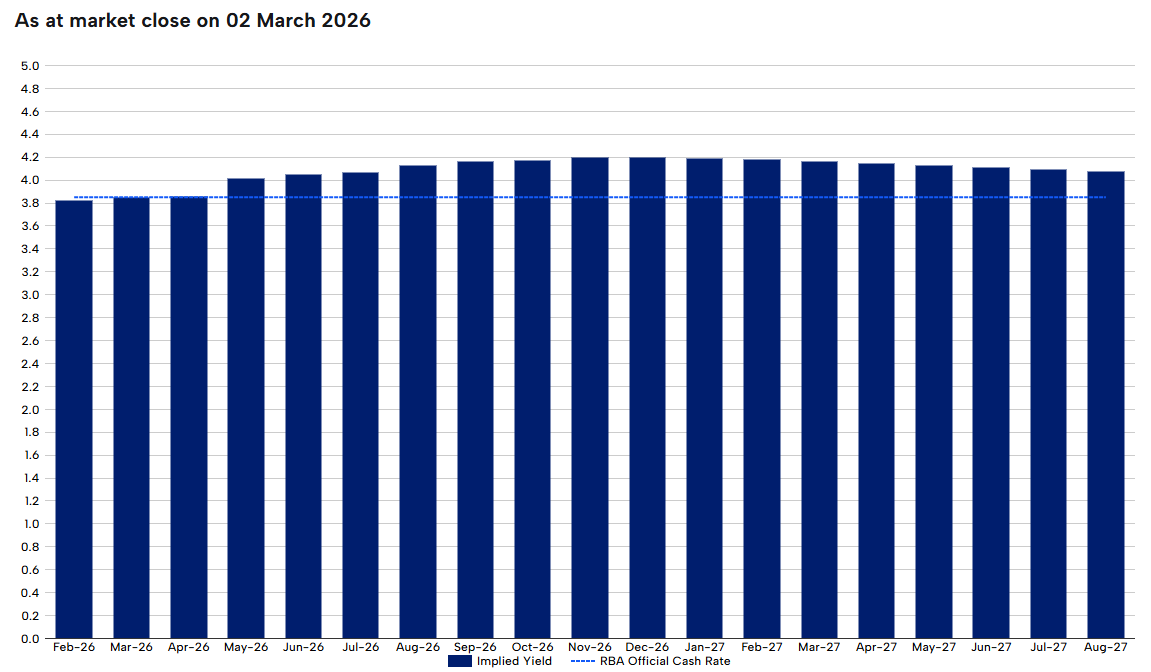
Interest rate futures official cash rate pricing
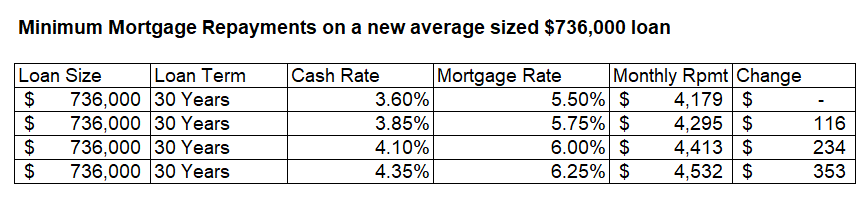
Based on the average new mortgage size of $736,000, three cumulative interest rate hikes would add $353 to monthly mortgage repayments:
Despite the poor affordability outlook, the latest Westpac-Melbourne Institute consumer sentiment survey showed that consumer expectations for house prices hit their highest level in 15 years, although fewer people think now is a good time to buy.
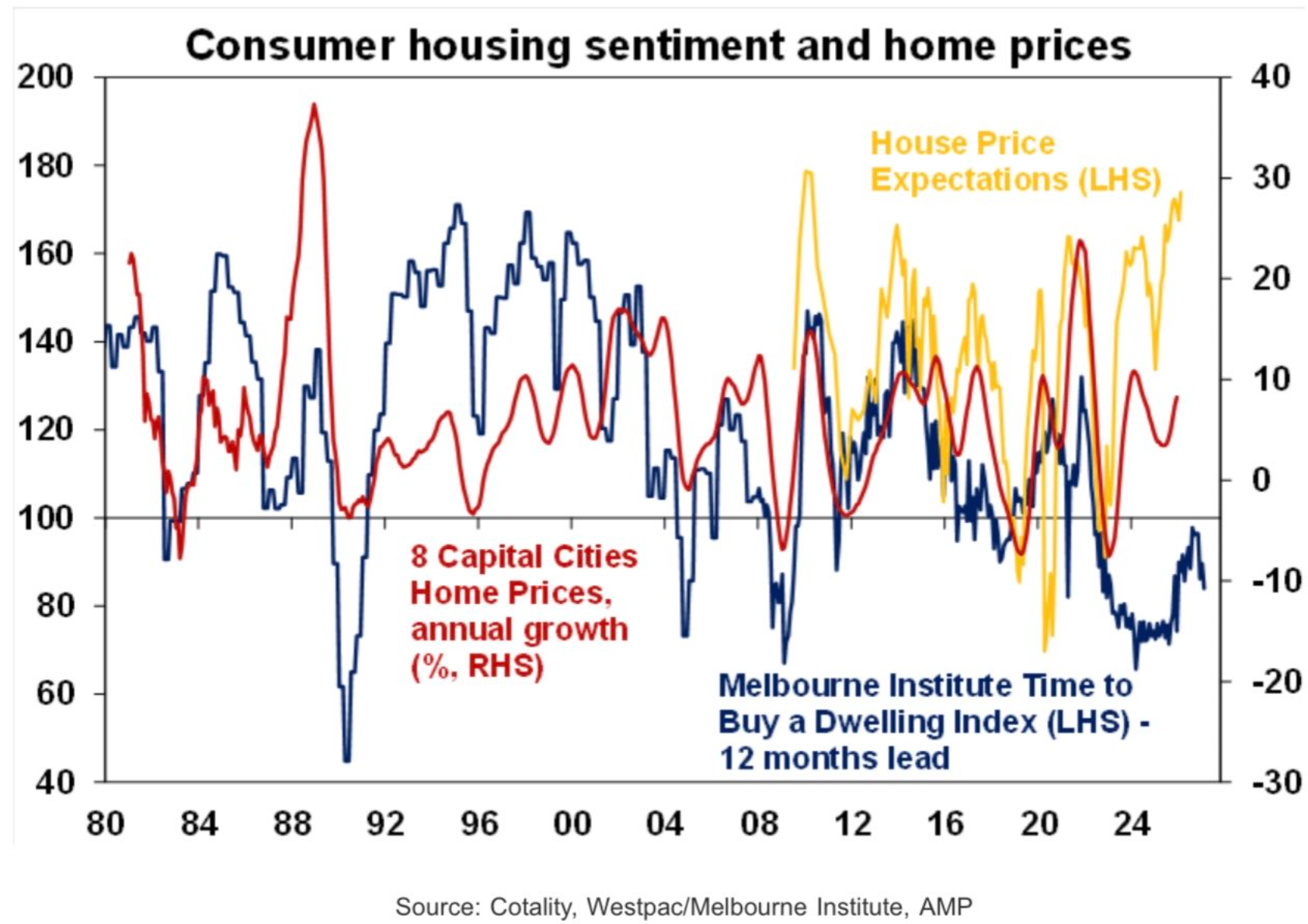
Chart by Shane Oliver (AMP)
The severe decoupling between borrowing capacity and house prices is likely behind the decline in the ‘Time to Buy a Dwelling Index’.
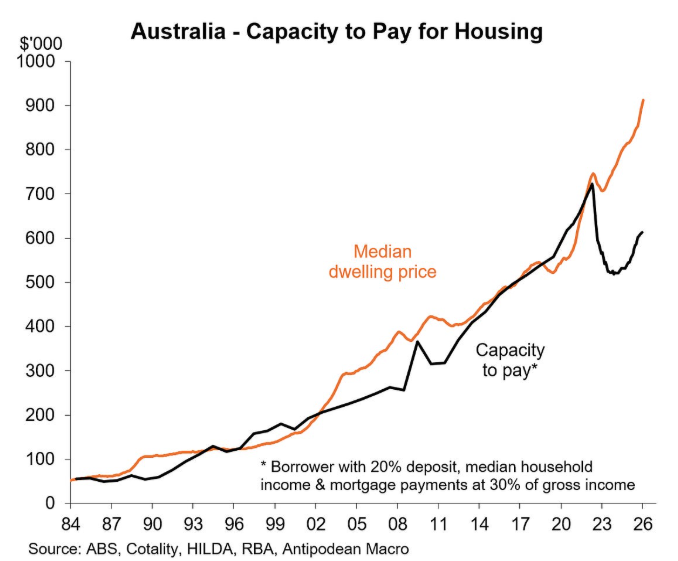
Chart by Justin Fabo from Antipodean Macro
A new survey from Finder likewise shows that, despite higher rates and affordability pressures, Australians overwhelmingly expect property prices to rise again in 2026.
Two‑thirds of Australians (66%) believe property prices in their area will rise this year.
- 49% expect a modest increase.
- 17% expect significant growth.
- 30% think prices will hold steady.
- Only 4% expect any decline.
This optimism persists even after years of rapid price growth and higher borrowing costs.
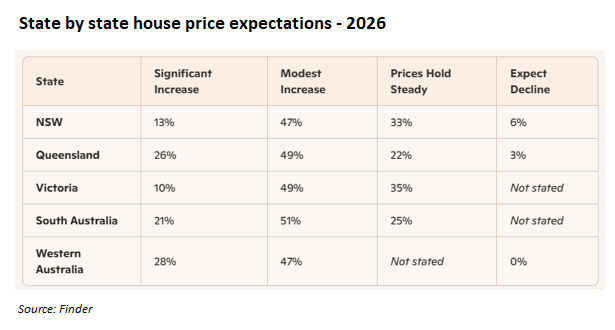
As illustrated below, Western Australians, Queenslanders, and South Australians are the most bullish on house prices, whereas Victorians and New South Welshmen are relatively less bullish (but still expect prices to rise):
Finder’s Graham Cooke says Australians continue to see property as the safest long‑term wealth strategy. The belief that prices “always go up” remains deeply embedded, driven by:
- Tight supply
- Strong population growth
- Persistent demand
- A cultural preference for property as a wealth vehicle
“Owning a home remains the primary wealth goal for most Australian households”, Cooke said.
“The data points to a nation doubling down on property, with expectations of further gains drastically outweighing fears of a downturn”.
“There’s a strong belief that tight supply, population growth and sustained demand will keep pushing prices up”, he said.
However, Cooke warned that sentiment could shift quickly amid interest rate hikes, economic shocks, or global conflicts.
“Interest rate movements, economic shocks or overseas conflict could alter the trajectory”, he said. “House prices are not guaranteed to only go up”.
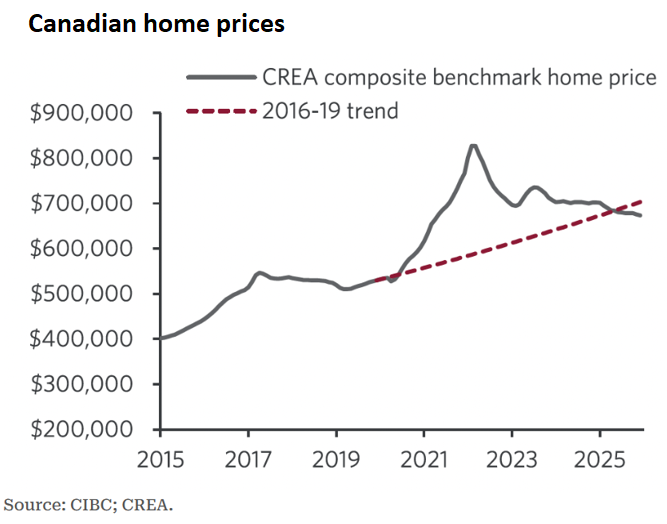
Both New Zealand and Canada—the most similar nations to Australia—have experienced sharp house price declines.
Canadian home prices have fallen 17.8% from their February 2022 peak, according to the CREA composite benchmark—a drop of nearly $149,000.
New Zealand home values have declined by 16.2% from their previous market peak in early 2022, according to the REINZ house price index:
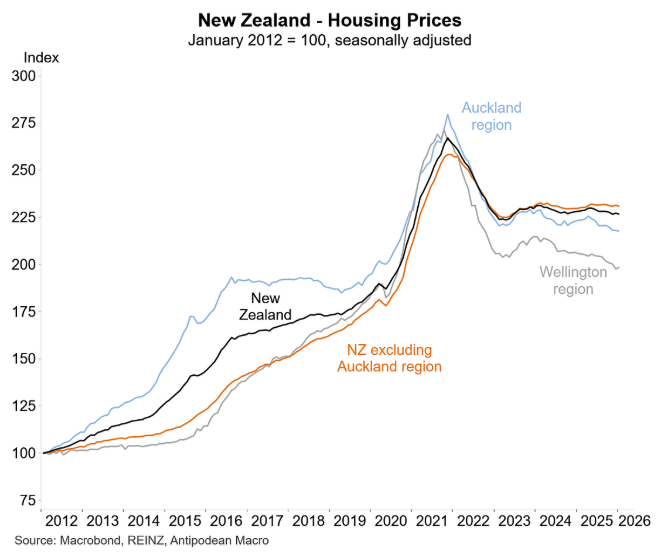
Chart by Justin Fabo from Antipodean Macro
Of course, the major difference between Australia and New Zealand and Canada is that population growth (immigration) remains strong and there is a structural housing shortage:
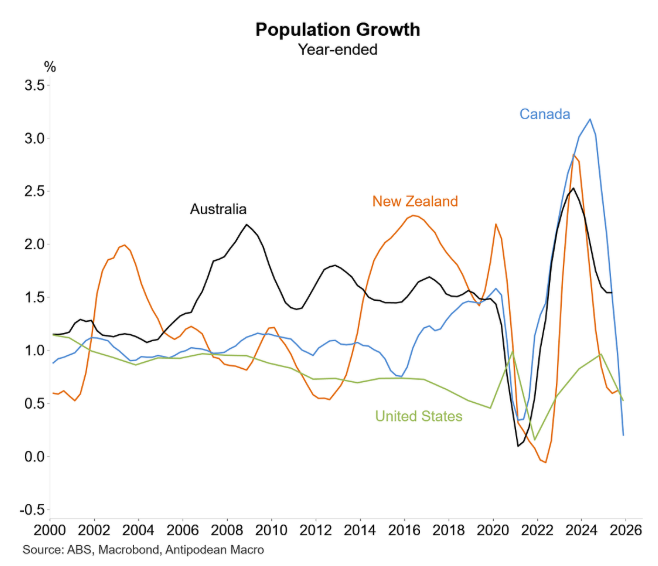
Chart by Justin Fabo from Antipodean Macro
Even so, Canada and New Zealand show that major house price corrections can happen, and given Australia’s poor affordability, the risk of a major downturn is building.
