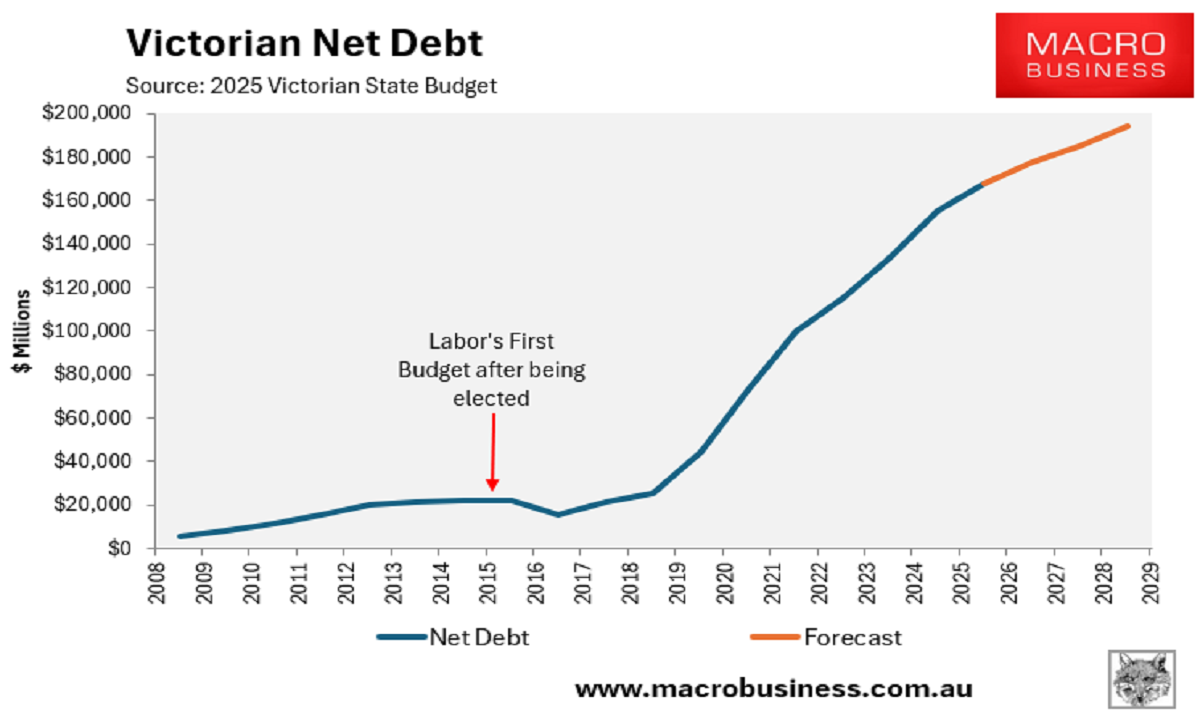
Melbourne’s status as an economic wasteland continues to grow.
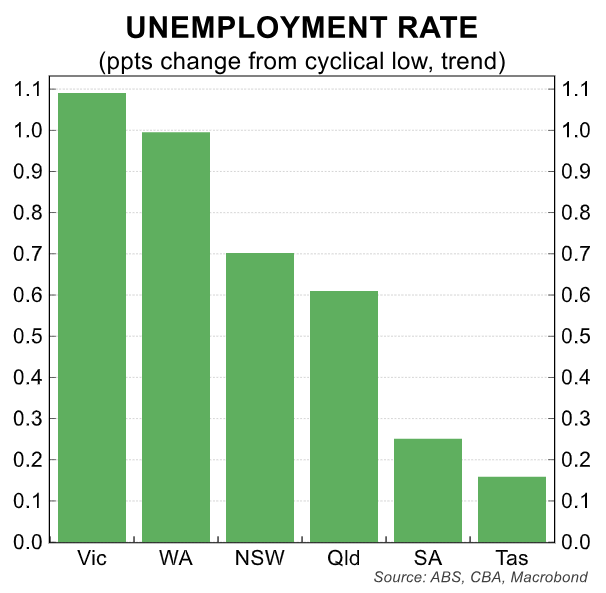
The latest labour force data from the Australian Bureau of Statistics (ABS), presented below by CBA, shows that Victoria has recorded the steepest rise in unemployment in the nation:
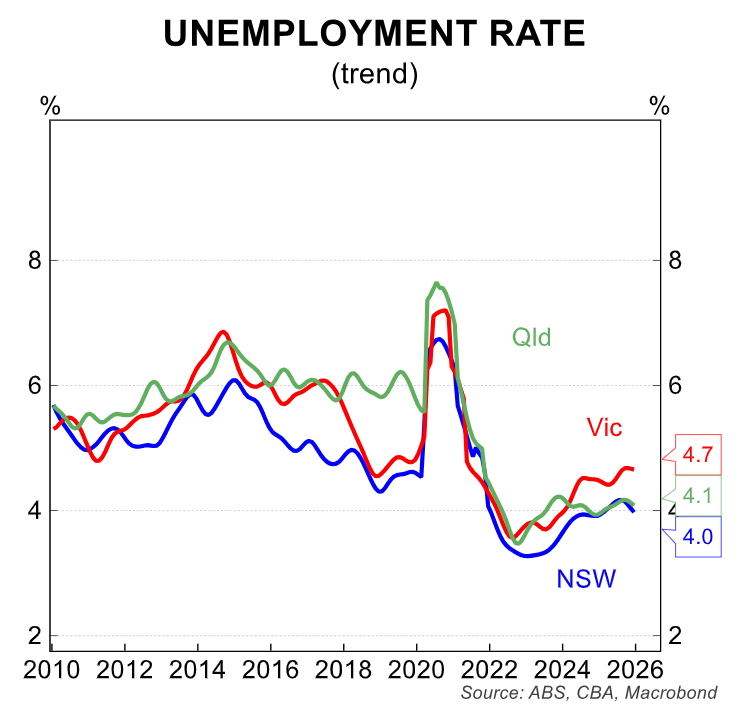
Victoria’s trend unemployment rate is also the highest in the nation at 4.7%, sitting well above the national average of 4.2%:
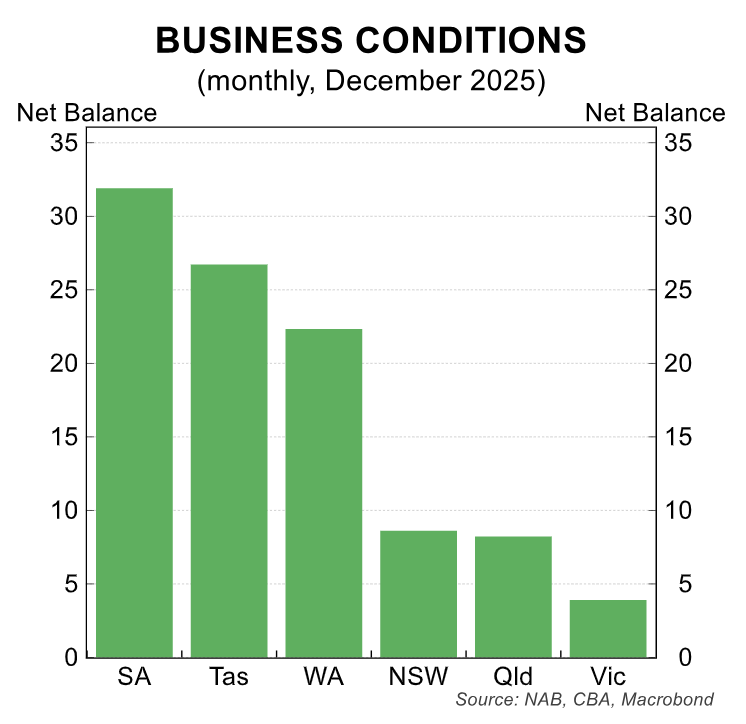
Meanwhile, the latest NAB business survey shows that Victoria has by far the worst business conditions in the nation, as illustrated below by CBA:
The Property Council of Australia’s latest office market report shows that the vacancy rate in Melbourne’s CBD has risen to 19%, the highest in the nation. This compares with 17.9% in July, and the CBD’s office vacancy rate is now at its highest level since 1997.
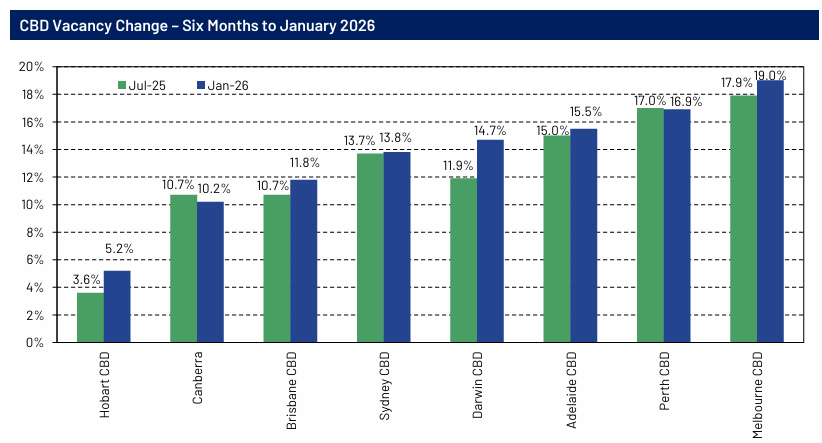
Source: Property Council of Australia
By comparison, the average office vacancy rate nationally is 15.9%.
The Property Council’s Victorian executive director, Cath Evans, says the state government’s push to introduce a legislated right to work from home has further unnerved investors, with the property sector already facing economic headwinds and a rising tax burden.
“The property sector in Melbourne has been battling harsh economic headwinds and a succession of new and increased taxes for years”, Evans said.
“Combine this with the uncertainty about the Victorian Government’s unprecedented and looming intervention to mandate the right to work from home, and it means too many investors are saying no to Melbourne”.
In August last year, Premier Jacinta Allan pledged to enshrine the right to work from home in law ahead of November’s state election.
Recent data from Roy Morgan showed that Melbourne is the only CBD to have fewer workers than before the pandemic:
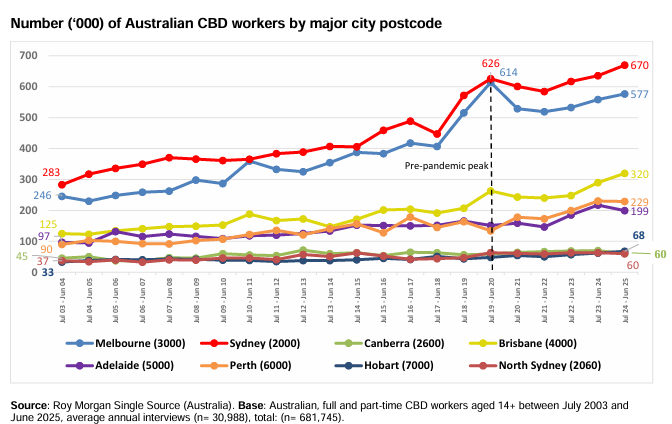
Roy Morgan estimated that Melbourne’s CBD workforce was 37,000 below the pre-pandemic peak as of mid-2025.
Bran Black, CEO of the Business Council of Australia, warned that the proposed legislated work-from-home rules would incentivise employers to shift investment capital and jobs interstate.
“Businesses, especially those operating across multiple jurisdictions, may find alternative locations more appealing if Victoria imposes rigid workplace mandates”, Black said.
“The Victorian economy Victoria’s economy is currently facing significant headwinds”.
“It is imperative, therefore, that Victoria does more to create jobs and generate investment in the state”.
“In this context, legislating a right to work two days per week from home risks driving investment and jobs from Victoria to other states”, he said.
While I enjoy working from home and have done so for 14 years, Bran Black is correct. The Victorian government has no business mandating that private enterprises enable employees to work from home two days each week. Employers and employees should negotiate such decisions in a mutually beneficial way.
Mandating work-from-home would encourage firms to relocate their offices interstate. Moreover, many roles that can be done remotely from home in Victoria could also be performed interstate or overseas.
Instead of trying to micromanage businesses, the Victorian government should concentrate on performing its core tasks of maintaining law and order and properly managing its expenditures.