
The latest data from Stats NZ reveals that immigration into New Zealand remains historically low, with only 10,691 net migrants landing in the year to November 2025:
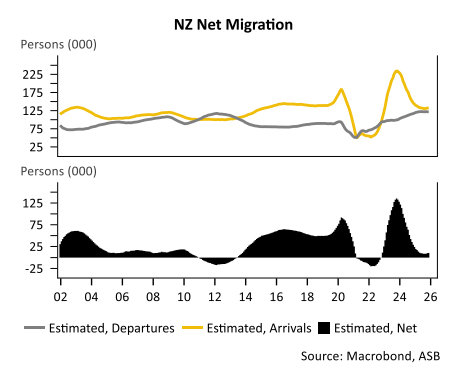
This level of net overseas migration is well below the decade average of 49,000 and is a fraction of the circa 130,000 peak migration recorded in 2023.
Arrivals remain around their 10-year averages at 132,600, but departures remain significantly higher (121,000) than the 10-year average (88,000).
The increase in departures has been driven by an exodus of New Zealand citizens.
In the year to November 2025, around 68,000 New Zealand citizens departed, with net departures of 40,800. Nearly 30,000 of these net departures were to Australia.
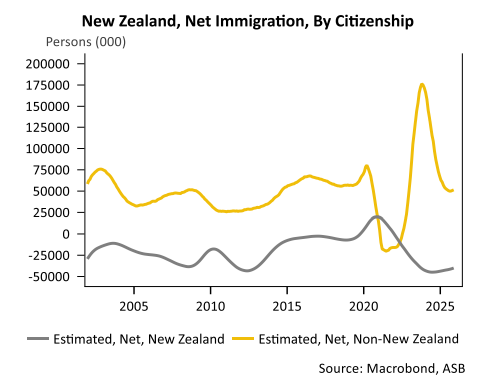
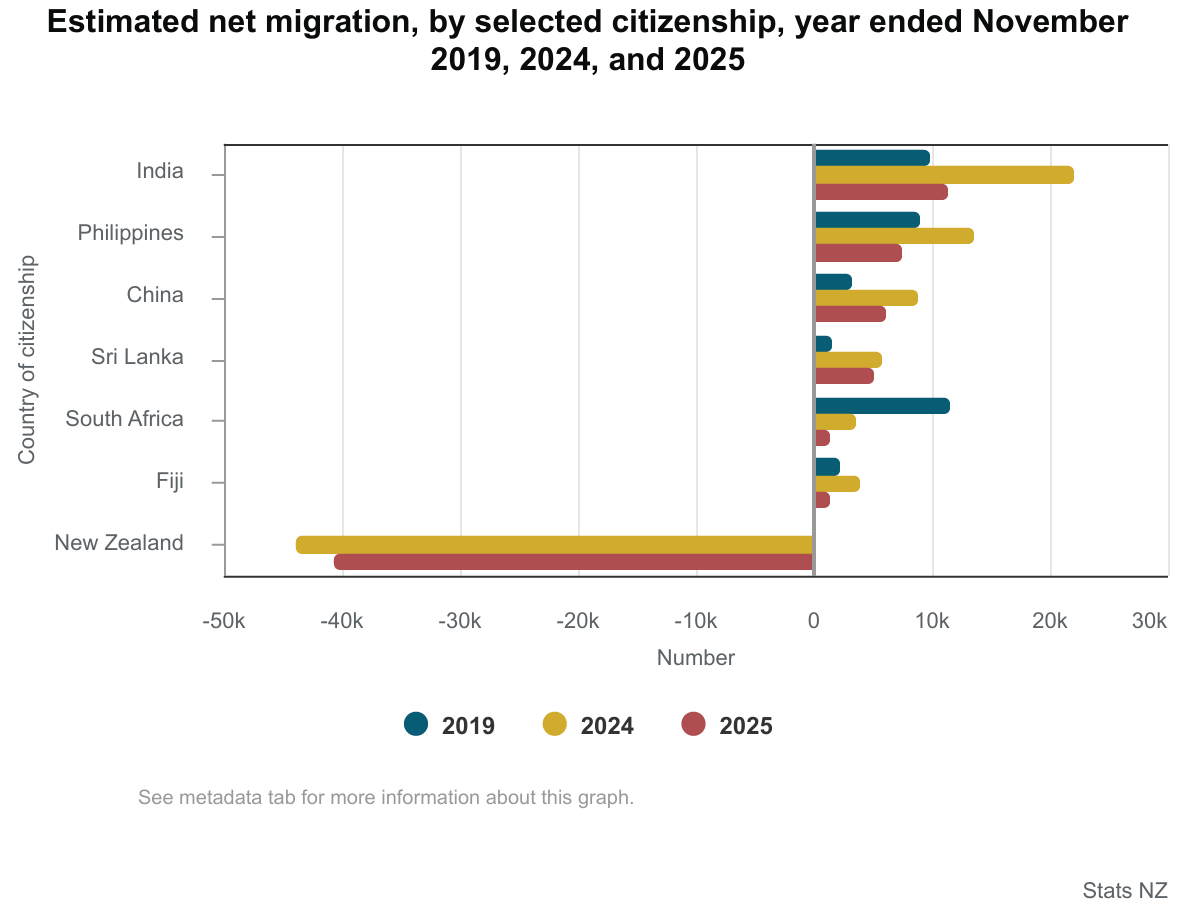
The next chart illustrates that significant (albeit declining) arrivals from Asia have offset the departure of New Zealand citizens:
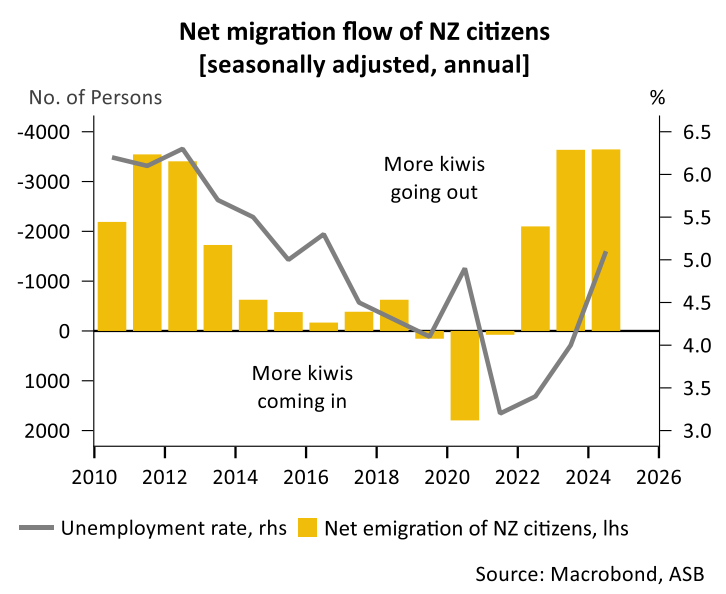
In seasonally adjusted terms, the outflow of New Zealand citizens is tracking at its highest level since 2011-12:
Major bank ASB commented that “the sharp decline in net immigration over the past two years is a key contributor to lower population growth, softer domestic demand and the sluggish housing market”.
While ASB does not expect to see an imminent pickup in net immigration to New Zealand, it believes that the worst is over given the improving economy.
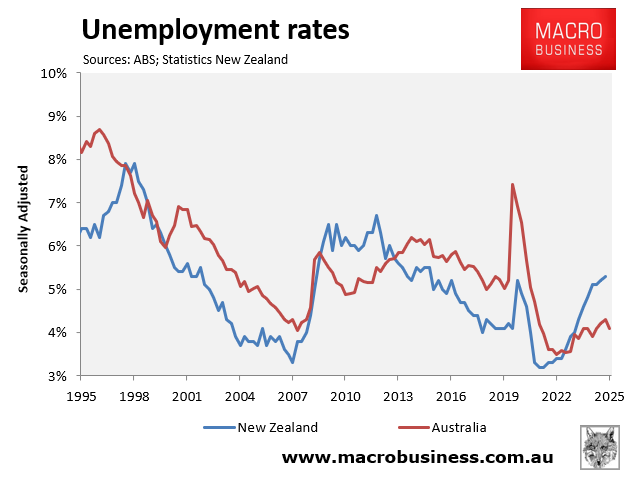
I will caution that the latest decline in Australia’s unemployment rate to 4.1% in December has widened the gap with New Zealand’s unemployment rate of 5.3% in the September quarter:
As illustrated below by ASB, there has traditionally been a net migration loss from New Zealand to Australia, with the magnitude of this loss correlating strongly with relative unemployment rates between the two nations:
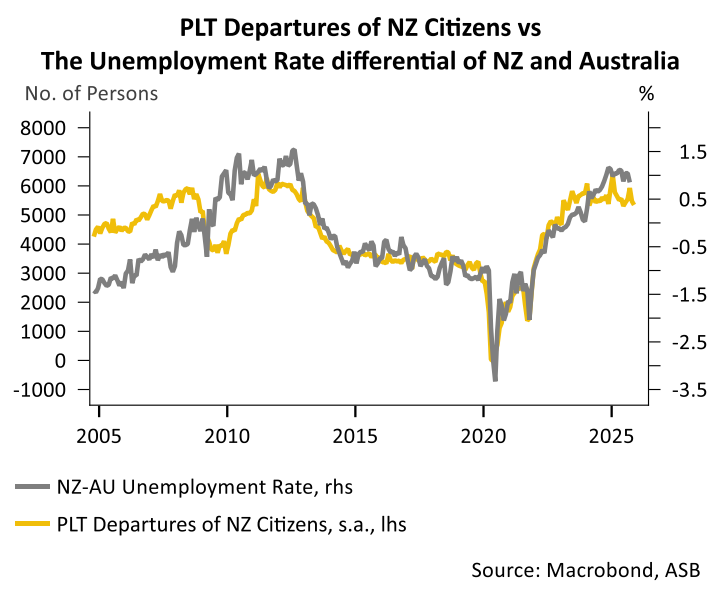
Therefore, Australia’s falling unemployment rate relative to New Zealand will continue to attract Kiwis seeking better job opportunities.
