Multiple Victorian government releases have explicitly described the Suburban Rail Loop (SRL) as “Australia’s largest housing and transport project”, because the rail line is expected to result in a massive housing‑led urban redevelopment program.
The Victorian Government states that the SRL will “build 70,000 homes around six new stations” in the SRL East corridor.
Additional stages (SRL North and SRL West) are expected to support tens of thousands more dwellings, though numbers are not yet finalised.
The Victorian government’s spin conveniently ignores the SRL’s 2021 business case, which claimed that it would result in only an additional 25,000 new homes being built.
Regardless, the gaslighting by the Victorian government is astounding. The SRL isn’t a housing project. The project will not build a single home. The SRL is a rail project, and it is not very good.
According to the Victorian Parliamentary Budget Office (PBO), the first two stages of the SRL (60 km) will generate social benefits worth only $0.60 to $0.70 for dollar spent.
An investigation by the Australian National Audit Office (ANAO), which is responsible for ensuring that all federal government funds are spent legally, discovered that the business case used to request $11.5 billion in federal funding for the SRL’s first stage contained information gaps and used spurious methods to quantify the SRL’s benefits.
The ANAO determined that the project’s first stage (SRL East) did “not present a reasonable investment”.
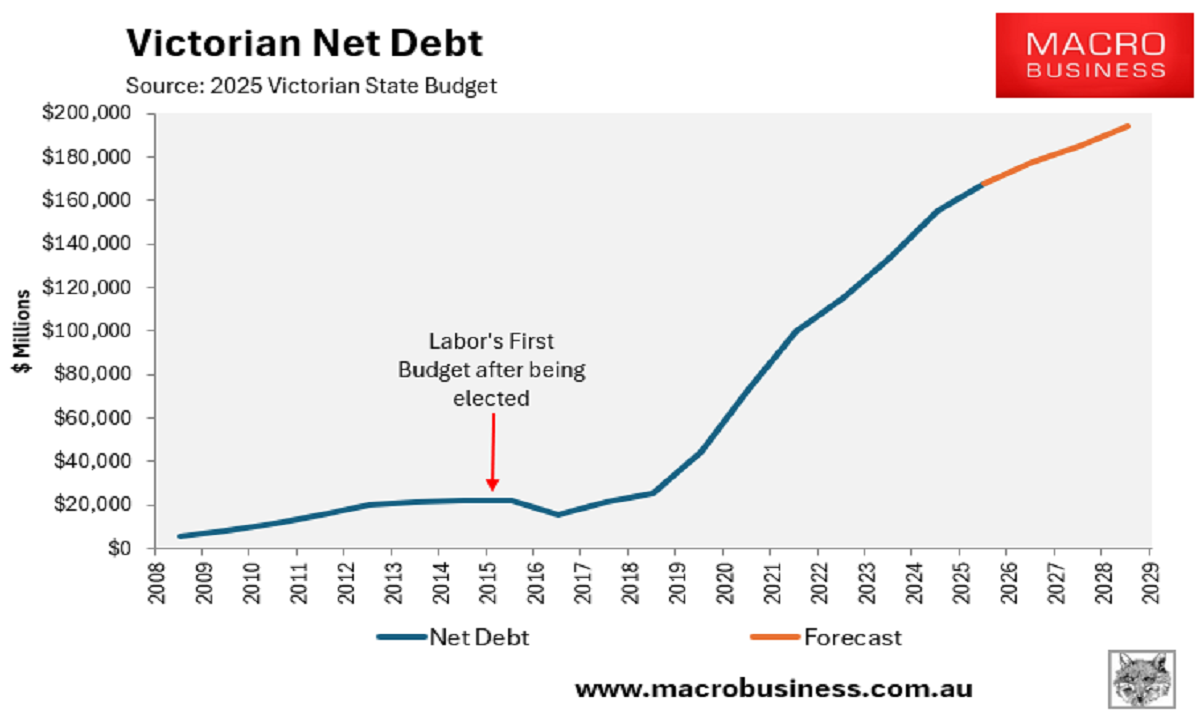
The SRL’s huge cost will push Victoria deeper into debt, resulting in future credit rating downgrades and higher interest payments.
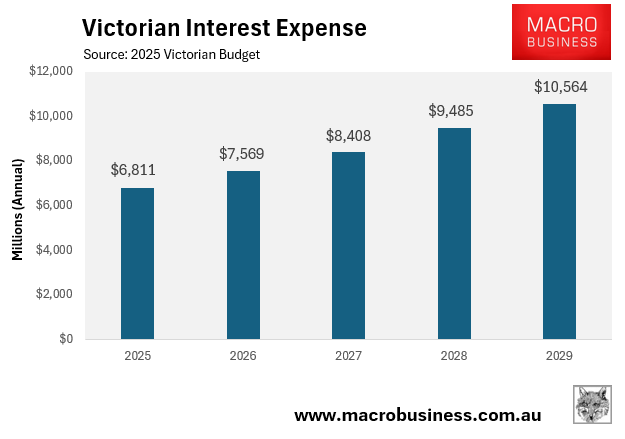
Indeed, major ratings agency S&P this week warned that the value capture method used by the Victorian government to fund one-third of SRL East risks downgrading Victoria’s credit rating.
The property industry has also warned that the SRL’s funding model will discourage development, thereby making it less financially viable to build apartments.
The Allan Government last week unveiled a suite of new ‘value capture’ taxes and levies on developers, landowners, and car‑park operators to help fund SRL East.
Measures include a new surcharge on developers building homes within the SRL East precincts, which is expected to raise billions of dollars over coming decades.
Specifically, from January 1, 2027, developers looking to build new apartment blocks or offices in their building will need to pay a one-off fee.
At first, the fee will only apply to those looking to build within 800 metres of each SRL station.
Then from 2032, the fee will apply to all developments in the “outer ring” areas—properties between 800 metres and 1.6 kilometres from each station.
The levy will cost up to $33,924 per dwelling by 2032 and will operate until 2062.
The rate will be indexed annually and progressively increase in 2032 and 2035 when the SRL East is operational.
Thus, the SRL’s value capture would significantly raise the cost of new apartments.
The cost of building apartments is already prohibitively expensive. As a result, consumers are unable to purchase them for a reasonable price.
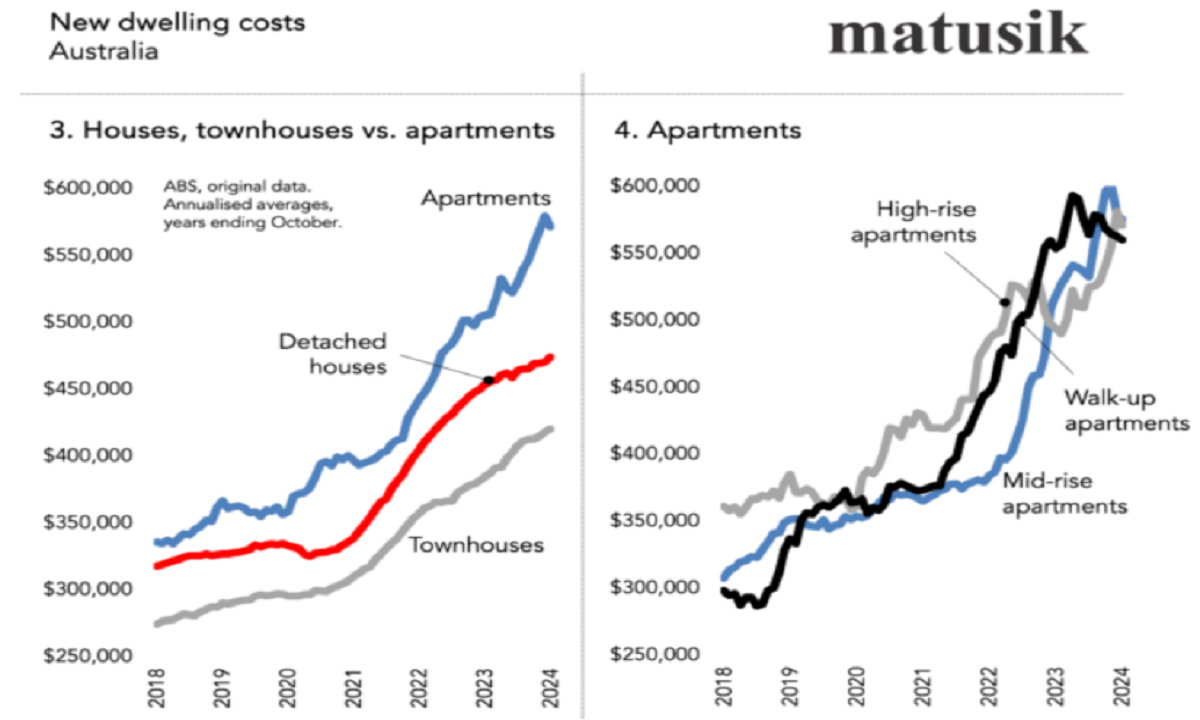
The Victorian government’s value capture taxes would, therefore, push their cost even farther out of reach, rendering the economics of the hoped-for apartment boom unviable.
The incompetent Victorian government continues to fail fundamental housing math.